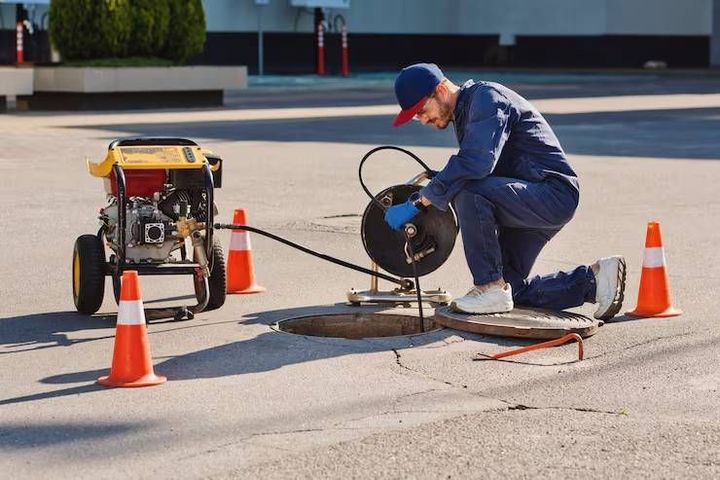
Road Crack Sealing Machines Overview With Road Maintenance Technology and Engineering Information
Road crack sealing machines are specialized equipment used to fill cracks in asphalt and, where suitable materials and methods are specified, certain concrete pavement surfaces.
These machines heat, store, transport, and dispense crack sealants into prepared openings. The process helps limit water infiltration and slows the deterioration of pavement caused by traffic, temperature changes, and environmental exposure.
Road cracks develop for several reasons, including repeated vehicle loading, changes in temperature, moisture exposure, aging pavement binders, and movement beneath the road surface. Small cracks may gradually widen, allowing water to enter the pavement structure. When moisture reaches underlying layers, it can contribute to weakening, potholes, and more extensive surface damage.
Traditional crack repair methods often rely on manual tools and portable heating equipment. Modern road crack sealing machines introduce more controlled heating, material circulation, temperature monitoring, and application systems. Their configuration varies according to road conditions, the type of sealant, the required working capacity, and the scale of the maintenance project.
Main Types of Crack Sealing Equipment
Different road maintenance operations require different machine designs. Common equipment categories include:
Hand-push crack sealing machines: Compact units designed for localized repairs, narrow roads, parking areas, and smaller maintenance projects.
Trailer-mounted crack sealing machines: Equipment transported behind a suitable vehicle, generally used for longer road sections and larger maintenance operations.
Truck-mounted sealing systems: Integrated units designed to support extensive road maintenance activities and transport additional materials or tools.
Hot-pour sealant machines: Systems that heat compatible sealants to specified application temperatures and maintain their condition during operation.
Portable crack filling equipment: Smaller systems used for selected repair applications where mobility and access are important.
The distinction between crack filling and crack sealing is important. Crack filling generally addresses cracks where movement is relatively limited, while crack sealing uses materials and preparation methods intended to accommodate some movement as cracks expand and contract. The appropriate method depends on pavement condition, crack characteristics, and engineering specifications.
Importance
Why Road Crack Sealing Matters
Road crack sealing is an important part of pavement preservation because water infiltration can accelerate deterioration. Rainwater entering cracks may weaken supporting layers, contribute to erosion, and create conditions that encourage pothole formation. In areas experiencing repeated freeze-thaw cycles, trapped water can also contribute to pavement damage.
Effective maintenance can help road authorities manage pavement deterioration before more extensive repairs become necessary. However, sealing does not correct every underlying structural problem. Roads with severe deformation, widespread fatigue cracking, unstable foundations, or extensive surface failure may require different rehabilitation methods.
Who Uses Road Crack Sealing Machines?
Several groups rely on crack sealing equipment as part of their road maintenance activities.
Municipal road departments use it to maintain residential streets, intersections, and local roads.
Highway maintenance authorities use larger equipment for selected sections of arterial roads and highways.
Airport pavement teams may use approved crack repair methods on suitable pavement areas, subject to aviation-specific requirements.
Industrial facility operators maintain internal roads, loading areas, and vehicle access routes.
Road maintenance contractors and infrastructure teams use different machine configurations according to project specifications.
For everyday road users, pavement preservation can help reduce the progression of surface defects that affect driving comfort and road condition. Maintenance planning also requires attention to traffic management, worker safety, weather conditions, and the time needed for sealant cooling or curing before traffic resumes.
Key Engineering Factors
The performance of a crack sealing operation depends on several technical factors. Crack width, depth, moisture content, pavement temperature, surface cleanliness, and the movement expected in the pavement all influence material selection and application.
Sealant compatibility is equally important. A material designed for asphalt pavement may not be suitable for every concrete application, and products differ in elasticity, adhesion, temperature resistance, and installation requirements.
Recent Updates
Developments in Road Maintenance Technology
Recent road maintenance trends emphasize preventive pavement management, improved equipment monitoring, and more systematic inspection. Rather than relying exclusively on visible surface damage, maintenance teams increasingly consider pavement condition records, traffic exposure, drainage performance, and deterioration patterns when planning repairs.
Crack sealing machines are also being designed and operated with attention to temperature consistency, material circulation, application control, and reduced material waste. Digital temperature displays, improved burner controls, and monitoring systems can help operators follow specified heating conditions. The availability of these features varies by machine model and manufacturer.
Integration With Digital Inspection Systems
Road inspection technologies can help maintenance teams identify cracks and record their locations. These tools include pavement inspection vehicles, digital photographs, mobile mapping systems, and image-analysis software.
Computer vision can assist with identifying surface cracks and measuring their approximate extent. However, automated detection does not independently determine whether every crack should be sealed. Human inspection and engineering assessment remain important because some cracks indicate structural distress that requires a different treatment.
Sustainability and Equipment Efficiency
Environmental considerations increasingly influence road maintenance operations. Efficient heating systems, appropriate insulation, controlled material dispensing, and preventive equipment maintenance can help reduce unnecessary energy consumption and material losses.
Some maintenance programs also evaluate lower-temperature materials or alternative formulations where their technical properties meet project requirements. Selection depends on the pavement, climate, traffic conditions, product specifications, and applicable environmental requirements. No single material or machine configuration is appropriate for every road.
Comparison of Common Machine Features
Feature | Compact machine | Trailer-mounted machine | Truck-mounted system |
|---|---|---|---|
Typical application | Localized repairs | Medium to extensive road sections | Large maintenance operations |
Mobility | High for small work areas | Requires a towing vehicle | Integrated vehicle transport |
Material capacity | Generally limited | Varies by tank size | Often configured for larger workloads |
Heating system | Depends on design | Common in hot-pour models | Common in integrated hot-pour systems |
Storage requirements | Relatively small | Moderate to large | Depends on vehicle configuration |
Operational planning | Access and manual handling | Towing and site access | Vehicle positioning and traffic control |
These are general comparisons rather than fixed specifications. Actual capacity, heating performance, dimensions, and application rates vary by equipment design.
Laws or Policies
Road Maintenance Regulations and Standards
Road crack sealing is influenced by pavement maintenance specifications, occupational safety requirements, environmental controls, and traffic management rules. The exact requirements depend on the country, road classification, project owner, and material being used.
Public road authorities may specify approved sealant types, crack preparation methods, application temperatures, quality inspections, and reopening conditions. Projects involving highways or other critical infrastructure may require additional documentation, inspection procedures, and traffic control plans.
Road Maintenance Policies in India
In India, road maintenance activities are guided by the specifications and contractual requirements of the relevant road authority. The Ministry of Road Transport and Highways publishes technical specifications and standards used in highway development and maintenance, while the Indian Roads Congress develops guidance and technical publications related to road engineering.
Requirements can differ between national highways, state highways, municipal roads, and privately operated roads. A maintenance team must identify the applicable contract specifications and technical guidance before selecting a crack sealing method or material.
Worker Safety and Environmental Considerations
Hot-pour crack sealing equipment can involve heated materials, burners, pressurized or circulating fluids, and hot surfaces. Appropriate protective equipment, operator training, fire prevention measures, and manufacturer-specified operating procedures are important.
Environmental controls may address emissions, fuel storage, spills, waste sealant, and the handling of cleaning materials. Work zones also require suitable warning signs, barriers, traffic control, and procedures to protect workers and road users. Requirements vary according to local rules and the conditions of the maintenance site.
Tools and Resources
Equipment Selection and Planning Tools
Several technical resources can help maintenance teams evaluate road crack sealing equipment and organize repair work.
Pavement inspection checklists: Record crack width, length, location, moisture, surface condition, and nearby pavement defects.
Crack measurement tools: Straightedges, measuring scales, crack gauges, and suitable digital measurement systems help document pavement damage.
Sealant technical data sheets: Explain material compatibility, preparation requirements, application temperatures, and cooling or curing conditions.
Equipment operation manuals: Provide information about heating systems, tank capacity, maintenance intervals, safety controls, and operating limits.
Maintenance planning spreadsheets: Track repair locations, estimated material quantities, equipment availability, inspection results, and completed work.
Pavement management software: Stores condition surveys and helps prioritize maintenance according to pavement deterioration and operational needs.
Estimating Sealant Requirements
Material planning depends on crack dimensions, the specified sealing configuration, and the selected material's density or volume characteristics. For a simplified rectangular crack, the approximate volume can be calculated by multiplying crack length by average width and average depth.
For example, a crack measuring 100 metres long, 10 millimetres wide, and 20 millimetres deep has a theoretical rectangular volume of 20 litres. Actual material requirements may differ because cracks have irregular shapes, preparation can change their dimensions, and the specified sealant reservoir may have a different profile.
This calculation is an initial estimate, not a complete engineering specification. Product instructions and project requirements determine the appropriate reservoir dimensions, application method, and material allowance.
Inspection and Quality Control
Quality control should cover the entire repair process rather than the final appearance alone. A typical inspection sequence includes:
Assessing crack type and pavement condition.
Removing debris and preparing the crack according to the specified method.
Checking sealant compatibility and heating conditions.
Applying the material at the required temperature and configuration.
Inspecting adhesion, coverage, and surface finish.
Allowing the material to cool or cure as specified before reopening the area.
Records of these checks help maintenance teams identify recurring problems and assess whether the selected treatment remains suitable for the pavement.
FAQs
What Is a Road Crack Sealing Machine Used For?
A road crack sealing machine prepares and dispenses compatible sealant into pavement cracks. It helps limit water infiltration and slow the progression of selected types of surface deterioration.
How Does a Hot-Pour Road Crack Sealing Machine Work?
A hot-pour machine heats a compatible sealant within a controlled system, maintains the specified application temperature, and delivers the material through a hose or dispensing mechanism. Operators prepare the crack and apply the sealant according to the product and project requirements.
What Is the Difference Between Crack Filling and Crack Sealing?
Crack filling generally addresses cracks with limited movement, while crack sealing uses materials and techniques intended to accommodate some pavement movement. The correct treatment depends on crack activity, pavement condition, and engineering specifications.
Which Road Crack Sealing Machine Is Suitable for Highway Maintenance?
The appropriate machine depends on road length, expected workload, material requirements, access conditions, and project specifications. Trailer-mounted and truck-mounted systems may suit larger operations, while compact units can support localized repairs.
How Often Should Road Cracks Be Sealed?
There is no universal interval for every road. Inspection frequency and repair timing depend on climate, traffic, pavement age, crack development, drainage, and the maintenance plan established by the responsible road authority.
Conclusion
Road crack sealing machines support pavement preservation by applying suitable sealants to selected cracks in asphalt and other compatible pavement surfaces. Machine design, material properties, crack preparation, and operating conditions all influence repair quality. Current maintenance practices increasingly combine equipment monitoring with digital inspection and structured pavement management. Applicable technical specifications, worker safety procedures, and environmental requirements remain essential parts of road maintenance planning.