Industrial Agitator Tanks Guide With Modern Processing Technology and Engineering Solutions
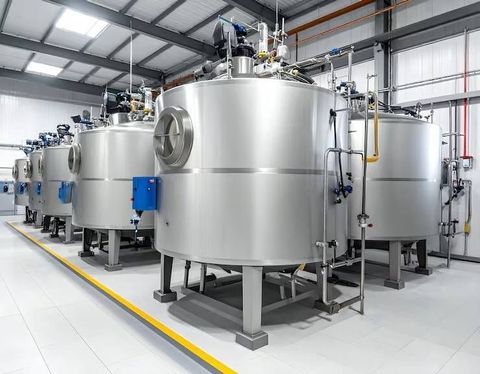
Industrial agitator tanks are processing vessels designed to mix liquids, combine materials, suspend solid particles, or maintain a consistent mixture during manufacturing.
They use rotating blades, paddles, impellers, or other mixing elements to move materials inside a tank. Industrial agitator tanks are used in chemical processing, food production, water treatment, pharmaceutical manufacturing, cosmetics, and various other industrial operations.
The development of mechanical mixing equipment emerged from the need to process larger quantities of materials with greater consistency. Early mixing methods relied on manual stirring and simple mechanical arrangements. As industrial production expanded, manufacturers developed motor-driven agitators, specialized tank designs, and automated control systems to manage different materials and processing requirements.
Modern industrial agitator tanks combine mechanical engineering, material selection, fluid movement, and process monitoring. Their design depends on the properties of the materials being mixed, including viscosity, density, temperature sensitivity, and the presence of suspended solids.
How Industrial Agitator Tanks Work
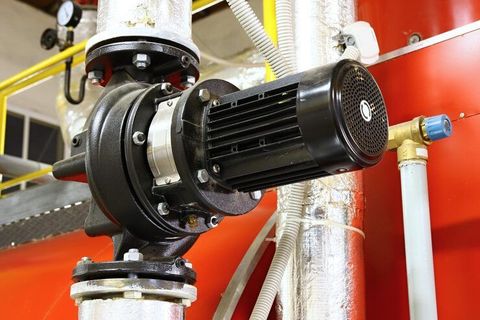
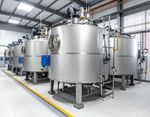
An industrial agitator tank generally consists of a vessel, a motor, a drive assembly, a shaft, and one or more mixing elements. The motor supplies rotational energy, which moves the impeller or blades through the material. This movement creates circulation and helps distribute ingredients throughout the vessel.
Different mixing elements produce different flow patterns. Some generate movement primarily along the vertical axis, while others create radial circulation or a combination of both. Engineers select the arrangement according to the intended process.
Common components include:
Tank vessel: Holds the material during processing.
Agitator motor: Supplies the energy required for mixing.
Shaft and impeller: Transfer rotational movement into the material.
Baffles: Reduce unwanted swirling and improve circulation.
Control panel: Allows operators to adjust operating parameters.
Temperature-control equipment: Helps maintain suitable processing conditions when required.
Main Types of Industrial Agitator Tanks
Industrial agitator tanks are available in several configurations. Each design addresses particular mixing requirements.
Tank or agitator type | Primary function | Common applications |
|---|---|---|
Top-entry agitator | Mixes materials using a shaft entering from above | Chemical processing and liquid blending |
Side-entry agitator | Creates circulation through a side-mounted assembly | Large storage and processing vessels |
Bottom-entry agitator | Introduces mixing action from the tank base | Specialized hygienic processing |
High-shear mixer | Produces intense local mixing | Emulsions and fine dispersions |
Paddle agitator | Moves materials at relatively low speeds | Thick mixtures and gentle blending |
Anchor agitator | Sweeps material near the vessel walls | Viscous liquids and heat-sensitive mixtures |
Selecting an appropriate configuration requires an understanding of material behavior, vessel dimensions, and production objectives.
Importance
Industrial agitator tanks play an important role in maintaining consistent processing conditions. In many manufacturing operations, ingredients must be distributed evenly to achieve the required composition, texture, concentration, or physical properties. Inadequate mixing can create uneven batches, material deposits, processing delays, and difficulties maintaining quality.
These challenges affect production operators, maintenance teams, quality-control personnel, equipment designers, and businesses that depend on reliable industrial processing.
Applications Across Different Industries
Industrial agitator tanks support a wide range of operations.
Chemical manufacturing: Mixing liquid ingredients, preparing solutions, and maintaining uniformity during reactions.
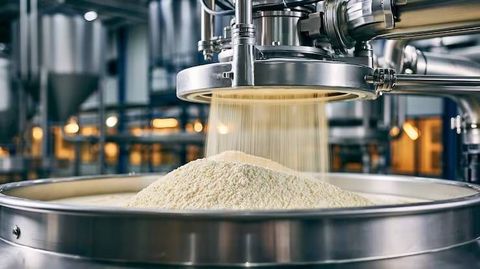
Food processing: Blending syrups, sauces, liquid ingredients, and other food materials under appropriate hygiene conditions.
Water treatment: Distributing treatment chemicals and keeping selected particles suspended.
Pharmaceutical manufacturing: Supporting controlled blending and preparation processes under applicable quality requirements.
Cosmetics production: Combining oils, water-based ingredients, and other components into uniform formulations.
Paint and coatings manufacturing: Dispersing pigments and maintaining consistent mixtures.
Pulp and paper processing: Mixing process chemicals and selected fibrous suspensions.
The required tank design differs between these applications. Food production may require cleanable surfaces and hygienic connections, whereas industrial chemical processing may require materials compatible with corrosive substances or elevated temperatures.
Addressing Common Processing Challenges
Several operational problems can affect mixing performance. Excessive agitation may introduce unwanted air, damage sensitive materials, or consume unnecessary energy. Insufficient agitation can leave stagnant regions, create concentration differences, or allow solids to settle.
Engineers address these challenges by considering impeller geometry, shaft speed, tank shape, liquid level, and material properties. Baffles can reduce rotational swirling, while suitable impeller placement can improve circulation.
Equipment maintenance also affects performance. Worn bearings, damaged seals, shaft misalignment, and deposits on mixing elements may cause vibration, leakage, or reduced mixing efficiency. Routine inspections help identify these conditions before they disrupt production.
Factors That Influence Tank Selection
Selecting industrial agitator tanks involves several engineering considerations.
Material viscosity: Thick materials may require different impellers and drive arrangements from low-viscosity liquids.
Tank capacity: Vessel dimensions influence circulation patterns and mixing requirements.
Operating temperature: Materials and seals must remain suitable under expected thermal conditions.
Chemical compatibility: Wetted components must withstand contact with the processed material.
Hygiene requirements: Certain industries need smooth surfaces, drainable designs, and validated cleaning procedures.
Energy consumption: Motor power and operating speed influence electrical demand.
Maintenance access: Equipment should allow appropriate inspection, cleaning, and component replacement.
These factors should be evaluated together rather than independently because a change in one operating condition can affect the performance of the entire mixing system.
Recent Updates
Industrial mixing technology continues to develop through improvements in automation, energy management, equipment monitoring, and mechanical design. Current trends emphasize better process visibility, more controlled operation, and integration with broader manufacturing systems.
Automation and Digital Process Monitoring
Modern agitator systems may incorporate programmable logic controllers, variable-frequency drives, temperature sensors, pressure sensors, and motor-load monitoring. These components allow operators to adjust mixing speed and observe operating conditions during production.
Variable-frequency drives are particularly useful when a process requires different speeds during separate stages. For example, a tank may operate slowly during initial ingredient addition and increase its speed during a later dispersion stage. The appropriate sequence depends on the material and process design.
Digital monitoring can also help maintenance teams identify changes in vibration, motor load, or operating temperature. Such information supports condition-based maintenance, although monitoring systems still require suitable installation, interpretation, and inspection procedures.
Energy-Efficient Mixing Systems
Energy management has become an important consideration in industrial engineering. Manufacturers are examining impeller geometry, motor efficiency, drive controls, and process scheduling to reduce unnecessary power consumption.
Efficient mixing does not simply mean operating at the lowest possible speed. The equipment must still achieve the required circulation, dispersion, or suspension. Engineers therefore evaluate energy use alongside mixing time, product consistency, and process performance.
Advanced Materials and Hygienic Design
Equipment design increasingly considers corrosion resistance, surface finish, cleanability, and compatibility with the processed material. Stainless steel remains common in applications requiring corrosion resistance and hygienic construction, although the appropriate grade depends on the operating environment.
Specialized coatings, improved sealing arrangements, and modular components may also be used where suitable. In hygienic production, cleaning-in-place systems can circulate cleaning solutions through connected equipment without requiring complete disassembly, provided the system is designed and validated for that purpose.
Simulation and Process Optimization
Computational fluid dynamics, commonly called CFD, allows engineers to model fluid movement inside a tank. These simulations can help evaluate circulation patterns, potential stagnant zones, and the effects of different impeller arrangements.
Simulation results depend on the assumptions, material properties, and operating conditions used in the model. Physical testing and operating data may still be needed to confirm that a proposed design performs as expected.
Laws or Policies
Industrial agitator tanks may be subject to equipment safety requirements, electrical regulations, workplace rules, environmental controls, and industry-specific manufacturing standards. Applicable requirements depend on the country, the industry, the substances being processed, and the operating conditions.
Equipment Safety and Engineering Requirements
Manufacturers and operators generally need to consider mechanical guarding, electrical protection, safe access, maintenance isolation, and pressure-related hazards where relevant. Tanks operating under pressure or vacuum may require additional engineering controls and conformity assessments.
In the United States, applicable Occupational Safety and Health Administration requirements can address machine guarding, electrical safety, and hazardous-energy control. International operations may also need to consider relevant ISO standards and local occupational safety frameworks.
Equipment used in potentially explosive atmospheres may require additional protection and assessment. The applicable requirements depend on the substances present, the likelihood of an explosive atmosphere, and the equipment's intended operating environment.
Environmental and Industry-Specific Rules
Industrial mixing operations can affect wastewater generation, chemical handling, energy use, and emissions. Facilities may need appropriate containment, ventilation, waste management, and discharge controls.
Food and pharmaceutical manufacturing may also require documented cleaning procedures, material traceability, and process controls. These measures help reduce contamination risks and support consistent production.
Regulatory obligations should be assessed for the specific facility and application. General engineering guidance does not replace a formal safety review or confirmation of applicable legal requirements.
Tools and Resources
Several engineering tools help evaluate industrial agitator tanks before installation and throughout their operating life.
Equipment Design and Process Calculation Tools
Useful tools include:
Agitator power calculators: Estimate the power required under specified mixing conditions.
Impeller speed calculators: Help assess rotational speed and related operating parameters.
Tank-volume calculators: Determine vessel capacity using tank dimensions and geometry.
Motor-sizing tools: Support preliminary evaluation of drive power and operating requirements.
CFD software: Models fluid movement and helps compare potential tank configurations.
Maintenance management systems: Record inspections, equipment history, maintenance activities, and component replacements.
Calculations require suitable input data. Material viscosity, density, impeller diameter, rotational speed, and tank geometry can all influence the results. Simplified calculators are useful for preliminary estimates, but complex processes may require specialist engineering analysis.
Inspection and Maintenance Resources
Equipment documentation should include operating instructions, maintenance schedules, equipment drawings, motor specifications, and relevant safety procedures.
A routine inspection program may cover:
Checking seals, bearings, shafts, and mounting arrangements.
Monitoring abnormal vibration, noise, and temperature.
Examining electrical connections and protective devices.
Inspecting impellers for corrosion, wear, or material buildup.
Confirming that guards and emergency controls remain functional.
Maintenance intervals should reflect the manufacturer's instructions, operating conditions, and the consequences of equipment failure.
FAQs
What are industrial agitator tanks used for?
Industrial agitator tanks mix liquids, suspend solids, disperse ingredients, and maintain uniform material distribution. They are used in chemical processing, food manufacturing, water treatment, cosmetics, and other industrial applications.
How do industrial agitator tanks differ from ordinary mixing tanks?
Industrial agitator tanks incorporate a mechanical mixing system designed for particular processing requirements. The arrangement may include specialized impellers, motors, baffles, speed controls, and temperature-management equipment.
Which agitator is suitable for high-viscosity materials?
Anchor agitators, paddle agitators, and certain helical mixing systems may suit high-viscosity materials. The appropriate choice depends on viscosity, tank geometry, operating temperature, and the desired mixing result.
How does automation improve industrial mixing processes?
Automation enables controlled adjustment of rotational speed and monitoring of operating conditions. When properly configured, it can improve process repeatability, provide operating records, and help identify developing equipment problems.
What maintenance do industrial agitator tanks require?
Typical maintenance includes inspecting seals, bearings, shafts, impellers, electrical systems, and protective devices. Cleaning requirements, lubrication intervals, and component inspections depend on equipment design and operating conditions.
Conclusion
Industrial agitator tanks are important components of modern manufacturing because they support material blending, suspension, dispersion, and controlled processing. Their performance depends on suitable equipment design, material compatibility, operating conditions, and routine maintenance. Automation, digital monitoring, energy management, and engineering simulation are helping manufacturers evaluate and manage mixing processes more precisely. Safe operation also requires appropriate engineering controls and compliance with applicable industry and workplace requirements.