Explore Industrial Ribbon Blender Powder Mixing Machines for Chemical and Food Processing
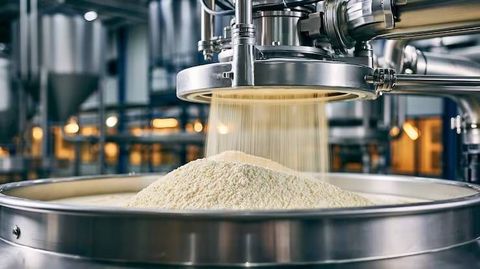
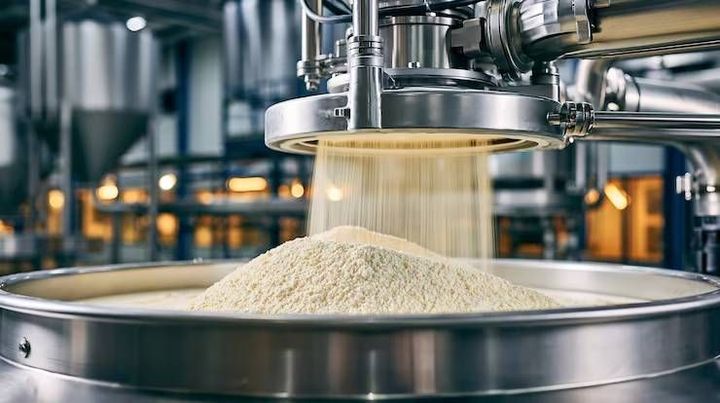
Industrial ribbon blender powder mixing machines are widely used in manufacturing environments where dry powders, granules, and certain semi-solid materials need to be combined into a consistent mixture.
These machines are commonly found in food production, chemical manufacturing, agricultural processing, construction materials, and pharmaceutical manufacturing. Their design focuses on moving materials through a mixing chamber to distribute ingredients evenly.
The development of industrial powder mixing equipment came from the need to handle larger quantities of materials than traditional manual mixing could manage efficiently. As manufacturing processes expanded, industries required equipment that could handle different ingredient volumes while maintaining repeatable mixing conditions. Ribbon blenders became a practical option because of their relatively straightforward construction and ability to handle a broad range of dry materials.
What Is an Industrial Ribbon Blender?
A ribbon blender is a mixing machine that typically consists of a horizontal U-shaped trough, a central rotating shaft, and helical metal ribbons. These ribbons move material in different directions, encouraging particles to circulate throughout the chamber. The arrangement helps combine ingredients that may differ in particle size, density, or composition.
Industrial ribbon blender powder mixing machines are available in different capacities and configurations. Some models include heating or cooling jackets, dust-control connections, liquid addition systems, and automated discharge arrangements. The appropriate configuration depends on the properties of the material, the required batch size, and the operating environment.
How Does a Ribbon Blender Work?
During operation, the shaft rotates and moves the ribbons through the material. The outer ribbon generally moves material toward one end of the trough, while the inner ribbon moves it in the opposite direction. This countercurrent movement creates circulation along the length of the chamber and helps distribute the ingredients.
A typical operating process includes the following stages:
Loading: Raw materials are introduced through an opening in the mixing chamber.
Mixing: The rotating ribbons move the materials through the chamber until the desired degree of uniformity is reached.
Discharge: The mixed material exits through a bottom discharge valve or another designated outlet.
Cleaning: Remaining material is removed according to the equipment design and the requirements of the next production batch.
Mixing time depends on particle characteristics, fill level, shaft speed, and the number of ingredients. A longer mixing period does not always produce a more uniform result, as some materials may separate again under certain conditions.
Importance
Industrial ribbon blender powder mixing machines play an important role in production processes that depend on consistent ingredient distribution. In food manufacturing, uneven mixing can affect flavor, texture, color, or the distribution of nutritional ingredients. In chemical production, an inconsistent mixture can affect the properties and performance of the finished material.
These challenges also influence product quality and manufacturing efficiency. Equipment that is appropriately selected and maintained can help reduce manual handling, improve batch repeatability, and support more controlled production processes. However, actual results depend on the material, machine configuration, and operating procedures.
Applications in Food Processing
Food manufacturers use ribbon blenders to combine dry ingredients for products such as seasoning blends, baking mixes, powdered drink preparations, and other dry food formulations. They can also be used for selected materials containing small amounts of liquid, provided the machine is designed for that purpose.
Food processing applications require careful attention to hygiene and ingredient protection. Equipment surfaces that contact food generally need to be compatible with the ingredients, resistant to corrosion, and accessible for cleaning. Manufacturers must also consider allergen management, moisture control, and the possibility of cross-contamination between batches.
Applications in Chemical Manufacturing
Chemical manufacturers use industrial powder mixing equipment to combine dry raw materials for applications such as detergents, mineral blends, industrial compounds, pigments, and selected specialty chemical formulations. The mixing process helps distribute ingredients before subsequent production stages, including packaging, granulation, or further processing.
Chemical materials can present different handling challenges. Some powders generate dust, absorb moisture, react with other substances, or require controlled temperature conditions. Machine selection therefore depends on material compatibility, operating hazards, ventilation needs, and the properties of the intended mixture.
Common Challenges Addressed by Ribbon Blenders
Ribbon blenders can help address several practical production issues:
Uneven distribution of ingredients across a batch.
Repetitive manual mixing requirements in larger production operations.
Dust generation during loading, mixing, and discharge.
Material loss caused by unsuitable transfer arrangements.
Production interruptions caused by difficult cleaning or discharge procedures.
These machines do not eliminate every mixing problem. Differences in particle size, bulk density, moisture content, and flow behavior can cause segregation or uneven distribution, so testing and process monitoring remain important.
Recent Updates
The industrial powder mixing sector continues to develop around automation, energy management, hygiene, and production monitoring. Recent industry trends through 2026 emphasize more controlled processing, improved equipment integration, and greater attention to traceability. The pace of adoption varies according to the size of the facility, its production requirements, and its investment priorities.
Automation and Process Monitoring
Modern ribbon blender systems may incorporate programmable logic controllers, variable-frequency drives, automated ingredient loading, and digital operating interfaces. These features can help operators manage mixing time, monitor shaft speed, and coordinate the blender with upstream and downstream equipment.
Some installations also integrate load cells and production software to record batch weights and operating parameters. Such systems can support process documentation and repeatability, although their effectiveness depends on sensor accuracy, software configuration, and maintenance.
Hygienic Design and Material Compatibility
Food manufacturers increasingly pay attention to equipment designs that simplify inspection and cleaning. Features may include accessible contact surfaces, suitable stainless steel construction, improved discharge arrangements, and seals selected for the material being processed.
Chemical facilities also consider corrosion resistance, dust containment, and compatibility with the substances being mixed. Stainless steel is used in many applications, but the appropriate grade depends on chemical exposure, cleaning agents, temperature, and other operating conditions.
Energy Efficiency and Dust Management
Manufacturers are also examining motor efficiency, drive controls, and equipment sizing to manage energy consumption. Variable-frequency drives can adjust shaft speed where the process permits, but the appropriate speed depends on material behavior and the mixing objective.
Dust-control systems, enclosed transfer points, and suitable extraction arrangements are important considerations in facilities handling fine powders. For combustible dusts, equipment design and operating procedures may also need specific fire and explosion prevention measures.
Ribbon Blender Types and Their Uses
| Blender configuration | Typical application | Main consideration |
|---|---|---|
| Standard horizontal ribbon blender | Dry powders and granules | General batch mixing |
| Stainless steel ribbon blender | Food and selected chemical applications | Material compatibility and cleanability |
| Jacketed ribbon blender | Processes requiring heating or cooling | Temperature control |
| Vacuum-compatible mixing system | Selected processes requiring reduced-pressure conditions | Seal design and process requirements |
| Automated ribbon blender | Repeated production batches | Controls, sensors, and system integration |
Not every ribbon blender supports every configuration. Special features may require substantial design changes, and their suitability must be assessed against the intended materials and operating conditions.
Laws or Policies
Industrial ribbon blender operations are affected by workplace safety rules, environmental requirements, and product-specific regulations. The applicable requirements depend on the country, the industry, the substances being processed, and whether the equipment is installed in a food facility, chemical plant, or another manufacturing environment.
Food Processing Requirements in India
In India, food businesses operate under the Food Safety and Standards Act, 2006, and applicable regulations administered by the Food Safety and Standards Authority of India (FSSAI). These requirements address food safety, hygiene, handling, and manufacturing practices.
Equipment used in food production should be suitable for contact with the relevant ingredients and should support appropriate cleaning and contamination control. Food businesses must determine which licensing, registration, hygiene, and documentation requirements apply to their activities.
Workplace Safety and Industrial Equipment
Manufacturing facilities need to assess hazards associated with rotating shafts, moving ribbons, electrical systems, lifting operations, and material handling. Appropriate machine guarding, emergency stops, isolation procedures, and maintenance practices help control these risks.
In India, applicable occupational safety requirements may include provisions under the Occupational Safety, Health and Working Conditions Code, 2020, and relevant rules or state requirements, subject to their commencement and applicability. Facilities should verify the current legal position for their location and type of operation.
Environmental and Combustible Dust Considerations
Factories may need to comply with applicable pollution-control requirements for airborne emissions, industrial waste, and wastewater. In India, relevant requirements can involve the Central Pollution Control Board, state pollution control boards, and applicable environmental legislation.
Where powders can form combustible dust clouds, facilities should assess ignition sources, dust accumulation, ventilation, and explosion protection requirements. Equipment intended for hazardous areas may need to meet applicable electrical and machinery standards. Compliance depends on the specific hazard assessment and local rules rather than the blender type alone.
Tools and Resources
Several practical resources help manufacturers evaluate industrial ribbon blender powder mixing machines and organize production requirements. The appropriate tools depend on the materials, operating scale, and regulatory environment.
Equipment Selection and Process Calculations
A batch-capacity worksheet can help estimate the quantity of material handled in each production cycle. Calculations should distinguish between the blender's total chamber volume and its usable working volume, since the material generally requires space to circulate.
A basic selection worksheet can record:
Material names, particle sizes, bulk densities, and moisture characteristics.
Required batch weight and production frequency.
Mixing uniformity requirements and acceptable variation.
Contact-material requirements and cleaning procedures.
Motor specifications, available electrical supply, and installation space.
Dust extraction, temperature control, and discharge requirements.
These details provide a consistent basis for comparing equipment configurations and assessing production needs.
Quality Control and Documentation
Sampling plans and laboratory testing can help determine whether a mixture meets the required uniformity standard. Samples may be collected from different locations or discharge stages, depending on the material and validation procedure.
Manufacturers can also maintain batch records containing ingredient weights, mixing duration, operating settings, cleaning status, and quality-control results. Standard operating procedures and maintenance logs support consistent operations and make it easier to investigate production deviations.
Regulatory and Technical Information
The FSSAI website provides Indian food safety regulations and related guidance. The Bureau of Indian Standards (BIS) publishes information on relevant Indian standards, while the Central Pollution Control Board provides environmental information and applicable regulatory guidance.
Equipment documentation from the machine manufacturer can provide rated capacity, installation requirements, operating limits, maintenance instructions, and material compatibility information. These documents should be considered alongside facility-specific risk assessments and applicable regulations.
FAQs
What Is an Industrial Ribbon Blender Powder Mixing Machine Used For?
An industrial ribbon blender powder mixing machine combines dry powders and granules into a more uniform mixture. Common applications include food ingredients, detergents, minerals, pigments, and selected chemical formulations.
How Does a Ribbon Blender Mix Powder?
A rotating shaft carries inner and outer helical ribbons that move material in opposing directions. This movement circulates ingredients through the mixing chamber and helps distribute them throughout the batch.
Which Ribbon Blender Is Suitable for Food and Chemical Processing?
The suitable machine depends on ingredient properties, batch volume, hygiene requirements, and chemical compatibility. Food applications may require hygienic contact surfaces, while chemical applications may require corrosion resistance, dust containment, or specialized safety features.
What Factors Affect Ribbon Blender Mixing Performance?
Performance depends on particle size, density, moisture, fill level, ribbon geometry, shaft speed, and mixing duration. Material testing and representative sampling help establish operating conditions for a particular formulation.
What Safety Features Should an Industrial Ribbon Blender Have?
Relevant features may include shaft guards, interlocked access covers, emergency stops, electrical protection, and safe maintenance isolation. Additional dust-control or explosion-protection measures may be necessary when processing hazardous or combustible powders.
Conclusion
Industrial ribbon blender powder mixing machines support the preparation of consistent powder and granule mixtures across food processing, chemical manufacturing, and other industries. Their performance depends on material characteristics, equipment configuration, operating conditions, and appropriate quality controls. Automation, hygienic design, energy management, and dust safety remain important considerations in modern installations. Applicable food safety, workplace safety, and environmental requirements also influence equipment design and daily operation.