Industrial Machine Development Explained With Design, Engineering, and Manufacturing Processes
Industrial machine development is the process of planning, designing, engineering, building, and testing machines used in manufacturing and other industrial activities.
These machines perform tasks such as cutting metal, shaping materials, mixing ingredients, moving products, packaging goods, and assembling components. Industrial machine development combines mechanical engineering, electrical systems, automation, and manufacturing methods to create equipment suited to specific production needs.
The origins of industrial machinery are closely connected to the Industrial Revolution, when steam-powered equipment and mechanized production changed how goods were manufactured. Over time, advances in electricity, materials science, computer technology, and automation expanded the capabilities of industrial equipment. Modern machines can combine mechanical parts, sensors, software, and control systems within a single production unit.
Today, industrial machine development involves more than constructing physical equipment. Engineers must understand the intended application, production environment, operating conditions, safety requirements, and expected performance. These factors influence the machine's design, the materials selected, the manufacturing methods used, and the procedures followed during testing.
What Industrial Machine Development Involves
The development process usually begins with identifying a manufacturing problem or production requirement. Engineers then translate that requirement into technical specifications describing the machine's functions, dimensions, operating speed, capacity, control systems, and safety features.
The main stages commonly include:
Requirement analysis: Identifying the task, production conditions, and operating limitations.
Conceptual design: Preparing initial ideas, sketches, and possible machine configurations.
Engineering design: Developing detailed drawings, calculations, component specifications, and digital models.
Prototype development: Constructing an early version to evaluate its operation.
Manufacturing and assembly: Producing individual components and combining them into a working machine.
Testing and refinement: Checking performance, reliability, safety, and compliance with applicable requirements.
Not every project follows an identical sequence. Some machines require extensive prototype testing, while simpler equipment may be developed through established designs and controlled modifications.
Importance
Industrial machine development plays an important role in modern manufacturing because many products depend on repeatable, controlled production processes. Food packaging, construction materials, automotive components, electronic devices, and household products may all involve specialized machinery at different production stages.
Well-planned equipment can help manufacturers maintain consistent output, reduce avoidable material waste, and manage repetitive operations. Automated systems can also handle tasks that require precise positioning or expose workers to heat, heavy loads, dust, or moving components.
The effects extend beyond factories. Industrial equipment influences the availability, consistency, and production methods of products used in everyday life. It also affects maintenance teams, machine operators, engineers, factory managers, and organizations responsible for workplace safety.
Problems Addressed by Machine Engineering
Industrial engineering teams address several practical challenges during development. One is production inconsistency, which can occur when equipment cannot maintain the required dimensions, mixing quality, temperature, or operating speed.
Another challenge is the integration of different machine components. Motors, gearboxes, sensors, conveyors, and controllers must operate together correctly. If one component does not match the requirements of the wider system, it may cause delays, interruptions, or quality problems.
Energy consumption and material use are additional considerations. Engineers evaluate motor efficiency, friction, heat generation, component durability, and production waste to understand how a machine performs throughout its operating life.
Industries That Use Industrial Machinery
Different industries require different equipment configurations.
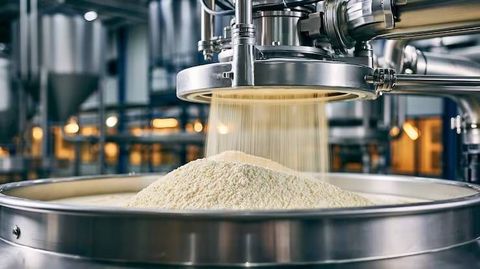
Food processing: Mixing machines, filling systems, ovens, and packaging equipment.
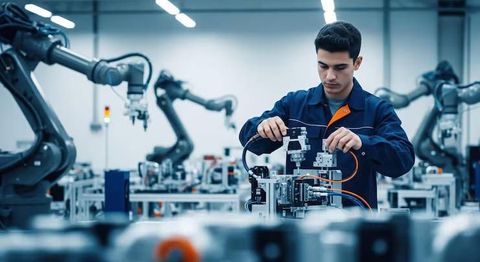
Automotive manufacturing: Robotic assembly systems, welding equipment, presses, and inspection machines.
Construction materials: Crushers, concrete batching systems, cutting equipment, and material handling units.
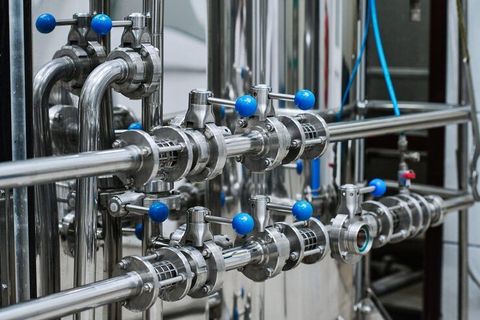
Pharmaceutical and chemical manufacturing: Controlled mixing, dosing, filtration, and processing equipment designed for the relevant materials and regulations.
Electronics manufacturing: Precision placement machines, soldering equipment, and automated inspection systems.
The design requirements vary according to the material being processed, the surrounding environment, production volume, and applicable safety controls.
Recent Updates
Industrial machine development continues to change as manufacturers adopt digital engineering, connected equipment, and more flexible production systems. Recent industry trends emphasize better visibility into machine performance, more efficient design workflows, and improved coordination between physical equipment and software.
Digital Design and Simulation
Computer-aided design (CAD) software allows engineers to create detailed three-dimensional models before components are manufactured. These models help teams examine dimensions, component placement, clearances, and assembly requirements.
Computer-aided engineering (CAE) tools can simulate forces, heat transfer, vibration, and fluid movement under selected conditions. Simulation helps identify potential design problems earlier, although physical testing may still be necessary to confirm actual performance.
Digital twins are another developing approach. A digital twin is a digital representation of a physical machine or process that can use operating data to help engineers understand behavior, monitor performance, or evaluate changes.
Automation and Artificial Intelligence
Industrial automation combines programmable controllers, sensors, robotics, and software to coordinate production tasks. More recent systems increasingly use data analysis and artificial intelligence to identify unusual operating patterns, support quality inspection, and assist with maintenance planning.
Predictive maintenance is one example. By examining information such as vibration, temperature, operating cycles, and energy use, maintenance teams may identify signs of developing equipment problems. The accuracy of these assessments depends on sensor quality, data availability, and the suitability of the analytical method.
Flexible Manufacturing and Energy Efficiency
Manufacturers are also exploring modular machinery that can be adapted to different products or production arrangements. Replaceable tooling, adjustable controls, and standardized interfaces can make certain equipment easier to reconfigure.
Energy efficiency remains another important design consideration. Engineers may assess motor selection, variable-speed drives, compressed-air use, heat recovery, and standby power requirements. The appropriate approach depends on the machine's workload and operating environment.
| Development trend | Main application | Potential benefit |
|---|---|---|
| CAD and simulation | Digital design evaluation | Earlier identification of design issues |
| Industrial sensors | Condition monitoring | Improved visibility into equipment operation |
| Robotics and automation | Repetitive production tasks | More consistent process control |
| Digital twins | Equipment analysis | Better understanding of machine behavior |
| Energy-efficient drives | Motor control | Reduced unnecessary energy consumption |
| Modular machine design | Flexible production lines | Easier configuration changes |
These developments do not eliminate engineering challenges. Integration, cybersecurity, employee training, data quality, and compatibility with older equipment remain important considerations.
Laws or Policies
Industrial machine development is influenced by machinery safety requirements, electrical regulations, environmental rules, and workplace protection standards. The exact requirements depend on the country, machine category, intended use, and location of installation.
In India, machinery manufacturers and industrial operators must consider applicable central and state laws, technical standards, and sector-specific requirements. The regulatory framework can include workplace safety provisions, electrical safety requirements, environmental obligations, and rules governing particular industrial activities.
Machinery Safety and Workplace Requirements
The Occupational Safety, Health and Working Conditions Code, 2020, forms part of India's framework for occupational safety and working conditions. Its implementation and applicable provisions should be assessed alongside relevant rules and notifications in force for the establishment concerned.
Machine designs commonly incorporate physical guards, emergency stops, interlocks, warning systems, and procedures for isolating hazardous energy during maintenance. The necessary safeguards depend on the risks identified through a machine-specific assessment.
Relevant technical standards may address electrical equipment, industrial control systems, mechanical safety, and risk assessment. The Bureau of Indian Standards (BIS) publishes Indian Standards, including standards relevant to machinery and industrial engineering. Whether a particular standard or certification is mandatory depends on the equipment and applicable regulatory provisions.
Environmental and Energy Considerations
Industrial equipment may also be subject to requirements involving emissions, wastewater, hazardous materials, noise, and waste management. Depending on the facility and activity, permissions or compliance obligations involving the Central Pollution Control Board and the relevant State Pollution Control Board may apply.
Energy-related requirements can influence the selection of motors, electrical systems, and operating controls. The Bureau of Energy Efficiency provides information about energy conservation and efficiency programs in India. Applicable obligations should be verified for the specific equipment, facility, and industry rather than assumed to be identical across all projects.
Tools and Resources
Industrial machine development uses a combination of engineering software, measurement equipment, project documentation, and technical references. The appropriate tools depend on whether the work involves concept development, detailed design, prototype construction, production planning, or equipment evaluation.
Engineering Design and Analysis Tools
CAD platforms help engineers prepare machine drawings, assemblies, and three-dimensional models. CAE software supports calculations and simulations involving structural loads, vibration, thermal behavior, and fluid movement.
Computer-aided manufacturing (CAM) tools can translate approved designs into instructions for compatible manufacturing equipment. Programmable logic controller (PLC) programming environments are used to develop and test control sequences for industrial automation.
Examples of commonly used engineering platforms include Autodesk Fusion, SOLIDWORKS, and Siemens engineering software. Their functions and capabilities differ, so project teams select tools according to technical requirements and compatibility.
Testing and Measurement Equipment
Physical testing helps establish whether a machine performs as intended. Common instruments include:
Calipers and micrometers: Measuring component dimensions.
Torque wrenches and load cells: Checking specified tightening forces or applied loads.
Vibration analyzers: Examining vibration patterns in rotating equipment.
Thermal sensors: Monitoring temperatures during operation.
Power analyzers: Evaluating electrical consumption and power characteristics.
Measurement results should be compared with defined engineering specifications and suitable acceptance criteria.
Documentation and Planning Resources
Structured documentation helps coordinate engineering, manufacturing, assembly, and maintenance activities. Common records include technical requirement documents, engineering drawings, bills of materials, risk assessments, inspection checklists, and testing reports.
Project planning software can help teams track development stages, component availability, design revisions, and testing activities. Standards catalogs and government regulatory websites provide information about technical requirements and applicable policies.
FAQs
What is industrial machine development?
Industrial machine development is the process of defining requirements, designing equipment, engineering its components, manufacturing and assembling the machine, and testing it for its intended application.
What are the main stages of industrial machine design and manufacturing?
The main stages generally include requirement analysis, concept development, engineering design, prototype construction, component manufacturing, assembly, testing, and refinement. The sequence varies according to the complexity of the equipment.
Which technologies are used in industrial machine development?
Common technologies include CAD, CAE, CAM, PLC controls, industrial sensors, robotics, simulation software, and data analysis systems. The technologies selected depend on the machine's purpose and operating requirements.
Which Indian regulations affect industrial machine manufacturing?
Applicable requirements may involve workplace safety, electrical safety, environmental protection, technical standards, and industry-specific rules. The relevant obligations depend on the equipment, installation, and current regulations.
How does automation influence industrial machinery engineering?
Automation allows machines to perform coordinated tasks using sensors, controllers, robotics, and software. It can improve process consistency and monitoring, but it also introduces requirements for system integration, operator training, cybersecurity, and maintenance.
Conclusion
Industrial machine development brings together design, engineering, manufacturing, automation, and testing to create equipment for different industrial applications. Digital design tools, connected sensors, and flexible production systems are influencing how modern machines are developed and maintained. Safety, regulatory compliance, energy use, and reliable operation remain important considerations throughout the process. Understanding these stages provides a clearer picture of how industrial equipment moves from an initial concept to a functioning production system.