Guide to Sanitary Stainless Steel Valves for Modern Food Processing Systems
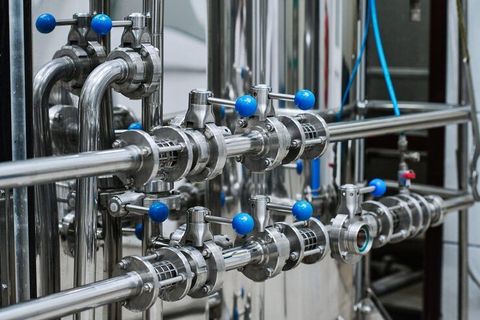
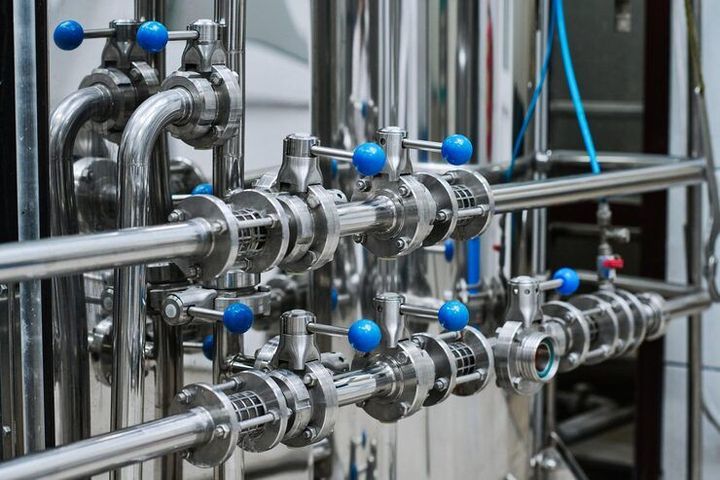
Sanitary stainless steel valves are specialized components used to control the movement of liquids, gases, and certain food ingredients through processing equipment. They are designed for applications where cleanliness, product quality, and hygiene are important.
Common materials include stainless steel grades that resist corrosion and tolerate repeated cleaning.
These valves are found in dairy plants, beverage production facilities, commercial food manufacturing units, and other processing environments. They help regulate the movement of milk, water, syrups, edible oils, sauces, and liquid food ingredients through pipelines and tanks.
How These Valves Developed
As food manufacturing expanded from small-scale production to automated industrial operations, manufacturers needed equipment that could handle larger quantities while maintaining consistent hygiene. Traditional valves were not always suitable for processes involving frequent washing, product changes, and strict sanitation requirements.
Sanitary valve designs developed to address these challenges through smoother internal surfaces, suitable sealing materials, and construction features that reduce areas where food residues can accumulate. Modern designs also accommodate automated controls, cleaning systems, and integrated production lines.
Common Types of Sanitary Valves
Different valve designs perform different functions within a food processing system.
Butterfly valves: Use a rotating disc to regulate or stop flow. Their compact construction makes them suitable for many liquid-handling applications.
Ball valves: Use a rotating ball with a passage through its center to open or close a pipeline. Sanitary versions are designed for hygienic processing environments.
Diaphragm valves: Use a flexible diaphragm to control flow while separating the operating mechanism from the process fluid.
Check valves: Allow flow in one direction and help prevent unwanted reverse movement.
Mixproof valves: Use specialized internal arrangements to separate different process fluids within suitable pipeline configurations.
Control valves: Adjust flow rates or pressure in response to manual settings or automated control signals.
The appropriate design depends on the product being handled, operating conditions, cleaning procedures, and the required level of process separation.
Importance
Maintaining Food Hygiene
Sanitary stainless steel valves play an important role in reducing contamination risks during food production. Their internal surfaces and sealing arrangements are designed to support cleaning and minimize places where food particles, moisture, or microorganisms may remain.
Hygienic construction alone does not ensure that a system is clean. Correct installation, validated cleaning procedures, appropriate inspection, and suitable operating practices are also necessary.
Supporting Consistent Production
Food processing frequently involves moving ingredients between storage tanks, blending vessels, heating equipment, filtration units, and filling lines. Valves help direct these materials through the correct pathways and regulate when flow begins or stops.
Reliable flow control also helps maintain repeatable processing conditions. For example, a beverage plant may use automated valves to direct liquid through different stages without requiring operators to manually adjust every pipeline connection.
Protecting Product Quality
Different food products have different handling requirements. Dairy products may be sensitive to contamination, while sauces and syrups can leave residues that require careful cleaning. Some ingredients are also sensitive to temperature, pressure, or prolonged contact with unsuitable materials.
Stainless steel valves with appropriate seals and surface finishes can help maintain suitable processing conditions. Material selection must consider the product's chemical properties, temperature, and cleaning agents to reduce corrosion, leakage, and unwanted product interactions.
Reducing Operational Challenges
Poorly selected valves may contribute to leakage, uneven flow, difficult cleaning, or interruptions during production. In systems handling several products, inadequate separation can also create cross-contamination risks.
Valve selection therefore affects maintenance planning, production scheduling, sanitation procedures, and equipment integration. Facilities generally consider the complete pipeline system rather than evaluating each valve as an isolated component.
Recent Updates
Automation and Digital Process Control
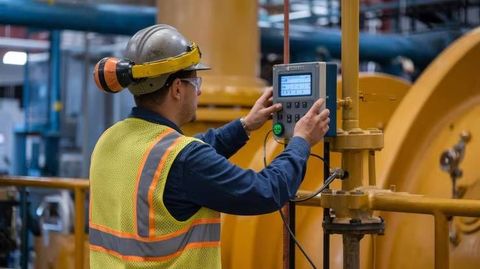
Modern food processing facilities increasingly integrate valves with programmable logic controllers, sensors, and centralized monitoring systems. Automated valve assemblies can receive operating commands and report their positions to control equipment.
This arrangement helps operators coordinate product transfer, tank filling, and cleaning cycles. Depending on the design, position feedback and fault alerts can also help identify operating problems before they cause larger interruptions.
Hygienic Design and Cleaning Systems
Recent equipment development continues to emphasize cleanability, reduced residue retention, and compatibility with cleaning-in-place systems. Cleaning in place, commonly called CIP, circulates suitable cleaning solutions through equipment without requiring routine dismantling of every pipeline component.
Not every valve is suitable for every CIP procedure. Internal geometry, seal compatibility, flow conditions, and cleaning parameters must match the application. Some assemblies may require additional inspection or dismantling to verify cleanliness.
Material Traceability and Quality Documentation
Food manufacturers increasingly pay attention to material identification, production records, and equipment documentation. Information about stainless steel grades, seal materials, surface finishes, and manufacturing specifications can support equipment qualification and maintenance planning.
Documentation is particularly relevant when a facility operates under a formal food safety management system or supplies products to markets with specific regulatory requirements.
Comparison of Common Valve Designs
| Valve type | Main function | Typical consideration |
|---|---|---|
| Butterfly valve | Opens, closes, or regulates flow | Compact design and suitable pipeline dimensions |
| Ball valve | Opens or closes flow | Internal cleanability and product compatibility |
| Diaphragm valve | Controls flow through a flexible barrier | Diaphragm material and operating conditions |
| Check valve | Limits reverse flow | Correct orientation and pressure requirements |
| Mixproof valve | Separates compatible process pathways | Internal configuration and leakage detection |
| Control valve | Adjusts flow or pressure | Control accuracy and automation requirements |
These descriptions are general. Actual performance depends on the particular design, operating conditions, and manufacturer specifications.
Laws or Policies
Food Safety Requirements in India
In India, food processing activities fall under the Food Safety and Standards Act, 2006, and applicable regulations established by the Food Safety and Standards Authority of India (FSSAI). These requirements address food safety, hygienic handling, manufacturing practices, and the responsibilities of food businesses.
Sanitary stainless steel valves support hygienic equipment design, but installing them does not automatically establish regulatory compliance. A processing facility must consider its complete production environment, including water quality, cleaning procedures, employee hygiene, equipment maintenance, and contamination prevention.
Hygiene and Manufacturing Practices
Food businesses need to follow applicable requirements for sanitary conditions and safe production. Equipment that contacts food should be appropriate for its intended use and maintained in a condition that does not introduce contamination.
When selecting valves, relevant considerations include:
Suitability of the metal and sealing materials for the food product.
Resistance to corrosion under normal production and cleaning conditions.
Accessibility for inspection and effective cleaning.
Prevention of leakage and unwanted mixing between product streams.
Maintenance records and documented sanitation procedures.
The precise obligations depend on the type of food business, its activities, and the regulations applicable to its operations.
International Standards and Market Requirements
Facilities supplying international markets may also need to consider relevant hygienic design standards and customer specifications. Examples include the 3-A Sanitary Standards used in certain hygienic processing applications and European Union food-contact material requirements, including Regulation (EC) No 1935/2004 where applicable.
The EHEDG guidelines are also used as technical references for hygienic equipment design. These standards, guidelines, and legal requirements are not interchangeable, and their applicability varies by location and equipment category.
A valve described as sanitary should therefore be evaluated against the actual requirements of the intended application rather than relying on its product description alone.
Tools and Resources
Valve Selection and Sizing Tools
Valve sizing tools help engineers estimate the appropriate valve capacity for a given flow rate, pressure difference, and fluid property. For food processing, viscosity and temperature can influence flow behavior, particularly when handling thick sauces, concentrated syrups, or other viscous ingredients.
Basic selection information usually includes pipeline diameter, required flow rate, operating pressure, product temperature, and the cleaning method. More complex systems may require engineering calculations to account for pressure losses and process conditions.
Material Compatibility References
Stainless steel grades such as 304 and 316 are widely used in food processing equipment, although their suitability differs by application. Grade 316 generally offers improved resistance to certain corrosive environments because of its molybdenum content.
Seal materials also require careful evaluation. Elastomers such as EPDM, silicone, and fluoropolymer-based materials have different temperature limits, chemical compatibility characteristics, and mechanical properties. The appropriate choice depends on the food product and the cleaning chemicals used.
Helpful Technical Resources
Several types of resources help organizations understand sanitary valve specifications and applicable requirements:
FSSAI resources: Provide information about Indian food safety regulations, licensing, and hygiene requirements.
3-A Sanitary Standards: Offer hygienic design standards and related technical information for applicable processing equipment.
EHEDG publications: Explain hygienic design principles and equipment evaluation approaches.
Manufacturer technical documents: Describe valve dimensions, material grades, pressure limits, sealing arrangements, and cleaning compatibility.
Maintenance and inspection templates: Help record leakage checks, seal replacement, cleaning verification, and equipment inspections.
These resources support informed equipment evaluation, but individual systems still require assessment based on their actual operating conditions.
FAQs
What are sanitary stainless steel valves used for?
Sanitary stainless steel valves control liquid movement in food and beverage processing systems. They are commonly used in dairy production, beverage manufacturing, sauce preparation, and ingredient transfer.
Which stainless steel grade is suitable for food processing valves?
Grades 304 and 316 are common choices. Grade 304 suits many general applications, while grade 316 may be more appropriate where additional corrosion resistance is required. The final selection depends on the product, cleaning chemicals, and operating environment.
How do sanitary valves support food safety?
They use hygienic construction features, suitable contact materials, and sealing arrangements that support effective cleaning. Food safety also depends on proper installation, sanitation, inspection, and operating procedures.
What is the difference between a sanitary butterfly valve and a ball valve?
A butterfly valve regulates flow using a rotating disc, while a ball valve uses a rotating ball with a flow passage. Their suitability depends on the required flow control, cleaning needs, pipeline configuration, and product characteristics.
Are sanitary stainless steel valves compatible with automated cleaning systems?
Some are designed for cleaning-in-place systems, but compatibility varies by model. Internal design, seal materials, cleaning temperatures, chemical concentrations, and flow conditions all influence cleaning effectiveness.
Conclusion
Sanitary stainless steel valves are important components in modern food processing systems because they regulate product movement and support hygienic production practices. Different valve designs address specific needs, including flow control, reverse-flow prevention, and separation between process streams. Material compatibility, cleanability, automation requirements, and applicable food safety rules all influence equipment selection. Proper installation, cleaning, inspection, and maintenance remain essential parts of a hygienic processing system.