Industrial Waterjet Cutting Machines Guide With Modern Manufacturing and Material Processing Techniques
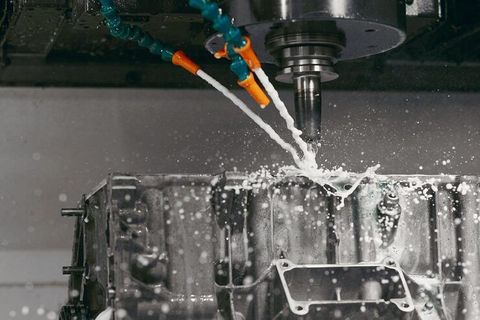
Industrial waterjet cutting machines are manufacturing systems that use a high-pressure stream of water to cut materials into specific shapes and dimensions.
Depending on the material, the stream may contain an abrasive substance that helps cut hard metals, stone, ceramics, and other dense materials. These machines are used in manufacturing facilities, engineering workshops, construction material processing, and industrial fabrication.
Waterjet cutting developed from early applications of high-pressure water for material removal and excavation. As pump technology, computer controls, and precision motion systems advanced, waterjet equipment became suitable for detailed industrial cutting operations. Modern systems combine pressurized water, specialized nozzles, cutting tables, and computer numerical control (CNC) technology.
The primary purpose of an industrial waterjet cutting machine is to separate materials without relying on a conventional cutting blade or a heat-based cutting process. This makes the technology relevant for applications where material shape, edge condition, and heat sensitivity are important considerations.
How Waterjet Cutting Technology Works
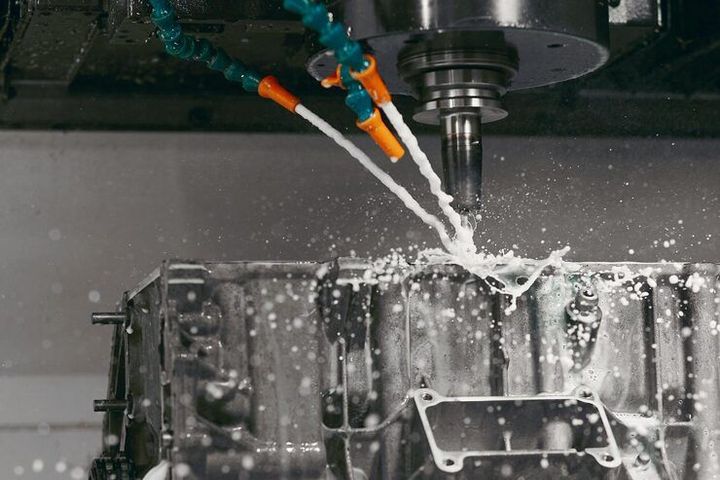
A waterjet cutting system uses a pump to generate high water pressure. The water travels through specialized plumbing and exits through a small nozzle, producing a concentrated stream capable of cutting compatible materials.
Abrasive waterjet systems introduce particles, commonly garnet, into the water stream. These particles increase the stream's ability to cut hard materials such as stainless steel, aluminum, and stone. Pure waterjet systems generally handle softer materials, including rubber, foam, paper, and certain textiles.
The cutting process typically involves several stages:
Water pressurization: A pump raises the water pressure to the operating level required by the application.
Stream formation: A precision nozzle directs the water into a narrow, concentrated stream.
Abrasive mixing: When required, abrasive particles combine with the water inside a mixing chamber.
Material separation: The stream follows a programmed path to create the intended shape.
Waste collection: A cutting tank captures the water, removed material, and abrasive residue.
Main Types of Industrial Waterjet Cutting Machines
Different waterjet systems are designed for different materials, production volumes, and cutting requirements.
Pure waterjet machines use water without added abrasive particles. They are suitable for softer materials that can be separated by a concentrated stream.
Abrasive waterjet machines combine water with abrasive particles for cutting metals, glass, ceramics, composites, and stone. These systems are common in industrial fabrication because they can process a broad range of materials.
CNC waterjet cutting machines use computer-controlled movement to follow digital cutting paths. Operators can prepare designs using computer-aided design (CAD) software and translate them into machine instructions through computer-aided manufacturing (CAM) software.
Five-axis waterjet machines add movement capabilities that support angled cuts and more complex shapes. Their suitability depends on the machine configuration, material thickness, and accuracy requirements.
Importance
Industrial waterjet cutting machines are important because manufacturers regularly process materials with different thicknesses, hardness levels, and physical properties. A method suitable for thin rubber may not work efficiently for thick steel or brittle stone. Waterjet systems provide a flexible processing option when conventional mechanical cutting or heat-based techniques present limitations.
The technology is relevant to aerospace component manufacturing, automotive fabrication, architectural materials, industrial machinery, electronics, and specialized construction projects. It also supports smaller production runs where multiple shapes must be cut from different material types.
Material Processing Without a Conventional Heat Source
One important characteristic of waterjet cutting is that it does not use a focused thermal beam to remove material. This reduces the risk of heat-related changes, such as heat-affected zones and thermal distortion, compared with processes such as plasma or laser cutting.
However, waterjet cutting is not automatically suitable for every material. The stream can cause surface damage, delamination, or edge irregularities in some composites and layered products if the cutting parameters are not appropriate.
Manufacturing Applications Across Industries
Industrial waterjet systems support a wide range of production activities.
Metal fabrication: Cutting steel plates, aluminum sheets, brackets, and machine components.
Automotive manufacturing: Producing selected interior components, gaskets, panels, and prototype parts.
Aerospace engineering: Processing certain structural materials and composite components where approved procedures permit.
Construction and architecture: Shaping stone, ceramic tiles, glass, and decorative panels.
Industrial equipment: Manufacturing seals, insulation components, and specialized machine parts.
Product development: Creating prototypes and custom-shaped components from sheet materials.
Comparing Waterjet Cutting With Other Methods
Manufacturers generally compare cutting technologies according to material compatibility, edge quality, production speed, and operating requirements.
Feature | Waterjet cutting | Laser cutting | Plasma cutting |
|---|---|---|---|
Cutting method | High-pressure water, sometimes with abrasive | Concentrated light energy | Electrically generated plasma |
Heat-related effects | Minimal thermal impact | Heat-affected zone may occur | Heat-affected zone may occur |
Common materials | Metals, stone, glass, composites, and soft materials, depending on system | Many metals and selected nonmetals | Primarily electrically conductive materials |
Thick material processing | Depends on material and machine capacity | Depends on laser power and material | Often suitable for thick conductive metals |
Edge characteristics | Depends on speed, thickness, and settings | Depends on beam quality and settings | Depends on torch settings and cutting conditions |
Process waste | Water, removed material, and possible abrasive residue | Scrap material and process emissions | Scrap material, fumes, and slag |
No single method is appropriate for every manufacturing task. Waterjet cutting may be useful when thermal effects must be minimized, while laser cutting may suit high-speed processing of certain sheet materials. Plasma cutting is often considered for conductive metal plates and related fabrication work.
Recent Updates
Modern industrial waterjet cutting is increasingly shaped by automation, digital design integration, improved pump controls, and production monitoring. These developments focus on making machine operation more consistent and improving how manufacturers plan, monitor, and document cutting processes.
CNC Automation and Digital Manufacturing
Current waterjet cutting systems commonly integrate CNC controllers with CAD and CAM software. Digital workflows allow operators to import component designs, arrange multiple parts on a sheet, and generate cutting paths with fewer manual programming steps.
Nesting software helps position parts to use available material efficiently. Its calculations can consider component dimensions, cutting gaps, material direction, and restrictions on how parts may be arranged. Actual material utilization depends on the design, stock dimensions, and production requirements.
Pump Efficiency and Process Control
Advances in pump design and control systems have increased attention to pressure stability, energy consumption, and maintenance monitoring. Modern equipment may include sensors that track pressure, temperature, operating hours, and selected component conditions.
Some systems also support remote diagnostics and production data collection. These capabilities can help maintenance teams identify irregular operating conditions, although sensor alerts do not replace physical inspection or manufacturer maintenance procedures.
Abrasive Management and Water Recycling
Abrasive consumption and wastewater handling remain important considerations in waterjet operations. Manufacturers increasingly evaluate abrasive delivery controls, sediment separation, water filtration, and recycling arrangements to manage material use and industrial waste.
Water recycling can reduce the need for fresh water in suitable installations. However, filtration requirements, contamination levels, local discharge rules, and the characteristics of the cutting process determine whether water can be reused.
Current Technology Trends
Several developments influence modern waterjet manufacturing:
Automated material handling: Supports the movement and positioning of sheets and plates.
Improved cutting software: Helps coordinate cutting paths, machine movement, and part nesting.
Condition monitoring: Tracks selected operating parameters to support maintenance planning.
Multi-axis cutting: Enables angled edges and more complex geometries.
Production data integration: Connects machine information with broader manufacturing monitoring systems.
These features vary by equipment model and configuration. Their practical value depends on the material being processed, production volume, operator skills, and the wider manufacturing workflow.
Laws or Policies
Industrial waterjet cutting machines are affected by workplace safety requirements, machinery standards, environmental rules, and electrical safety provisions. The exact requirements depend on the country, facility type, equipment design, and materials being processed.
Workplace Safety and Machine Operation
In India, industrial facilities may be subject to applicable occupational safety and health legislation, factory-related requirements, electrical safety provisions, and relevant state rules. The Occupational Safety, Health and Working Conditions Code, 2020, is part of India's framework for workplace safety and working conditions; its applicability must be assessed alongside commencement notifications and other relevant legal provisions.
Waterjet equipment can create hazards involving high-pressure fluid, moving machinery, noise, electrical systems, and abrasive particles. Safety measures may include machine guarding, pressure-system inspection, operator training, emergency stops, and documented maintenance procedures.
Operators should never place their hands or other body parts in the path of a high-pressure waterjet. Even a narrow stream can cause severe injury.
Environmental and Waste Management Requirements
Waterjet cutting generates wastewater containing suspended particles, removed material, and sometimes abrasive residue. Facilities must determine whether this wastewater can be reused, requires treatment, or must be managed under applicable discharge requirements.
In India, relevant environmental obligations may involve the applicable provisions of water pollution legislation, consent conditions, and directions issued by the relevant pollution control authorities. Requirements depend on the facility's activities and the nature of its discharge.
Equipment Standards and Documentation
Manufacturers and facility operators may refer to applicable machinery safety standards, electrical standards, pressure-system requirements, and equipment documentation. Standards developed by organizations such as ISO can provide technical guidance, but their legal status depends on adoption, contracts, and relevant regulatory requirements.
Before installing a system, facilities generally assess electrical capacity, floor loading, water supply, drainage, noise exposure, maintenance access, and emergency procedures. These considerations help establish whether the equipment can operate appropriately within the intended industrial environment.
Tools and Resources
Waterjet cutting operations rely on software, technical documentation, measurement tools, and process-planning resources. These help operators evaluate material suitability, prepare cutting paths, estimate production requirements, and monitor machine performance.
CAD and CAM Software
CAD software is used to create or modify component drawings. CAM software converts those designs into machine instructions, including cutting paths, lead-ins, movement sequences, and other relevant parameters.
Nesting software arranges components on a sheet or plate to manage material utilization. Some platforms combine CAD, CAM, nesting, and machine monitoring features, while others provide separate functions.
Cutting Parameter Calculators
Waterjet cutting calculators can help estimate initial process settings based on material type, thickness, nozzle configuration, abrasive flow, and cutting speed. These estimates should be treated as starting points because actual results depend on machine condition, pressure stability, material properties, and edge-quality requirements.
Useful measurements include dimensional accuracy, kerf width, taper, surface roughness, and cutting time. The kerf is the width of material removed during cutting, while taper refers to the difference between the upper and lower dimensions of the cut.
Maintenance and Quality-Control Resources
Equipment manuals, maintenance checklists, inspection records, and operator training materials help establish consistent operating practices. Common inspection points include high-pressure tubing, seals, nozzles, mixing chambers, abrasive delivery components, and filtration equipment.
Quality-control tools may include calipers, micrometers, coordinate measuring systems, and surface measurement instruments. The appropriate method depends on the required tolerances and the geometry of the finished component.
FAQs
What is an industrial waterjet cutting machine?
An industrial waterjet cutting machine uses a high-pressure water stream, with or without abrasive particles, to cut materials into specified shapes. CNC controls can guide the stream along programmed paths.
Which materials can waterjet cutting machines process?
Depending on the system, they can process metals, stone, glass, ceramics, rubber, foam, and selected composite materials. Material thickness, hardness, structure, and machine capacity determine suitability.
How does abrasive waterjet cutting differ from pure waterjet cutting?
Abrasive waterjet cutting introduces particles into the water stream to process harder materials. Pure waterjet cutting uses water alone and is generally intended for softer materials such as foam, rubber, and textiles.
Are CNC waterjet cutting machines suitable for precision manufacturing?
They can produce detailed components when machine calibration, cutting parameters, material characteristics, and programming are appropriately controlled. Achievable precision varies by equipment and application.
What maintenance do industrial waterjet cutting machines require?
Typical maintenance includes inspecting high-pressure components, replacing worn seals and nozzles, checking abrasive delivery systems, cleaning filtration equipment, and reviewing pump performance. The equipment manufacturer's maintenance schedule determines the specific requirements.
Conclusion
Industrial waterjet cutting machines provide a flexible method for processing materials through high-pressure water, sometimes combined with abrasive particles. CNC automation, digital design tools, improved monitoring, and water management systems continue to shape their role in modern manufacturing. Equipment selection and operating procedures depend on material properties, cutting requirements, workplace safety, and environmental obligations. Understanding these factors helps explain how waterjet technology fits into contemporary industrial production.