Sofa Frame Stapling Machines Information With Features, Uses, and Industrial Applications
Sofa frame stapling machines are industrial tools used to fasten wooden components together during furniture manufacturing. They use pneumatic, electric, or mechanical power to drive staples into wood and other suitable materials, helping assemble sofa frames, seat structures, armrests, backrests, and supporting components.
These machines are commonly used in furniture factories, upholstery workshops, and production facilities that manufacture seating products.
Traditional sofa frame assembly often involves manual hammers, nails, screws, and handheld fastening tools. As furniture production expanded, manufacturers began using powered stapling equipment to improve fastening consistency and reduce repetitive manual effort. Modern sofa frame stapling machines support different production requirements, from small workshops assembling individual frames to industrial facilities handling larger production volumes.
The main purpose of this equipment is to hold frame components securely during assembly. Depending on the machine design, staples can attach wooden strips, plywood panels, fabric supports, webbing, and selected upholstery materials. The appropriate machine depends on the material thickness, staple dimensions, frame design, and required fastening strength.
How Sofa Frame Stapling Machines Work
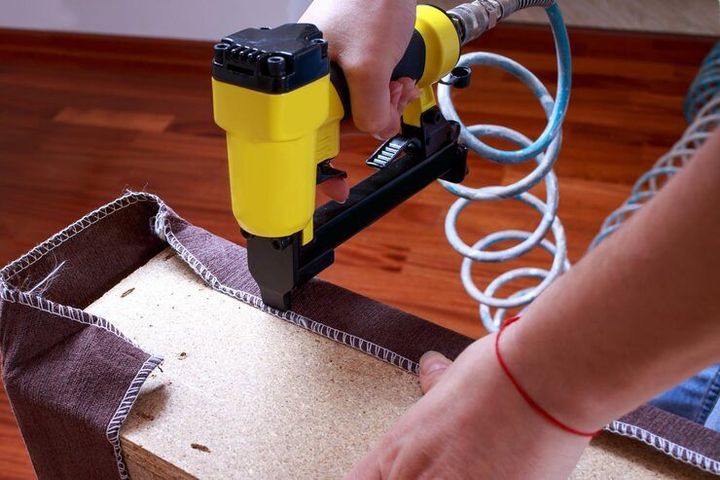
A sofa frame stapling machine drives a metal staple through a selected material and into a supporting surface. The staple legs penetrate the material and remain embedded in the base, creating a mechanical connection. Correct staple length, penetration depth, and placement help maintain the intended joint structure.
Pneumatic models use compressed air to operate the fastening mechanism, while electric models use an electrically powered drive system. Some machines are handheld, whereas others are integrated into workstations or automated assembly arrangements.
Main Types of Stapling Equipment
Different stapling systems serve different stages of sofa production.
Pneumatic staplers use compressed air and are common in upholstery and wooden frame assembly.
Electric staplers use an electric drive mechanism and may suit workshops seeking to reduce dependence on compressed-air equipment.
Manual staplers rely on hand-operated mechanisms and are generally suited to light-duty work.
Industrial stapling systems may include fixtures, guided positioning, or automated feeding arrangements for repeated assembly tasks.
The machine category determines its operating requirements, fastening capacity, portability, and suitability for continuous production.
Importance
Sofa frame stapling machines play an important role in furniture manufacturing because the frame provides the structural foundation for the finished sofa. A poorly assembled frame can develop movement, noise, loose components, or premature wear. Consistent fastening helps maintain assembly quality and supports the later installation of cushions, springs, webbing, foam, and upholstery fabric.
The equipment also affects production efficiency. Repetitive fastening with handheld powered tools can reduce the physical effort associated with manual hammering, while fixtures and positioning guides can help workers place staples more consistently.
Who Uses These Machines?
Several groups depend on sofa frame stapling equipment for furniture production.
Furniture manufacturers use it to assemble wooden frames and internal supports.
Upholstery workshops use staplers to attach fabric, webbing, and other compatible materials.
Custom furniture makers use portable equipment for individual pieces and specialized designs.
Industrial assembly teams use standardized fastening systems to maintain repeatable production processes.
Furniture maintenance and refurbishment workshops use suitable staplers for selected repair and reupholstery tasks.
The equipment also affects quality inspectors, production supervisors, machine operators, and maintenance personnel who monitor fastening quality and operating conditions.
Problems Addressed by Industrial Stapling Equipment
Manual fastening can become difficult when production involves numerous joints, repeated staple placement, or materials that require consistent penetration. Powered stapling machines help address these challenges by delivering repeatable fastening action when operated correctly.
Common production challenges include uneven staple depth, misplaced fasteners, damaged wood, staple jams, and inconsistent joint strength. These problems may result from incorrect staple selection, unsuitable air pressure, worn components, poor material positioning, or inappropriate machine settings.
A machine alone cannot compensate for weak frame design or unsuitable materials. Structural joints must be designed appropriately, and staples should be selected according to the intended application.
Operational Factors That Influence Performance
Several factors affect the performance of sofa frame stapling machines:
Staple compatibility: The staple type, crown width, wire dimensions, and leg length must match the machine and material.
Material condition: Wood density, thickness, moisture, and grain direction influence staple penetration and holding performance.
Operating pressure: Pneumatic equipment requires pressure within the manufacturer's specified range.
Positioning accuracy: Guides and fixtures help maintain consistent staple placement.
Maintenance: Cleaning, inspection, and replacement of worn components help maintain reliable operation.
Recent Updates
Recent developments in furniture manufacturing reflect a broader movement toward automation, ergonomic equipment, and more consistent production processes. Sofa frame stapling machines are part of this transition, although the pace of adoption varies according to factory size, production volume, and available infrastructure.
Automation and Production Integration
Modern furniture production increasingly combines fastening tools with assembly benches, positioning fixtures, and organized material-handling systems. These arrangements help operators maintain repeatable work sequences and reduce unnecessary movement between production stages.
In larger facilities, selected fastening operations may be integrated with automated or semi-automated assembly equipment. Full automation is not necessary for every factory, particularly where furniture designs change frequently or production involves customized frames.
Ergonomic and Energy Considerations
Manufacturers continue to focus on equipment weight, grip design, vibration, trigger placement, and operator comfort. These factors matter when workers perform repeated fastening tasks over extended periods.
Pneumatic systems require compressed-air infrastructure, which consumes energy and needs regular maintenance. Electric fastening tools may reduce the need for air hoses and compressors, although their suitability depends on fastening capacity, duty cycle, and the particular production process.
Digital Quality Monitoring
Some advanced manufacturing environments use digital production records, inspection systems, and process monitoring to identify assembly defects. These systems can help track production stages and reveal recurring fastening problems.
However, digital monitoring is not a standard feature of every sofa frame stapling machine. Many workshops continue to use conventional powered tools supported by visual inspection and routine quality checks.
Comparison of Machine Types
Machine type | Power source | Common application | Main consideration |
|---|---|---|---|
Manual stapler | Hand-operated | Light-duty fastening | Greater physical effort |
Pneumatic stapler | Compressed air | Repeated frame and upholstery fastening | Requires air supply |
Electric stapler | Electricity or battery | Workshop fastening and selected assembly tasks | Depends on power and duty-cycle limits |
Industrial stapling system | Pneumatic, electric, or integrated drive | Repetitive production-line operations | Requires setup and process integration |
The suitable option depends on the frame design, expected production volume, material requirements, and working environment rather than on automation level alone.
Laws or Policies
Sofa frame stapling machines are affected by workplace safety requirements, machinery standards, electrical safety provisions, and environmental rules applicable to the manufacturing facility. Because the article addresses a global audience, the precise legal requirements depend on the country where the equipment is manufactured, installed, and operated.
Machinery and Workplace Safety
Workplaces generally need to manage hazards associated with powered fastening tools. These include accidental discharge, flying fasteners, noise, vibration, electrical faults, and compressed-air equipment.
Relevant workplace procedures may include:
Training operators to use the equipment according to its instructions.
Providing suitable eye protection and other required personal protective equipment.
Keeping hands clear of the fastening point.
Disconnecting the power or air supply before clearing jams or conducting maintenance.
Inspecting triggers, hoses, cables, guards, and fastening mechanisms.
Storing equipment securely when it is not in use.
Pneumatic staplers should never be pointed toward people, and their triggers should not be bypassed or modified.
Product and Electrical Safety
Manufacturers and equipment suppliers may need to comply with applicable machinery safety, electrical safety, product conformity, and import requirements. The relevant standards vary by jurisdiction and equipment category.
Factories should verify that machinery documentation, operating instructions, electrical connections, and maintenance procedures meet applicable requirements. Equipment intended for industrial use should be assessed for its operating environment and expected workload.
Environmental and Workplace Conditions
Furniture factories may also need to manage wood dust, noise, waste fasteners, packaging materials, and energy consumption. Appropriate extraction systems, housekeeping procedures, and waste-handling practices can help control these issues.
Compressed-air systems require suitable pressure regulation and maintenance. Electrical equipment should be installed and maintained by appropriately qualified personnel where required by local rules.
Tools and Resources
Selecting and operating sofa frame stapling machines involves several practical resources. These help manufacturers compare equipment specifications, plan assembly processes, and identify fastening problems.
Machine Selection Checklist
A structured checklist helps match a stapling machine to its intended application. Important considerations include:
Frame material, thickness, and construction method.
Compatible staple type, crown width, and length.
Required fastening depth and holding strength.
Production volume and expected operating duration.
Pneumatic or electrical infrastructure.
Tool weight, ergonomics, and operator access.
Maintenance requirements and availability of compatible replacement components.
Safety features, operating documentation, and applicable conformity requirements.
These factors should be evaluated together because a machine designed for upholstery fabric may not be suitable for structural frame joints.
Staple Compatibility and Material Testing
Staple compatibility charts and manufacturer specifications help determine which fasteners can be used with a particular tool. Test pieces made from the same or comparable materials can reveal whether staples penetrate correctly, sit flush, or damage the wood.
Testing should also examine whether the fastener provides appropriate holding strength for its intended role. Critical structural joints may require additional fastening methods, such as screws, bolts, adhesives, or purpose-designed connectors.
Maintenance and Inspection Records
A maintenance log can record cleaning, lubrication where specified, hose and cable inspections, jam incidents, and replacement-part changes. Regular checks help identify recurring faults before they disrupt production.
A simple production inspection sheet can record staple placement, visible damage, joint movement, and rejected components. These records help supervisors distinguish equipment problems from material or assembly-design issues.
Production Planning Tools
Furniture manufacturers may use spreadsheets, work instructions, production scheduling systems, and quality-control templates to organize assembly activities. A basic production worksheet can include frame model, material specifications, staple type, machine settings, inspection results, and operator training status.
These records are particularly useful when a workshop produces several sofa designs with different frame dimensions and fastening requirements.
FAQs
What is a sofa frame stapling machine used for?
A sofa frame stapling machine fastens compatible materials during furniture assembly. Common applications include joining selected wooden components, attaching webbing, and securing upholstery materials, depending on the machine's specifications.
Which type of stapling machine is suitable for sofa manufacturing?
Pneumatic staplers are commonly used for repetitive furniture assembly and upholstery tasks. Electric and manual models may suit other production requirements. Selection depends on staple compatibility, material thickness, fastening strength, and production volume.
How do industrial sofa frame stapling machines improve assembly?
They can reduce repetitive manual effort and support consistent staple placement. Fixtures, correct machine settings, and operator training help maintain assembly quality, but frame design and material selection remain important.
What maintenance do sofa frame stapling machines require?
Typical maintenance includes cleaning, checking fasteners and feed mechanisms, inspecting hoses or cables, and following specified lubrication procedures. Power or compressed-air supplies should be disconnected before clearing jams or performing maintenance.
What safety precautions are important when operating a stapling machine?
Operators should use appropriate protective equipment, keep hands away from the fastening point, avoid pointing the tool toward people, and follow the manufacturer's instructions. Jam clearing and maintenance should take place only after the machine has been made safe.
Conclusion
Sofa frame stapling machines support furniture assembly by fastening compatible wooden components and upholstery materials with controlled mechanical action. Pneumatic, electric, manual, and integrated industrial systems serve different production requirements. Equipment selection depends on material compatibility, fastening strength, production volume, maintenance needs, and workplace safety. Proper operation and regular inspection help maintain consistent assembly quality.