Bearing Production Equipment Guide With Manufacturing Processes and Engineering Insights
Bearing production equipment refers to the industrial machines and supporting systems used to manufacture bearings for rotating machinery. Bearings reduce friction between moving parts, support loads, and help shafts rotate smoothly.
They are widely used in automobiles, electric motors, industrial pumps, agricultural machinery, household appliances, and manufacturing equipment.
The development of bearing manufacturing grew alongside the expansion of mechanical engineering. As machinery became more complex, manufacturers needed components with accurate dimensions, durable surfaces, and consistent performance. Traditional machining methods gradually developed into specialized production systems capable of shaping, grinding, heat-treating, and inspecting bearing components.
Modern bearing production equipment includes automated machining centers, forging presses, heat treatment furnaces, precision grinding machines, assembly systems, and quality inspection instruments. Each machine performs a particular task within the manufacturing sequence, helping transform raw materials into finished components.
Main Types of Bearings and Their Components
Bearings are designed according to the direction of the applied load, operating speed, available space, and surrounding conditions. Ball bearings use spherical rolling elements, while roller bearings use cylindrical, tapered, or other shaped rollers. Plain bearings operate through sliding contact rather than rolling elements.
Most rolling bearings contain several essential components:
Inner ring: Fits around the rotating shaft and provides a running surface.
Outer ring: Supports the bearing within its housing.
Rolling elements: Transfer loads between the inner and outer rings.
Cage: Maintains separation between rolling elements in many bearing designs.
Lubrication system: Helps reduce friction, heat, and surface wear during operation.
The required manufacturing equipment depends on the bearing design, material, dimensions, and expected operating conditions.
How Bearing Manufacturing Works
Bearing manufacturing follows a sequence of forming, machining, thermal processing, finishing, and inspection. Steel rings may begin as forged or cut blanks, while rolling elements are produced from suitable metal stock using dedicated forming and finishing processes.
The main production stages are summarized below.
Manufacturing stage | Equipment used | Primary purpose |
|---|---|---|
Material preparation | Cutting machines and material handling systems | Prepare metal stock |
Component forming | Forging presses and forming machines | Create preliminary shapes |
Turning and machining | CNC lathes and machining centers | Establish component dimensions |
Heat treatment | Controlled-atmosphere furnaces | Develop required material properties |
Precision grinding | Internal, external, and surface grinders | Improve geometry and surface finish |
Superfinishing | Honing and superfinishing machines | Refine contact surfaces |
Assembly | Automated or manual assembly systems | Combine bearing components |
Quality inspection | Gauges, sensors, and measuring instruments | Verify product characteristics |
The order and selection of these operations vary with bearing type, production volume, and engineering specifications.
Importance
Why Bearing Production Equipment Matters
Bearing manufacturing equipment affects the reliability of machinery used in transportation, energy generation, construction, agriculture, and industrial production. Small dimensional errors can influence vibration, noise, operating temperature, and the distribution of loads across bearing surfaces.
Precision equipment helps manufacturers maintain repeatable dimensions and reduce inconsistencies between production batches. Automated controls can also support consistent machine operation, while inspection systems identify deviations before components move to later manufacturing stages.
Bearing production is particularly important for applications involving continuous rotation, heavy loads, or demanding operating environments. For example, electric motors depend on bearings to support their shafts, while industrial conveyor systems require suitable bearings to maintain movement under repeated loading.
Industries That Depend on Bearing Manufacturing
Several industries use bearings and therefore depend on reliable production processes.
Automotive manufacturing uses bearings in wheel assemblies, transmissions, engines, and electric drive systems.
Industrial machinery uses bearings in pumps, compressors, gearboxes, machine tools, and conveyor equipment.
Renewable energy systems use specialized bearings in wind turbines and other rotating equipment.
Aerospace manufacturing requires carefully controlled materials, dimensions, and inspection procedures for applicable bearing designs.
Household appliances use compact bearings in selected motors, fans, washing machines, and other rotating mechanisms.
Equipment requirements differ across these applications. A high-speed electric motor may require different precision and lubrication characteristics from a large industrial conveyor operating under heavy loads.
Common Manufacturing Challenges
Bearing production involves several technical challenges that can affect output consistency and product reliability. Excessive grinding temperatures, unsuitable heat treatment, tool wear, contamination, and incorrect component alignment can affect finished parts.
Manufacturers also need to manage material usage, machine downtime, energy consumption, and inspection requirements. Poor coordination between production stages may create bottlenecks, while insufficient maintenance can lead to dimensional variation or unplanned interruptions.
Addressing these challenges generally involves process monitoring, suitable machine settings, preventive maintenance, controlled material handling, and documented quality checks.
Recent Updates
Automation and Digital Manufacturing
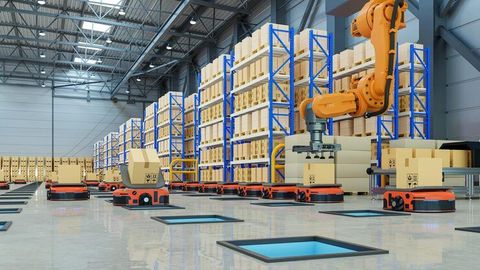
Recent developments in bearing production equipment reflect the broader movement toward connected factories and automated manufacturing. Computer numerical control (CNC) machines, robotic material handling, and programmable inspection systems allow manufacturers to coordinate repeated operations with less manual intervention.
Digital monitoring systems can collect information about vibration, temperature, spindle operation, and machine utilization. Engineers use these measurements to identify unusual operating patterns and schedule maintenance according to equipment condition.
Automated production does not remove the need for human oversight. Machine operators and engineers remain responsible for interpreting inspection results, verifying process settings, and managing unexpected variations.
Precision Grinding and Advanced Inspection
Precision grinding continues to play an important role in bearing production because rolling surfaces must meet defined dimensional and finish requirements. Improvements in machine controls, grinding wheel management, coolant delivery, and measurement systems support more consistent processing.
Non-contact measurement technologies, including selected optical and laser-based instruments, can measure dimensions or surface characteristics without relying entirely on conventional contact gauges. Their suitability depends on the material, geometry, measurement range, and required accuracy.
Energy Efficiency and Predictive Maintenance
Manufacturers are also examining energy use, coolant management, and equipment availability. Efficient spindle systems, optimized machine cycles, and improved process control can help reduce unnecessary energy consumption and material waste.
Predictive maintenance uses machine data to identify potential equipment problems before they cause major disruption. Depending on the system, monitoring may include bearing vibration, motor current, temperature, lubrication conditions, and spindle behavior.
These developments are part of an ongoing industrial trend rather than a uniform change across every factory. Adoption depends on production scale, existing infrastructure, technical expertise, and the characteristics of the bearings being manufactured.
Laws or Policies
Manufacturing Standards and Quality Requirements
Bearing production equipment is influenced by technical standards, workplace safety requirements, environmental rules, and product-specific specifications. These requirements vary by country and by the intended application of the finished bearing.
International standards organizations publish documents covering bearing dimensions, tolerances, terminology, and related engineering subjects. Manufacturers may consult relevant ISO standards and applicable national standards when defining product specifications and inspection procedures.
Quality management frameworks, including ISO 9001, provide principles for documented processes, consistent production, corrective action, and continuous improvement. Certification requirements depend on the organization, its customers, and the relevant contractual or regulatory conditions.
Machinery Safety and Environmental Controls
Industrial machinery must be operated with appropriate safeguards, training, and maintenance procedures. Depending on the jurisdiction, applicable rules may cover moving machine parts, electrical systems, emergency stops, hazardous energy isolation, noise exposure, and worker protection.
Environmental requirements may address industrial emissions, waste disposal, metalworking fluids, coolant handling, and energy use. Heat treatment furnaces and machining operations can create different environmental and occupational risks, so controls must reflect the actual processes used.
Manufacturers operating across international markets may need to consider several regulatory systems simultaneously. The specific obligations depend on the manufacturing location, equipment design, workplace conditions, and destination market.
Tools and Resources
Engineering Design and Production Planning Tools
Bearing manufacturers use engineering software and measurement tools to plan operations, evaluate component geometry, and monitor production quality. The selection depends on whether the task involves machine programming, equipment layout, material analysis, or finished-product inspection.
Common tools include:
CAD software: Supports component drawings, dimensional models, and machine layout planning.
CAM software: Converts suitable engineering models into manufacturing instructions for CNC equipment.
CNC simulation tools: Help review tool paths, machining sequences, and potential collisions before production.
Statistical process control software: Tracks measurement data and helps identify variation across production batches.
Condition monitoring systems: Collect operating data to assess machine health and maintenance requirements.
Precision measuring instruments: Include micrometers, bore gauges, roundness testers, surface roughness testers, and coordinate measuring machines.
Equipment Selection and Evaluation
Selecting bearing production equipment requires an understanding of component specifications, expected production volume, and available factory resources. A suitable evaluation considers machine capability alongside maintenance requirements, operator training, inspection needs, and integration with existing equipment.
Important factors include:
Bearing type, dimensions, and material.
Required dimensional tolerances and surface finish.
Expected production volume and cycle time.
Automation level and compatibility with existing systems.
Machine energy consumption and maintenance access.
Safety features, technical documentation, and operator training.
Availability of suitable inspection equipment and process controls.
A structured equipment comparison can help engineers document technical requirements and evaluate alternative manufacturing arrangements without relying on a single specification.
FAQs
What equipment is used in bearing production?
Bearing production equipment commonly includes forging presses, CNC lathes, heat treatment furnaces, precision grinding machines, superfinishing systems, assembly equipment, and inspection instruments. The exact combination depends on the bearing design and production requirements.
How does precision grinding affect bearing manufacturing?
Precision grinding establishes accurate dimensions and improves the surface condition of bearing raceways and other functional surfaces. Appropriate grinding conditions help control geometry, surface finish, and heat-related damage.
What materials are used in bearing production equipment processes?
Bearing components commonly use suitable bearing steels, stainless steels, and other engineered materials selected for the application. Material selection depends on load, speed, corrosion exposure, temperature, and required operating characteristics.
How is automation used in bearing manufacturing?
Automation supports component handling, machining, inspection, and assembly. CNC controls and production monitoring systems help maintain repeatable operations, while engineers review data and investigate deviations.
Which standards apply to bearing production equipment?
Applicable requirements may include ISO standards for bearing dimensions and terminology, quality management frameworks, and national machinery safety regulations. The relevant standards depend on the product, manufacturing location, and intended application.
Conclusion
Bearing production equipment combines forming, machining, heat treatment, finishing, assembly, and inspection technologies to manufacture components for many types of machinery. Precision controls, automation, and digital monitoring continue to influence manufacturing methods and equipment design. Quality management, workplace safety, and environmental requirements also shape production practices. Understanding these processes provides a foundation for evaluating bearing manufacturing systems and their engineering requirements.