Industrial Heat Treatment Guide With Metal Processing and Engineering Insights
Industrial heat treatment is a controlled method used to change the physical and mechanical properties of metals. It involves heating a metal to a selected temperature, holding it under controlled conditions, and then cooling it at a planned rate. The process can change hardness, strength, toughness, ductility, wear resistance, dimensional stability, and other characteristics.
The foundations of heat treatment developed alongside advances in metalworking and metallurgy. As manufacturers began working with iron, steel, aluminum, copper alloys, and other engineering materials, they found that the same metal could behave differently depending on its thermal history. Modern industrial heat treatment builds on these principles through controlled furnaces, sensors, computer systems, cooling equipment, and process monitoring.
Industrial heat treatment is used in many areas of metal processing. Components such as gears, shafts, bearings, tools, fasteners, springs, molds, automotive parts, machine components, and structural elements may undergo thermal processing before or after machining.
How Industrial Heat Treatment Works
A typical heat treatment cycle has three main stages: heating, holding, and cooling. Heating must be controlled so that the material reaches the required temperature without creating excessive thermal stress or unwanted surface reactions.
During the holding stage, the metal remains at a selected temperature for a specified period. This allows internal structural changes to develop throughout the component. The required duration depends on material composition, thickness, geometry, furnace conditions, and the intended result.
Cooling is equally important. Different cooling rates can produce very different properties. Air cooling, furnace cooling, oil-based cooling, water-based cooling, polymer-based cooling, and controlled gas cooling are among the approaches used in industrial environments.
Common Heat Treatment Processes
Several established processes are used across metalworking applications:
- Annealing generally reduces hardness and improves ductility and machinability.
- Normalizing refines the structure of certain steels and can improve consistency.
- Hardening increases hardness through controlled heating followed by relatively rapid cooling.
- Tempering reduces some of the brittleness associated with hardened steel while adjusting mechanical properties.
- Stress relieving reduces internal stresses that may have developed during machining, welding, forming, or casting.
- Case hardening creates a harder surface while retaining a comparatively tougher interior.
- Carburizing introduces carbon into a suitable steel surface at elevated temperature.
- Nitriding introduces nitrogen into selected metal surfaces to improve surface hardness and wear behavior.
The appropriate treatment depends on the alloy, component geometry, required properties, and subsequent manufacturing stages.
Importance
Industrial heat treatment matters because metal components often need a balance of properties rather than a single characteristic. A component that is extremely hard may not provide sufficient toughness, while a highly ductile material may not withstand repeated wear or loading.
Improving Component Performance
Heat treatment can influence how a component responds to mechanical loads, friction, temperature changes, and repeated operation. This is particularly relevant for parts exposed to high contact pressure or cyclic forces.
For example, gears require suitable surface and internal properties to withstand repeated contact. Shafts may require controlled hardness and toughness to handle rotational loads. Cutting tools often require carefully selected thermal processing to maintain their geometry and resistance to wear.
Supporting Manufacturing Processes
Heat treatment also affects machining and fabrication. Annealing can make some materials easier to machine, while stress relieving can reduce the possibility of distortion after certain manufacturing operations.
In production environments, thermal processing is therefore connected with several stages of metal processing, including casting, forging, machining, forming, welding, surface treatment, and final inspection.
Industries That Use Heat Treatment
Industrial heat treatment is relevant across many sectors, including:
- Automotive and transportation manufacturing
- Aerospace component production
- Heavy machinery manufacturing
- Construction equipment production
- Tool and die manufacturing
- Energy equipment manufacturing
- Industrial automation
- General metal fabrication
- Bearing and gear production
- Medical and precision equipment manufacturing
The process is also important for small precision components and large industrial structures. Furnace capacity, atmosphere control, temperature uniformity, and cooling arrangements vary according to the application.
Key Process Variables
| Variable | Main Purpose | Typical Consideration |
|---|---|---|
| Heating temperature | Initiates material transformation | Alloy composition |
| Holding time | Allows structural changes | Component thickness |
| Heating rate | Controls thermal exposure | Geometry and material |
| Cooling rate | Influences final properties | Selected treatment |
| Furnace atmosphere | Controls surface reactions | Material sensitivity |
| Temperature uniformity | Supports consistency | Furnace design |
| Quenching medium | Controls rapid cooling | Alloy and hardness target |
| Process monitoring | Records treatment conditions | Quality control |
These variables must be considered together because changing one part of the cycle can affect the final characteristics of the material.
Recent Updates
Modern industrial heat treatment is increasingly connected with automation, digital monitoring, energy management, and data-based process control. The general direction of the industry is toward more precise temperature management and improved traceability of thermal cycles.
Automated Furnace Control
Computerized furnace systems can continuously monitor temperature, atmosphere conditions, heating stages, and cooling sequences. Automated controls reduce dependence on manual adjustments and make it easier to maintain repeatable processing conditions.
Industrial sensors are increasingly used to collect information from different parts of the furnace. Data can then be recorded for process verification and production analysis.
Advanced Atmosphere Control
Atmosphere management has become an important area of development. Controlled atmospheres can reduce unwanted oxidation, surface reactions, or changes in material composition during heating.
Vacuum heat treatment is also used for selected applications where surface cleanliness and controlled environmental conditions are important. Gas-based cooling systems can provide controlled cooling for certain alloys and precision components.
Energy and Process Efficiency
Modern heat treatment equipment increasingly focuses on efficient heat transfer, insulation, furnace loading, heat recovery, and automated cycle management. These approaches can help reduce unnecessary energy use while maintaining appropriate processing conditions.
Induction heating is another important technology. It uses electromagnetic fields to heat electrically conductive materials, allowing selected areas of a component to receive controlled thermal treatment.
Data-Based Quality Monitoring
Digital records allow manufacturers to compare furnace cycles, identify process variations, and investigate deviations. Sensors, programmable controllers, and manufacturing data systems can work together to create a clearer record of the thermal history of a component.
Predictive maintenance concepts are also being applied to furnaces and related equipment. Temperature sensors, electrical measurements, vibration monitoring, and equipment history can help identify developing equipment issues.
Laws or Policies
Industrial heat treatment is influenced by occupational safety requirements, environmental rules, equipment standards, and quality-management practices. The exact requirements vary by country, industry, material, and type of furnace.
Worker and Equipment Safety
Industrial furnaces operate at high temperatures and may use combustible gases, pressurized gases, electrical systems, or liquid cooling media. Facilities therefore generally need appropriate safeguards covering machine operation, ventilation, fire protection, electrical systems, emergency procedures, and worker training.
Risk controls can include protective equipment, furnace interlocks, temperature alarms, gas monitoring, emergency shutdown systems, and controlled access to high-temperature areas.
Environmental Considerations
Heat treatment can involve combustion gases, process gases, quenching fluids, cleaning chemicals, and other industrial materials. Environmental requirements may address emissions, waste handling, wastewater, storage, and equipment operation.
Facilities must follow the applicable rules in their jurisdiction rather than relying on a single global requirement. Industries with specialized materials or processes may also have additional technical requirements.
Quality and Documentation
Quality systems commonly require controlled procedures, equipment calibration, process records, inspection results, and traceability. Depending on the application, manufacturers may document furnace temperature profiles, material batches, treatment cycles, hardness measurements, and inspection results.
These records can help demonstrate that processing conditions were controlled according to the applicable technical specifications.
Tools and Resources
Several technical tools support industrial heat treatment planning and monitoring. Furnace controllers are used to manage temperature cycles, while thermocouples and temperature sensors measure thermal conditions inside equipment.
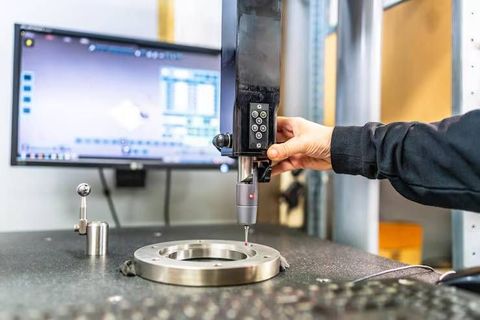
Hardness testers help assess selected mechanical characteristics after treatment. Metallographic microscopes can be used to examine the microstructure of prepared metal samples, helping technicians understand changes produced by thermal processing.
Useful Technical Resources
Engineers and technicians may work with:
- Heat treatment cycle calculators
- Temperature data loggers
- Furnace profiling systems
- Thermocouples and calibration equipment
- Hardness testing equipment
- Metallographic analysis tools
- Alloy composition databases
- Material property databases
- Process-control software
- Technical standards databases
- Furnace maintenance records
- Digital production monitoring platforms
Computer-based simulation is also increasingly used to study heating, cooling, temperature distribution, distortion, and material behavior before physical processing takes place.
FAQs
What is industrial heat treatment?
Industrial heat treatment is a controlled thermal process used to modify the properties of metals. It involves planned heating, holding, and cooling stages selected according to the material and intended characteristics.
What are the main industrial heat treatment processes?
Common processes include annealing, normalizing, hardening, tempering, stress relieving, carburizing, nitriding, and other surface or transformation treatments. The appropriate process depends on the alloy and required properties.
Why is heat treatment important in metal processing?
Heat treatment can modify hardness, toughness, ductility, wear behavior, and dimensional stability. It is therefore an important part of many metal processing and engineering workflows.
How does furnace temperature affect industrial heat treatment?
Temperature influences the metallurgical transformations that occur inside a material. Incorrect temperature control can produce unsuitable properties, distortion, surface changes, or inconsistent results.
What equipment is used for industrial heat treatment?
Equipment can include batch furnaces, continuous furnaces, vacuum furnaces, induction heating systems, quenching systems, temperature sensors, controllers, data loggers, and hardness testing equipment.
Conclusion
Industrial heat treatment is an important part of modern metal processing because controlled thermal cycles can significantly influence the properties and behavior of engineering materials. Processes such as annealing, hardening, tempering, carburizing, and nitriding are selected according to material characteristics and component requirements. Modern systems increasingly combine automation, sensors, digital records, atmosphere control, and process monitoring. Safety requirements, environmental rules, technical standards, and quality procedures also shape how industrial heat treatment is carried out.