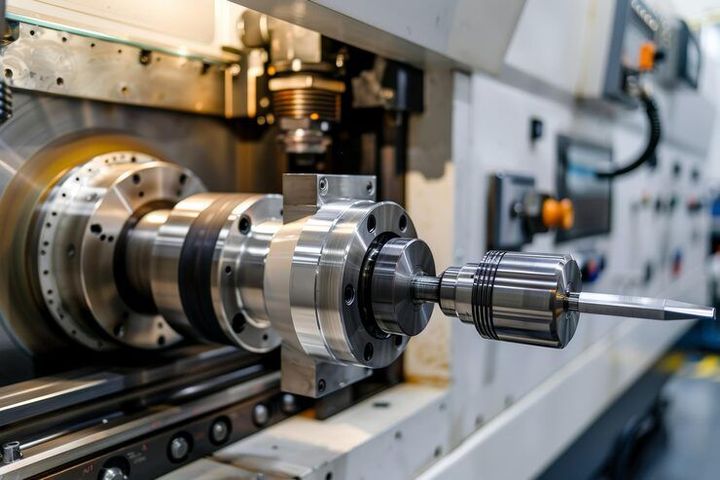
CNC Turning Centers Guide With Automated Manufacturing and Precision Machining Technology
CNC turning centers are important machines in modern manufacturing because they help produce accurate cylindrical components through automated machining processes.
CNC stands for Computer Numerical Control, a technology that allows machines to follow programmed instructions to perform cutting, shaping, drilling, and other manufacturing operations. These machines are commonly used in automotive production, aerospace engineering, industrial equipment manufacturing, electronics, and metalworking.
The development of CNC turning centers came from traditional lathe machines. Conventional lathes required operators to control many machining movements manually. As manufacturing requirements became more demanding, computer-controlled systems were introduced to improve consistency, repeatability, and production efficiency.
A CNC turning center combines a rotating workpiece, cutting tools, automated movements, and computer-based controls. Depending on its configuration, it can perform several machining operations within one setup. This reduces the need to move components between multiple machines and helps maintain dimensional accuracy.
How CNC Turning Centers Work
A CNC turning center operates by holding a material inside a rotating spindle. Cutting tools move along programmed paths to remove unwanted material and create the required shape. The machine follows instructions prepared using computer-aided manufacturing software.
The general machining process involves several stages:
Material loading: A metal or plastic workpiece is secured inside the machine.
Program preparation: Machining instructions define tool movements, spindle speed, cutting depth, and other parameters.
Turning operation: The rotating material is shaped using cutting tools.
Additional machining: Depending on the machine, drilling, threading, boring, and milling may also be performed.
Inspection: The completed component is checked against its technical specifications.
Modern CNC turning centers may include automatic tool changers, bar feeders, tool monitoring systems, and programmable material handling equipment.
Main Types of CNC Turning Centers
Different CNC turning center configurations support different production requirements. Their design depends on component dimensions, material characteristics, machining complexity, and manufacturing volume.
Horizontal CNC turning centers: These machines position the spindle horizontally and are commonly used for cylindrical components and general machining.
Vertical CNC turning centers: Their vertical spindle arrangement supports larger or heavier workpieces that require stable positioning.
Multi-axis turning centers: These machines provide additional movement directions for producing complex components.
Swiss-type CNC turning centers: These systems support precision machining of small, slender components using a guide bushing.
Mill-turn CNC centers: These combine turning and milling operations, allowing multiple machining processes within one machine.
Importance
CNC turning centers matter because modern industries require components with consistent dimensions, reliable performance, and complex geometries. Manual machining can involve variations caused by operator technique, tool positioning, and production conditions. Automated manufacturing helps reduce some of these variations by following programmed machining instructions.
These machines also support industries that manufacture everyday products. Vehicle engines, industrial pumps, medical equipment housings, electrical connectors, and mechanical assemblies can contain components produced through CNC turning processes.
Industries That Use CNC Turning Technology
Several manufacturing sectors depend on CNC turning centers for producing precision-machined components.
Automotive manufacturing: Used for shafts, bushings, threaded components, transmission parts, and engine-related components.
Aerospace engineering: Supports the production of precision fittings, connectors, and structural hardware.
Medical equipment manufacturing: Used for selected metal components, instrument parts, and equipment fittings.
Electronics production: Helps manufacture small housings, connectors, and precision mechanical parts.
Industrial machinery: Supports the production of rollers, couplings, valves, and rotating equipment components.
Problems Addressed by Automated Turning
Automated turning technology addresses several common manufacturing challenges.
First, it helps maintain repeatability when producing large quantities of similar components. Once a machining program has been properly developed and verified, the machine can follow the same instructions across multiple production cycles.
Second, CNC turning reduces certain manual handling requirements. Automatic tool changing, workpiece feeding, and integrated machining functions can reduce interruptions between operations.
Third, it supports more complicated component designs. Multi-axis machining and live tooling allow manufacturers to produce features that may otherwise require separate machining setups.
CNC Turning Centers Compared With Conventional Lathes
Although both machines use rotating workpieces, their control systems and operating capabilities differ.
Feature | Conventional Lathe | CNC Turning Center |
|---|---|---|
Operation | Mainly manual | Computer-controlled |
Tool movement | Operator-controlled | Programmed movements |
Repeatability | Depends heavily on operator technique | Based on verified machining programs |
Complex machining | May require multiple setups | Can support integrated operations |
Production monitoring | Often manual | May include digital monitoring |
Tool changing | Usually manual | May include automatic tool changers |
Applications | General turning | Precision and automated manufacturing |
The appropriate machine depends on the component design, production requirements, available skills, and manufacturing environment.
Recent Updates
Developments in CNC turning technology between 2024 and 2026 reflect a broader movement toward connected manufacturing, intelligent automation, and improved production monitoring. Manufacturers are increasingly combining conventional machining equipment with digital technologies to understand machine performance and improve production planning.
Artificial Intelligence in CNC Machining
Artificial intelligence is becoming more relevant in manufacturing environments. AI-based systems can analyze machine operating information, identify unusual patterns, and support predictive maintenance planning.
In CNC turning centers, these systems may examine spindle loads, vibration measurements, cutting conditions, and tool performance. The collected information can help production teams identify potential equipment problems before they cause significant interruptions.
However, AI-generated recommendations still require appropriate technical evaluation and human oversight.
Industrial Internet of Things Integration
The Industrial Internet of Things connects machines, sensors, and manufacturing software through digital communication systems. Connected CNC turning centers can transmit operating information to monitoring platforms.
Common monitoring parameters include:
Spindle speed and operating hours.
Machine temperature and vibration.
Tool usage and replacement intervals.
Production cycle duration.
Equipment operating and idle periods.
This information supports production analysis and helps manufacturing teams understand how equipment is performing.
Robotics and Automated Material Handling
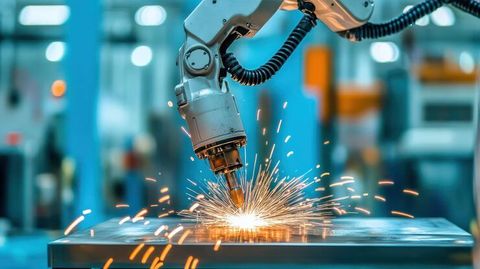
Robotic automation is increasingly being integrated with CNC turning centers. Industrial robots can load raw materials, remove completed components, and transfer parts between production stages.
Automated bar feeders and robotic loading systems can also reduce repeated manual handling. These arrangements are particularly relevant for manufacturers operating multiple production shifts or producing large quantities of similar components.
Advanced Machining Software
Modern computer-aided manufacturing software provides tools for preparing machining programs, simulating tool movements, and examining potential machining conflicts.
Digital simulation can help engineers identify programming errors before production begins. This is particularly useful for multi-axis CNC turning centers, where several tools and machine movements may operate within a single machining cycle.
Laws or Policies
CNC turning centers are influenced by industrial safety requirements, machinery standards, environmental rules, and workplace regulations. These requirements differ depending on the country where the equipment is manufactured, installed, or operated.
In India, industrial manufacturing activities are influenced by workplace safety legislation, applicable factory regulations, machinery safety requirements, and environmental rules. The Occupational Safety, Health and Working Conditions Code, 2020, is part of the country's broader framework for workplace safety and working conditions, subject to its applicable commencement and implementation provisions.
Machinery Safety Requirements
Manufacturing facilities generally need to consider safeguards that protect operators and maintenance personnel.
Important safety measures include:
Installing appropriate machine guards around moving components.
Using emergency stop systems.
Providing suitable electrical protection.
Maintaining safe access around operating machinery.
Training operators in approved operating procedures.
Following manufacturer instructions for maintenance and inspection.
Rotating spindles, cutting tools, workholding devices, and automated tool changers can create mechanical hazards if appropriate precautions are not followed.
Environmental and Energy Considerations
CNC machining may generate metal chips, used cutting fluids, coolant waste, noise, and energy consumption. Manufacturing facilities need to manage these materials according to applicable environmental requirements.
Common environmental considerations include:
Proper collection and handling of metal chips.
Appropriate storage and disposal of used machining fluids.
Coolant filtration and recycling where suitable.
Control of workplace noise and airborne particles.
Monitoring electricity consumption.
Manufacturers may also consider energy-efficient spindle systems, variable-speed drives, and improved coolant management.
Tools and Resources
Several technical tools and digital resources support CNC turning center selection, programming, operation, and maintenance. These resources are useful for manufacturing engineers, machine operators, students, and production planners.
CNC Programming Software
Computer-aided manufacturing software helps users prepare machining instructions for different CNC machine configurations. It can generate toolpaths, simulate machining operations, and support the preparation of machine-specific programs.
Common software platforms include:
Autodesk Fusion: Supports computer-aided design and manufacturing workflows.
Mastercam: Provides CNC programming and toolpath development capabilities.
Siemens NX: Supports integrated product design, engineering, and manufacturing processes.
SolidCAM: Provides machining programming and simulation functions.
The capabilities available depend on software editions, machine configurations, and licensing arrangements.
Machining Calculators
Machining calculators help estimate important operating parameters before production. These tools are particularly useful when working with different materials and cutting tools.
Parameter | Purpose |
|---|---|
Cutting speed | Determines the relative speed between the workpiece surface and cutting tool |
Spindle speed | Estimates the required rotational speed |
Feed rate | Determines how quickly the tool advances |
Depth of cut | Measures the amount of material removed in one pass |
Material removal rate | Estimates the volume of material removed over time |
Tool life | Helps evaluate tool replacement requirements |
These calculations provide starting values. Actual machining settings depend on material properties, tooling, machine rigidity, and manufacturer recommendations.
Machine Monitoring and Maintenance Resources
Machine monitoring platforms help production teams review equipment performance and operating conditions. Some systems provide dashboards for production cycles, machine utilization, alarms, and maintenance records.
Maintenance documentation is equally important. Operators can use inspection checklists, tool replacement records, coolant monitoring sheets, and preventive maintenance schedules to organize routine equipment care.
FAQs
What Is a CNC Turning Center Used For?
A CNC turning center is used to manufacture cylindrical and precision-machined components. Common applications include shafts, bushings, threaded parts, connectors, and mechanical fittings.
How Does an Automated CNC Turning Center Work?
An automated CNC turning center follows computer-programmed instructions to rotate a workpiece and move cutting tools. Depending on its configuration, it can also perform drilling, milling, threading, and other machining operations.
What Is the Difference Between CNC Turning and CNC Milling?
CNC turning generally shapes a rotating workpiece using cutting tools, while CNC milling typically removes material using rotating cutting tools applied to a positioned workpiece. Both processes are widely used in precision manufacturing.
What Industries Use Multi-Axis CNC Turning Centers?
Automotive, aerospace, electronics, medical equipment, and industrial machinery manufacturers use multi-axis CNC turning centers. These machines are suitable for components requiring several machining operations and complex geometries.
Which Software Is Used for CNC Turning Center Programming?
Common platforms include Mastercam, Autodesk Fusion, Siemens NX, and SolidCAM. Software selection depends on machine compatibility, programming requirements, available functions, and operator experience.
Conclusion
CNC turning centers play an important role in automated manufacturing by producing cylindrical components with consistent dimensions and complex features. Developments in artificial intelligence, robotics, connected monitoring, and machining software are expanding their capabilities. Their applications extend across automotive, aerospace, electronics, medical equipment, and industrial machinery manufacturing. Proper programming, equipment maintenance, operator training, and workplace safety remain essential elements of effective CNC machining.