Explore Roller Conveyor Systems With Conveyor Technology and Engineering Details
Roller conveyor systems are an important part of modern material handling and industrial transportation. They use a series of rotating cylindrical rollers arranged within a supporting frame to move products, packages, containers, and other materials from one location to another.
These systems are commonly found in manufacturing facilities, warehouses, distribution centers, packaging units, and assembly plants.
The development of roller conveyors came from the need to move heavy materials more efficiently across industrial workspaces. Earlier material handling processes depended heavily on manual transportation, lifting equipment, and basic mechanical arrangements. As manufacturing activities expanded, industries required organized transportation systems that could support continuous production and improve the movement of goods between different processing stages.
Today, roller conveyor technology includes gravity-driven, powered, flexible, and automated configurations. Each design serves different transportation requirements depending on product dimensions, weight, operating conditions, and facility layout.
Understanding roller conveyor engineering helps explain how these systems support industrial operations, improve material flow, and connect different stages of production.
What Are Roller Conveyor Systems?
A roller conveyor system consists of multiple cylindrical rollers mounted parallel to one another within a frame. Products move across the rollers through gravity, manual pushing, or motor-driven rotation.
The rollers support the transported objects while allowing them to move along a defined pathway. Their spacing, diameter, material, and arrangement influence how smoothly products travel.
Main Types of Roller Conveyor Technology
Different roller conveyor configurations are developed for particular industrial applications.
Gravity roller conveyors: Use a slightly inclined surface or manual force to move products without powered rollers.
Powered roller conveyors: Use electric motors, belts, chains, or other drive arrangements to rotate rollers.
Accumulation roller conveyors: Allow products to collect temporarily in designated sections without necessarily stopping the entire transportation line.
Flexible roller conveyors: Feature adjustable frames that can expand, contract, or change direction according to workspace requirements.
Curved roller conveyors: Support directional changes while maintaining product movement through connected production areas.
Essential Engineering Components
The performance of industrial roller conveyor systems depends on the coordination of several mechanical components.
Important components include:
Rollers: Cylindrical elements that directly support and transport products.
Conveyor frame: Provides structural support and maintains the arrangement of rollers.
Bearings: Reduce rotational friction and support smooth roller movement.
Drive mechanism: Transfers mechanical power to rollers in powered configurations.
Motors and controls: Regulate movement, operating speed, and transportation sequences.
Side guides: Help maintain product alignment during transportation.
Safety guards: Protect workers from accessible moving components and potential pinch points.
Importance
Roller conveyor systems matter because material transportation is a fundamental requirement across manufacturing, storage, packaging, and distribution activities. Without organized transportation equipment, facilities may experience unnecessary product movement, workflow interruptions, handling difficulties, and workplace congestion.
These systems help connect different operational areas and support a more organized movement of materials. Their applications extend beyond large factories to smaller production facilities, parcel handling centers, and commercial distribution environments.
Industries That Use Roller Conveyor Systems
Several industries depend on roller conveyor technology for internal material transportation.
Manufacturing: Transfers components between assembly stations, production equipment, and inspection areas.
Warehousing: Supports the movement of cartons, containers, and packaged products.
Automotive production: Moves vehicle components and assemblies between different manufacturing stages.
Food processing: Transports suitable containers, trays, and packaged food products.
Pharmaceutical manufacturing: Supports controlled movement of packaging materials and finished product containers.
E-commerce distribution: Helps organize parcel movement, sorting, and dispatch operations.
Packaging facilities: Connects filling, labeling, inspection, and carton handling processes.
Problems Addressed by Conveyor Engineering
Manual transportation can create difficulties when facilities handle large quantities of materials or repeated movement tasks. Roller conveyors address several operational challenges.
Material handling complexity: Organized roller pathways reduce unnecessary movement between workstations.
Workflow interruptions: Connected conveyor sections support a more consistent transportation process.
Workplace congestion: Defined transportation routes help separate material movement from pedestrian areas.
Product handling: Appropriate roller spacing and surface materials help support different package dimensions.
Production coordination: Powered controls can synchronize transportation with other manufacturing equipment.
Gravity Versus Powered Roller Conveyors
Both systems perform similar transportation functions, but their operating principles differ.
| Feature | Gravity Roller Conveyor | Powered Roller Conveyor |
|---|---|---|
| Movement | Gravity or manual force | Motor-driven rollers |
| Inclination | Often required | Not always required |
| Speed control | Limited | Available through controls |
| Automation | Generally limited | Supports automated operations |
| Applications | Simple transportation | Production and distribution lines |
| Power requirement | Usually none for movement | Requires an appropriate power source |
Selecting a configuration depends on product characteristics, transportation distance, operating frequency, and facility requirements.
Recent Updates
Roller conveyor technology continues to develop alongside industrial automation, digital manufacturing, and warehouse management systems. Recent developments increasingly focus on flexible equipment arrangements, intelligent monitoring, energy management, and improved integration with production controls.
Modular Conveyor Engineering
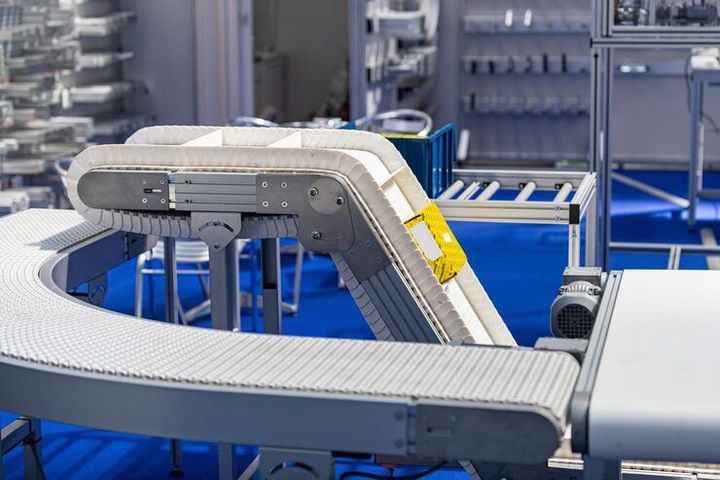
Modular roller conveyor designs allow facilities to combine different conveyor sections into a connected transportation arrangement. Straight, curved, inclined, and accumulation sections can be configured to accommodate changing production layouts.
This approach supports facilities that handle different product categories or periodically modify their internal transportation routes.
Smart Sensors and Automated Controls
Modern conveyor installations increasingly incorporate sensors and electronic control systems. These components help detect product presence, monitor movement, and coordinate transportation between connected sections.
Common technologies include:
Photoelectric sensors for detecting objects.
Proximity sensors for identifying nearby materials.
Variable frequency drives for regulating motor speed.
Programmable logic controllers for coordinating conveyor operations.
Monitoring systems for identifying operating interruptions.
Energy-Efficient Conveyor Technology
Energy management has become an important consideration in industrial equipment development. Powered roller conveyors increasingly use appropriately sized motors, controlled operating speeds, and zoned transportation arrangements.
Some accumulation systems activate individual sections only when transportation is required. This can reduce unnecessary motor operation under suitable operating conditions.
Digital Monitoring and Industrial Connectivity
Digital manufacturing developments are creating additional opportunities for conveyor monitoring. Connected control systems can provide operating information, equipment status, and maintenance indicators.
Digital models and simulation tools can also help engineers examine conveyor layouts before physical installation. These developments support more informed planning and coordination across industrial facilities.
Laws or Policies
Roller conveyor systems are influenced by machinery safety requirements, workplace protection rules, electrical standards, and industrial equipment regulations. Requirements differ between jurisdictions, so manufacturers and facility operators must identify the rules applicable to their equipment and operating environment.
Machinery Safety Requirements
Industrial conveyor installations generally require appropriate protection against mechanical hazards. Important considerations include rotating components, accessible pinch points, unstable structures, falling materials, and unexpected equipment movement.
International machinery safety frameworks, including ISO 12100, provide principles for identifying hazards and reducing machinery-related risks through suitable design measures.
Workplace Safety Regulations
In jurisdictions following Occupational Safety and Health Administration requirements, conveyor installations are subject to applicable workplace machinery and safety provisions.
Relevant considerations include:
Appropriate guarding around hazardous moving components.
Accessible emergency stopping arrangements.
Safe walking and crossing areas.
Equipment inspection and maintenance procedures.
Isolation of hazardous energy during maintenance.
Operator training and safe operating instructions.
OSHA regulations also contain specific conveyor provisions for certain industrial environments, including marine terminals and construction activities.
Conveyor Design and Safety Standards
ASME B20.1 is an important technical safety standard covering conveyors and related equipment. Its scope includes design, construction, installation, inspection, maintenance, and operation.
Other relevant standards may address electrical equipment, protective controls, risk assessment, and machinery guarding. Applicable requirements depend on the installation, equipment classification, and local regulatory framework.
Tools and Resources
Several engineering tools and technical resources help with roller conveyor planning, design, operation, and maintenance. These resources provide information about mechanical performance, equipment dimensions, transportation requirements, and workplace safety.
Conveyor Design and Calculation Tools
Engineering calculators can help estimate important conveyor parameters.
Common calculations include:
Roller spacing: Determines suitable distances between supporting rollers.
Load capacity: Evaluates the weight supported by individual rollers and the complete conveyor structure.
Conveyor speed: Estimates how quickly products move through the transportation line.
Motor power: Helps determine appropriate drive requirements for powered systems.
Conveyor inclination: Helps evaluate gravity-based transportation arrangements.
Throughput: Estimates the quantity of products transported during a particular operating period.
These calculations depend on product dimensions, friction, loading conditions, conveyor geometry, and mechanical specifications.
Engineering Software and Technical Platforms
Computer-aided design software helps engineers prepare conveyor layouts, examine structural dimensions, and coordinate equipment positioning.
Simulation platforms can evaluate product movement, accumulation areas, and potential workflow interruptions. Programmable logic controller software supports the configuration of automated transportation sequences.
Technical documentation, equipment manuals, engineering drawings, and maintenance checklists also help operators understand individual conveyor components.
Maintenance and Inspection Resources
Regular inspection helps identify mechanical problems before they interrupt operations.
A basic roller conveyor inspection checklist may include:
Checking rollers for damage, wear, and alignment.
Inspecting bearings and drive components.
Examining frame connections and structural stability.
Reviewing electrical connections and control functions.
Testing emergency stopping arrangements.
Checking protective guards and warning indicators.
Recording unusual noise, vibration, or movement.
Maintenance activities should follow equipment instructions and applicable workplace safety procedures.
FAQs
What Are Roller Conveyor Systems Used For?
Roller conveyor systems transport cartons, containers, components, and other suitable materials between different industrial or commercial locations. They are widely used in manufacturing, warehousing, packaging, and distribution operations.
How Does a Powered Roller Conveyor Work?
A powered roller conveyor uses an electric motor connected to a mechanical drive arrangement. The drive rotates the rollers, allowing products to move along the conveyor pathway at a controlled operating speed.
What Is the Difference Between Gravity and Motorized Roller Conveyors?
Gravity roller conveyors depend on gravity or manual pushing to move products, while motorized roller conveyors use mechanical power. Powered configurations also support automated movement and speed regulation.
How Is Roller Conveyor Load Capacity Determined?
Load capacity depends on roller dimensions, material strength, bearing specifications, frame construction, roller spacing, and the distribution of product weight. Engineering calculations and manufacturer specifications help establish suitable operating limits.
What Safety Features Are Required in Industrial Roller Conveyor Systems?
Important safety features may include protective guards, emergency stopping devices, stable supporting frames, suitable electrical controls, warning systems, and appropriate maintenance procedures. Specific requirements depend on the installation and applicable regulations.
Conclusion
Roller conveyor systems play an important role in modern material handling by connecting manufacturing, packaging, warehousing, and distribution activities. Their engineering combines rollers, structural frames, mechanical drives, sensors, and control technologies to support organized product movement. Recent developments emphasize modular configurations, digital monitoring, and automated transportation. Equipment design, operational requirements, and workplace safety standards remain important considerations throughout the conveyor system lifecycle.