Steel Coil Slitting Machine Guide With Advanced Metal Cutting and Industrial Manufacturing Solutions
A steel coil slitting machine is an industrial system designed to cut wide metal coils into narrower strips of specified widths.
The process, known as coil slitting, is widely used in metal processing because manufacturers often require steel in dimensions suited to their production equipment and finished products.
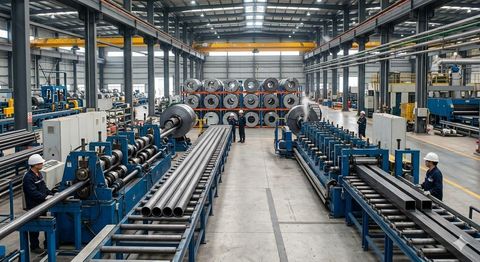
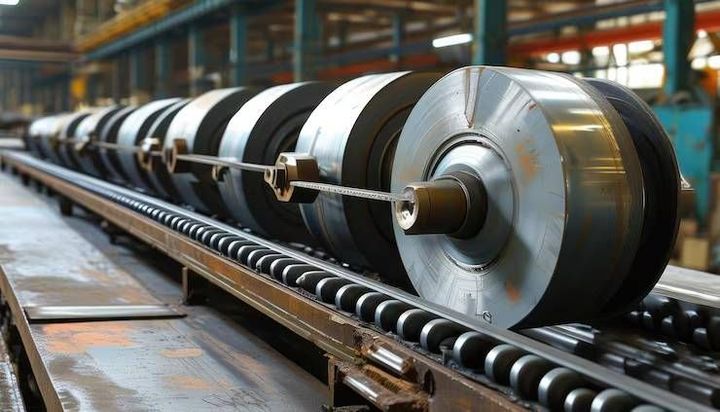
Steel coils are supplied in large rolls to support efficient transportation, storage, and processing. A slitting line unwinds the coil, guides the metal through rotating circular blades, separates it into narrower strips, and rewinds the strips into individual coils. Depending on the material and production requirements, the system may also include tension control, edge trimming, strip separation, and automated handling equipment.
Steel coil slitting machines are used in industries such as automotive manufacturing, construction, electrical equipment, metal fabrication, appliance production, and industrial packaging. Their main purpose is to prepare metal materials for downstream operations while maintaining consistent dimensions and suitable edge quality.
Main Components of a Slitting Line
A typical steel coil slitting line contains several coordinated components. Each component contributes to material handling, cutting accuracy, or finished coil quality.
Uncoiler: Holds the incoming steel coil and releases the material into the production line.
Leveling or feeding equipment: Helps control strip movement and, where fitted, reduces certain material irregularities.
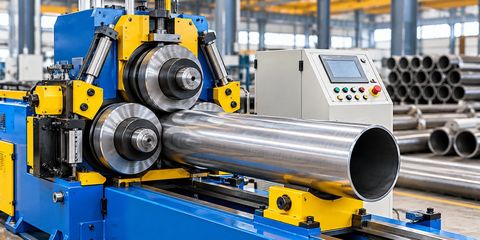
Slitter head: Uses circular cutting blades arranged on shafts to divide the wide strip into narrower sections.
Scrap handling system: Collects edge-trimming material when the production setup requires it.
Tension control system: Maintains suitable strip tension during processing.
Recoiler: Winds the finished strips into separate coils.
Control system: Coordinates machine movements, operating settings, and safety functions.
Not every steel coil slitting machine uses the same configuration. Equipment selection depends on steel thickness, material strength, coil dimensions, strip width, production volume, and the required finish.
Importance
Improving Metal Processing Efficiency
Steel coil slitting helps manufacturers prepare raw materials for different production processes. Instead of processing an entire wide coil in each downstream operation, a manufacturer can create multiple narrower strips according to a production specification.
This approach can support material planning and reduce unnecessary handling between manufacturing stages. Consistent strip dimensions also help downstream equipment operate with fewer interruptions caused by incorrectly sized material.
The overall result depends on machine setup, blade condition, operator training, material properties, and production planning. Slitting alone does not eliminate material waste or ensure that every strip meets a required specification.
Industries That Use Steel Slitting Equipment
Steel coil slitting machines support several industrial applications.
Automotive manufacturing: Narrow steel strips can be prepared for brackets, structural components, and formed metal parts.
Construction: Slit coils may be used to manufacture framing components, roofing profiles, and metal supports.
Electrical equipment: Certain steel grades are processed into strips for components used in electrical products.
Appliance manufacturing: Metal strips can supply forming and stamping operations for selected appliance parts.
Metal fabrication: Fabricators use slit coils as input material for cutting, bending, punching, and forming.
Pipe and tube production: Narrow strips can feed tube-forming lines, depending on the required dimensions and material properties.
Factors Affecting Cutting Quality
Cutting quality depends on the relationship between machine settings and the material being processed. Incorrect blade clearances, worn tooling, unsuitable tension, or poor alignment can produce rough edges, burrs, strip deformation, and inconsistent winding.
Operating factor | Purpose | Possible issue if poorly controlled |
|---|---|---|
Blade clearance | Controls the interaction between cutting edges | Excessive burrs or poor edge quality |
Blade sharpness | Supports consistent cutting | Rough edges and increased tooling wear |
Strip tension | Maintains stable material movement | Loose winding or strip deformation |
Material thickness | Determines tooling and setup requirements | Cutting inconsistency |
Shaft alignment | Supports uniform blade engagement | Width variation or uneven cutting |
Recoiler settings | Controls finished coil winding | Telescoping or uneven coil edges |
Regular inspection and setup verification help identify problems before they affect large quantities of material.
Recent Updates
Automation and Digital Machine Controls
During 2024–2026, industrial metal processing continued to adopt greater automation, digital monitoring, and integrated production controls. Steel coil slitting equipment can incorporate programmable logic controllers, digital displays, automated positioning, and sensors that monitor selected operating conditions.
These technologies can help operators repeat established settings, track machine status, and identify certain process irregularities. Their effectiveness depends on sensor quality, control-system integration, maintenance, and the accuracy of production data.
Some advanced systems also support recipe storage for different steel grades and strip dimensions. This can simplify changeovers, although the correct setup still requires suitable tooling, verification, and operator oversight.
Precision Cutting and Material Utilization
Manufacturers increasingly pay attention to strip-width accuracy, edge condition, and material utilization. These factors influence downstream processing, particularly when slit coils feed automated stamping, roll-forming, or tube-manufacturing lines.
Production planning software can help determine how a wide coil should be divided into narrower strips. However, the selected cutting pattern must account for blade spacing, trim allowances, material specifications, and actual production requirements.
Maintenance and Workplace Safety
Preventive maintenance remains important as slitting lines become more integrated with automated handling equipment. Inspection programs commonly cover blade condition, bearings, shafts, tension controls, electrical systems, and guarding.
Automation does not remove the need for workplace safety procedures. Operators still require suitable training, access controls, and established procedures for clearing jams, changing tooling, and performing maintenance.
Laws or Policies
Industrial Machinery Safety Requirements
Steel coil slitting machines contain rotating shafts, sharp blades, heavy coils, and powered material-handling equipment. These hazards require appropriate machine guarding, operating procedures, training, and maintenance controls.
Applicable requirements depend on the country where the equipment is installed and operated. Manufacturers and industrial facilities should identify the relevant occupational safety, machinery, electrical, and environmental rules before commissioning a production line.
In India, the Occupational Safety, Health and Working Conditions Code, 2020, is part of the country's occupational safety legislation framework. Its applicable provisions, commencement status, and associated rules should be checked against current official notifications and requirements relevant to the particular facility.
Machine Guarding and Operator Protection
A steel coil slitting line should be designed and operated to control access to hazardous moving parts. Emergency-stop devices, interlocks, barriers, and safe operating zones may form part of the protection system, depending on the machine design and applicable requirements.
Important safety practices include:
Preventing access to rotating blades and shafts during operation.
Using appropriate lifting equipment to handle heavy coils.
Following lockout procedures before maintenance or tooling changes.
Inspecting guarding and emergency-stop functions.
Providing suitable personal protective equipment.
Training operators in material handling and emergency procedures.
Protective equipment does not replace engineering controls or safe work procedures. Maintenance activities should follow the machine manufacturer's instructions and the facility's applicable safety requirements.
Environmental and Material Handling Considerations
Slitting operations may generate metal scrap, used lubricants, packaging waste, and other industrial residues. Facilities should manage these materials according to applicable environmental and waste-handling requirements.
Steel scrap can often be recovered for recycling when it is appropriately separated and handled. Proper storage and housekeeping also help reduce contamination, handling risks, and unnecessary material losses.
Tools and Resources
Machine Selection and Technical Specifications
Selecting a steel coil slitting machine requires an understanding of the intended production process. Technical specifications should describe the incoming coil, required strip dimensions, material grades, operating speed, and finished coil requirements.
Key specifications to compare include:
Minimum and maximum material thickness.
Maximum coil width and coil weight.
Permitted material strength and grade.
Number of strips produced in one pass.
Slitting width tolerance.
Blade dimensions and adjustment arrangements.
Recoiler capacity and finished coil diameter.
Automation, guarding, and maintenance requirements.
Nominal machine capacity should not be treated as proof that every material can be processed at the same speed or quality level.
Production Planning and Calculation Tools
Several calculations support slitting-line planning. Coil mass, material thickness, strip width, and steel density can help estimate the amount of material processed and the dimensions of finished coils.
For example, an approximate steel strip mass can be estimated using:
Mass = Length × Width × Thickness × Material Density
All dimensions must use compatible units. Actual values can differ because of material tolerances, coil geometry, and measurement methods.
Slitting-pattern calculators and production-planning spreadsheets can help evaluate strip combinations and trim allowances. Their results should be checked against blade arrangement, tooling limits, and the material specification before production begins.
Inspection and Maintenance Records
A structured maintenance log can record blade changes, alignment checks, equipment faults, repairs, and inspection results. These records help identify recurring issues and support planned maintenance.
Quality-control records can also include strip width, edge condition, coil shape, material identification, and batch details. Consistent documentation helps production teams investigate defects and maintain traceability between incoming material and finished coils.
FAQs
What is a steel coil slitting machine used for?
A steel coil slitting machine divides wide steel coils into narrower strips for manufacturing processes such as stamping, roll forming, tube production, and metal fabrication.
How does a steel coil slitting line work?
The line unwinds a steel coil, feeds it through rotating circular blades, separates the material into narrower strips, controls strip tension, and rewinds the finished strips into individual coils.
Which factors affect steel coil slitting machine accuracy?
Blade clearance, tooling condition, shaft alignment, material thickness, strip tension, and machine setup all influence cutting accuracy and edge quality.
How do manufacturers select an industrial metal slitting machine?
Selection depends on material grade, thickness, coil width, coil weight, required strip widths, production volume, tolerance requirements, automation needs, and workplace safety provisions.
How often should a steel coil slitting machine be maintained?
Maintenance frequency depends on operating hours, material characteristics, machine design, and manufacturer guidance. Regular inspections and condition-based maintenance help identify wear and operating problems.
Conclusion
Steel coil slitting machines convert wide metal coils into narrower strips used across construction, automotive, electrical, and fabrication industries. Cutting quality depends on appropriate tooling, material characteristics, machine alignment, tension control, and maintenance practices. Automation and digital monitoring can support production consistency, while workplace safety and environmental requirements remain essential. Equipment selection should be based on verified technical specifications and the actual needs of the manufacturing process.