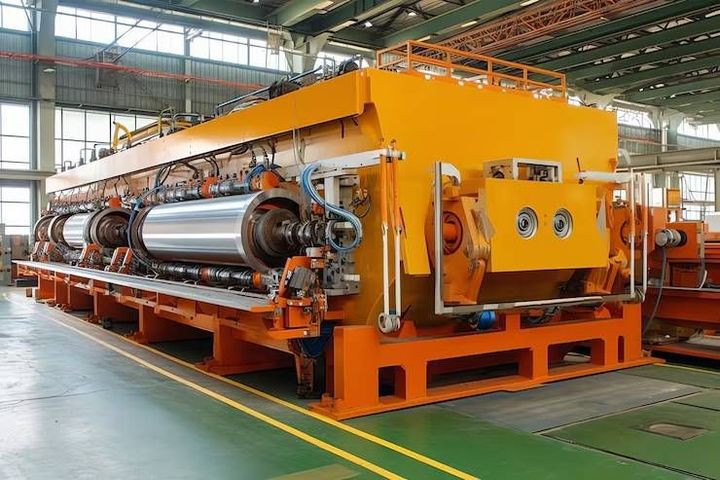
Explore Synchronous Tube Forming Machines With Precision Engineering and Industrial Applications
Synchronous Tube Forming Machines are industrial systems designed to shape metal tubes through coordinated mechanical movements.
These machines use synchronized operations to control forming tools, workpiece positioning, and processing sequences, helping manufacturers produce tube components with consistent dimensions and shapes. They are used in industries where tubular parts require accurate geometry, repeatable production, and compatibility with other manufacturing processes.
Tube forming technology developed alongside the growth of metalworking, transportation, construction, and industrial equipment manufacturing. As products became more complex, manufacturers needed equipment capable of producing bends, reductions, expansions, flares, and other shapes without relying entirely on manual operations.
The term synchronous describes the coordinated timing of different machine movements. Depending on the equipment design, synchronization may involve multiple forming heads, rotating components, feeding mechanisms, clamps, or automated transfer systems. The exact configuration varies according to the tube material, diameter, wall thickness, and required finished shape.
How Synchronous Tube Forming Technology Works
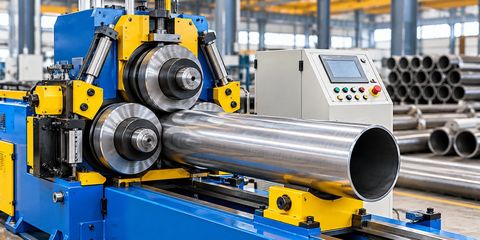
A synchronous tube forming machine generally combines a feeding system, a workpiece holding mechanism, forming tools, a drive system, and a control unit. The tube is positioned and secured before the forming operation begins, while the tools move according to a defined sequence.
In systems with programmable controls, operators can adjust parameters such as tool travel, forming speed, feed distance, and cycle timing. Sensors may monitor position or operating conditions to help maintain repeatability and identify deviations.
A typical production sequence includes:
Loading: The metal tube enters the machine manually or through an automated feeding system.
Positioning: Stops, clamps, or guides align the tube with the forming tools.
Forming: Mechanical, hydraulic, pneumatic, or servo-driven mechanisms shape the selected section.
Inspection: The formed component is checked for dimensions, surface condition, and shape accuracy.
Unloading: The finished component moves to the next manufacturing stage.
Not every machine performs all these operations automatically. Some systems require separate cutting, deburring, cleaning, or inspection equipment.
Common Types of Tube Forming Operations
Synchronous tube forming equipment can support different operations depending on its tooling and mechanical arrangement.
Tube end forming changes the shape of a tube's end through expansion, reduction, flaring, beading, or other processes. Tube bending changes the direction of a straight tube, while specialized forming systems can create collars, stepped sections, or shaped connections.
The selected process depends on the final component design. For example, a tube used in a fluid connection may require a precisely formed end, while a structural component may need a controlled bend or several coordinated forming stages.
Importance
Why Precision Engineering Matters
Precision engineering is important because tube dimensions affect assembly, alignment, strength, and performance. A poorly formed end may not fit a connecting component correctly, while an inaccurate bend can create interference during installation.
Synchronous Tube Forming Machines help manage these challenges by coordinating movements and repeating defined production sequences. When the machine is configured correctly and maintained properly, synchronized operation can reduce variation between components.
However, consistency depends on several factors, including material properties, tooling condition, machine calibration, lubrication, and operator procedures. Synchronization alone does not eliminate defects or remove the need for quality inspection.
Industrial Applications
Tube forming equipment is used across manufacturing sectors that depend on shaped tubular components.
Automotive manufacturing: Tubes for exhaust assemblies, structural components, fluid lines, and other vehicle systems.
HVAC equipment: Tubular connections, refrigerant lines, and components used in heating and cooling systems.
Furniture production: Metal frames, chair supports, table structures, and decorative tubular parts.
Construction equipment: Tubular supports, handrails, brackets, and structural assemblies.
Medical equipment manufacturing: Selected tubular components used in equipment frames and compatible devices, subject to applicable material and quality requirements.
Industrial machinery: Fluid connections, protective frames, equipment supports, and fabricated machine parts.
Each application has different requirements for material strength, dimensional tolerance, surface finish, and inspection. A machine suitable for thin-walled aluminum tubing may not be appropriate for heavy steel tubing without a different configuration.
Benefits and Practical Limitations
Synchronous forming can support repeatable production, coordinated multi-stage operations, and integration with automated manufacturing lines. It may also reduce unnecessary handling when several forming actions can occur within one controlled cycle.
Important considerations include tooling complexity, setup time, maintenance requirements, and the range of tube dimensions a machine can accommodate. Manufacturers must evaluate these factors against the production volume and component specifications.
Recent Updates
Automation and Digital Controls
During 2024–2026, industrial tube forming has continued to follow broader manufacturing trends toward automation, programmable controls, and production monitoring. These developments are not exclusive to synchronous tube forming machines, but they influence how newer systems are designed and operated.
Programmable logic controllers, servo drives, and human-machine interfaces can help operators manage movement sequences and adjust production parameters. Depending on the machine, digital systems may also record cycle information, display alarms, or store settings for different components.
Automation can reduce repetitive manual tasks, although the level of automation varies significantly between machines. Complex production lines may combine tube feeding, forming, cutting, and inspection, while smaller installations may automate only selected stages.
Sensors and Quality Monitoring
Position sensors and other monitoring devices can help detect movement deviations or operating abnormalities. Some manufacturing systems also use dimensional measurement equipment to check tube geometry during or after forming.
These tools support process control but do not automatically establish that every finished part meets its specification. Inspection methods must be appropriate for the component, and measurement equipment needs suitable calibration and maintenance.
Energy Efficiency and Flexible Production
Manufacturers continue to examine energy consumption, equipment utilization, and production flexibility. Servo-driven systems can provide controlled movement and may reduce energy use in certain operating conditions, depending on machine design and duty cycle.
Flexible tooling and programmable recipes can also help production facilities handle different component designs. Nevertheless, changeover time, tooling availability, material compatibility, and operator training remain important practical considerations.
Laws or Policies
Industrial Machinery Safety
In India, industrial machinery is subject to applicable workplace safety requirements and relevant factory regulations. The precise obligations depend on the establishment, machine type, operating environment, and legislation in force.
Tube forming equipment can involve crushing points, moving tools, hydraulic pressure, sharp metal edges, and unexpected machine movement. Appropriate guarding, emergency stops, safe operating procedures, and maintenance controls are important elements of machine safety.
Operators should receive training appropriate to their responsibilities. Adjustments, cleaning, and maintenance should follow the manufacturer's instructions and established isolation procedures to reduce the risk of accidental movement.
Electrical and Control System Safety
Machines with electrical drives and automated controls require appropriate electrical protection, grounding, wiring practices, and inspection. Control systems should be designed and maintained to support safe operation under expected working conditions.
Manufacturers and facility operators may need to consider applicable Indian standards and relevant international standards, depending on the equipment and contractual requirements. Compliance should be assessed against the specific rules that apply to the installation rather than assumed from a general product description.
Quality and Product Requirements
Tube forming equipment may be used to produce components governed by industry-specific technical specifications. These requirements can cover dimensions, material grades, pressure performance, surface condition, traceability, or inspection procedures.
For example, components intended for fluid systems may require checks different from those used for furniture frames. Manufacturers should establish inspection criteria based on the finished component's intended application and applicable engineering specifications.
Tools and Resources
Machine Selection and Process Planning
Selecting a synchronous tube forming machine involves understanding the tube material, dimensions, forming operations, and expected production requirements. Technical datasheets and machine manuals can help establish whether a particular configuration matches the intended application.
Important specifications to review include:
Tube diameter and wall-thickness range.
Compatible materials and material strength.
Number and sequence of forming operations.
Forming force and tool travel.
Positioning accuracy and repeatability.
Production cycle time under defined conditions.
Available controls, sensors, and safety features.
Tooling requirements and maintenance access.
Actual production performance should be assessed under conditions representative of the intended application. A published cycle time may not include loading, unloading, inspection, or tool changes.
Design and Measurement Tools
Computer-aided design software can help engineers develop tube profiles, evaluate dimensions, and prepare component drawings. Where appropriate, simulation tools can help assess bending behavior, deformation, and possible interference before production trials.
Measurement instruments support inspection of finished components. Depending on the required tolerances, these may include calipers, micrometers, gauges, coordinate measuring equipment, or dedicated fixtures.
Comparing Machine Configurations
The following table outlines common machine arrangements and their general characteristics.
Machine configuration | Typical characteristics | Common consideration |
|---|---|---|
Mechanical forming system | Uses mechanical drives and tooling | Suitable cycle and force range |
Hydraulic forming system | Uses hydraulic pressure for forming movements | Pressure control and fluid maintenance |
Servo-driven system | Uses electronically controlled motors | Programmability and motion control |
Multi-station system | Performs several operations across stations | Tool coordination and transfer timing |
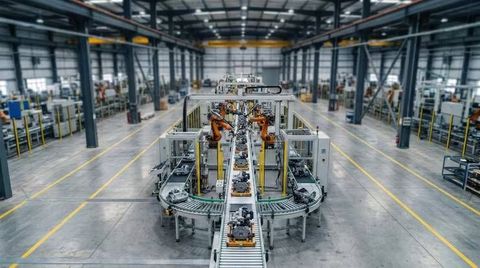
Integrated automated line | Connects forming with feeding or inspection | System integration and safety controls |
These categories can overlap. A machine may use servo-driven positioning alongside hydraulic forming, or incorporate multiple stations within an automated production line.
FAQs
What is a synchronous tube forming machine?
A synchronous tube forming machine coordinates different mechanical movements to shape metal tubes through controlled operations. Depending on its design, it may support tube end forming, expansion, reduction, bending, or multiple forming stages.
How does synchronous tube forming improve production consistency?
Coordinated movement, controlled positioning, repeatable settings, and suitable tooling can reduce variation between parts. Consistency still depends on material properties, machine calibration, tool condition, and inspection procedures.
Which industries use synchronous tube forming machines?
Automotive, HVAC, furniture, construction equipment, and general industrial manufacturing use tube forming technology. The specific machine configuration depends on the component geometry and material requirements.
What factors matter when selecting a synchronous tube forming machine?
Important factors include tube diameter, wall thickness, material type, forming operations, dimensional tolerances, production volume, tooling needs, control features, and safety provisions.
What maintenance does a synchronous tube forming machine require?
Maintenance may include checking tooling, inspecting moving parts, monitoring lubrication or hydraulic systems, verifying sensors, and checking safety devices. The appropriate schedule depends on the machine manufacturer's instructions and actual operating conditions.
Conclusion
Synchronous Tube Forming Machines use coordinated mechanical movements to produce shaped tubular components for a range of industrial applications. Their contribution to precision engineering depends on suitable tooling, controlled operating parameters, consistent materials, and effective inspection. Automation, digital controls, and production monitoring continue to influence machine design and manufacturing practices. Safe operation and reliable results require attention to applicable regulations, maintenance procedures, and component specifications.