Discover Rubber Recycling Machines for Efficient Tire and Rubber Waste Processing
Rubber recycling machines are designed to process discarded tires, rubber products, and production residues into reusable materials. Rubber recycling machines can include tire shredders, granulators, crumb rubber systems, magnetic separators, fiber separators, and related processing equipment.
These systems support rubber waste recycling by reducing the size of discarded materials and separating rubber from components such as steel and textile fibers. As global consumption of tires and rubber products continues to generate substantial waste streams, tire recycling machine technology has become an important part of modern waste processing. Understanding how these machines work helps readers recognize the stages involved in tire recycling, the materials produced, and the factors that influence processing efficiency.
Context
What Rubber Recycling Machines Do
Rubber recycling machines process rubber-containing waste into smaller and more manageable material forms. A complete recycling line may use several machines because discarded tires contain different materials that need to be separated during processing.
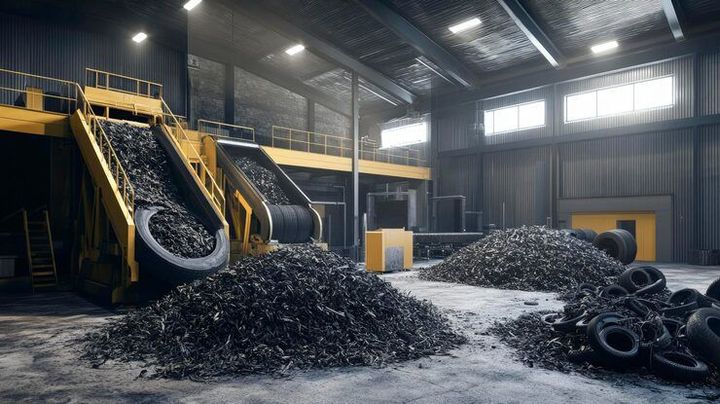
A typical system can begin with a tire shredder that cuts whole tires into larger pieces. Further processing can reduce these pieces into smaller rubber granules or crumb rubber. Magnetic separation can then remove steel, while fiber separation helps remove textile material.
The resulting rubber particles can have different sizes depending on the processing method. Coarser rubber chips, rubber granules, and fine crumb rubber are used in different manufacturing and material applications.
Where Rubber Waste Comes From
Rubber waste comes from many sources. Used vehicle tires represent a major waste stream, but rubber residues also come from manufacturing facilities, conveyor components, seals, hoses, mats, footwear, and other rubber-based products.
Industrial production can create rubber scraps when products are trimmed, cut, molded, or rejected during manufacturing. Recycling equipment allows suitable rubber residues to enter another processing cycle rather than remaining as mixed waste.
Main Stages of Tire Recycling
Tire recycling generally involves several stages:
- Initial inspection and preparation
- Tire cutting or shredding
- Size reduction
- Steel separation
- Fiber separation
- Granulation
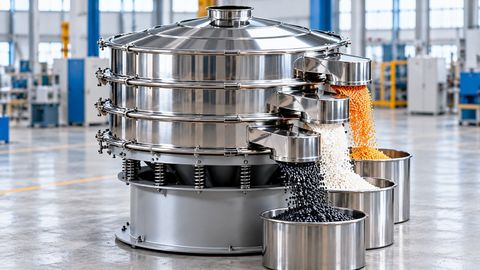
- Screening
- Material collection
The exact sequence depends on the type of feedstock and the desired output. Some systems process whole tires, while others are designed specifically for pre-shredded rubber.
Importance
Why Rubber Waste Recycling Matters
Rubber products can remain in the environment for long periods because their materials are designed to withstand physical stress and environmental conditions. Large quantities of discarded tires can also occupy considerable storage space and create handling challenges.
Rubber waste recycling provides a way to recover useful material from discarded products. Instead of treating rubber waste as a single mixed material, recycling systems divide it into usable fractions such as rubber, steel, and textile fibers.
This approach can support material recovery and reduce the amount of rubber-containing waste entering disposal streams.
Who Uses Recycling Equipment
Rubber recycling equipment can be used in different industrial settings, including:
- Tire recycling facilities
- Rubber product manufacturing operations
- Material recovery facilities
- Waste processing plants
- Industrial recycling operations
- Facilities handling rubber production residues
The equipment selected depends on factors such as the type of rubber waste, expected throughput, particle size requirements, available space, and the level of material separation required.
Common Recovered Materials
Tire recycling can produce several material streams. Rubber is usually the primary recovered fraction, while steel and textile fibers may be separated as secondary materials.
| Material | Typical Processing Stage | General Form |
|---|---|---|
| Rubber | Shredding and granulation | Chips, granules, crumb |
| Steel | Magnetic separation | Separated metal pieces |
| Textile fiber | Fiber separation | Loose fiber |
| Mixed tire pieces | Initial shredding | Larger rubber fragments |
The quality and composition of recovered materials depend on tire construction, equipment configuration, contamination, and processing conditions.
Factors Affecting Processing Efficiency
Processing efficiency is influenced by several practical factors. Feedstock consistency is important because tires and rubber products can vary in thickness, reinforcement, and composition.
Machine configuration also matters. Cutting tools, screening systems, conveyor arrangements, and separation equipment must work together to maintain a consistent material flow.
Other considerations include:
- Feedstock size
- Rubber hardness
- Moisture and contamination
- Desired particle size
- Equipment capacity
- Maintenance requirements
- Separation accuracy
- Energy consumption
These factors help determine how a rubber recycling machine fits into a particular processing system.
Recent Updates
Development of More Integrated Systems
Recent developments from 2024 through 2026 have continued to emphasize integrated recycling systems rather than isolated machines. Modern tire recycling lines increasingly combine shredding, granulation, screening, magnetic separation, and fiber separation within coordinated processing arrangements.
Automation has also become more common. Sensors and control systems can monitor material flow, machine conditions, temperature, and other operating variables. These technologies can help operators identify changes in processing conditions and maintain more consistent operation.
Growing Interest in Material Recovery
Another current trend is greater attention to recovering useful materials from difficult waste streams. Rubber waste recycling is increasingly discussed as part of broader circular-material strategies in which recovered materials are returned to manufacturing or other applications.
Manufacturers and recycling operators are also examining ways to improve rubber particle consistency. Controlled particle sizing can make recovered rubber easier to classify and use in downstream processes.
Improvements in Separation Technology
Separation remains an important area of equipment development. Tire recycling machine systems may use magnetic separators for steel recovery and specialized fiber separation stages for textile removal.
Better separation can improve the purity of individual material streams. Digital monitoring and automated controls are also being incorporated into some processing systems to provide more information about equipment performance.
Laws or Policies
Regulations for Tire and Rubber Waste
Rules governing tire recycling and rubber waste recycling vary according to the country and region where processing takes place. Many regulatory systems classify discarded tires as a specific waste stream and establish requirements for collection, storage, transportation, processing, or final disposal.
Some jurisdictions use extended producer responsibility programs. Under these frameworks, manufacturers or other participants in the tire supply chain may have defined responsibilities related to the management of products after use.
Environmental and Safety Requirements
Rubber recycling facilities may also need to comply with requirements covering air emissions, noise, fire prevention, worker protection, waste handling, and industrial equipment.
Shredding and grinding can generate dust and airborne particles, while tire processing can involve moving machinery and stored combustible materials. Appropriate controls therefore form an important part of facility planning and operation.
Because requirements differ between jurisdictions, operators generally need to review the environmental and industrial rules applicable to their location and processing activity.
International Waste Movement
Cross-border movement of certain waste materials can also be regulated through international agreements and national import or export rules. The Basel Convention is one example of an international framework addressing the movement and disposal of hazardous and other wastes.
Whether a particular rubber or tire shipment falls under specific controls depends on its classification and the rules of the countries involved.
Tools and Resources
Equipment Selection Resources
Useful resources for understanding rubber recycling machines include manufacturer technical specifications, equipment manuals, engineering diagrams, recycling-industry publications, and environmental guidance documents.
Technical specifications can provide information about processing capacity, input dimensions, particle size, power requirements, machine configuration, and separation stages.
Planning and Calculation Tools
Basic planning tools can help estimate material flow and processing requirements. Common resources include:
- Throughput calculators
- Material-flow worksheets
- Particle-size reference charts
- Equipment maintenance schedules
- Energy-use calculation sheets
- Waste composition templates
- Process-flow diagrams
These tools can help organize information before evaluating a rubber recycling system.
Industry Information Platforms
Environmental agencies, recycling associations, engineering publications, technical libraries, and equipment documentation can provide background information about tire recycling and rubber waste processing.
Readers researching a specific system should distinguish general educational information from technical specifications that apply to a particular machine configuration. Actual processing results depend on feedstock, equipment design, operating conditions, and maintenance.
FAQs
What is a rubber recycling machine?
A rubber recycling machine is equipment used to reduce, process, separate, or classify discarded rubber materials. Systems may include shredders, granulators, screens, magnetic separators, and fiber separation equipment.
How does a tire recycling machine work?
A tire recycling machine system generally begins by cutting or shredding tires into smaller pieces. The material can then pass through additional stages that separate steel and textile fibers and produce rubber chips, granules, or crumb rubber.
What materials can rubber waste recycling recover?
Rubber waste recycling can recover rubber as the main material, along with steel and textile fibers from reinforced products such as tires. The recovered fractions depend on the composition of the input material and the processing system.
What size rubber can a tire recycling machine produce?
The output size depends on the machine configuration and screening system. Some systems produce larger rubber chips, while others use additional granulation stages to produce smaller particles or crumb rubber.
What factors affect rubber recycling machine performance?
Feedstock type, tire composition, particle size requirements, machine configuration, separation stages, operating conditions, and maintenance can all influence processing performance. Consistent input material can also make processing easier to control.
Conclusion
Rubber recycling machines provide a structured method for processing discarded tires and other rubber waste into separated material streams. Tire recycling machine systems can combine shredding, granulation, screening, steel removal, and fiber separation to produce different forms of recovered rubber. Current developments increasingly focus on integrated processing, automation, material separation, and resource recovery. Regulations surrounding tire and rubber waste vary by jurisdiction, making environmental and operational requirements an important part of recycling facility planning.