Welding Robots Guide With Automated Welding Technology and Manufacturing Insights
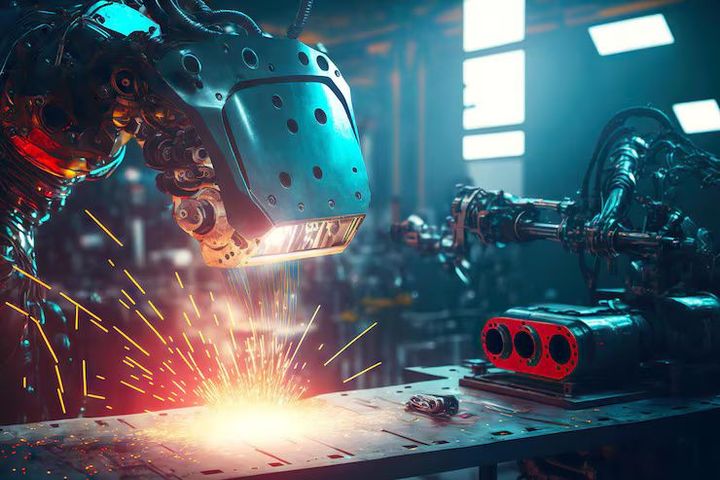
Welding robots are automated machines designed to perform welding operations with programmed movements, controlled heat, and repeatable positioning. A typical robotic welding system combines a robotic arm with a welding power source, torch, sensors, fixtures, controllers, and safety equipment.
The development of welding robots comes from the broader growth of industrial automation. Traditional welding often required workers to position materials, control the welding torch, maintain suitable movement, and repeat the same process across many components. As manufacturing became more standardized, automated systems emerged to handle repetitive welding operations.
Modern robotic welding technology can be configured for different materials, joint designs, component sizes, and production environments. Common applications include automotive components, metal structures, machinery frames, appliances, construction equipment, and fabricated metal assemblies.
How robotic welding works
A welding robot normally operates according to programmed movement instructions. The controller coordinates the robotic arm, welding equipment, workpiece position, and other components so that the torch follows a defined welding path.
The basic process usually involves:
- Component positioning through fixtures or positioning equipment
- Programmed robotic arm movement
- Welding arc activation
- Controlled travel speed and torch positioning
- Monitoring of welding parameters
- Completion of the programmed welding sequence
- Inspection of the finished weld
Some systems use sensors or machine vision to detect the position of components and adjust movement when conditions change.
Main types of welding robots
Different robotic configurations are used according to workspace requirements and manufacturing processes. Articulated robots are widely used because their multiple joints allow movement around complex components. Collaborative welding systems are designed around controlled interaction between people and automated equipment, although their permitted operating conditions depend on the specific system and risk assessment.
Other configurations include Cartesian, SCARA, and specialized robotic platforms. The choice depends on factors such as component geometry, required reach, welding process, production volume, and workspace arrangement.
Importance
Welding is an important manufacturing process because it joins metal components into structures that can become part of machines, vehicles, equipment, buildings, and industrial products. However, repeated welding can involve heat, fumes, sparks, arc radiation, awkward positions, and physically demanding movements.
Welding robots address some of the repetitive aspects of these operations. They can repeatedly follow programmed paths and maintain controlled welding parameters, while human workers can focus on activities such as programming, inspection, fixture preparation, maintenance, process supervision, and quality control.
Manufacturing challenges addressed by automation
Automated welding technology can be particularly relevant when manufacturers need consistent production processes. Repeated components can require the same welding sequence many times, making accurate positioning and repeatable movement important.
Robotic welding may help address:
- Repetitive welding movements
- Difficult access to certain component areas
- Variation caused by manual movement
- Production interruptions from repeated setup activities
- Inconsistent torch positioning
- Difficult working positions
- Process monitoring requirements
The technology does not eliminate every manufacturing challenge. Incorrect programming, unsuitable fixtures, poor material preparation, equipment faults, or incorrect welding parameters can still affect results.
Welding robots and human workers
Robotic systems generally change the type of human involvement rather than removing the need for people entirely. Operators and technicians may be responsible for programming, system setup, inspection, troubleshooting, maintenance, and process control.
Training can therefore involve robotics fundamentals, welding principles, programming, electrical systems, mechanical components, safety procedures, and quality inspection.
Key components of a robotic welding system
A complete automated welding cell can contain several interconnected components.
| Component | Primary function |
|---|---|
| Robotic arm | Moves the welding equipment along programmed paths |
| Robot controller | Coordinates movement and operating instructions |
| Welding power source | Generates controlled welding energy |
| Welding torch | Directs the welding process toward the joint |
| Wire feeder | Supplies welding wire when required |
| Fixture | Holds components in a defined position |
| Positioner | Rotates or repositions components |
| Sensors | Detect component position or process conditions |
| Safety equipment | Controls access and hazardous operating areas |
| Human-machine interface | Allows operators to monitor and control the system |
The performance of the entire cell depends on how these components work together. A highly capable robot can still produce inconsistent results if components are poorly positioned or the welding parameters are unsuitable.
Recent Updates
From 2024 through 2026, the welding automation sector has continued moving toward greater sensing, software integration, data collection, and flexible production. Instead of relying only on fixed robotic movements, newer systems increasingly combine robots with sensors, cameras, monitoring equipment, and digital control platforms.
AI and machine vision
Machine vision is becoming more relevant in automated welding because cameras and related sensors can help identify component positions, joint locations, or changes in the workpiece. Artificial intelligence can also be applied to image analysis, process monitoring, anomaly detection, and production data interpretation.
These technologies do not make every welding process autonomous. Their usefulness depends on sensor quality, software configuration, material conditions, lighting, component consistency, and the specific welding application.
Digital monitoring and connected systems
Industrial connectivity is another important development. Welding robots can generate information about operating cycles, welding parameters, equipment conditions, and production activity. Manufacturing software can use this information for process analysis and equipment monitoring.
Connected systems can also support predictive maintenance approaches by identifying unusual operating patterns. However, maintenance decisions still require suitable technical evaluation.
Flexible robotic welding
Manufacturers increasingly need equipment that can accommodate different component designs and production requirements. Robotic welding systems are therefore being developed with easier programming, digital simulation, offline programming, modular fixtures, and sensor-based adjustments.
Collaborative robotic technology is also receiving attention for applications where controlled human-machine interaction may be appropriate. Safety assessment remains essential because welding involves heat, electrical energy, fumes, radiation, and moving machinery.
Laws or Policies
Welding robots are influenced by workplace safety rules, machinery requirements, electrical standards, welding procedures, environmental controls, and industrial automation regulations. The exact requirements vary according to the country, industry, machine configuration, and operating environment.
Workplace safety
Automated welding cells normally require measures that reduce access to hazardous moving parts and welding areas. Physical guarding, safety interlocks, emergency stopping systems, warning systems, and controlled access can form part of a robotic cell's safety design.
A risk assessment is generally used to identify hazards associated with robot movement, welding arcs, electrical systems, hot materials, fumes, and unexpected machine operation.
Welding and machinery requirements
Applicable standards may address robot safety, welding equipment, electrical installations, protective systems, ventilation, and weld quality. Manufacturers and operators normally need to identify which standards and regulations apply to their specific installation.
Government programs in some regions also support industrial automation, digital manufacturing, energy efficiency, or advanced manufacturing development. Eligibility and requirements differ between jurisdictions, so such programs should be evaluated using current official information.
Environmental considerations
Welding can generate fumes and gases that require appropriate ventilation and exposure controls. Automated equipment does not remove these hazards. A robotic welding cell may require extraction systems, enclosure design, air-quality controls, and appropriate personal protective equipment.
Tools and Resources
Several technical tools can help people understand, plan, or manage robotic welding systems. Welding calculators can assist with basic parameter estimates, while robot simulation software can model movement and identify possible collisions before physical production.
Useful resources for learning and planning
Relevant resources include:
- Welding parameter calculators
- Robot programming software
- Offline programming platforms
- Welding procedure templates
- Maintenance checklists
- Risk assessment templates
- Digital manufacturing dashboards
- Weld inspection documentation
- Machine vision configuration tools
- Equipment manuals and technical documentation
Simulation software is particularly useful when a robotic welding cell involves complex component geometry. A virtual model can help evaluate robot reach, torch access, fixture positioning, and movement sequences before the physical system is operated.
For quality management, inspection records can document welding parameters, component identification, inspection results, equipment conditions, and corrective actions. The specific documentation required depends on the industry and applicable standards.
FAQs
What are welding robots?
Welding robots are programmable industrial machines that move welding equipment along defined paths. They are used to automate repeated welding processes while allowing human personnel to manage programming, setup, inspection, maintenance, and supervision.
How does automated welding technology work?
Automated welding technology combines a robotic movement system with welding equipment, controllers, fixtures, and sometimes sensors. The controller coordinates the equipment according to programmed instructions so the welding torch follows a planned sequence.
What are welding robots used for?
Welding robots are used for repeated metal joining operations in industries such as vehicle manufacturing, machinery production, metal fabrication, appliances, construction equipment, and structural component manufacturing.
Can welding robots use artificial intelligence?
Some modern robotic welding systems incorporate machine vision, sensor analysis, or AI-based software. These technologies can assist with component recognition, weld monitoring, process analysis, and detection of unusual conditions.
Are welding robots safe?
Welding robots can be operated within controlled safety systems, but they still involve hazards from moving machinery, welding arcs, heat, electricity, fumes, and hot materials. Proper guarding, risk assessment, training, maintenance, and applicable safety procedures are important.
Conclusion
Welding robots combine robotic movement, welding equipment, sensors, controllers, and fixtures to automate repeated metal joining processes. Automated welding technology is increasingly connected with machine vision, digital monitoring, simulation, and data-based manufacturing systems. Human involvement remains important for programming, inspection, maintenance, safety management, and process control. Understanding the equipment, operating environment, applicable rules, and production requirements is essential when evaluating robotic welding applications.