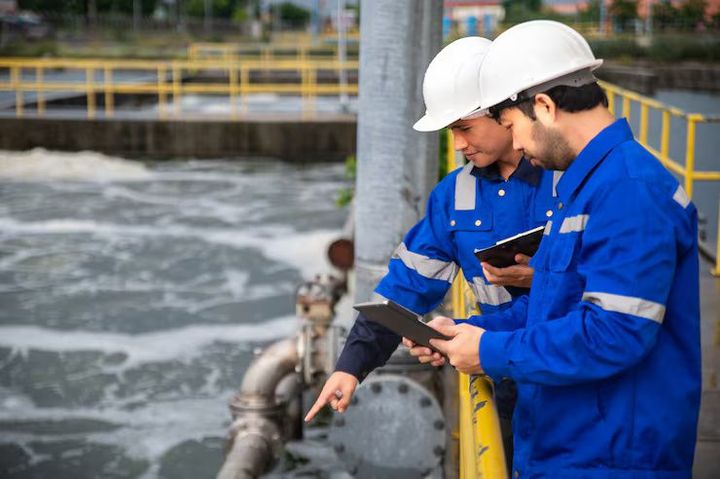
Water Treatment Guide With Advanced Purification Technology and Environmental Insights
Water treatment is the process of improving water quality so it can be used safely for drinking, household activities, agriculture, industry, or environmental purposes. Water can contain suspended particles, microorganisms, dissolved minerals, organic compounds, metals, salts, and other contaminants depending on its original source and surrounding conditions.
Modern water treatment combines physical, chemical, biological, and membrane-based processes. A typical system may begin with screening and sediment removal before moving through filtration, biological treatment, chemical treatment, disinfection, or advanced purification. The exact combination depends on the source water and the contaminants that need to be controlled.
The purpose of water treatment has expanded beyond simple filtration. Current approaches increasingly consider the complete water cycle, including source protection, treatment, distribution, wastewater recovery, monitoring, and responsible management of treatment residues. The World Health Organization's updated guidance emphasizes risk management from the water source through the point of consumption.
How Water Treatment Works
Most treatment systems use several stages because no single process removes every type of contaminant.
| Treatment stage | Main purpose | Common technologies |
|---|---|---|
| Screening | Removes larger materials | Screens, grates |
| Coagulation | Groups fine particles | Coagulants, rapid mixing |
| Sedimentation | Separates heavier particles | Clarifiers, settling tanks |
| Filtration | Removes smaller particles | Sand, multimedia, cartridge filters |
| Biological treatment | Reduces biodegradable matter | Activated sludge, biofilters |
| Membrane treatment | Separates dissolved or very small contaminants | Ultrafiltration, nanofiltration, reverse osmosis |
| Disinfection | Controls microorganisms | UV, ozone, chlorine-based processes |
| Advanced purification | Targets specific contaminants | Activated carbon, ion exchange, advanced oxidation |
The treatment sequence is selected according to water quality testing and the intended use of the treated water. Drinking-water systems generally require more stringent controls than water intended for some industrial or non-potable applications.
Main Types of Water Sources
Water treatment can begin with surface water from rivers, lakes, and reservoirs, or groundwater obtained from wells and underground formations. Rainwater, seawater, industrial wastewater, and municipal wastewater may also require specialized treatment.
Each source presents different challenges. Surface water can contain sediment and microorganisms, while groundwater may contain dissolved minerals or naturally occurring metals. Seawater contains high concentrations of dissolved salts and therefore commonly requires desalination technology such as reverse osmosis.
Importance
Safe water is important for public health, food production, industrial activity, sanitation, and environmental protection. Poorly managed water sources can become contaminated through wastewater discharge, agricultural runoff, industrial activity, damaged infrastructure, or naturally occurring substances.
Water treatment also addresses increasing pressure on freshwater resources. Reusing appropriately treated wastewater can reduce demand on freshwater sources in applications where reclaimed water is suitable. This approach is becoming increasingly relevant as communities consider water resilience, resource efficiency, and environmental protection.
Problems Addressed by Modern Treatment
Modern water treatment technologies can address different categories of contamination.
- Physical contaminants include sediment, suspended solids, and visible particles.
- Biological contaminants include bacteria, viruses, protozoa, and other microorganisms.
- Chemical contaminants can include metals, nutrients, pesticides, solvents, and industrial compounds.
- Dissolved substances can include salts and minerals that require membrane or specialized treatment.
- Emerging contaminants include substances such as PFAS, pharmaceuticals, personal-care compounds, and some microplastics.
The treatment method must match the contaminant. For example, conventional filtration may remove suspended particles effectively but may not remove dissolved salts. Reverse osmosis can separate many dissolved substances, while activated carbon can be used for certain organic compounds.
Environmental Considerations
Treatment itself requires energy, chemicals, equipment, and maintenance. It can also produce residual materials such as sludge, concentrated brine, or spent filtration media.
Environmental planning therefore considers both contaminant removal and what happens to the resulting residuals. Modern water treatment planning increasingly incorporates energy efficiency, resource recovery, water reuse, and lifecycle considerations rather than viewing treatment as an isolated process.
Recent Updates
Water treatment developments from 2024 through 2026 have placed greater emphasis on preventive risk management, advanced monitoring, emerging contaminants, and technology selection based on local conditions.
Updated Water Safety Guidance
The World Health Organization published updated guidance for small drinking-water supplies in 2024, placing stronger emphasis on preventive risk management, sanitary inspections, health-based regulations, and water safety planning.
In 2025, WHO also published a comprehensive compendium covering water technologies from the source through treatment, distribution, and household practices. It emphasizes matching technology selection with water quality conditions, health targets, monitoring, resilience, and lifecycle considerations.
In 2026, WHO released an updated edition of its drinking-water quality guidelines incorporating additional evidence and implementation experience. The update strengthens attention to small water supplies, microbial risks, chemical hazards, sanitary inspections, and risk-based management.
Advanced Purification Technology
Membrane systems remain an important part of advanced water purification. Ultrafiltration and nanofiltration can target different particle and molecular-size ranges, while reverse osmosis is widely used when substantial removal of dissolved substances is required.
Activated carbon and ion exchange are also important technologies for specific contaminants. Research into PFAS treatment, for example, includes granular activated carbon, ion exchange, and membrane processes.
Another developing area is contaminant destruction. Research is examining processes such as advanced oxidation, electrochemical methods, and other approaches intended to transform difficult contaminants rather than simply transfer them into another waste stream.
Digital Monitoring
Sensors and automated monitoring are becoming more common in treatment facilities. Parameters such as turbidity, pH, conductivity, temperature, pressure, flow, and disinfectant levels can be monitored continuously.
Digital monitoring can help operators identify changes in water quality or equipment performance more quickly. However, sensor data still needs appropriate interpretation, calibration, verification, and maintenance.
Laws or Policies
Water treatment is shaped by drinking-water standards, wastewater discharge requirements, environmental rules, public-health policies, and industrial regulations. Because requirements differ between jurisdictions, a treatment system must be evaluated against the rules that apply to its location and intended use.
International guidance can provide a technical foundation, but WHO guidelines themselves are not automatically national law. WHO's framework encourages health-based targets, water safety planning, surveillance, and risk management across the water supply chain.
Regulatory Areas
Common regulatory areas include:
- Drinking-water quality limits for microbiological and chemical parameters.
- Requirements for monitoring and laboratory testing.
- Wastewater discharge limits for pollutants.
- Rules governing water reuse and reclaimed water.
- Requirements for treatment chemicals and materials that contact drinking water.
- Environmental controls for sludge, brine, and other treatment residuals.
- Reporting and corrective procedures when quality requirements are not met.
For example, the United States introduced a federal drinking-water rule addressing six PFAS in 2024, demonstrating how emerging contaminants can become part of formal drinking-water regulation.
The regulatory position can change as scientific evidence develops. Therefore, current national or regional requirements should be checked when designing, operating, or evaluating a treatment system.
Tools and Resources
Several tools can help people understand water quality and treatment processes without requiring advanced engineering knowledge.
Water Quality Testing
Laboratory testing can identify parameters such as pH, turbidity, hardness, dissolved solids, microbial indicators, metals, nutrients, and selected organic contaminants. The appropriate testing panel depends on the water source and intended application.
Treatment Calculators
Engineering calculators can help estimate flow rates, tank volumes, filtration loading, membrane recovery, hydraulic residence time, and chemical dosing. These calculations are useful for preliminary understanding but do not replace detailed system design.
Water Safety Planning Tools
WHO provides water safety planning resources that organize risk assessment from the source through the consumer. Its approach focuses on identifying hazards, evaluating risks, applying control measures, and monitoring their effectiveness.
Technology Selection Resources
Technology comparison tables, water-quality databases, laboratory reports, regulatory databases, and technical manuals can help users understand which treatment processes address particular contaminants. A technology should be evaluated according to the actual water chemistry, treatment objective, operating conditions, residual management, and applicable requirements.
FAQs
What is water treatment?
Water treatment is the controlled process of removing, reducing, or managing contaminants in water. It may include filtration, sedimentation, biological treatment, membrane separation, chemical treatment, and disinfection.
What is advanced water purification technology?
Advanced water purification technology includes processes designed to address contaminants that may not be adequately controlled through basic treatment alone. Examples include reverse osmosis, nanofiltration, activated carbon, ion exchange, ultraviolet treatment, and advanced oxidation.
How does water treatment remove PFAS?
PFAS treatment can involve granular activated carbon, ion exchange, and high-pressure membrane processes such as reverse osmosis. The appropriate approach depends on the specific compounds, concentrations, water chemistry, and treatment objectives.
What are the main stages of a water treatment system?
Common stages include screening, coagulation, sedimentation, filtration, specialized treatment, and disinfection. Not every system uses every stage, because the process depends on source-water characteristics and the intended use of the treated water.
Why is water safety planning important?
Water safety planning uses a preventive risk-management approach. Instead of relying only on final water testing, it considers potential hazards throughout the supply chain and identifies control measures that can reduce those risks.
Conclusion
Water treatment combines multiple technologies to manage physical, biological, chemical, and emerging contaminants. Recent developments have strengthened attention to preventive risk management, advanced purification, monitoring, water reuse, and environmental considerations. Updated international guidance also places greater emphasis on understanding risks across the complete water supply chain. Treatment requirements vary according to water source, intended use, local regulations, and contaminant characteristics.