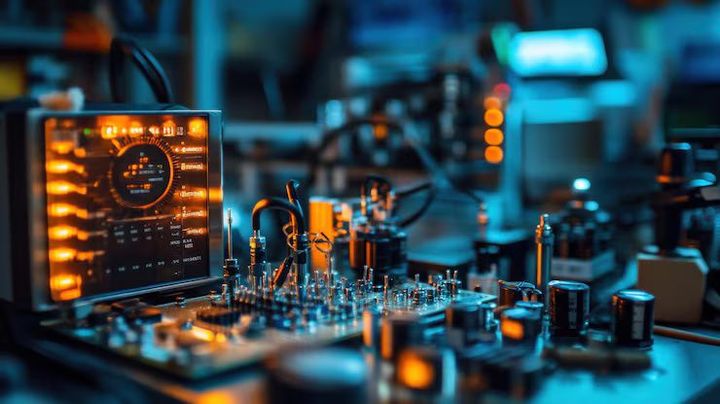
Power Electronics Testing Systems Guide With Testing Technology and Engineering Insights
Power electronics testing systems are specialized arrangements used to evaluate electrical converters, inverters, power modules, motor drives, chargers, controllers, and related electronic equipment.
They combine instruments, controlled power sources, electronic loads, measurement devices, software, and safety equipment to observe how a device behaves under different electrical conditions.
Power electronics became increasingly important as electronic systems began handling larger amounts of electrical energy. Traditional electronic circuits mainly process information or low levels of power, while power electronic systems control voltage, current, frequency, and energy flow. They are now used across transportation, renewable energy, industrial automation, data infrastructure, consumer electronics, battery systems, and electrical networks.
What Power Electronics Testing Systems Do
A power electronics testing system creates controlled conditions that allow engineers and technicians to examine a device under test. Instead of connecting equipment directly to an uncontrolled electrical source, the test setup can regulate voltage, current, frequency, load, temperature, and other variables.
Common testing activities include:
- Voltage and current measurement
- Power and efficiency measurement
- Thermal performance evaluation
- Switching behavior analysis
- Electromagnetic compatibility testing
- Power quality assessment
- Insulation and dielectric testing
- Overload and protection testing
- Transient response testing
- Functional and control-system verification
The equipment may range from compact laboratory instruments to large automated test benches capable of handling substantial electrical power.
Main Components
A typical power electronics testing system can contain several interconnected elements. Programmable power supplies provide controlled input conditions, while electronic loads reproduce different operating demands. Oscilloscopes and high-bandwidth probes capture fast electrical signals, and power analyzers measure quantities such as voltage, current, real power, apparent power, and power factor.
Data acquisition hardware collects measurements from multiple channels. Control software coordinates test sequences and records results. Depending on the application, environmental chambers, thermal measurement equipment, isolation systems, and protective enclosures can also form part of the setup.
Importance
Power electronics testing matters because electrical equipment can behave differently when operating conditions change. A converter may function normally at a stable voltage but respond differently during a voltage dip, rapid load change, temperature increase, or switching transition.
Testing helps identify these behaviors before equipment is integrated into a larger system. It also provides measurable information for engineering decisions involving reliability, efficiency, thermal management, protection, and electromagnetic compatibility.
Who Uses Testing Systems
Power electronics testing systems are relevant to several groups:
- Semiconductor and power module developers
- Electrical equipment manufacturers
- Automotive and transportation engineers
- Renewable energy system developers
- Battery and energy-storage researchers
- Industrial automation teams
- University and research laboratories
- Compliance and validation laboratories
Testing also affects everyday users indirectly. Power converters are found inside chargers, appliances, computers, electric transportation systems, photovoltaic equipment, and many other products. Proper evaluation helps these systems operate predictably within their intended electrical environments.
Key Testing Parameters
Different applications require different measurements. A power converter may need efficiency and thermal testing, while an inverter may require harmonic, transient, switching, and grid-interaction evaluation.
| Test Area | Typical Measurement | Purpose |
|---|---|---|
| Voltage Testing | Input and output voltage | Checks electrical operating ranges |
| Current Testing | RMS, peak and transient current | Examines loading behavior |
| Power Testing | Active and apparent power | Evaluates energy conversion |
| Efficiency Testing | Input versus output power | Determines conversion performance |
| Thermal Testing | Temperature and heat rise | Examines thermal behavior |
| Switching Testing | Rise, fall and switching waveforms | Studies semiconductor operation |
| EMC Testing | Conducted and radiated disturbances | Evaluates electromagnetic behavior |
| Load Testing | Variable electrical demand | Examines response under changing loads |
| Protection Testing | Fault and abnormal conditions | Checks protective functions |
Recent Updates
Power electronics testing has continued to change as switching devices become faster and power systems become more interconnected. Developments in silicon carbide and gallium nitride technologies have increased interest in high-frequency measurements, fast switching analysis, thermal characterization, and accurate waveform capture.
Wide-bandgap devices can switch at higher speeds than many conventional silicon-based devices. This creates additional testing requirements because small timing differences, parasitic effects, measurement-probe limitations, and electromagnetic effects can become more significant.
More Automated Testing
Automated testing is another important development. Modern test platforms can execute predefined sequences, change operating conditions automatically, record measurements, and compare results against specified limits.
This approach is particularly useful when hundreds or thousands of operating points need to be evaluated. Automation can also make testing more repeatable by reducing differences between individual test sessions.
Advanced Power Quality Measurement
Power quality testing has also received attention as power electronic converters become more common throughout electrical networks. Modern measurement approaches can examine voltage changes, interruptions, harmonics, interharmonics, unbalance, and other conducted phenomena.
Recent revisions within the IEC 61000 family have expanded or clarified measurement approaches for power quality and immunity testing. Updated standards increasingly recognize the measurement challenges associated with modern converter-based electrical systems.
Testing for Renewable Energy Equipment
Solar inverters and other power conversion equipment are another growing area. Testing can examine steady-state operation, transient response, grid interaction, voltage behavior, frequency behavior, reactive power, and power factor.
The increasing integration of electronic converters into electrical networks means laboratory testing is becoming more closely connected with real operating conditions.
Laws or Policies
Power electronics testing requirements vary according to the product, application, electrical environment, and jurisdiction. There is no single worldwide testing rule covering every type of power electronic equipment.
Electromagnetic Compatibility
Electromagnetic compatibility, commonly called EMC, is an important regulatory area. Equipment may need to demonstrate that it does not create unacceptable electromagnetic disturbances and that it can tolerate defined disturbances in its operating environment.
The IEC 61000 family provides widely used technical frameworks for EMC measurement and immunity testing. Individual jurisdictions may adopt these standards directly or use related national standards.
Electrical Safety
Electrical safety requirements can address insulation, protective measures, creepage and clearance, abnormal operating conditions, temperature, and protection against electric shock. The applicable requirements depend on the equipment category and intended environment.
Testing laboratories therefore normally identify the relevant product standard before selecting the complete test sequence.
Product-Specific Requirements
Different equipment categories can have separate technical requirements. Power converters, industrial drives, photovoltaic equipment, battery systems, household electronics, and transportation equipment may each fall under different standards.
For this reason, a testing system is usually configured around the characteristics of the equipment under evaluation rather than using one identical procedure for every product.
Tools and Resources
A modern power electronics testing laboratory can use a combination of physical instruments and software resources. The appropriate selection depends on voltage range, current range, switching frequency, power level, measurement accuracy, and the required test standards.
Measurement Instruments
Common instruments include:
- Digital oscilloscopes
- Power analyzers
- Digital multimeters
- Programmable power supplies
- Electronic loads
- Current probes
- Differential voltage probes
- Thermal cameras
- Data acquisition systems
- Frequency-response analyzers
High-bandwidth probes are particularly important for fast-switching circuits because an unsuitable probe can distort the waveform being measured.
Software and Calculators
Test-control software can automate measurement sequences and organize large datasets. Engineering calculators can assist with power, efficiency, resistance, inductance, capacitance, switching frequency, thermal relationships, and electrical loading calculations.
Simulation platforms are also useful before physical testing. Engineers can model converters, switching devices, control systems, and loads to identify expected behavior before constructing a laboratory setup.
Test Documentation
A structured test template normally records the equipment identification, operating conditions, measurement instruments, test sequence, environmental conditions, observed results, and acceptance criteria.
Good documentation makes results easier to compare between test sessions and helps identify changes in equipment behavior.
FAQs
What are power electronics testing systems?
Power electronics testing systems are combinations of instruments, controlled electrical sources, loads, measurement equipment, software, and safety equipment used to evaluate power electronic devices and systems.
Why is power electronics testing important?
Power electronics testing helps examine electrical, thermal, switching, efficiency, protection, and electromagnetic behavior under controlled operating conditions. It can reveal performance differences that may not appear during simple functional checks.
What equipment is used in power electronics testing systems?
Common equipment includes programmable power supplies, electronic loads, oscilloscopes, power analyzers, current probes, voltage probes, thermal measurement equipment, and automated data acquisition systems.
How does testing technology support wide-bandgap power electronics?
Testing technology helps measure the fast switching transitions, thermal behavior, electrical losses, and electromagnetic effects associated with silicon carbide and gallium nitride devices. High-bandwidth measurement equipment is particularly relevant for these applications.
Which standards apply to power electronics testing?
Applicable standards depend on the equipment and jurisdiction. IEC 61000 standards are widely associated with electromagnetic compatibility and power quality testing, while other IEC and national standards address specific power converters, electrical safety, renewable energy equipment, and related applications.
Conclusion
Power electronics testing systems provide controlled environments for examining how electrical and electronic equipment behaves under different operating conditions. Modern testing increasingly combines accurate measurement instruments, automated procedures, simulation, thermal analysis, and advanced power-quality evaluation. Developments in high-speed switching devices and converter-based electrical systems are creating additional measurement challenges. Testing requirements ultimately depend on the equipment type, intended application, applicable standards, and operating environment.