PVC Laminate Production Line Guide With Manufacturing Process and Technology Insights
PVC laminate is a decorative and functional surface material made primarily from polyvinyl chloride resin, additives, pigments, and other formulation components.
It is commonly used on furniture panels, interior surfaces, doors, partitions, cabinetry, and other applications where a durable decorative finish is required.
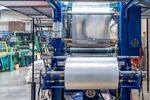
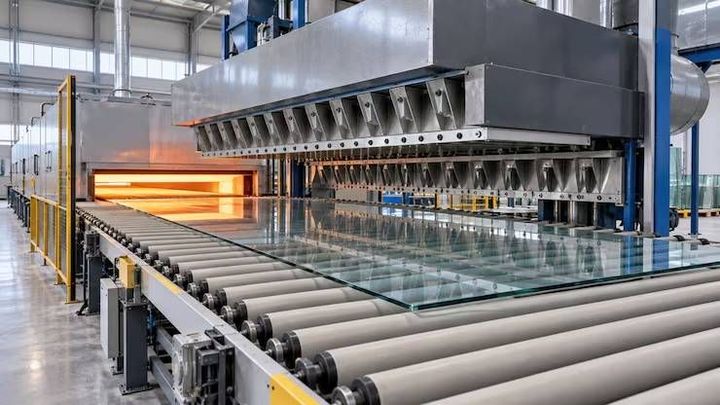
A PVC laminate production line brings together several stages that transform raw materials into a finished sheet or roll. Depending on the product design, the line may include material mixing, compounding, extrusion, calendering, cooling, embossing, printing, laminating, trimming, inspection, and packaging.
The manufacturing process exists because consistent surface quality requires controlled processing. Temperature, pressure, material formulation, thickness, cooling speed, surface texture, and dimensional stability all influence the final laminate.
Main Materials Used
A typical formulation can contain several groups of materials:
- PVC resin as the primary polymer
- Plasticizers or processing modifiers where required by the formulation
- Stabilizers for processing performance
- Pigments for color development
- Fillers for formulation and physical-property control
- Impact or flexibility modifiers for specific applications
- Decorative films, inks, or protective layers for selected products
The exact formulation varies according to whether the product is intended for furniture, wall surfaces, doors, flooring-related applications, or other interior uses.
Basic Production Flow
The PVC laminate production process can be understood as a sequence:
Raw material preparation → mixing → compounding → extrusion or calendering → sheet formation → cooling → surface treatment → printing or embossing → lamination → trimming → inspection → packaging
Different PVC laminate production lines use different combinations of these stages. A simple single-layer sheet line can have fewer processes, while multilayer decorative products require additional equipment.
Importance
Why the Production Line Matters
A PVC laminate production line is important because manufacturing quality depends on repeatable processing conditions. Small variations in thickness, temperature, surface pressure, or material feeding can affect appearance and physical performance.
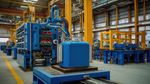
For manufacturers, production planning involves more than selecting individual machines. The equipment must work as an integrated system so that material movement, temperature control, surface finishing, inspection, and handling remain consistent throughout production.
For buyers and users of laminate products, manufacturing quality can influence:
- Surface appearance
- Sheet thickness
- Color consistency
- Dimensional stability
- Surface texture
- Resistance to everyday wear
- Adhesion between layers
- Ease of downstream processing
Production Challenges
PVC laminate manufacturing can present several technical challenges. Poor material mixing may create inconsistent color or physical properties, while incorrect extrusion conditions can cause uneven thickness or surface defects.
Cooling is another important stage. If a sheet does not cool evenly, internal stresses can develop and may contribute to warping or dimensional changes.
Surface finishing also requires careful control. Embossing pressure, printing alignment, coating thickness, and lamination temperature can all influence the final appearance.
Important Production Parameters
| Parameter | Purpose | Possible Effect of Poor Control |
|---|---|---|
| Material formulation | Establishes product characteristics | Inconsistent properties |
| Mixing temperature | Promotes uniform material preparation | Poor dispersion |
| Extrusion temperature | Controls polymer processing | Surface or flow defects |
| Sheet thickness | Maintains dimensional consistency | Uneven finished product |
| Cooling rate | Stabilizes the sheet | Warping or deformation |
| Embossing pressure | Creates surface texture | Uneven patterns |
| Printing alignment | Maintains decorative design | Pattern misalignment |
| Lamination temperature | Bonds layers where applicable | Weak or uneven bonding |
| Line speed | Controls production throughput | Quality variation if excessive |
Recent Updates
Greater Process Automation
Recent developments in PVC laminate production have generally moved toward greater automation and process monitoring. Production lines increasingly use digital controls to monitor temperature, pressure, speed, material feeding, and other operating conditions.
Automated controls can help operators identify variations earlier. Data from different parts of the line may also be recorded for production analysis and quality documentation.
Improved Energy Management
Energy efficiency has become a more important consideration in polymer processing. Extruders, heaters, cooling systems, motors, and auxiliary equipment can represent significant energy requirements.
Newer production concepts may incorporate improved heating controls, variable-speed drives, insulation, optimized cooling systems, and automated shutdown functions. These approaches focus on controlling energy use while maintaining stable processing conditions.
More Flexible Product Development
Manufacturers are also placing greater emphasis on flexible production capabilities. A single production environment may need to handle different thicknesses, colors, textures, surface patterns, and multilayer structures.
Digital control systems can make production changes more manageable by allowing operating parameters to be adjusted for different product specifications.
Increased Attention to Material Selection
Environmental considerations have also influenced material development. Manufacturers are examining formulations, additives, recycled-content possibilities, production waste management, and material efficiency.
The practical feasibility of recycled PVC or alternative formulations depends on product specifications and processing requirements. Material selection therefore remains closely connected to quality, regulatory requirements, and intended application.
Laws or Policies
Regulatory Framework
PVC laminate manufacturing is affected by several categories of rules, but requirements vary according to the country, region, facility size, and product application. Since no specific target country is identified here, the following framework describes common regulatory areas rather than a country-specific legal requirement.
Manufacturing facilities may need to address:
- Industrial emissions and air-quality requirements
- Chemical handling and workplace safety
- Waste management and disposal
- Machinery guarding and operator protection
- Fire prevention and emergency procedures
- Electrical and equipment safety
- Product composition requirements
- Packaging and environmental requirements
Chemical and Workplace Controls
PVC processing can involve additives, pigments, processing aids, inks, coatings, and cleaning materials. Facilities generally need appropriate procedures for storage, handling, labeling, ventilation, and worker protection.
Heating PVC also requires controlled processing conditions. Excessive temperatures can cause material degradation and release undesirable decomposition products. Equipment monitoring and appropriate ventilation are therefore important parts of responsible manufacturing.
Product and Environmental Requirements
Depending on the intended application, laminate products may also need to meet material, emissions, fire-performance, durability, or indoor-environment requirements established by relevant authorities or industry standards.
Manufacturers operating internationally may encounter different documentation and product requirements across markets. Compliance should therefore be evaluated against the rules applicable to the specific manufacturing location and product category.
Tools and Resources
Production Planning Tools
Several tools can support planning and monitoring of a PVC laminate production line. Production calculators can help estimate material requirements, sheet output, line speed, and production capacity.
Commonly used tools include:
- Production planning spreadsheets
- Material consumption calculators
- Thickness measurement instruments
- Digital temperature controllers
- Pressure monitoring systems
- Moisture and material inspection equipment
- Surface inspection systems
- Statistical process control software
- Maintenance scheduling platforms
Quality Control Equipment
Thickness gauges can help verify sheet dimensions, while color measurement instruments can support consistency checks for decorative products.
Surface inspection systems may identify scratches, spots, bubbles, uneven textures, or other visible defects. Depending on the manufacturing setup, inspection can be performed manually, automatically, or through a combination of both methods.
Production Documentation
Manufacturers commonly maintain documents covering raw-material specifications, process parameters, inspection results, equipment maintenance, production batches, and quality checks.
Digital production records can make it easier to identify when a variation occurred and compare operating conditions between production batches.
FAQs
What is a PVC laminate production line?
A PVC laminate production line is an integrated manufacturing system used to convert PVC-based raw materials into decorative or functional laminate sheets or rolls. Depending on the product, it may include mixing, extrusion, cooling, embossing, printing, lamination, trimming, and inspection.
How does a PVC laminate manufacturing process work?
The PVC laminate manufacturing process generally begins with material preparation and mixing. The prepared compound is processed through extrusion or another sheet-forming method, followed by cooling, surface treatment, decorative processing, lamination where required, trimming, inspection, and packaging.
What technology is used in a PVC laminate production line?
Modern PVC laminate production lines can use automated temperature control, digital speed regulation, pressure monitoring, automatic feeding, thickness measurement, surface inspection, and production data recording. The exact technology depends on the product structure and required output characteristics.
What affects PVC laminate sheet quality?
PVC laminate quality can be affected by material formulation, mixing, processing temperature, pressure, extrusion conditions, cooling, thickness control, embossing, printing, and lamination. Consistent control across these stages helps maintain uniform product characteristics.
What regulations apply to PVC laminate manufacturing?
Regulations depend on the manufacturing location and product application. Common areas include workplace safety, chemical handling, industrial emissions, waste management, machinery safety, fire prevention, and product-specific requirements.
Conclusion
A PVC laminate production line combines material preparation, polymer processing, sheet formation, cooling, surface finishing, inspection, and handling into an integrated manufacturing process. Technology developments increasingly focus on automation, process monitoring, energy management, product flexibility, and improved material efficiency. Regulatory requirements also influence how PVC materials, machinery, emissions, waste, and workplace conditions are managed. Understanding these areas provides a clearer view of how PVC laminate manufacturing operates from raw materials through finished products.