Discover ZLD Wastewater Concepts for Industrial Water Management and Resource Recovery
Zero Liquid Discharge (ZLD) is an industrial wastewater management approach designed to minimize liquid waste leaving an industrial facility.
It involves treating wastewater, recovering reusable water, and separating dissolved solids to reduce the amount of wastewater released into the environment. ZLD wastewater treatment is increasingly relevant to industries that depend on large volumes of water during manufacturing and processing.
Industrial facilities generate wastewater through activities such as equipment cleaning, chemical processing, cooling operations, material washing, and production activities. This wastewater may contain dissolved salts, suspended particles, organic compounds, and other contaminants. Releasing untreated or inadequately treated wastewater can affect rivers, groundwater, agricultural land, and surrounding communities.
Traditional wastewater treatment systems remove selected contaminants and prepare water for discharge or reuse. However, some industrial processes require additional treatment because dissolved minerals and concentrated salts remain in the wastewater. ZLD systems address this challenge through several treatment stages that recover water and separate remaining solids.
The concept combines industrial wastewater treatment, water purification, evaporation, crystallization, filtration, and resource recovery. Rather than relying primarily on wastewater disposal, the system focuses on recovering water for additional industrial applications.
Importance
Why Zero Liquid Discharge Matters
Industrial water management has become an important environmental and operational consideration. Manufacturing facilities, chemical plants, textile industries, power stations, and pharmaceutical production units can generate substantial wastewater volumes.
Zero Liquid Discharge technology addresses several important challenges:
Water conservation: Recovered water can be reused in industrial operations, reducing demand for freshwater resources.
Wastewater reduction: The system minimizes liquid wastewater leaving the treatment facility.
Environmental protection: Proper treatment and containment help reduce the potential release of concentrated pollutants into natural water bodies.
Resource recovery: Certain dissolved materials and salts may be recovered during treatment, depending on wastewater composition.
Industrial efficiency: Recovered water can support cooling, washing, and other suitable processes.
Industries Using ZLD Wastewater Treatment
Different industries have different wastewater characteristics. ZLD systems are therefore designed according to the contaminants, water volume, and recovery requirements of individual facilities.
Industry | Common wastewater sources | ZLD application |
|---|---|---|
Textile manufacturing | Dyeing and fabric washing | Water recovery and salt separation |
Chemical processing | Production and equipment cleaning | Concentrated wastewater treatment |
Power generation | Cooling tower blowdown | Water recovery and mineral concentration |
Pharmaceutical manufacturing | Process cleaning and production | Wastewater treatment and reuse |
Food processing | Washing and production | Water recovery and waste reduction |
Mining | Mineral processing and extraction | Saline wastewater management |
Challenges Addressed by ZLD Systems
Industrial wastewater can contain high concentrations of dissolved solids that are difficult to remove through conventional filtration. These substances may create scaling, corrosion, and operational difficulties in treatment equipment.
ZLD systems address these challenges through combinations of membrane filtration, thermal evaporation, and crystallization. Their design depends on wastewater quality, available energy, treatment capacity, and the intended reuse of recovered water.
However, concentrated residues still require appropriate handling and management. Not every industrial wastewater stream is suitable for identical treatment methods.
Recent Updates
Developments in Industrial ZLD Technology
Recent developments in industrial wastewater management have focused on improving treatment efficiency, reducing energy consumption, and increasing water recovery. Advanced membrane systems and thermal technologies are receiving attention because they can support different stages of the ZLD process.
Several developments are influencing the sector:
Advanced membrane filtration: Improved membrane materials and configurations help separate dissolved substances and suspended contaminants.
Energy-efficient evaporation: Industrial evaporators are being designed to improve heat utilization and reduce energy requirements.
Automated monitoring: Sensors and digital monitoring platforms help operators observe water quality, pressure, temperature, and system performance.
Hybrid treatment systems: Combining membrane filtration with thermal processes can improve treatment flexibility.
Resource recovery: Greater attention is being given to recovering usable salts and other materials from concentrated industrial wastewater.
Membrane and Thermal Treatment Integration
Reverse osmosis is frequently used during the initial stages of industrial water recovery. It separates water from many dissolved substances by applying pressure across a semi-permeable membrane.
However, reverse osmosis has operating limitations when wastewater contains very high concentrations of dissolved solids. Thermal evaporation may therefore be introduced to concentrate the remaining wastewater.
A typical integrated system may include:
Preliminary filtration to remove suspended particles.
Chemical treatment to manage scaling and other water quality issues.
Membrane filtration to recover a portion of the water.
Evaporation to concentrate the remaining liquid.
Crystallization to separate dissolved solids.
Final handling of recovered water and solid residues.
Digital Monitoring and Automation
Industrial wastewater treatment facilities increasingly use digital monitoring systems to observe operating conditions. These platforms can collect information about temperature, flow rate, conductivity, pressure, and water quality.
Automation can help identify changing treatment conditions and support timely maintenance. However, system performance still depends on appropriate engineering, equipment condition, and regular operational monitoring.
Laws or Policies
Industrial Wastewater Regulations
Industrial wastewater management is influenced by environmental protection laws, discharge standards, water conservation policies, and pollution control requirements. These rules vary according to the country, industry, and type of manufacturing activity.
In India, industrial wastewater management is governed by environmental legislation and regulatory requirements established by central and state authorities.
The Water (Prevention and Control of Pollution) Act, 1974, provides a framework for preventing and controlling water pollution. The Environment (Protection) Act, 1986, also supports environmental regulation and the establishment of standards for industrial activities.
The Central Pollution Control Board (CPCB) and State Pollution Control Boards (SPCBs) play important roles in monitoring industrial pollution and implementing applicable requirements.
ZLD Requirements in Industrial Operations
Zero Liquid Discharge requirements may apply to particular industrial sectors, facilities, or wastewater conditions. However, ZLD is not a universal requirement for every industrial establishment.
Relevant regulatory considerations include:
Industrial wastewater discharge standards.
Environmental clearance conditions, where applicable.
Consent to Establish and Consent to Operate requirements.
Groundwater extraction and water-use permissions.
Hazardous and solid waste handling requirements.
Monitoring and reporting obligations.
Industries must understand the requirements applicable to their specific operations. Treatment technology alone does not establish regulatory compliance; proper operation, monitoring, and residue management are also important.
Tools and Resources
Industrial Wastewater Treatment Tools
Several technical tools help engineers and facility operators understand wastewater characteristics and evaluate ZLD system performance.
1. Water Quality Testing Instruments
These instruments measure important wastewater parameters, including pH, conductivity, turbidity, and total dissolved solids (TDS). The results help determine suitable treatment methods.
2. Reverse Osmosis System Calculators
RO calculators help estimate membrane recovery, feedwater requirements, concentrate volumes, and operating conditions. Their results depend on the assumptions and input water characteristics.
3. Evaporator Performance Calculators
These tools support preliminary calculations involving evaporation capacity, heat requirements, and water concentration.
4. Wastewater Treatment Design Software
Engineering software can support process simulations, equipment sizing, and wastewater treatment system planning.
5. Digital Monitoring Platforms
Industrial monitoring platforms collect operational information from treatment equipment. They can help track flow rates, water quality, equipment performance, and maintenance requirements.
Important Technical Parameters
Understanding wastewater characteristics is essential when evaluating an industrial ZLD system.
Parameter | Meaning | Importance |
|---|---|---|
TDS | Total Dissolved Solids | Indicates dissolved material concentration |
TSS | Total Suspended Solids | Measures suspended particles |
pH | Acidity or alkalinity | Helps determine treatment requirements |
COD | Chemical Oxygen Demand | Indicates chemically oxidizable substances |
BOD | Biochemical Oxygen Demand | Indicates biodegradable organic matter |
Conductivity | Electrical conductivity | Helps monitor dissolved ionic substances |
Recovery Rate | Percentage of feedwater recovered | Indicates water recovery performance |
Resource Recovery and Waste Management
Resource recovery is another important part of ZLD wastewater management. Depending on the wastewater composition and treatment process, facilities may recover water and certain dissolved salts.
Crystallization equipment separates dissolved materials into solid forms. These materials require evaluation before any further use because their purity and chemical composition can vary.
The remaining solid residues may need specialized storage, transportation, or disposal according to applicable environmental requirements.
FAQs
What Is Zero Liquid Discharge in Wastewater Treatment?
Zero Liquid Discharge is an industrial wastewater treatment approach that aims to eliminate or minimize liquid wastewater discharge from a facility. It combines treatment, water recovery, evaporation, and crystallization to separate water and dissolved solids.
How Does a ZLD Wastewater Treatment Plant Work?
A ZLD wastewater treatment plant generally uses filtration, chemical treatment, membrane separation, evaporation, and crystallization. These processes recover water for suitable reuse and convert concentrated wastewater into solid residues.
Which Industries Use Zero Liquid Discharge Systems?
Textile manufacturing, chemical processing, pharmaceutical production, power generation, mining, and certain food processing facilities use ZLD systems where wastewater characteristics and environmental requirements justify their application.
What Is the Difference Between ZLD and Conventional Wastewater Treatment?
Conventional wastewater treatment generally prepares water for discharge or reuse according to applicable standards. ZLD goes further by concentrating the remaining wastewater and recovering additional water while separating dissolved solids.
What Are the Main Components of an Industrial ZLD System?
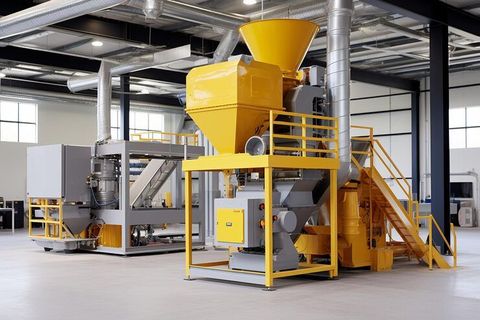
Common components include filtration units, chemical treatment equipment, reverse osmosis membranes, evaporators, crystallizers, water storage tanks, and solid residue handling equipment. The configuration varies according to wastewater quality and industrial requirements.
Conclusion
Zero Liquid Discharge is an important approach to industrial wastewater management, combining water recovery, wastewater concentration, and solid separation. Its applications extend across manufacturing, chemical processing, textiles, power generation, and other water-intensive industries. Advances in membrane filtration, thermal evaporation, and automated monitoring continue to influence industrial ZLD technology. Effective implementation depends on wastewater characteristics, energy requirements, regulatory conditions, and responsible residue management.