Automated Guided Pallet Systems Information With Industrial Automation and Material Handling Solutions
Automated Guided Pallet Systems are an important part of modern industrial automation and material handling operations.
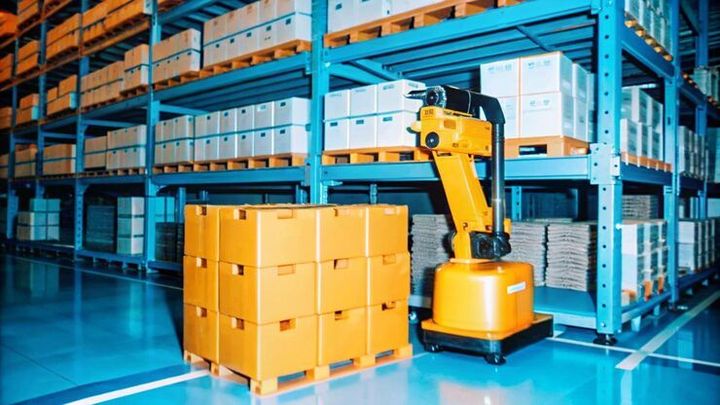
These systems use automated mobile equipment to transport pallets, containers, raw materials, and finished products between different areas of warehouses, factories, and distribution facilities. They help organize internal transportation by reducing the need for continuous manual movement and supporting more structured material flows.
The development of Automated Guided Vehicles (AGVs) introduced new possibilities for industrial transportation. Earlier material handling operations depended heavily on forklifts, manual pallet trucks, conveyor belts, and human operators. As manufacturing facilities expanded and warehouse operations became more complex, businesses began exploring automated transportation technologies to improve movement accuracy and operational coordination.
Automated Guided Pallet Systems generally combine mobile robots, navigation technology, pallet handling equipment, sensors, and warehouse management software. Depending on the application, these systems can collect pallets from designated pickup points, transport them along programmed routes, and position them at specific destinations.
How Automated Guided Pallet Systems Work
An automated pallet transportation system follows a planned process involving several technical components. Each component contributes to navigation, movement, communication, and load handling.
The main components include:
Automated guided vehicles: Mobile machines designed to transport pallets between designated locations.
Navigation systems: Technologies such as laser navigation, magnetic guidance, QR codes, and natural feature navigation that help vehicles identify their positions.
Load handling mechanisms: Forks, lifting platforms, rollers, or conveyor attachments used to collect and transport pallets.
Safety sensors: Devices that identify nearby objects, pedestrians, and potential obstacles.
Control software: Computer-based platforms that coordinate vehicle movements and transportation assignments.
Charging systems: Battery charging equipment that supports continued operation.
When a transportation request enters the control system, the software assigns an appropriate vehicle. The vehicle follows its navigation instructions, collects the designated pallet, and moves toward the assigned destination.
Different Types of Automated Pallet Systems
Industrial facilities use different automated transportation technologies depending on their layouts, pallet dimensions, load requirements, and operational activities.
Common categories include:
Forklift AGVs: Designed to lift and transport palletized materials at different heights.
Pallet jack AGVs: Used for moving pallets across relatively short distances.
Automated pallet conveyors: Stationary transportation equipment that moves pallets along defined paths.
Autonomous mobile robots (AMRs): Mobile robots that use sensors and mapping technologies to navigate changing environments.
Hybrid pallet systems: Combine automated vehicles with conveyors, warehouse software, and other material handling equipment.
Importance
Automated Guided Pallet Systems have become increasingly relevant because industrial facilities handle growing volumes of materials across interconnected production and storage areas. Moving pallets manually between receiving docks, storage locations, production lines, and dispatch areas can create operational challenges, particularly when transportation activities occur throughout multiple shifts.
Automation helps address these challenges by organizing repetitive transportation tasks and coordinating material movement with production schedules.
Who Uses Automated Guided Pallet Systems?
Several industries use automated pallet transportation technologies for different operational requirements.
Manufacturing facilities: Transport raw materials, components, and finished products between production departments.
Warehouses: Move palletized inventory between receiving, storage, picking, and dispatch locations.
Food and beverage facilities: Support internal movement of packaged goods and palletized ingredients.
Pharmaceutical manufacturing: Coordinate material transportation within controlled production environments.
Automotive industries: Move components, assemblies, and equipment between manufacturing stations.
Distribution centers: Organize pallet transportation between storage areas and loading zones.
Problems Addressed by Industrial Pallet Automation
Traditional material handling can involve repeated transportation activities, inconsistent movement schedules, and difficulties coordinating multiple vehicles.
Automated systems address several operational challenges:
Repetitive transportation: Automated vehicles handle recurring pallet movement along designated routes.
Movement coordination: Centralized software helps coordinate multiple vehicles and transportation requests.
Inventory visibility: Integration with warehouse systems can improve the recording of pallet movements.
Workplace interaction: Sensors and controlled movement areas help manage interactions between automated vehicles and people.
Operational consistency: Programmed transportation instructions support more standardized internal workflows.
However, automation does not eliminate every operational challenge. Equipment maintenance, software configuration, battery management, and workplace safety remain important considerations.
Manual and Automated Pallet Handling Comparison
| Operational factor | Manual handling | Automated pallet systems |
|---|---|---|
| Transportation | Human-operated equipment | Automated vehicles |
| Navigation | Operator-controlled | Sensors and navigation software |
| Task assignment | Manual coordination | Centralized control software |
| Movement records | Manual or digital entry | Potential system integration |
| Route flexibility | Operator-selected | Programmed or mapped routes |
| Safety management | Training and operating procedures | Sensors and safety controls |
| Maintenance | Mechanical inspections | Mechanical and software maintenance |
The appropriate approach depends on facility requirements, transportation frequency, infrastructure, and the nature of the materials being handled.
Recent Updates
Recent developments in Automated Guided Pallet Systems focus on intelligent navigation, autonomous decision-making, warehouse connectivity, and improved safety monitoring. Industrial automation is increasingly moving toward integrated environments where transportation equipment communicates with production and inventory management platforms.
Artificial Intelligence and Autonomous Navigation
Artificial intelligence is becoming more relevant to autonomous mobile robots and automated material handling equipment. Modern navigation platforms can interpret sensor information, identify obstacles, and adjust vehicle movements according to surrounding conditions.
Natural feature navigation also allows certain vehicles to operate without extensive physical guidance infrastructure. This can provide greater flexibility when warehouse layouts change.
Improved Sensor Technology
Industrial mobile robots increasingly use combinations of cameras, laser scanners, LiDAR, and proximity sensors. These technologies help identify obstacles, recognize navigation landmarks, and monitor surrounding environments.
Sensor integration is particularly important in facilities where pedestrians, forklifts, automated vehicles, and stationary equipment share working areas.
Warehouse Management Integration
Another significant development involves connecting automated pallet transportation systems with Warehouse Management Systems (WMS) and Manufacturing Execution Systems (MES).
This integration allows transportation requests to originate from inventory movements, production requirements, and warehouse workflows. Centralized platforms can then coordinate vehicle assignments and monitor transportation activities.
Battery and Charging Developments
Battery technology and automated charging arrangements are also influencing industrial vehicle design. Lithium-ion batteries are used in many modern mobile robots because of their charging characteristics and energy management capabilities.
Some facilities use opportunity charging, where vehicles recharge during scheduled pauses or periods of lower activity.
Current Technology Trends
| Technology | Main application | Operational purpose |
|---|---|---|
| AI navigation | Autonomous movement | Environmental interpretation |
| LiDAR sensors | Obstacle detection | Navigation awareness |
| Fleet management software | Multiple vehicle coordination | Transportation planning |
| WMS integration | Inventory transportation | Workflow coordination |
| Automated charging | Battery management | Energy availability |
| Digital mapping | Facility navigation | Route management |
These developments indicate a broader movement toward connected industrial transportation environments rather than isolated automated machines.
Laws or Policies
Automated Guided Pallet Systems operate within workplace safety, machinery, electrical equipment, and industrial automation requirements. The applicable rules depend on the country, equipment classification, operating environment, and intended application.
There is no single international regulation that covers every aspect of automated pallet transportation. Manufacturers and facility operators generally need to consider national workplace safety legislation alongside relevant technical standards.
International Safety Standards
ISO 3691-4 is an important international standard covering safety requirements and verification for driverless industrial trucks and their systems. It addresses relevant equipment categories, including certain automated guided vehicles and autonomous mobile platforms.
The standard provides guidance for identifying hazards, assessing risks, and establishing appropriate safety measures.
Workplace Safety Requirements
Industrial facilities generally need procedures covering:
Separation between pedestrian and automated vehicle routes.
Emergency stopping arrangements.
Safe loading and unloading activities.
Equipment inspection and maintenance.
Operator and employee training.
Battery charging and electrical safety.
Hazard identification and workplace risk assessment.
In the United States, Occupational Safety and Health Administration (OSHA) requirements provide a framework for workplace safety, including powered industrial truck operations and general industrial hazards.
Machinery and Regional Regulations
European facilities must consider applicable machinery legislation, including the EU Machinery Regulation 2023/1230, which is scheduled to apply from January 2027. During 2026, the transition toward its application remains relevant for manufacturers and equipment operators.
Other regions maintain their own machinery safety, electrical compliance, and workplace health requirements. Businesses operating internationally may need to evaluate several regulatory frameworks before introducing automated pallet transportation equipment.
Tools and Resources
Various digital tools and technical resources help organizations understand, plan, monitor, and maintain Automated Guided Pallet Systems. Selecting suitable resources depends on facility size, vehicle configuration, operational requirements, and existing industrial infrastructure.
Warehouse Planning and Simulation Software
Warehouse simulation platforms help evaluate transportation routes, storage arrangements, traffic patterns, and equipment requirements before implementation.
These platforms can model vehicle movements and identify possible congestion points. They are particularly useful when facilities are planning changes to warehouse layouts or production workflows.
Fleet Management Software
Fleet management software coordinates multiple automated vehicles through a centralized platform. Common functions include:
Vehicle assignment and scheduling.
Route monitoring and traffic coordination.
Battery status monitoring.
Transportation task tracking.
Equipment performance reporting.
Fault identification and operational alerts.
Navigation and Mapping Tools
Digital mapping tools help establish vehicle operating areas and navigation routes. Depending on the system, mapping may involve laser scanners, cameras, QR markers, magnetic guidance, or other positioning technologies.
Accurate mapping is important because navigation information influences vehicle movement and transportation reliability.
Useful Technical Resources
Organizations researching industrial pallet automation may examine:
ISO industrial vehicle safety standards.
Warehouse Management System documentation.
Manufacturing Execution System specifications.
AGV and AMR technical manuals.
Industrial risk assessment templates.
Battery management documentation.
Warehouse layout planning software.
These resources provide technical information for understanding equipment requirements, operational limitations, and workplace safety considerations.
FAQs
What Are Automated Guided Pallet Systems?
Automated Guided Pallet Systems are industrial transportation solutions that use automated vehicles, sensors, navigation technologies, and control software to move palletized materials between designated locations.
How Do Automated Pallet Handling Systems Work?
Automated pallet handling systems receive transportation instructions through control software. Vehicles navigate toward designated pickup points, collect pallets using suitable lifting or handling mechanisms, and transport them to assigned destinations.
What Is the Difference Between AGVs and AMRs?
Automated Guided Vehicles generally follow predefined routes or navigation instructions, while Autonomous Mobile Robots use mapping and environmental sensing to navigate more dynamically. However, modern technologies increasingly combine features from both categories.
Which Industries Use Automated Guided Pallet Systems?
Manufacturing, automotive production, food processing, pharmaceutical manufacturing, warehousing, and distribution industries use automated pallet systems to coordinate internal material transportation.
What Safety Standards Apply to Automated Guided Vehicles?
Relevant requirements depend on the operating country and equipment classification. ISO 3691-4 provides internationally recognized safety requirements for driverless industrial trucks and their systems, while national workplace safety regulations address additional operational responsibilities.
Conclusion
Automated Guided Pallet Systems represent an important development in industrial automation and material handling. They combine mobile vehicles, navigation technologies, sensors, and centralized software to coordinate pallet transportation across manufacturing facilities and warehouses. Developments in artificial intelligence, warehouse integration, and battery management are expanding their industrial applications. Safety standards, infrastructure planning, and equipment maintenance remain essential elements of their operation.