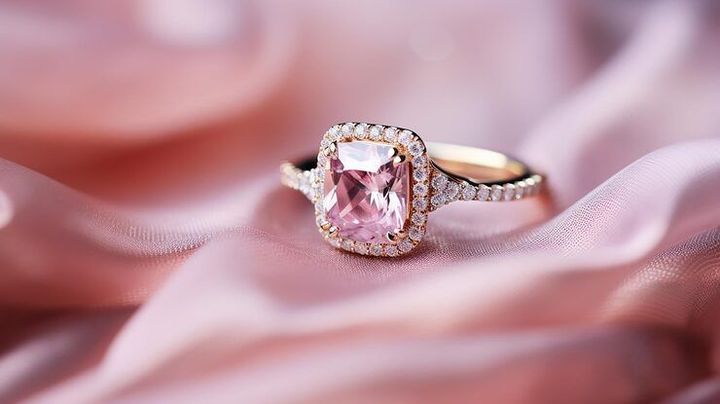
Natural Pink Sapphire Rings Information With Gemstone Grading and Design Insights
Natural pink sapphire rings are jewellery pieces featuring pink sapphires formed naturally within the Earth. These gemstones belong to the corundum mineral family, which also includes blue sapphires and rubies.
Pink sapphires occur in different shades, ranging from pale blush and soft pastel pink to vivid pink and purplish pink. Their appearance depends on the gemstone's chemical composition, geological formation, and any treatments applied after extraction. Natural pink sapphire rings are available in traditional, contemporary, and custom-designed settings.
Origin and Formation of Natural Pink Sapphires
Natural sapphires develop under specific geological conditions involving high temperatures and pressure. Corundum crystals form in certain igneous and metamorphic rocks, where aluminium and oxygen combine to create the mineral structure.
Pink sapphires are found in several gemstone-producing regions, including:
Sri Lanka, known for a variety of light and medium pink sapphires.
Madagascar, which produces gemstones in several pink and purplish shades.
Myanmar, recognised for different varieties of coloured corundum.
Tanzania, where sapphire deposits include pink and other colour varieties.
Australia, which has deposits containing different sapphire colours.
The geographical origin can influence a gemstone's characteristics, but it does not independently determine its quality. Colour, clarity, cut, treatments, and overall appearance are also important considerations.
Natural Pink Sapphire and Lab-Grown Sapphire
Natural pink sapphires develop through geological processes over long periods. Lab-grown pink sapphires are produced in controlled environments using methods that recreate the conditions needed for crystal growth.
Both types have similar chemical compositions and physical properties. However, their origins differ, making accurate identification and disclosure important when examining gemstone jewellery.
Importance
Natural pink sapphire rings are relevant to jewellery collectors, gemstone enthusiasts, designers, and individuals interested in coloured gemstone jewellery. Their colour variety provides an alternative to traditional colourless diamonds and blue sapphires.
Understanding gemstone grading is important because two pink sapphires with similar dimensions may have different visual characteristics. Differences in colour distribution, transparency, internal features, and cutting can influence their appearance and overall market assessment.
Why Gemstone Grading Matters
Gemstone grading provides a structured way to examine the characteristics of natural pink sapphires. Unlike diamonds, coloured gemstones do not have one universally adopted grading scale.
Professional gemmological laboratories generally examine several characteristics:
Colour: Evaluates hue, tone, and saturation. Pink sapphires may display reddish, purplish, or orangish undertones.
Clarity: Identifies internal inclusions and external imperfections that may affect transparency and appearance.
Cut: Examines proportions, symmetry, polish, and the distribution of light across the gemstone.
Carat weight: Measures the gemstone's weight rather than its physical dimensions.
These characteristics help readers understand why gemstones of similar weight can have different visual qualities.
Understanding Common Gemstone Treatments
Natural pink sapphires may undergo treatments to modify their appearance. Heat treatment is an established gemstone enhancement method that can change colour characteristics or improve clarity.
Other treatments may include diffusion processes or surface-related enhancements. Their acceptance and disclosure requirements can differ across jewellery markets and professional standards.
Treatment type | General purpose | Important consideration |
|---|---|---|
Heat treatment | Changes or improves colour appearance | Disclosure is important |
Diffusion treatment | Alters colour near or within the gemstone's surface | Treatment depth should be understood |
Fracture filling | Reduces the visibility of certain fractures | Stability and durability require consideration |
No indication of treatment | Describes laboratory findings | Does not automatically establish superior quality |
A laboratory report can help distinguish natural gemstones from synthetic materials and identify detectable treatments.
Recent Updates
The coloured gemstone jewellery market continues to develop through changes in consumer preferences, gemstone identification technology, laboratory reporting, and jewellery design. Natural pink sapphire rings remain part of the broader interest in coloured gemstones, particularly designs that emphasise individual gemstone characteristics.
Developments in Gemstone Identification
Modern gemmological laboratories use advanced analytical methods to examine gemstone composition, growth characteristics, and treatments. Microscopic examination, spectroscopy, and other laboratory techniques can help distinguish natural sapphires from laboratory-created materials.
Recent industry developments have also increased attention towards gemstone origin documentation and treatment disclosure. Buyers, jewellers, and collectors increasingly consider independent laboratory reports when assessing coloured gemstones.
Changing Pink Sapphire Ring Designs
Contemporary pink sapphire ring designs include several approaches:
Solitaire settings: Feature one central pink sapphire with minimal surrounding decoration.
Halo settings: Place smaller diamonds or coloured gemstones around the central sapphire.
Three-stone settings: Combine a central pink sapphire with two complementary gemstones.
Vintage-inspired settings: Incorporate decorative metalwork, milgrain details, and traditional patterns.
Minimalist settings: Use simple bands and understated gemstone arrangements.
Popular metal combinations
White gold, yellow gold, rose gold, and platinum are commonly used in pink sapphire jewellery. Rose gold can create a coordinated appearance with warmer pink shades, while white metals provide a contrasting background.
Growing Interest in Responsible Gemstone Sourcing
Traceability and responsible sourcing have become important subjects within the jewellery industry. Consumers and industry participants increasingly pay attention to mining practices, supply-chain documentation, and the origin of gemstones.
However, geographical origin alone does not establish whether a gemstone was responsibly sourced. Reliable documentation and transparent supply-chain information are important when evaluating these claims.
Laws or Policies
Natural pink sapphire rings are influenced by regulations covering jewellery descriptions, gemstone identification, consumer protection, precious-metal purity, and international trade. Specific requirements differ between countries and can change according to local legislation.
Gemstone Disclosure and Consumer Protection
Jewellery descriptions should accurately identify the materials used in a ring. Important information includes whether the sapphire is natural or laboratory-grown, whether treatments have been applied, and whether accompanying stones are natural or synthetic.
Misleading descriptions or incorrect representations may create consumer protection concerns. Clear invoices, product descriptions, and laboratory documentation help establish what a jewellery item contains.
Precious-Metal Standards in India
In India, the Bureau of Indian Standards (BIS) operates the hallmarking framework for applicable precious-metal jewellery. Hallmarking relates to the purity of the metal, such as gold or silver, rather than providing a complete quality grade for the pink sapphire itself.
Therefore, a hallmarked gold ring does not automatically establish the gemstone's natural origin, treatment status, or colour grade. These characteristics require separate gemstone identification and documentation.
International Gemstone Trade
International gemstone transactions may involve customs documentation, import and export requirements, and applicable trade regulations. Documentation can include invoices, declarations of gemstone type, and origin information where required.
Industry organisations and gemmological laboratories also publish terminology and reporting guidelines. These help create greater consistency when describing natural, synthetic, treated, and untreated gemstones.
Tools and Resources
Several technical resources help readers understand natural pink sapphire rings, gemstone grading, and jewellery specifications. Their usefulness depends on the type of information being examined.
Gemstone Identification and Grading Resources
The following organisations provide educational information and gemmological documentation:
Gemological Institute of America (GIA): Provides gemstone education, coloured stone information, and laboratory identification reports.
International Gemological Institute (IGI): Provides gemmological reports and information about gemstone identification.
American Gem Trade Association (AGTA): Publishes educational resources and industry information concerning coloured gemstones.
CIBJO: Develops international jewellery terminology and guidelines covering gemstone descriptions and disclosure.
Useful Gemstone Evaluation Tools
Readers can also understand gemstone characteristics through practical evaluation resources.
Carat weight calculator: Converts gemstone weight measurements and helps explain weight differences.
Ring size calculator: Provides an approximate ring-size measurement based on finger circumference or diameter.
Gemstone colour charts: Illustrate differences in hue, tone, and saturation.
Jewellery metal purity charts: Explain gold and platinum purity markings.
Laboratory gemstone reports: Provide information about natural or synthetic origin, detectable treatments, and other identifying characteristics.
Comparing Natural Pink Sapphire Specifications
A structured comparison can help readers understand the differences between individual gemstones.
Evaluation factor | Information to examine |
|---|---|
Origin | Geological or reported geographical origin |
Colour | Pink hue, tone, and saturation |
Clarity | Internal inclusions and transparency |
Cut | Shape, symmetry, and proportions |
Weight | Carat measurement |
Treatment | Heating or other detectable enhancements |
Certification | Independent laboratory findings |
Setting | Metal type and mounting design |
A laboratory report should be interpreted according to its stated examination scope. Not every report provides a commercial grade or confirms every characteristic associated with a gemstone.
FAQs
What Makes Natural Pink Sapphire Rings Different From Other Sapphire Rings?
Natural pink sapphire rings contain corundum gemstones with pink colouration caused primarily by trace chromium. Their shades range from pale pink to vivid purplish pink, creating different visual appearances compared with blue and yellow sapphires.
How Is Natural Pink Sapphire Grading Determined?
Natural pink sapphire grading involves examining colour, clarity, cut, and carat weight. Gemmological laboratories may also assess natural or synthetic origin and identify detectable treatments. There is no single universally accepted grading system for all coloured sapphires.
Are Natural Pink Sapphires Heat Treated?
Yes. Some natural pink sapphires undergo heat treatment to modify their colour or improve their appearance. Treatment information should be disclosed, and independent laboratory examination can help identify detectable enhancements.
Which Metals Are Used in Pink Sapphire Ring Designs?
Common metals include yellow gold, white gold, rose gold, and platinum. The selection depends on the intended design, metal purity, durability requirements, and the desired contrast with the gemstone's pink colour.
How Can Natural Pink Sapphires Be Distinguished From Lab-Grown Gemstones?
Natural and laboratory-grown sapphires have similar chemical and physical properties. Their internal growth features and other characteristics can be examined using specialised gemmological equipment. Independent laboratory reports provide additional identification information.
Conclusion
Natural pink sapphire rings combine geological gemstone formation, varied pink colour characteristics, and different jewellery design approaches. Understanding colour, clarity, cut, carat weight, and treatment disclosure helps explain the differences between individual gemstones. Laboratory reports, precious-metal hallmarking, and responsible sourcing documentation provide additional information about jewellery specifications. Together, these factors form an important foundation for understanding natural pink sapphire jewellery.