Ruby Bracelets Guide to Gemstone Quality, Color, and Authenticity
Ruby bracelets are jewellery pieces featuring rubies, a precious variety of the mineral corundum. Known for their red colour, these gemstones have been used in jewellery across different cultures for centuries.
A ruby bracelet may feature natural rubies, treated gemstones, laboratory-created rubies, or ruby-coloured imitation stones, depending on its design and materials.
Rubies are primarily composed of aluminium oxide, with chromium responsible for their characteristic red colour. They are found in several parts of the world, including Myanmar, Mozambique, Thailand, Sri Lanka, and Madagascar. Their colour, clarity, origin, treatment, and cutting quality influence their appearance and gemological classification.
Understanding ruby gemstone quality is important when examining bracelets because two stones that look similar may have different characteristics. Learning about colour variations, gemstone treatments, metal settings, and authenticity helps readers understand what makes each bracelet different.
What Makes Ruby Bracelets Distinctive?
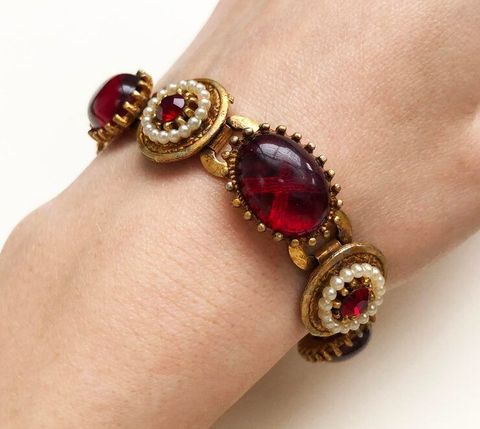
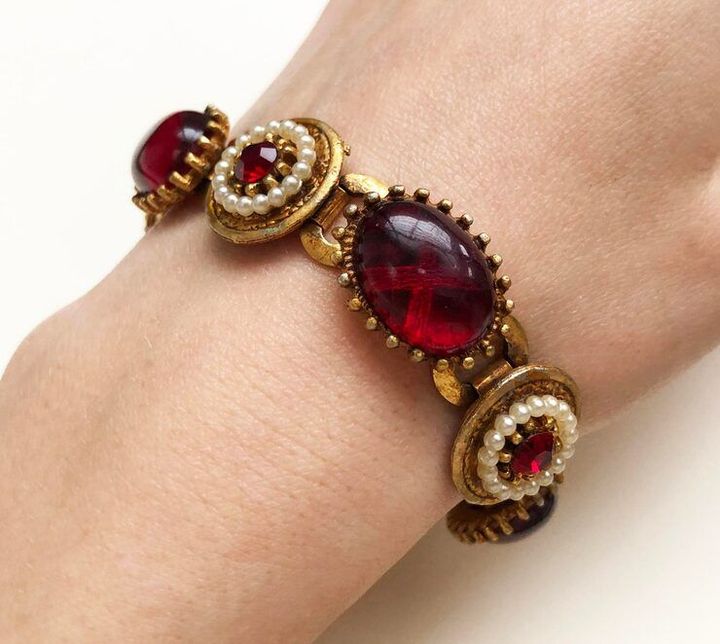
A ruby bracelet combines gemstones with a metal structure designed to hold them securely around the wrist. Depending on the design, it may contain a single prominent ruby, a row of matching stones, or several smaller gemstones arranged in a decorative pattern.
Common bracelet styles include:
Tennis bracelets: Feature a continuous arrangement of gemstones set along a flexible metal chain.
Bangle bracelets: Use a solid or hinged circular structure, sometimes decorated with ruby stones.
Chain bracelets: Combine ruby gemstones with connected metal links.
Cuff bracelets: Have an open-ended structure with rubies positioned as decorative elements.
Beaded bracelets: Use polished ruby beads arranged with or without other gemstones.
The choice of design affects the bracelet's appearance, flexibility, comfort, and gemstone protection.
Understanding Ruby Gemstone Quality
Gemstone professionals commonly evaluate rubies through four main characteristics: colour, clarity, cut, and carat weight. These factors are often described as the four Cs.
Colour is particularly important because rubies are recognised for their red appearance. Clarity refers to internal characteristics and surface imperfections, while cut describes how the gemstone has been shaped and polished. Carat weight measures the gemstone's weight rather than its physical size.
Natural rubies frequently contain inclusions, which are small internal features formed during their geological development. Their presence does not automatically indicate poor quality or artificial origin.
Importance of Ruby Bracelets and Gemstone Authenticity
Understanding ruby quality and authenticity matters to jewellery enthusiasts, collectors, and people interested in gemstone jewellery. Natural, treated, synthetic, and imitation rubies can have similar appearances, but they differ in composition, formation, and identification.
Clear information helps people understand the materials used in jewellery and avoid confusing laboratory-created gemstones with natural stones. It also helps explain why gemstones with similar colours may have different gemological characteristics.
Why Ruby Colour Matters
Ruby colour is one of the main features used to describe gemstone appearance. Natural rubies range from pinkish red to deep red, depending on their chemical composition and geological formation.
The colour of a ruby is generally examined through three elements:
Hue: Describes the basic colour, such as red, purplish red, or orangish red.
Tone: Refers to how light or dark the gemstone appears.
Saturation: Describes the intensity or strength of the colour.
Some rubies display strong, vivid red shades, while others have darker or lighter appearances. Lighting conditions can also influence how a gemstone's colour is perceived.
Natural, Treated, and Synthetic Rubies
Not every ruby used in a bracelet has the same origin or treatment history. Understanding these categories helps distinguish gemstones accurately.
Natural rubies form naturally within the Earth over geological periods. They may contain inclusions and can undergo treatments to improve their appearance.
Treated rubies are natural gemstones that have undergone processes such as heat treatment or, in some cases, lead-glass filling. Heat treatment is commonly used to modify colour and improve clarity. Glass-filled rubies require particular care because their filled fractures can be affected by chemicals, heat, and certain cleaning methods.
Synthetic rubies are laboratory-created gemstones with essentially the same chemical composition and crystal structure as natural rubies. They are genuine corundum but are not naturally mined.
Imitation rubies are materials that resemble ruby visually but have a different composition. Examples include red glass and certain synthetic materials.
Ruby Bracelet Materials and Settings
The metal used in a ruby bracelet affects its structure, appearance, and durability. Common options include gold, platinum, and sterling silver.
Gold may be available in different colours, including yellow, white, and rose. Platinum is a naturally white metal, while sterling silver is an alloy containing silver and other metals.
| Bracelet Material | Main Characteristics | Common Use |
|---|---|---|
| Yellow gold | Warm golden appearance | Traditional jewellery |
| White gold | Light metallic appearance | Contemporary gemstone settings |
| Rose gold | Pinkish metallic appearance | Decorative jewellery |
| Platinum | Naturally white and dense | Fine gemstone settings |
| Sterling silver | Silver-coloured alloy | Everyday jewellery designs |
The setting also affects gemstone security. Prong settings expose more of the gemstone, while bezel settings surround the stone with a metal border. Channel settings hold several gemstones between metal walls.
Recent Developments in Ruby Bracelets and Gemstone Identification
The gemstone jewellery industry continues to evolve through improved laboratory testing, gemstone traceability, and changing jewellery design preferences. Developments across 2024–2026 reflect growing attention to transparency, responsible sourcing, and the identification of natural and laboratory-created gemstones.
Advanced Gemstone Testing
Gemological laboratories use specialised instruments to examine ruby composition, inclusions, and treatment characteristics. Techniques such as spectroscopy and microscopic examination help experts distinguish between different gemstone categories.
Advanced testing can also help identify certain synthetic growth characteristics and detect treatments that may not be visible to the unaided eye.
Increased Attention to Gemstone Disclosure
Consumers are increasingly interested in understanding whether ruby bracelets contain natural, treated, synthetic, or imitation stones. Clear gemstone descriptions and laboratory documentation are important for explaining these differences.
A gemstone report may include information about species, variety, identification, detectable treatments, and sometimes geographic origin. However, not every report covers every characteristic.
Digital Traceability and Responsible Sourcing
Digital documentation and gemstone tracking systems are receiving attention within the jewellery industry. These approaches aim to improve the recording of gemstone origin, movement, and supply chain information.
However, traceability methods vary between organisations, and digital records should not automatically be treated as independent proof of authenticity.
Changing Ruby Bracelet Designs
Modern jewellery designs include minimalist chains, gemstone combinations, adjustable bracelets, and traditional bangle styles. Some designs use rubies alongside diamonds or other coloured gemstones to create different visual arrangements.
There is also continued interest in laboratory-created rubies, which provide an alternative to naturally formed gemstones while retaining the same fundamental corundum composition.
Laws and Policies Affecting Ruby Jewellery in India
Ruby bracelets in India are influenced by jewellery hallmarking requirements, consumer protection rules, gemstone disclosure practices, and regulations governing precious metal transactions.
These frameworks help establish standards for metal purity, product descriptions, and transparent business practices.
Gold and Silver Hallmarking
The Bureau of Indian Standards (BIS) operates India's hallmarking framework for applicable precious metal jewellery. Hallmarking helps identify the purity of gold and certain other precious metal products.
For gold jewellery covered by mandatory hallmarking requirements, consumers can examine the BIS hallmark and associated identification details. Hallmarking of the metal does not independently establish the natural origin or authenticity of the ruby gemstone.
Consumer Protection and Product Information
India's Consumer Protection Act, 2019, establishes a framework addressing misleading representations and consumer rights. Jewellery descriptions should accurately communicate relevant product characteristics.
For ruby bracelets, important information may include:
Whether the ruby is natural, synthetic, or imitation.
Whether the gemstone has undergone treatment.
The metal type and stated purity.
Relevant gemstone certification details.
Whether the bracelet contains additional gemstones.
Accurate descriptions help distinguish between different jewellery materials and gemstone categories.
Gemstone Certification and Import Requirements
Gemological laboratories examine gemstones and prepare reports describing their characteristics. Such reports may help identify a ruby and disclose detectable treatments.
Gemstone imports and jewellery transactions may also be subject to applicable customs, taxation, and trade regulations in India. Requirements depend on the product category and the nature of the transaction.
Tools and Resources for Ruby Quality and Authenticity
Several tools and technical resources help people understand ruby characteristics, gemstone identification, and jewellery materials.
Gemstone Identification Instruments
Professional gemologists use specialised instruments to examine ruby characteristics. Common tools include:
Jeweller's loupe: Provides magnification for examining visible inclusions and surface features.
Gemological microscope: Allows detailed examination of internal structures and growth patterns.
Refractometer: Measures refractive index, which helps identify gemstones.
Spectroscope: Examines light absorption patterns associated with gemstone composition.
Polariscope: Helps assess optical properties of transparent gemstones.
These instruments require appropriate knowledge and should be interpreted together rather than used as isolated proof of authenticity.
Gemstone Certification Resources
Gemological laboratories provide identification and testing reports for different gemstone categories. Their reports may describe whether a stone is natural or laboratory-created and disclose detectable treatments.
A report should be checked for its issuing laboratory, report number, gemstone description, and applicable identification details.
Ruby Colour and Quality Evaluation
A simple observation checklist can help readers understand the visible characteristics of ruby bracelets:
Examine colour under consistent lighting.
Look for visible inclusions and surface marks.
Observe whether the gemstones have similar colour distribution.
Check the symmetry and finish of the cut.
Examine the metal setting and gemstone placement.
Review available documentation for treatment information.
Visual inspection is useful for general understanding but cannot establish natural origin with certainty.
Frequently Asked Questions About Ruby Bracelets
How Can You Identify an Authentic Ruby Bracelet?
Authenticity is evaluated by examining the gemstone's composition, inclusions, growth characteristics, and treatment history. A report from a recognised gemological laboratory can provide additional identification information. Visual appearance alone cannot reliably distinguish natural rubies from synthetic or imitation materials.
What Colour Is Considered a Quality Ruby?
Rubies range from pinkish red to deep red. Colour evaluation considers hue, tone, and saturation rather than relying on a single shade. Brightness, colour distribution, and personal visual preference also influence how a ruby appears.
What Is the Difference Between Natural and Synthetic Ruby Bracelets?
Natural ruby bracelets contain gemstones formed through geological processes, while synthetic ruby bracelets contain laboratory-created corundum. Both have essentially the same chemical composition and crystal structure, but their formation processes are different.
Do Ruby Bracelets Require Special Care?
Ruby care depends partly on gemstone treatment and the bracelet's metal setting. General cleaning may involve lukewarm water, mild soap, and a soft cloth, but glass-filled or fracture-treated rubies may require special precautions. Harsh chemicals, sudden temperature changes, and unsuitable cleaning equipment should be avoided.
What Is a Ruby Gemstone Certificate?
A ruby gemstone certificate or identification report is a document prepared by a gemological laboratory. It may describe the gemstone's identity, natural or laboratory-created origin, detectable treatments, and other examined characteristics. The information included depends on the laboratory and the type of examination performed.
Conclusion
Ruby bracelets combine gemstone characteristics, jewellery craftsmanship, and different metal settings to create a variety of designs. Understanding colour, clarity, cut, treatments, and gemstone origin helps explain the differences between natural, synthetic, and imitation rubies. Gemological testing and accurate product descriptions play important roles in identifying gemstone characteristics and understanding authenticity. Indian hallmarking and consumer protection frameworks also contribute to transparency in the jewellery sector.