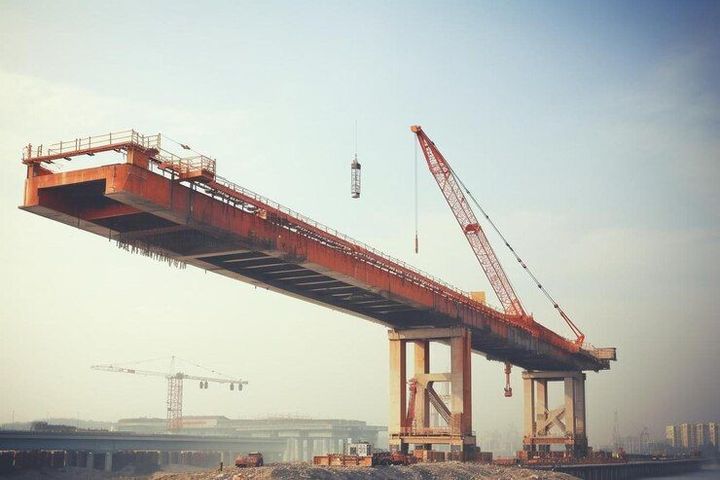
Learn How Bridge Girder Launchers Improve Bridge Construction Efficiency
Bridge girder launchers are specialized construction systems designed to place long structural girders across bridge supports with controlled movement and positioning. Instead of relying entirely on large ground-based lifting equipment, a girder launching system can move bridge components along the structure and position them over piers or other supports. This approach is particularly useful where access below the bridge is restricted.
The development of Bridge Girder Launchers is connected to the growing need for construction methods that can handle large structural components while reducing disruption around a bridge site. Traditional lifting methods may require substantial access areas, temporary supports, or several pieces of lifting equipment. Launching systems provide another approach by moving girders from a prepared location toward their final position.
A typical system can include a launching truss, support frames, hydraulic mechanisms, rollers, lifting devices, control systems, and temporary supports. The exact configuration depends on the bridge design, girder dimensions, span arrangement, site conditions, and required construction sequence.
Bridge Girder Launchers are commonly associated with projects involving highways, rail crossings, elevated structures, viaducts, and other bridges where conventional lifting arrangements may be difficult. Their role is not simply to move a girder; the system coordinates several controlled movements so that the structural element reaches its intended position.
How a Girder Launching System Works
The basic process begins with preparing the launching equipment and positioning the first girder or structural element. The launcher then supports and moves the girder toward the next pier or span.
Depending on the equipment design, movement can involve hydraulic cylinders, winches, rollers, or combinations of mechanical systems. Once the girder reaches the required position, it is lowered or transferred onto its permanent supports.
The general sequence can include:
- Assembly of the launching equipment
- Inspection of structural and mechanical components
- Positioning of girders
- Controlled forward movement
- Alignment over bridge supports
- Lowering onto bearings or designated support locations
- Repositioning of the launcher for the following span
The process requires coordination between equipment operators, engineers, survey personnel, and ground teams. Each movement is normally performed according to a planned sequence rather than through uncontrolled lifting.
Importance
Bridge construction can involve difficult working conditions, particularly when a bridge crosses roads, railways, rivers, industrial areas, or densely developed locations. Equipment working below the structure may interfere with existing transportation routes or require extensive temporary arrangements.
Bridge Girder Launchers address some of these challenges by allowing major structural components to be moved from locations already prepared for construction. This can reduce the need for extensive ground access beneath the bridge, depending on the project configuration.
Problems Addressed by Launching Equipment
A girder launching system can be relevant when construction teams need to manage:
- Limited access beneath an elevated structure
- Long bridge spans
- Heavy precast or steel girders
- Restricted working areas
- Active roads or railways beneath the bridge
- Water crossings
- Repeated girder placement across multiple spans
- Reduced dependence on large ground-based lifting arrangements
The method can also support a more organized construction sequence. Once the launching equipment is correctly positioned, similar movements can be repeated across multiple spans while following an established procedure.
Who Is Affected by Bridge Construction Efficiency
Bridge construction efficiency matters to more than the construction team. Transportation users can be affected by lane restrictions, temporary closures, altered traffic patterns, and construction activity. Nearby communities may also experience changes in access and movement during major projects.
Infrastructure owners and project planners are concerned with structural quality, construction sequencing, site safety, environmental conditions, and project duration. Engineers must also consider how the selected erection method interacts with the permanent bridge design.
The efficiency of a launching system should therefore be understood as more than speed. A suitable method can help coordinate structural placement, site access, equipment movement, and construction planning within the physical limitations of a project.
Recent Updates
Recent developments in bridge construction have increasingly emphasized modular equipment, digital planning, improved hydraulic control, structural monitoring, and more precise positioning. These trends are influencing how modern launching systems are designed and operated.
Greater Use of Digital Planning
Three-dimensional modeling and digital construction planning can help teams examine the movement of girders before physical work begins. Digital models can represent pier locations, span geometry, equipment dimensions, clearance areas, and potential movement paths.
This can make it easier to identify conflicts between the launching equipment and surrounding structures. It can also support more detailed planning of assembly, transportation, girder placement, and equipment repositioning.
Improved Monitoring and Control
Modern launching equipment can incorporate sensors and control systems that help operators monitor parameters such as hydraulic pressure, movement, alignment, load conditions, and equipment position.
Monitoring does not replace engineering assessment, but it can provide useful information during controlled lifting and launching activities. Data from sensors may also contribute to inspection records and maintenance planning.
Modular and Adaptable Equipment
Another current trend is the use of modular components that can be configured for different bridge arrangements. Modular systems can simplify equipment planning when projects involve varying span lengths or different site constraints.
However, adaptability depends on the manufacturer's equipment specifications and the engineering requirements of the bridge. A configuration suitable for one project may not be appropriate for another without detailed assessment.
Comparison of Common Girder Placement Approaches
| Method | Main Movement Approach | Typical Site Requirement | Key Consideration |
|---|---|---|---|
| Bridge Girder Launchers | Controlled movement along the bridge | Prepared launching area | Equipment configuration and structural loading |
| Mobile Cranes | Direct lifting and placement | Ground access | Crane reach and ground conditions |
| Tower Cranes | Vertical lifting and positioning | Fixed crane location | Site layout and lifting capacity |
| Incremental Launching | Progressive movement of bridge sections | Launching and support areas | Bridge geometry and temporary forces |
| Floating Equipment | Movement from water level | Navigable water access | Water conditions and lifting arrangement |
This comparison shows why there is no single method for every bridge. Selection depends on the structure, surroundings, available space, girder characteristics, and construction sequence.
Laws or Policies
Bridge construction is shaped by engineering regulations, occupational safety requirements, environmental rules, transportation controls, and project-specific approval processes. The exact requirements vary according to the jurisdiction and type of infrastructure, so project teams normally work within the applicable local regulatory framework.
Structural and Construction Requirements
Launching equipment must be compatible with the temporary and permanent structural conditions created during construction. Engineers may need to assess equipment loads, temporary reactions, support conditions, girder stability, and movement sequences.
Temporary conditions can differ significantly from the completed bridge. A girder may experience different forces while being lifted or launched than it will experience after permanent connections and supports are completed.
Workplace Safety Requirements
Construction rules commonly address lifting operations, equipment inspection, worker access, exclusion areas, communication procedures, and emergency planning. Personnel involved in launching operations generally need appropriate training for their assigned responsibilities.
Safety planning can include:
- Equipment inspection before operation
- Verification of load information
- Controlled access around moving equipment
- Communication between operators and ground personnel
- Weather and environmental condition checks
- Emergency procedures
- Inspection of temporary supports
Environmental and Transportation Considerations
Projects crossing roads, railways, waterways, or environmentally sensitive areas may have additional requirements. These can affect construction timing, access arrangements, noise controls, temporary occupation of areas, and protection of existing infrastructure.
Because regulations differ between jurisdictions, general information about Bridge Girder Launchers should not be treated as a substitute for project-specific engineering or regulatory assessment.
Tools and Resources
Several technical tools can help readers understand or plan bridge girder launching activities. Their usefulness depends on the project stage and the level of engineering analysis required.
Planning and Design Tools
Common resources include structural analysis software, three-dimensional modeling platforms, lifting-plan templates, load calculation worksheets, surveying equipment, and equipment inspection checklists.
Structural analysis tools can help examine temporary loading conditions. Modeling platforms can visualize equipment placement and movement. Surveying instruments can help establish reference points and verify alignment during construction.
Equipment Documentation
Manufacturer technical manuals are also important resources because they describe equipment capacities, operating limitations, assembly requirements, inspection procedures, and permitted configurations. These documents should be considered together with project-specific engineering information.
Construction teams may also use method statements and lifting plans to document the sequence of operations. Such documents can identify responsibilities, equipment requirements, temporary supports, communication procedures, and inspection points.
Basic Planning Factors
Before selecting a girder launching arrangement, planners generally consider:
- Girder weight and dimensions
- Bridge span lengths
- Pier arrangement
- Available assembly space
- Required launching direction
- Clearance beneath the bridge
- Ground and support conditions
- Weather exposure
- Equipment capacity
- Transportation and access limitations
These factors influence whether a particular launching method is technically appropriate for a project.
FAQs
What are Bridge Girder Launchers?
Bridge Girder Launchers are specialized systems used to move and position bridge girders over piers and spans. They can be useful where conventional ground-based lifting equipment has limited access.
How does a girder launching system improve construction efficiency?
A girder launching system can organize repeated girder placement and reduce dependence on extensive access beneath an elevated structure. Its efficiency depends on the bridge design, equipment configuration, site conditions, and construction sequence.
Where are Bridge Girder Launchers commonly used?
They are used on various bridge and elevated-structure projects, including highway bridges, railway crossings, viaducts, and locations where access below the structure is restricted.
Are Bridge Girder Launchers suitable for every bridge?
No. Suitability depends on factors such as girder dimensions, span arrangement, structural capacity, available space, equipment configuration, and temporary loading conditions. Engineering assessment is required for project-specific decisions.
What equipment is used with a girder launching system?
A system may include launching trusses, support frames, hydraulic equipment, rollers, lifting mechanisms, control systems, and temporary supports. The exact arrangement varies by project.
Conclusion
Bridge Girder Launchers provide a controlled approach for positioning large bridge girders, particularly where ground access beneath a structure is limited. Their effectiveness depends on careful engineering, equipment configuration, construction sequencing, and site conditions. Recent developments in digital planning, monitoring systems, and modular equipment are contributing to more structured bridge erection processes. Understanding these factors helps explain how a girder launching system fits into modern bridge construction.