High-Yield Plastic Extrusion Lines Basics With Equipment Features and Processing Methods
Plastic extrusion is a continuous manufacturing process used to create products with a consistent cross-sectional shape. A plastic material is heated until it becomes workable, pushed through a shaped opening called a die, and then cooled to maintain its required form.
High-yield plastic extrusion lines are designed to maintain continuous material flow while controlling temperature, pressure, speed, and product dimensions. A complete extrusion line can contain several connected machines rather than one standalone unit. The exact arrangement depends on the material being processed and the final product requirements.
The main stages usually include material preparation, feeding, melting, mixing, extrusion, shaping, cooling, sizing, cutting, winding, and inspection. Each stage contributes to product consistency. When equipment settings are coordinated correctly, the line can maintain stable production over extended operating periods.
Plastic extrusion lines are commonly built around an extruder, which contains a heated barrel and rotating screw. The screw moves plastic material through different processing zones. Heat and mechanical energy gradually transform the material into a controlled melt before it reaches the die.
Main extrusion line components
A typical line can contain:
- Material hopper for introducing plastic feedstock
- Gravimetric or volumetric feeder for controlling material flow
- Single-screw or twin-screw extruder
- Heating and cooling zones for thermal control
- Screen changer and filtration equipment
- Melt pump for controlled pressure and flow
- Die for forming the plastic melt
- Cooling equipment for product stabilization
- Haul-off or puller system
- Cutting, trimming, or winding equipment
- Measurement and inspection instruments
The configuration changes according to whether the line produces film, pipe, sheet, cable coating, pellets, or profiles.
Importance
Plastic extrusion is important because many everyday products require long, continuous, or repeatable shapes. Pipes, packaging films, electrical insulation, construction profiles, medical tubing, agricultural films, and technical sheets can all be produced using extrusion-based methods.
The process also allows manufacturers to control important characteristics such as thickness, width, diameter, surface appearance, and material composition. Automated controls can monitor these characteristics while production is underway.
High-yield plastic extrusion lines are particularly relevant where consistent throughput and dimensional stability are important. However, higher throughput does not simply depend on increasing screw speed. Feeding accuracy, melting capacity, die design, cooling performance, material properties, and downstream equipment must operate together.
Problems addressed by extrusion technology
Plastic extrusion equipment helps address several practical manufacturing challenges:
- Maintaining continuous material flow
- Producing repeatable dimensions
- Processing different thermoplastic materials
- Controlling melt temperature and pressure
- Reducing variations in product thickness
- Integrating cooling and sizing operations
- Monitoring production conditions automatically
- Supporting different product formats with suitable dies
Energy management is another important consideration. Heating systems, motors, cooling units, and auxiliary equipment all contribute to the overall energy requirement of an extrusion line. Modern control systems can coordinate operating parameters to reduce unnecessary energy use while maintaining process stability.
Common extrusion products
| Product | Typical Extrusion Method | Important Control Factors |
|---|---|---|
| Plastic Pipe | Pipe extrusion | Diameter, wall thickness, cooling |
| Plastic Film | Film extrusion | Thickness, air flow, tension |
| Plastic Sheet | Sheet extrusion | Width, thickness, roll temperature |
| Profiles | Profile extrusion | Die shape, cooling, dimensions |
| Tubing | Tube extrusion | Diameter, pressure, cooling |
| Cable Coating | Coating extrusion | Melt temperature, line speed, thickness |
| Pellets | Extrusion and pelletizing | Melt quality, cutting rate, particle size |
The choice of equipment depends heavily on the intended product. A pipe extrusion line has different downstream equipment from a film extrusion system, even though both use an extruder as a central processing machine.
Recent Updates
Plastic extrusion technology has increasingly incorporated digital controls, automated monitoring, energy-management functions, and improved material-handling systems. These developments are aimed at improving process stability, reducing material variation, and making operating conditions easier to monitor.
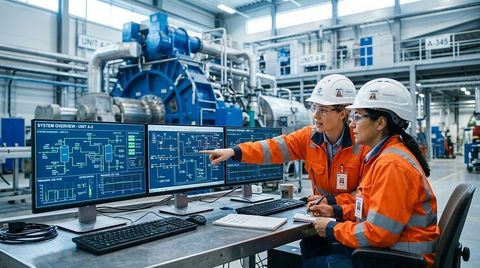
Modern extrusion lines can use sensors to measure melt pressure, temperature, screw speed, motor load, cooling conditions, and other variables. Data from these sensors can be displayed through a centralized human-machine interface, allowing operators to observe the process without manually checking every machine component.
Automation and process monitoring
Automation has become more integrated into high-yield plastic extrusion lines. Controllers can coordinate feeder rates, screw speed, heating zones, cooling systems, haul-off speed, and other parameters.
Some systems also support alarms and trend monitoring. If a measured value moves outside a configured range, the control system can notify the operator or initiate a predefined response.
Another developing area is predictive maintenance. Sensors can help identify changes in motor load, vibration, temperature, or pressure that may indicate equipment wear. This approach can support maintenance planning based on operating conditions rather than relying only on fixed inspection intervals.
Energy and material efficiency
Energy efficiency continues to influence extrusion equipment development. Improved motors, temperature controllers, insulation, heating technologies, and cooling systems can help manage energy consumption.
Material efficiency is also important. Accurate feeders and automated thickness controls can reduce variation in the finished product. Recycling systems may also be integrated into certain extrusion processes when the material characteristics and product specifications permit it.
Advanced extrusion methods
Twin-screw extrusion has gained attention for applications requiring intensive mixing, compounding, or material modification. Compared with conventional single-screw systems, twin-screw equipment provides additional control over mixing and material residence conditions.
Multi-layer extrusion is another established technique. It combines several plastic layers through a specialized die to create products with different functional characteristics across the structure. This method is used in applications involving barrier properties, mechanical performance, appearance, or material optimization.
Laws or Policies
Plastic extrusion facilities are generally affected by rules covering machinery safety, worker protection, emissions, waste handling, electrical systems, and environmental management. The exact requirements vary by country, region, facility type, and material being processed.
Machine safety requirements commonly address guarding, emergency stops, electrical protection, moving components, heated surfaces, and access to hazardous areas. Operators may also need appropriate training for equipment startup, shutdown, cleaning, material handling, and maintenance.
Environmental requirements can apply to plastic waste, production residues, air emissions, wastewater, and energy use. Some jurisdictions also have rules concerning the handling of specific additives or processing materials.
Regulatory areas commonly considered
Important compliance areas may include:
- Machinery and workplace safety
- Electrical and control-system requirements
- Industrial ventilation
- Plastic waste management
- Air-emission controls
- Wastewater management
- Noise management
- Material identification and handling
- Product-specific quality requirements
Recycling and circular-material policies are also influencing plastic processing. Some markets are establishing requirements or targets related to recycled content, packaging waste, producer responsibility, and material recovery.
Because regulations differ significantly between jurisdictions, an extrusion facility needs to consider the rules applicable to its location and product category. General technical information cannot replace the requirements issued by the relevant regulatory authorities.
Tools and Resources
Several tools help engineers, operators, and students understand and manage extrusion processes. Process calculators can estimate material throughput, screw speed relationships, cooling requirements, and basic dimensional parameters.
Material databases can provide information about processing temperatures, density, melt characteristics, and recommended operating ranges. These values are useful for initial process planning, although actual settings depend on the specific material formulation and machine design.
Useful resources for extrusion work
- Extrusion process calculators for basic production estimates
- Polymer material databases for processing information
- CAD software for die and profile development
- PLC and HMI platforms for machine control
- Thickness gauges for dimensional monitoring
- Melt-pressure sensors for process monitoring
- Infrared temperature instruments for surface measurements
- Production spreadsheets for tracking operating parameters
- Maintenance-management platforms for equipment records
- Technical manuals for extruder and downstream equipment
Simulation software can also be used during equipment development. Depending on the application, simulation may examine polymer flow through screws, dies, cooling sections, or other parts of an extrusion system.
Quality-control instruments are equally important. Micrometers, laser measurement systems, diameter gauges, thickness gauges, and visual inspection systems can help identify dimensional or surface variations.
FAQs
What are high-yield plastic extrusion lines?
High-yield plastic extrusion lines are integrated production systems designed to process plastic continuously at controlled throughput levels. They combine an extruder with feeding, shaping, cooling, pulling, cutting, winding, or other downstream equipment.
How does a plastic extrusion line work?
Plastic material enters the extruder through a feeding system. A rotating screw moves the material through heated zones, where it melts and becomes a controlled polymer flow. The melt passes through a die, takes its required shape, and then moves through cooling and sizing equipment before final handling.
What equipment is used in plastic extrusion lines?
Common equipment includes hoppers, feeders, extruders, heating systems, screen changers, melt pumps, dies, cooling units, haul-off systems, cutters, winders, and measurement equipment. The combination depends on the type of plastic product being produced.
What is the difference between single-screw and twin-screw extrusion?
A single-screw extruder generally provides straightforward conveying and melting for many conventional extrusion applications. A twin-screw extruder provides additional mixing and processing capabilities and is commonly used when material blending, compounding, or controlled mixing is important.
What factors affect extrusion processing?
Important factors include material characteristics, moisture, temperature, screw design, screw speed, feed rate, melt pressure, die geometry, cooling conditions, and downstream line speed. Maintaining appropriate relationships between these variables helps support consistent product dimensions and material quality.
Conclusion
High-yield plastic extrusion lines combine material feeding, controlled melting, shaping, cooling, sizing, and downstream handling into a continuous production process. Equipment configuration varies according to the material and final product, with automation increasingly supporting temperature, pressure, throughput, and dimensional monitoring. Current developments include improved process controls, energy-management technologies, sensor-based monitoring, and advanced extrusion configurations. Regulatory requirements continue to address machinery safety, environmental management, waste handling, and product-specific considerations.