Explore Bead Embroidered Necklaces With Creative Patterns, Colors, and Styling Tips
Bead embroidered necklaces are decorative jewelry pieces made by stitching beads onto a fabric, felt, leather, or other supportive base. Small beads are arranged into patterns, shapes, borders, floral designs, geometric forms, or abstract compositions before the finished piece is attached to a necklace structure.
The technique combines textile craft with jewelry design and can produce both simple everyday pieces and elaborate statement accessories.
The practice of decorating clothing and accessories with beads has existed across many cultures for generations. Different communities have developed their own approaches to bead selection, stitching, color combinations, symbols, and pattern construction. Contemporary bead embroidered necklaces draw from these traditions while also incorporating modern fashion preferences and materials.
Unlike necklaces made primarily from chains, metal, or molded components, bead embroidered designs often have a textile character. The surface can be soft, layered, textured, and visually detailed. Beads may include glass seed beads, crystals, pearls, ceramic pieces, gemstones, wooden beads, or other decorative elements.
The construction process usually begins with a design sketch or pattern. Beads are then attached individually or in small groups using thread and a needle. Several rows may be stitched together to create borders, raised sections, central motifs, or decorative edges.
Main Elements of Bead Embroidered Necklaces
A finished necklace can contain several interconnected elements:
Base material that supports the embroidery
Beads that form the visible pattern
Thread used to secure the beads
Backing material that provides structure
Pendant or central decorative section
Necklace cord, chain, ribbon, or beaded strand
Clasp or fastening mechanism
Decorative edging or fringe
The balance between these components affects the appearance and flexibility of the finished piece. A lightweight design may use small seed beads and a thin fabric base, while a larger necklace may require a stronger backing and more structured construction.
Creative Patterns and Design Styles
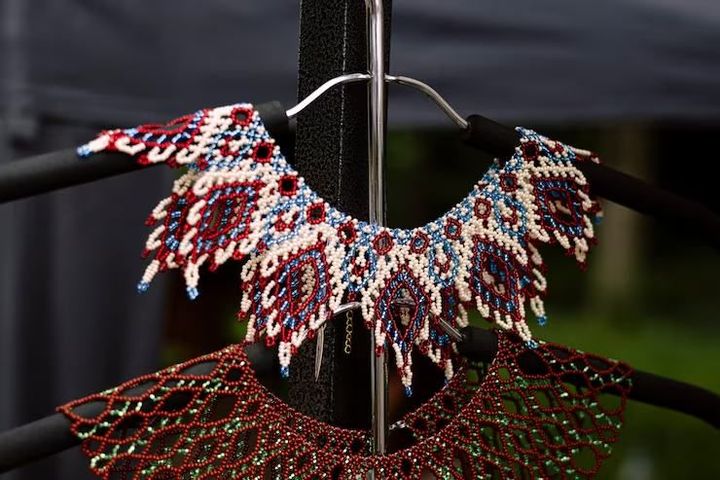
Bead embroidered necklaces can use symmetrical patterns, repeated geometric shapes, botanical motifs, curved lines, abstract forms, or combinations of several design approaches. The pattern may cover the entire necklace centerpiece or remain concentrated around a smaller focal area.
Color is another major design element. Designers can use contrasting colors for visual definition, related shades for a softer appearance, or metallic beads to create highlights. Neutral backgrounds can make colorful embroidery more noticeable, while bright backgrounds can produce a more expressive effect.
Importance
Bead embroidered necklaces matter as both decorative accessories and examples of textile craftsmanship. They demonstrate how small individual components can be combined into a larger visual composition through careful stitching and pattern planning.
The technique is also relevant to cultural preservation. Traditional beadwork methods can carry information about regional design practices, community history, clothing traditions, and artistic expression. Contemporary makers may adapt these techniques while maintaining elements of established craft knowledge.
Who Uses Bead Embroidered Necklaces?
These necklaces can appeal to people with different fashion preferences. Some may prefer small designs that complement everyday clothing, while others may choose large embroidered pieces as the central element of an outfit.
They can be used with:
Casual clothing
Formal outfits
Cultural clothing
Layered fashion combinations
Neutral garments
Printed dresses or tops
Seasonal accessories
Creative or artistic styling
The size, color, and pattern of a necklace can influence how it interacts with clothing. A detailed necklace may become the main visual focus, while a smaller design can work as a subtle accessory.
Craftsmanship and Construction
Bead embroidery requires attention to spacing and thread tension. If beads are placed too loosely, the pattern may lose its shape. If the thread is pulled too tightly, the base can become distorted.
Designers often work from the center outward or build the pattern in sections. Repeated motifs can help maintain symmetry, while free-form embroidery allows more variation between individual pieces.
The backing is also important. It supports the embroidered surface and can influence how the necklace rests against clothing. Flexible backing may suit lightweight designs, while structured backing can help larger pieces maintain their shape.
Choosing Colors and Bead Sizes
Color selection can be based on contrast, harmony, seasonal palettes, cultural references, or personal styling preferences. A simple palette can make geometric patterns easy to recognize, while a broader palette can create a more complex appearance.
Bead size also affects texture. Small beads can create detailed lines and curved shapes, whereas larger beads can establish focal points. Combining different sizes can add depth, but excessive variation may make a pattern harder to visually follow.
Recent Updates
From 2024 through 2026, jewelry and accessory design has continued to include handcrafted textures, expressive color combinations, personalized patterns, and interest in traditional craft techniques. Bead embroidery fits within this wider movement because each piece can contain visible handmade details and variations.
Contemporary Color Trends
Current accessory design frequently includes both restrained palettes and strong color combinations. Earth tones, muted shades, metallic accents, and natural colors can create understated designs, while saturated blues, greens, reds, pinks, and yellows can create more noticeable patterns.
Mixed-color bead embroidery can also use gradients. Beads are arranged so that one shade gradually changes into another, creating a transition across the necklace surface.
Geometric and Botanical Patterns
Geometric designs remain useful for bead embroidery because small beads can be arranged into repeated lines, diamonds, circles, triangles, and symmetrical borders. These structures can make complex surfaces easier to organize.
Botanical designs use leaves, flowers, vines, seeds, and other natural forms. They can be realistic or highly stylized. Abstract interpretations can combine curved lines and repeated shapes without representing a specific plant.
Personalization and Handmade Variation
Contemporary jewelry design increasingly includes individualized patterns, initials, color combinations, symbolic motifs, and customized proportions. Bead embroidery naturally supports this approach because designs can be constructed bead by bead.
Handmade variation is also part of the character of embroidered jewelry. Minor differences in bead placement, thread direction, and pattern spacing can occur between pieces created from the same general design.
Layering and Mixed Jewelry
Bead embroidered necklaces can also be incorporated into layered jewelry arrangements. A larger embroidered centerpiece can be paired with a simple chain or a shorter necklace with small beads.
When layering several necklaces, differences in length, texture, and visual weight can help separate the individual pieces. Too many similarly sized or highly detailed pieces can make the overall arrangement appear crowded.
Laws or Policies
Jewelry products and decorative accessories can be influenced by consumer protection rules, material disclosure requirements, labeling regulations, import requirements, intellectual property laws, and restrictions on particular materials. The specific requirements vary according to the country and the materials used.
Material Information
Jewelry may contain metals, coatings, adhesives, dyes, stones, glass beads, or other components. In some markets, regulations can require information about particular materials or substances when they may affect consumer safety.
Designers and manufacturers should maintain accurate records of materials used in a piece. Clear material descriptions can help distinguish between natural stones, synthetic materials, glass, ceramic components, and other decorative elements.
Cultural Designs and Intellectual Property
Traditional motifs may have cultural significance. Contemporary designers should distinguish between general decorative inspiration and protected artwork, designs, symbols, or patterns belonging to particular creators or communities.
Original patterns, photographs, written descriptions, and brand identifiers may also be protected under intellectual property rules. Reproducing another creator's distinctive work without appropriate permission can raise legal concerns.
Product Safety
Jewelry intended for regular wear should be constructed so that beads, clasps, wires, and other components are appropriately secured for the intended use. Designs for children may be subject to additional safety requirements in some jurisdictions because small components can present particular risks.
Tools and Resources
Creating or studying bead embroidered necklaces can involve a range of practical tools. A bead board can help organize beads by color and size before stitching. Design paper or digital pattern software can be used to plan symmetry, borders, and repeating motifs.
Useful resources include:
Bead size charts
Color palette tools
Embroidery pattern templates
Bead-count worksheets
Needle and thread guides
Jewelry measurement charts
Digital sketching applications
Pattern-grid software
Storage organizers
Clasp and fastening references
Textile and bead identification guides
A simple design comparison can help explain how different choices affect the finished necklace:
| Design Approach | Typical Bead Arrangement | Visual Character | Styling Consideration |
|---|---|---|---|
| Minimal | Small repeated motifs | Subtle | Everyday clothing |
| Geometric | Lines, circles, diamonds | Structured | Plain or simple outfits |
| Floral | Leaves and flower forms | Organic | Dresses and soft textures |
| Multicolor | Several contrasting shades | Expressive | Neutral clothing |
| Metallic Accent | Metallic beads among other colors | Reflective | Evening or formal styling |
| Layered | Multiple embroidered sections | Detailed | Simple surrounding accessories |
Pattern planning can also include a measurement guide. The designer can determine the width of the central section, length of the necklace, position of the clasp, and spacing between repeated motifs before beginning embroidery.
FAQs
What are bead embroidered necklaces?
Bead embroidered necklaces are jewelry pieces created by stitching individual beads onto a supportive material to form patterns, motifs, borders, or decorative surfaces. The embroidered section is then incorporated into a necklace structure.
How are bead embroidered necklaces made?
They are generally made by selecting a pattern, preparing a backing material, arranging beads, and stitching them securely with suitable thread. Additional edging, backing, clasps, or necklace strands may then be added.
What colors work well for bead embroidered necklaces?
Color selection depends on the desired visual effect. Contrasting shades can emphasize patterns, related shades can create harmony, and metallic accents can add highlights. Clothing colors can also influence the palette.
How can bead embroidered necklaces be styled?
A detailed necklace can be paired with relatively simple clothing so the embroidery remains visually clear. Smaller pieces can be layered with simple chains or other necklaces, while larger designs can function as the main accessory.
What beads are used for bead embroidered necklaces?
Common choices include glass seed beads, crystal beads, pearls, ceramic beads, wooden beads, and various decorative stones. The selection depends on the pattern, desired texture, weight, and construction method.
Conclusion
Bead embroidered necklaces combine textile techniques, jewelry design, color planning, and detailed beadwork. Creative patterns can range from geometric arrangements to botanical motifs, while bead size and color influence texture and visual balance. Recent accessory trends continue to include handmade details, expressive palettes, personalization, and traditional craft influences. Material information, construction quality, cultural considerations, and applicable product requirements are important parts of understanding these jewelry pieces.