Complete Guide to Wire Drawing Machines for Modern Metal Manufacturing
Wire drawing machines are industrial systems used to reduce the diameter of metal wire while improving dimensional consistency and producing the required surface characteristics. The process has existed for centuries in different forms, beginning with relatively simple drawing tools and gradually developing into powered mechanical and automated equipment used in modern metal manufacturing.
The basic principle is straightforward. A metal rod or wire is pulled through a specially shaped opening called a die. The opening is smaller than the incoming material, so the metal is reduced in diameter as it passes through. Depending on the required final size, the material can pass through several dies in sequence.
Modern wire drawing machines combine mechanical systems, electrical controls, cooling arrangements, lubrication, tension management, and monitoring equipment. These features allow manufacturers to process different metals and produce wire for electrical products, construction materials, automotive components, industrial equipment, springs, fasteners, and other applications.
How Wire Drawing Works
The wire drawing process generally begins with a metal rod or larger-diameter wire. Before drawing, the material may undergo preparation processes such as cleaning, descaling, pointing, or surface treatment.
The prepared material enters the drawing machine and passes through one or more dies. Each die reduces the wire diameter by a controlled amount. The drawing force is generated by rotating blocks, capstans, drums, or other pulling mechanisms.
Heat can develop because of friction and deformation during processing. For this reason, many wire drawing machines use cooling and lubrication systems to control temperature and reduce friction between the material and die.
Main Types of Wire Drawing Machines
Different manufacturing requirements have resulted in several wire drawing machine configurations.
- Single-block machines are generally associated with operations where the material passes through one primary drawing stage.
- Multi-block machines use several drawing stages to achieve greater diameter reduction.
- Continuous wire drawing machines are designed for uninterrupted material movement through multiple dies.
- Fine wire drawing machines are configured for small-diameter products requiring close dimensional control.
- Wet drawing machines use liquid lubrication and cooling around the drawing area.
- Dry drawing machines use solid or specialized lubricating materials during processing.
- Bull-block machines use a rotating drum to pull and collect wire after drawing.
- Specialized machines can be configured for materials such as steel, copper, aluminum, stainless steel, and certain alloy wires.
The appropriate configuration depends on material characteristics, incoming diameter, final diameter, production requirements, and required surface quality.
Importance
Wire drawing machines play an important role because many industrial products require wire with controlled diameter, mechanical properties, and surface condition. Small variations in wire dimensions can affect how a finished component performs, particularly when wire is used in electrical conductors, springs, cables, fasteners, and precision components.
The process also allows manufacturers to transform relatively large metal feedstock into smaller wire sizes without relying only on cutting operations. This makes wire drawing an important part of metal forming and material processing.
Industries That Use Drawn Wire
Drawn wire appears in a wide range of products and industrial systems. Common applications include:
- Electrical conductors and cable components
- Welding and fabrication materials
- Automotive springs and components
- Construction reinforcement and fastening products
- Industrial springs
- Mesh and fencing materials
- Medical and precision components
- Fasteners and small mechanical parts
- Communication and electronic components
- Industrial ropes and cable systems
Each application can require different combinations of diameter accuracy, tensile strength, surface finish, flexibility, and material composition.
Key Machine Components
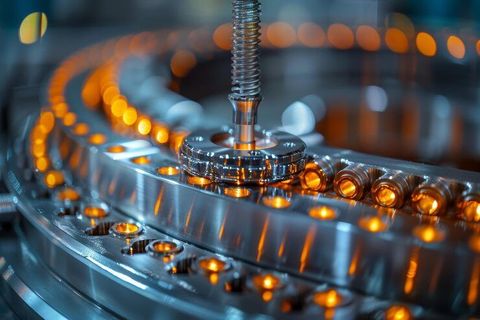
A wire drawing machine consists of several coordinated components. The die determines the reduction geometry and has a direct influence on the finished wire dimensions. Drawing blocks or capstans provide the pulling force needed to move material through the dies.
Other important components include:
- Motor and drive system for controlled movement
- Die holders for accurate die positioning
- Cooling equipment for temperature management
- Lubrication equipment for friction reduction
- Tension controls for stable material movement
- Take-up systems for collecting finished wire
- Sensors for monitoring operating conditions
- Electrical control panels for machine operation
- Safety systems for protecting operators and equipment
The interaction between these components determines how consistently a wire drawing machine can operate.
Typical Process Stages
| Process Stage | Main Purpose | Important Consideration |
|---|---|---|
| Material preparation | Remove surface contaminants | Feedstock condition |
| Pointing | Prepare the wire end | Correct entry geometry |
| Die entry | Begin diameter reduction | Die alignment |
| Drawing | Reduce wire diameter | Force and speed |
| Cooling | Control generated heat | Temperature stability |
| Lubrication | Reduce friction | Lubricant condition |
| Inspection | Check dimensions and surface | Measurement accuracy |
| Take-up | Collect processed wire | Tension control |
Maintaining stable conditions across these stages helps reduce dimensional variation and surface problems.
Recent Updates
Wire drawing technology has increasingly incorporated automation, electronic controls, sensors, and production monitoring. Current systems can use programmable controls to coordinate drawing speed, tension, motor operation, cooling, and other machine functions.
Automation and Digital Monitoring
Digital monitoring is becoming more common in metal manufacturing. Sensors can collect information about motor load, temperature, line speed, tension, vibration, and other operating conditions.
This information can help operators identify abnormal conditions earlier and understand how machine settings affect production. Some systems also connect machine data with manufacturing software for production records and process analysis.
Energy and Material Efficiency
Modern manufacturers are paying greater attention to energy consumption and material utilization. Variable-speed drives and electronically controlled motors can help coordinate machine speed with process requirements.
Improved die materials and lubrication methods are also part of ongoing development. Longer die life, controlled friction, and accurate process settings can help reduce interruptions and material waste.
Flexible Production Systems
Manufacturing environments increasingly require equipment that can handle different wire specifications. Modern wire drawing machines may therefore include adjustable controls, automated setup functions, quick-change components, and digital parameter storage.
The exact capabilities vary by machine design and manufacturer, but the broader trend is toward more adaptable and data-oriented metal processing equipment.
Laws or Policies
Wire drawing machine operations are influenced by workplace safety rules, machinery requirements, environmental controls, and product-quality standards. The exact requirements depend on the country, industry, machine configuration, and type of metal being processed.
Workplace Safety
Operators can face hazards from rotating components, moving wire, high mechanical forces, electrical equipment, noise, heat, and lubricating materials. Industrial safety frameworks commonly require appropriate guarding, emergency stopping systems, operator training, maintenance procedures, and risk assessment.
Manufacturers and facility operators should identify the rules that apply to their specific location and production environment.
Machinery and Electrical Requirements
Industrial machinery may need to meet applicable requirements for electrical safety, mechanical protection, control systems, and emergency functions. Equipment documentation can include operating instructions, maintenance information, electrical specifications, and safety procedures.
Environmental Considerations
Drawing operations can involve lubricants, coolants, metal residues, and other process materials. Environmental rules may govern the handling, storage, treatment, recycling, and disposal of these materials.
Because regulations differ between jurisdictions, organizations should consult the applicable regulatory authorities and technical standards for their operating location.
Tools and Resources
Several tools can help people understand, plan, monitor, and evaluate wire drawing operations. Engineering calculators can assist with wire diameter, cross-sectional area, reduction ratio, drawing speed, and material-related calculations.
Useful Technical Resources
Common resources include:
- Wire diameter and area calculators
- Drawing reduction calculators
- Motor and power calculation tools
- Die geometry references
- Material property databases
- Maintenance checklists
- Equipment inspection templates
- Production monitoring software
- Industrial safety documentation
- Technical standards databases
Computer-based manufacturing systems can also help organize production parameters and inspection information. Measurement equipment such as micrometers, laser diameter gauges, tension sensors, and surface inspection systems can support quality control.
Selecting Technical Parameters
When evaluating a wire drawing machine, several technical factors should be considered together. These include the incoming material diameter, required output diameter, material type, number of drawing stages, production speed, lubrication method, cooling arrangement, motor configuration, automation level, and available floor space.
A machine designed for fine copper wire can have significantly different requirements from equipment intended for heavy steel wire. Understanding the application is therefore important before comparing technical specifications.
FAQs
What is a wire drawing machine?
A wire drawing machine is industrial equipment that reduces the diameter of metal wire by pulling it through one or more dies. It is used to produce wire with controlled dimensions and required material characteristics.
How does a wire drawing machine work?
The machine pulls metal wire through a die with a smaller opening. The material undergoes controlled deformation and becomes smaller in diameter. Multiple dies can be used when a larger overall reduction is required.
What metals can wire drawing machines process?
Wire drawing machines can process materials including steel, copper, aluminum, stainless steel, and various metal alloys. The machine configuration, die material, lubrication method, and drawing parameters depend on the material being processed.
What is the difference between wet and dry wire drawing machines?
Wet drawing systems use liquid lubrication and cooling during the drawing operation, while dry drawing systems generally use solid or specialized lubricating materials. The selection depends on the material, wire size, production conditions, and required surface characteristics.
Why is automation important in modern wire drawing machines?
Automation can help coordinate drawing speed, tension, temperature monitoring, motor operation, and production data. Digital controls can also make it easier to maintain consistent process parameters and identify unusual operating conditions.
Conclusion
Wire drawing machines are important metal-forming systems used to produce wire with controlled dimensions and physical characteristics. Their development has progressed from basic mechanical drawing equipment toward automated systems with electronic controls, sensors, improved cooling, and digital monitoring. Applications extend across electrical, automotive, construction, manufacturing, and precision industries. Understanding the drawing process, machine types, components, safety requirements, and technical parameters provides a useful foundation for evaluating modern wire manufacturing systems.