Complete Guide to Battery Manufacturing Machines for Efficient Battery Production
Battery manufacturing machines are specialized industrial systems used to transform raw materials and battery components into finished cells, modules, and battery packs. They support processes such as electrode preparation, coating, drying, cell assembly, welding, formation, testing, and final pack integration.
The development of battery manufacturing machines is closely connected with the expansion of electric mobility, portable electronics, renewable energy storage, backup power systems, and industrial equipment. As batteries became more important for modern energy systems, manufacturers developed increasingly automated equipment to handle repetitive production stages with controlled operating conditions.
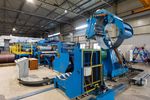
A modern battery production line can contain several interconnected machines. Each machine performs a particular function, while inspection and control systems monitor materials and production conditions. The exact equipment configuration depends on battery chemistry, cell format, production volume, and the intended application.
Battery manufacturing machines can generally be grouped into several stages:
- Material preparation equipment
- Electrode mixing and coating systems
- Electrode drying and calendaring equipment
- Slitting and cutting machines
- Cell assembly machines
- Battery tab welding systems
- Electrolyte filling equipment
- Formation and aging systems
- Cell testing and inspection equipment
- Module and battery pack assembly machines
Understanding these stages helps explain how raw materials eventually become functional battery systems.
Importance
Battery production affects many areas of modern technology. Electric vehicles depend on rechargeable battery packs, while energy storage systems use batteries to store electricity for later use. Portable devices, industrial equipment, telecommunications systems, and backup power applications also depend on reliable battery technology.
Battery manufacturing machines matter because production quality depends heavily on controlled processes. Small variations in electrode thickness, material distribution, welding, sealing, moisture levels, or electrical characteristics can affect the performance and reliability of finished cells.
Production consistency
Automation allows machines to repeat defined manufacturing operations under controlled conditions. Automated coating equipment, precision cutting systems, and robotic assembly equipment can reduce variation between production batches.
Safety and quality control
Battery production requires careful handling of chemicals, electrical energy, heat, pressure, and sensitive materials. Manufacturing equipment therefore commonly incorporates monitoring systems, interlocks, ventilation arrangements, inspection cameras, and process-control functions.
Quality control can include:
- Dimensional inspection
- Electrical testing
- Weld inspection
- Leak detection
- Thickness measurement
- Temperature monitoring
- Voltage and capacity testing
- Visual inspection
Production efficiency
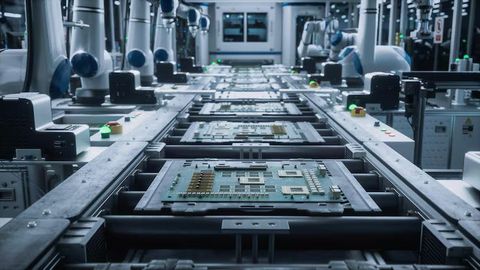
A coordinated battery manufacturing line can connect multiple production stages into a continuous workflow. Material handling systems, conveyors, robotic systems, and automated inspection equipment can reduce unnecessary manual movement between stages.
The equipment also helps manufacturers collect process information. Production data can be used to identify variations, monitor machine conditions, and maintain consistent operating parameters.
Recent Updates
Battery manufacturing has continued to change during 2024–2026, particularly through greater automation, digital monitoring, and expansion of advanced cell production.
One important development has been the expansion of Advanced Chemistry Cell manufacturing programs. In India, the Production Linked Incentive program for Advanced Chemistry Cell battery storage is designed around large-scale domestic manufacturing capacity. The program has a planned 50 GWh capacity framework, while additional government activity during 2026 has focused on another 10 GWh of grid-scale stationary storage capacity.
Automation and robotics
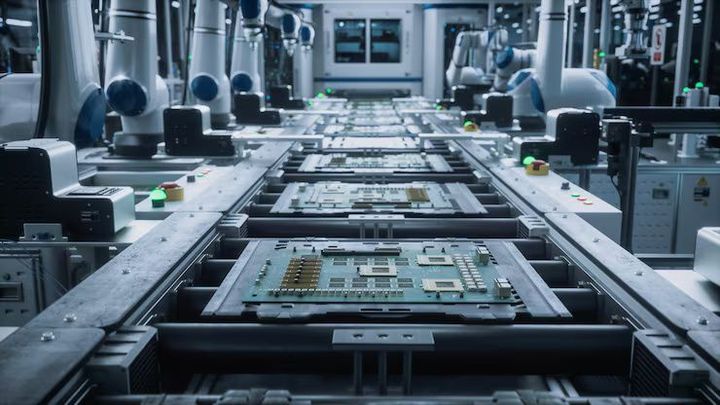
Modern production lines increasingly combine battery manufacturing machines with robotic material handling. Robots can transfer cells, position components, perform repetitive assembly operations, and move products between testing stations.
Machine vision is also becoming more common. Cameras and image-processing systems can inspect electrode surfaces, weld locations, labels, dimensions, and assembly conditions.
Digital process monitoring
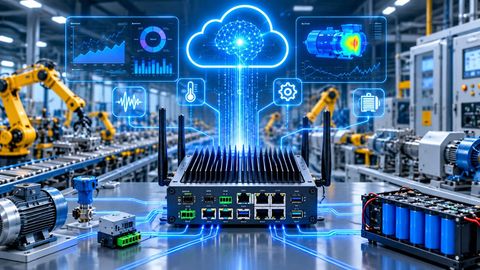
Manufacturers are increasingly using sensors and industrial software to monitor production conditions. Data can include temperature, humidity, pressure, coating thickness, machine speed, electrical measurements, and equipment status.
This supports production traceability because individual cells or batches can be associated with process information collected during manufacturing.
New battery chemistries
Battery manufacturing equipment is also adapting to different cell chemistries and formats. Lithium iron phosphate, nickel-based lithium-ion technologies, sodium-ion research, and other emerging approaches can require different material handling, processing, testing, or assembly arrangements.
Greater testing integration
Testing is becoming more integrated into production lines. Instead of relying only on final inspection, manufacturers can place measurement systems at multiple stages. This approach helps identify process variation earlier in the manufacturing sequence.
Battery Manufacturing Process and Machines
Battery production involves several connected stages. The following table provides a simplified overview.
| Production Stage | Common Machine | Main Function |
|---|---|---|
| Material preparation | Powder handling system | Handles active materials and additives |
| Mixing | Vacuum mixer | Produces uniform electrode slurry |
| Coating | Electrode coating machine | Applies slurry to current collectors |
| Drying | Electrode drying oven | Removes solvent or moisture |
| Calendaring | Roll press | Controls electrode density and thickness |
| Slitting | Slitting machine | Divides coated electrode rolls |
| Cell assembly | Winding or stacking machine | Builds internal cell structure |
| Welding | Tab welding machine | Connects electrical tabs |
| Filling | Electrolyte filling system | Introduces electrolyte |
| Formation | Battery formation system | Performs controlled charging and discharging |
| Testing | Battery testing equipment | Measures electrical characteristics |
| Pack assembly | Battery pack assembly line | Integrates cells into modules and packs |
Electrode preparation equipment
Electrode production begins with material mixing. A vacuum mixer can combine active materials, conductive additives, binders, and solvents into a controlled slurry.
The slurry is then transferred to an electrode coating machine. The coating system applies a controlled layer onto a current collector, such as aluminum or copper foil. Drying equipment subsequently removes the required solvent or moisture under controlled conditions.
Calendaring equipment uses rollers to compress the electrode material to a specified thickness and density. Slitting machines then divide large coated rolls into narrower sections suitable for cell assembly.
Cell assembly machines
Cell assembly equipment creates the internal structure of a battery cell. Depending on the cell design, machines may wind electrode and separator materials into a cylindrical or prismatic structure, or stack individual layers into a defined arrangement.
Assembly systems must maintain accurate alignment because electrode and separator positioning affects cell construction.
Battery tab welding systems
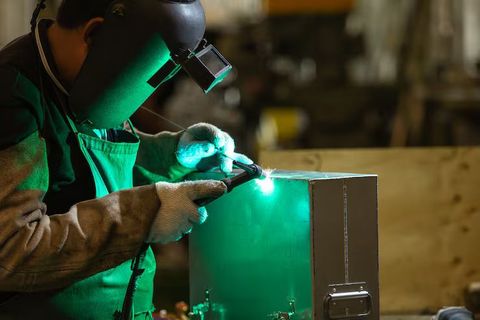
Battery tab welding systems connect conductive tabs to electrodes or other electrical components. Laser welding, ultrasonic welding, and resistance welding can be used depending on the battery design and materials.
Automated welding equipment can control welding parameters and monitor the connection process. Inspection systems may subsequently check weld appearance or electrical characteristics.
Electrolyte filling equipment
Electrolyte filling machines introduce the required electrolyte into compatible battery cells. This process is normally carried out under controlled environmental conditions because moisture and contamination can affect battery chemistry.
Vacuum-assisted systems may be used to help manage filling and wetting processes. After filling, cells may undergo sealing and stabilization procedures before formation.
Formation and aging systems
Formation is a critical electrical process in rechargeable battery manufacturing. Formation equipment applies controlled charging and discharging cycles to establish the electrochemical characteristics of the cell.
Battery formation systems can control voltage, current, temperature, and charging profiles. Aging equipment then allows cells to remain under controlled conditions while their electrical behavior is monitored.
Battery testing machines
Testing equipment measures characteristics such as voltage, current, capacity, resistance, temperature response, and charge-discharge behavior.
Automated battery testers can handle multiple cells simultaneously. Data collection systems can record test results for quality analysis and production traceability.
Laws or Policies
Battery manufacturing in India is influenced by environmental, manufacturing, product-safety, and waste-management requirements. The Battery Waste Management Rules, 2022 established an extended framework for battery producers and other relevant participants, with subsequent amendments issued during 2024 and 2025. These rules address battery waste management and recycling responsibilities.
For manufacturers, this means battery production is connected not only with factory operations but also with responsibilities related to batteries after their useful life. Record keeping, registration, recycling-related obligations, and material recovery requirements can form part of the regulatory framework depending on the activity involved.
India also uses standards administered through the Bureau of Indian Standards. For example, BIS maintains standards covering battery safety and performance, including standards related to primary lithium batteries and other battery categories.
BIS explains that manufacturers seeking applicable product certification need to identify the relevant Indian Standard and demonstrate appropriate manufacturing infrastructure, process controls, quality-control capabilities, and testing arrangements.
The regulatory requirements applicable to a particular battery facility can vary according to chemistry, product category, manufacturing process, environmental activities, and intended application. Therefore, compliance should be assessed against the current requirements applicable to the specific facility and product.
Tools and Resources
Several technical tools can help readers understand battery manufacturing machines and production planning.
Production calculators
Battery sizing calculators can estimate parameters such as energy capacity, voltage, current, and approximate cell configurations. These tools are useful for understanding how individual cells can be combined into modules and packs.
Battery testing platforms
Battery analysis platforms can record charging, discharging, voltage, current, temperature, and capacity information. Laboratory systems are generally used when detailed electrical characterization is required.
CAD and engineering software
Computer-aided design software can be used to develop battery enclosures, module structures, fixtures, machine layouts, and production-line arrangements.
Manufacturing execution systems
Manufacturing execution systems can connect production equipment with manufacturing records. Depending on the system, they can track batches, production parameters, inspection results, equipment status, and traceability information.
Technical standards databases
Standards databases from recognized standards organizations can help manufacturers identify applicable technical requirements. For India, the BIS standards database is an important reference for applicable Indian Standards.
FAQs
What are battery manufacturing machines?
Battery manufacturing machines are industrial systems used to prepare materials, produce electrodes, assemble cells, perform welding and filling operations, form batteries electrically, and test finished products.
Which machines are used in lithium-ion battery production?
Common equipment includes mixing machines, electrode coating machines, drying ovens, calendaring machines, slitting machines, cell winding or stacking machines, battery tab welding systems, electrolyte filling equipment, formation systems, and battery testing machines.
What does a battery formation machine do?
A battery formation machine controls charging and discharging cycles during the initial electrical conditioning of rechargeable cells. It can monitor voltage, current, temperature, and other defined parameters.
Why are battery tab welding systems important?
Battery tab welding systems create electrical connections between battery components. Controlled welding helps establish consistent connections and supports automated cell assembly.
How is battery manufacturing affected by regulations?
Battery manufacturing can be affected by product standards, environmental requirements, waste-management rules, factory safety requirements, and recycling obligations. The applicable requirements depend on the battery type and manufacturing activity.
Conclusion
Battery manufacturing machines form an interconnected production system covering material preparation, electrode processing, cell assembly, welding, filling, formation, testing, and pack integration. Automation, machine vision, digital monitoring, and integrated testing are becoming increasingly important across modern production lines. Regulatory frameworks also connect battery manufacturing with product safety, environmental management, and end-of-life battery handling. Understanding each production stage helps explain how raw battery materials are converted into cells, modules, and complete battery systems.