Machine Intelligence Guide: Know about emerging AI Trends
Artificial intelligence is moving beyond simple automation and becoming a core part of how modern digital systems operate, communicate, create, and make decisions. From generative applications and intelligent assistants to robotics and autonomous systems, machine intelligence is influencing industries at an accelerating pace.
Modern machine intelligence combines areas such as machine learning, deep learning, natural language processing, computer vision, robotics, generative AI, and AI agents. These technologies allow systems to process large volumes of information and perform tasks that previously required extensive human involvement. As models become more capable, attention is also shifting toward reliability, transparency, security, data quality, and responsible use.
Context
What Machine Intelligence Means
Machine intelligence describes computational systems that can perform activities associated with learning, reasoning, perception, prediction, and language understanding. Traditional software generally follows explicitly defined instructions, while machine learning systems can identify patterns from training data and use those patterns when processing new information.
Machine intelligence does not represent a single technology. It includes several connected areas:
- Machine learning for pattern recognition and prediction
- Deep learning for complex data processing
- Natural language processing for understanding and generating language
- Computer vision for interpreting images and video
- Generative AI for producing text, images, audio, video, and code
- Robotics for connecting intelligent software with physical machines
- AI agents for carrying out sequences of tasks using models, tools, and external information
How the Field Developed
Early artificial intelligence research focused heavily on symbolic reasoning and rule-based systems. Later advances in statistics, computing hardware, large datasets, and neural networks expanded the practical capabilities of machine learning.
Deep learning accelerated progress in image recognition, speech processing, language understanding, and other areas. More recently, foundation models have enabled one model to support multiple applications rather than being designed for only one narrowly defined task.
The emergence of generative AI has further changed public interaction with machine intelligence. Instead of simply classifying or predicting information, modern systems can create new digital content based on instructions and contextual information.
Importance
Why Machine Intelligence Matters
Machine intelligence matters because digital systems increasingly need to process information at a scale that is difficult for people to handle manually. Pattern recognition can help identify relationships within large datasets, while language models can assist with summarization, translation, coding, research, and information organization.
The technology affects individuals, organizations, researchers, educators, manufacturers, developers, and public institutions. It also creates challenges involving privacy, cybersecurity, intellectual property, inaccurate outputs, bias, accountability, and the changing nature of human-computer interaction.
Everyday Applications
People may encounter machine intelligence without realizing that an AI system is involved. Examples include:
- Voice recognition and transcription
- Personalized content recommendations
- Image classification
- Language translation
- Fraud detection
- Navigation and route prediction
- Document analysis
- Automated quality inspection
- Predictive maintenance
- Scientific data analysis
- Digital assistants and AI agents
The practical value of these applications depends on the quality of the underlying data, model design, testing process, and human oversight.
Key Areas of Machine Intelligence
| Area | Primary Function | Common Applications |
|---|---|---|
| Machine Learning | Learns patterns from data | Prediction and classification |
| Deep Learning | Processes complex patterns | Vision and speech |
| Generative AI | Creates digital content | Text, images, audio, code |
| Computer Vision | Interprets visual information | Inspection and image analysis |
| Natural Language Processing | Processes human language | Translation and summarization |
| Robotics | Connects AI with physical systems | Automation and navigation |
| AI Agents | Performs multi-step digital tasks | Research and workflow automation |
Recent Updates
Growth of Generative and Multimodal AI
Recent AI development has increasingly focused on multimodal models that can process combinations of text, images, audio, and video. This allows one system to work across several information formats rather than relying on separate models for every input type.
The 2026 AI Index reports continued progress across language, vision, speech, reasoning, robotics, and agentic systems. It also notes that evaluation methods are facing new challenges because some established benchmarks are becoming less useful as advanced models improve rapidly.
AI Agents and Task-Oriented Systems
Another emerging AI trend involves AI agents. Instead of responding to one instruction at a time, agentic systems can break a broader objective into multiple steps, interact with tools, retrieve information, and maintain context during a workflow.
This area is developing rapidly, but reliability remains important. An agent that can perform several connected actions also has more opportunities to make an incorrect decision, use unsuitable information, or misunderstand an instruction. Evaluation and human supervision therefore remain important parts of responsible deployment.
Smaller and More Efficient Models
AI development is also moving toward models that can perform useful tasks with fewer computational resources. Smaller models can be deployed closer to where data is generated, including personal devices, industrial equipment, vehicles, and edge computing environments.
This trend can reduce dependence on large centralized computing infrastructure and may improve response times for certain applications. However, model size alone does not determine capability, accuracy, security, or suitability for a particular task.
Robotics and Physical AI
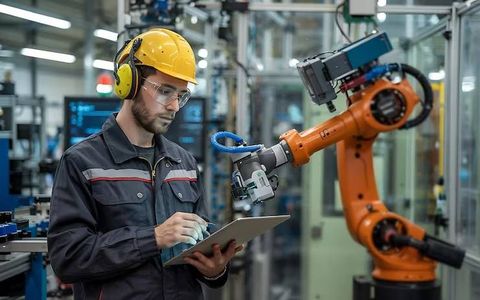
Machine intelligence is increasingly connected with physical systems. Robotics research combines perception, planning, language understanding, and movement so machines can respond to changing environments.
This development is relevant to manufacturing, logistics, agriculture, transportation, inspection, and research. Physical AI introduces additional challenges because errors can affect real-world equipment and environments rather than only producing an incorrect digital response.
Responsible AI and Evaluation
Responsible AI has become a major part of current machine intelligence development. Organizations are placing greater attention on data governance, model testing, transparency, cybersecurity, privacy, bias assessment, and incident management.
NIST's AI Risk Management Framework provides a voluntary structure for identifying and managing AI risks. Its generative AI profile addresses risks associated with generative systems, while NIST is also developing additional guidance for trustworthy AI in critical infrastructure.
The OECD AI Principles, updated in 2024, similarly emphasize trustworthy AI, human rights, transparency, accountability, safety, and international cooperation.
Laws or Policies
Global AI Governance
AI laws and policies differ across jurisdictions. Some governments use comprehensive AI legislation, while others rely on existing privacy, consumer protection, cybersecurity, intellectual property, and sector-specific rules.
The OECD AI Principles provide an international policy reference focused on trustworthy and human-centered artificial intelligence. They are not a single worldwide law, but they contribute to greater consistency in discussions about responsible AI development and governance.
European Union AI Act
The European Union has established a risk-based legal framework through the AI Act. The framework distinguishes between different levels of risk and introduces requirements related to prohibited practices, high-risk systems, transparency, governance, and general-purpose AI.
The rules for general-purpose AI models began applying earlier, while broader AI Act provisions reached another major application stage in 2026. Transparency requirements also address areas such as informing people when they interact with certain AI systems and identifying certain AI-generated or altered content.
Providers of general-purpose AI models face requirements involving technical documentation, copyright policies, and summaries of training content. Models presenting systemic risk have additional requirements involving risk assessment, incident reporting, evaluation, and cybersecurity.
Because AI regulation continues to develop, organizations need to consider the rules that apply to their jurisdiction, sector, data, and specific AI use case.
Tools and Resources
AI Development and Evaluation Tools
People learning about machine intelligence can explore several categories of tools and resources. Model development frameworks help researchers create and test machine learning systems, while notebook environments support experimentation with datasets and models.
Other useful resources include:
- AI model evaluation frameworks
- Data preparation and annotation tools
- Machine learning notebooks
- Model documentation templates
- Risk assessment frameworks
- AI governance checklists
- Bias and fairness evaluation methods
- Model monitoring systems
- Cybersecurity testing resources
- Technical documentation libraries
NIST's AI Resource Center provides materials related to testing, evaluation, verification, validation, and AI risk management.
For general learning, technical documentation, research papers, educational courses, benchmark repositories, and public datasets can help readers understand how machine intelligence systems are developed and evaluated.
Choosing Appropriate Resources
The appropriate tool depends on the task. A beginner studying machine learning may need educational notebooks and sample datasets, while an organization developing an AI system may require model evaluation procedures, data governance documentation, security testing, and risk assessment frameworks.
No single tool can establish that an AI system is accurate or appropriate for every situation. Testing should reflect the intended users, data, environment, and consequences of errors.
FAQs
What is machine intelligence?
Machine intelligence refers to computer systems that can learn patterns, process information, interpret inputs, generate outputs, or support decisions. It includes machine learning, deep learning, natural language processing, computer vision, robotics, and generative AI.
What are the emerging AI trends?
Important emerging AI trends include multimodal models, AI agents, smaller and more efficient models, generative AI, robotics, edge AI, improved evaluation methods, and stronger AI governance. These areas are developing at different speeds and have different technical and regulatory challenges.
How does machine intelligence differ from traditional software?
Traditional software generally follows instructions explicitly defined by developers. Machine learning systems can learn patterns from data and use those patterns to produce predictions or outputs for new inputs. Many modern applications combine traditional programming with machine learning.
Is machine intelligence used in robotics?
Yes. Machine intelligence can help robots interpret visual information, understand commands, plan movements, recognize objects, navigate environments, and adapt to changing conditions. Physical AI combines these capabilities with sensors, control systems, and mechanical components.
Why is AI regulation important?
AI regulation can establish requirements for transparency, safety, privacy, accountability, documentation, and risk management. The exact requirements depend on the jurisdiction, technology, sector, and intended use of an AI system.
Conclusion
Machine intelligence combines machine learning, deep learning, generative AI, computer vision, language technologies, robotics, and related fields to process information and perform increasingly complex tasks. Current AI trends are moving toward multimodal systems, AI agents, efficient models, physical AI, and stronger evaluation and governance practices. Regulation is also becoming an important part of how advanced AI systems are developed and deployed. Understanding both the capabilities and limitations of machine intelligence provides useful context for interpreting its growing role in digital and physical environments.