Machine Data Analytics Systems Guide With Smart Manufacturing and Industry Insights
Machine Data Analytics Systems are digital systems designed to collect, organize, analyze, and present information generated by industrial machines. Modern equipment can produce large amounts of operational data through sensors, controllers, meters, cameras, production software, and connected devices.
The development of these systems is closely connected with Industry 4.0, Industrial Internet of Things technology, cloud computing, automation, and smart manufacturing. Earlier industrial environments often depended on manual readings, isolated control systems, and periodic inspections. As machinery became more connected, manufacturers gained access to continuous streams of information that could be analyzed more systematically.
A typical machine data analytics system may collect information such as temperature, vibration, pressure, speed, energy consumption, operating hours, production quantities, error codes, and equipment status. The information can then be processed through dashboards, statistical models, machine learning systems, or other analytical methods.
The basic process can be understood through five stages:
- Data collection gathers information from machines and sensors.
- Data transmission moves information to local or centralized systems.
- Data storage keeps operational information available for analysis.
- Data analytics identifies patterns, changes, and unusual conditions.
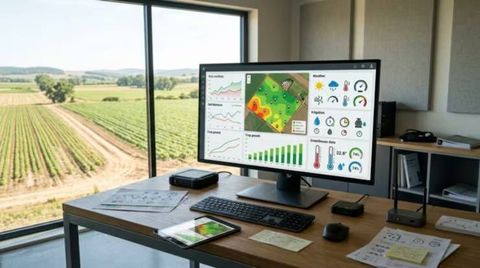
- Data visualization presents findings through dashboards, reports, alerts, or other interfaces.
These stages allow machine data analytics systems to connect physical equipment with digital decision-making. The purpose is not simply to collect more information, but to make machine information easier to understand and use within industrial operations.
Importance
Machine data analytics systems matter because modern manufacturing environments can contain hundreds or thousands of data points that are difficult to interpret manually. A machine may operate continuously while generating information about temperature, vibration, pressure, production speed, energy consumption, and operating conditions.
Without suitable analytics, this information can remain separated across different machines or software platforms. Machine data analytics provides a structured way to combine information and identify relationships that may not be visible through individual readings.
Supporting Equipment Monitoring
Continuous equipment monitoring can help identify changes in normal operating patterns. For example, a gradual increase in vibration may indicate that a component is behaving differently from its historical pattern.
Analytics systems can compare current readings with historical information and establish operating baselines. This can support maintenance planning and equipment monitoring without relying entirely on fixed inspection intervals.
Supporting Production Quality
Machine data can also be connected with production quality information. Temperature, pressure, speed, material flow, and other process variables may influence the consistency of manufactured products.
Analytics can help identify relationships between operating conditions and production results. This can provide manufacturers with a clearer understanding of which process variables require attention.
Energy and Resource Monitoring
Industrial equipment can consume substantial amounts of electricity, fuel, water, compressed air, or other resources. Machine data analytics systems can track resource consumption by machine, production line, process, or operating period.
This information can help organizations understand consumption patterns and identify unusual changes. Energy analytics is increasingly connected with sustainability programs and resource-efficiency initiatives.
Maintenance Planning
Predictive maintenance is one of the widely discussed applications of machine data analytics. Instead of relying only on fixed maintenance schedules, analytical systems can examine equipment conditions and historical patterns.
Common information used for maintenance analytics includes:
- Vibration measurements
- Temperature readings
- Operating hours
- Pressure changes
- Error codes
- Motor current
- Component performance
- Historical failure information
The results can support maintenance teams when assessing equipment conditions and planning inspections.
Who Uses Machine Data Analytics Systems
These systems can affect several groups within an industrial organization. Production teams may use dashboards to monitor operations, maintenance teams may analyze equipment conditions, quality teams may examine process relationships, and management teams may review broader production indicators.
The wider adoption of these systems also creates a need for people who understand both industrial processes and data interpretation. Technical knowledge remains important, but information must also be presented in ways that non-specialists can understand.
Recent Updates
Machine data analytics has continued evolving as manufacturers combine industrial connectivity with artificial intelligence, machine learning, edge computing, cloud platforms, and digital twins. Recent research increasingly discusses analytics as part of larger smart manufacturing environments rather than as an isolated reporting tool.
One major development is the growing use of artificial intelligence and machine learning for predictive maintenance, anomaly detection, quality inspection, process optimization, and forecasting. Recent manufacturing research also emphasizes challenges involving data quality, interoperability, legacy equipment, cybersecurity, and the practical integration of analytical results into everyday decisions.
Another development is the movement toward edge analytics. Instead of sending every piece of machine information to a distant computing environment, some systems process selected information closer to the equipment. This can reduce unnecessary data transmission and support applications that require rapid analysis.
Digital twins are also becoming increasingly connected with machine data analytics. A digital twin represents aspects of a physical machine, process, or production environment in a digital form. When continuously updated with operational information, it can support simulation, monitoring, analysis, and process understanding.
Generative AI and advanced machine learning are also entering industrial analytics discussions. Current research focuses on how these technologies could help interpret complex industrial information while maintaining human oversight, reliable data management, explainability, and operational safety.
The overall direction is toward integrated systems that combine sensors, industrial networks, analytics, artificial intelligence, digital twins, and human decision-making.
| Analytics Area | Typical Machine Data | Common Purpose |
|---|---|---|
| Equipment monitoring | Temperature, vibration, pressure | Detect operating changes |
| Predictive maintenance | Runtime, faults, vibration | Assess equipment condition |
| Quality analytics | Process variables, inspection data | Understand quality patterns |
| Energy analytics | Power and consumption readings | Examine resource usage |
| Production analytics | Output, cycle time, downtime | Understand production performance |
| Process analytics | Speed, pressure, flow | Study process behavior |
| Anomaly detection | Sensor and event data | Identify unusual conditions |
These developments do not remove the importance of reliable data. Poor sensor readings, inconsistent data formats, missing information, and disconnected legacy systems can reduce the usefulness of analytics.
Laws or Policies
Machine data analytics systems can be affected by several categories of laws, standards, and organizational policies. The exact requirements depend on the country, industry, type of information collected, and whether systems are connected to external networks.
Data Protection
Industrial machine data may sometimes be combined with information about employees, operators, contractors, or other identifiable individuals. When this happens, applicable data protection and privacy requirements may become relevant.
Organizations generally need to understand what information is collected, why it is collected, how long it is retained, who can access it, and how it is protected.
Cybersecurity
Connected machinery creates cybersecurity considerations because industrial equipment may communicate with internal networks, cloud platforms, remote monitoring systems, or other digital infrastructure.
Security policies commonly address authentication, access control, network segmentation, software updates, monitoring, incident response, and protection of sensitive operational information.
Industrial Safety
Machine analytics does not replace established equipment safety controls. Where analytical systems influence industrial operations, organizations may need to consider functional safety, machine safety, electrical safety, and operational risk requirements applicable to their environment.
Analytical recommendations should therefore be evaluated within the wider safety system rather than treated as independent instructions.
Data Governance
Organizations may also establish internal policies covering data ownership, retention, access permissions, quality standards, system integration, and audit records. These policies become particularly important when information is shared between production systems, enterprise software, cloud platforms, and external technology providers.
Because regulatory requirements vary between jurisdictions, organizations should evaluate machine data analytics systems against the rules applicable to their specific location and industry.
Tools and Resources
Several categories of tools can help people understand and manage machine data analytics systems. Industrial dashboards are commonly used to display machine status, production indicators, alarms, and historical trends.
Data visualization platforms can transform large datasets into charts, tables, trend lines, and monitoring panels. Spreadsheet applications can also be useful for basic analysis when datasets are relatively small and structured.
Other commonly used resources include:
- Industrial IoT platforms for connecting machines and sensors
- Manufacturing execution systems for production information
- Computerized maintenance management systems for maintenance records
- Statistical analysis tools for examining patterns
- Machine learning platforms for predictive models
- Digital twin platforms for simulation and equipment modeling
- Data quality templates for checking completeness and consistency
- Cybersecurity frameworks for assessing connected industrial environments
- Equipment manuals and technical documentation for interpreting sensor readings
The usefulness of any tool depends on the quality of the underlying information and how well the system connects with existing industrial processes.
FAQs
What are Machine Data Analytics Systems?
Machine Data Analytics Systems are digital platforms or connected software environments that collect and analyze information generated by industrial machines. They can help users understand equipment performance, production conditions, maintenance patterns, and operational changes.
How does machine data analytics support smart manufacturing?
Machine data analytics supports smart manufacturing by connecting machine information with digital analysis. It can help organizations examine production patterns, equipment conditions, quality information, energy usage, and other operational indicators.
What data is used in machine data analytics systems?
Common data includes temperature, vibration, pressure, speed, operating hours, energy consumption, production output, error codes, machine status, and process measurements. The exact data depends on the equipment and manufacturing process.
What is predictive maintenance in machine data analytics?
Predictive maintenance uses machine condition information and analytical methods to identify patterns associated with equipment deterioration or unusual behavior. The information can support maintenance planning and inspection decisions.
Are machine data analytics systems affected by cybersecurity policies?
Yes. Connected industrial systems can introduce cybersecurity considerations involving access control, network security, data protection, software updates, monitoring, and incident response. Applicable requirements vary by industry and jurisdiction.
Conclusion
Machine Data Analytics Systems connect industrial equipment with structured data analysis, helping organizations understand machine behavior and production conditions. Their applications include equipment monitoring, predictive maintenance, quality analytics, energy analysis, and process monitoring. Recent developments increasingly combine machine learning, edge computing, digital twins, and connected industrial platforms while emphasizing data quality, interoperability, cybersecurity, and human oversight. The regulatory environment depends on the type of data, industrial application, and jurisdiction in which the system operates.