Industrial Robotics and CNC Machinery Guide for Modern Manufacturing and Automation
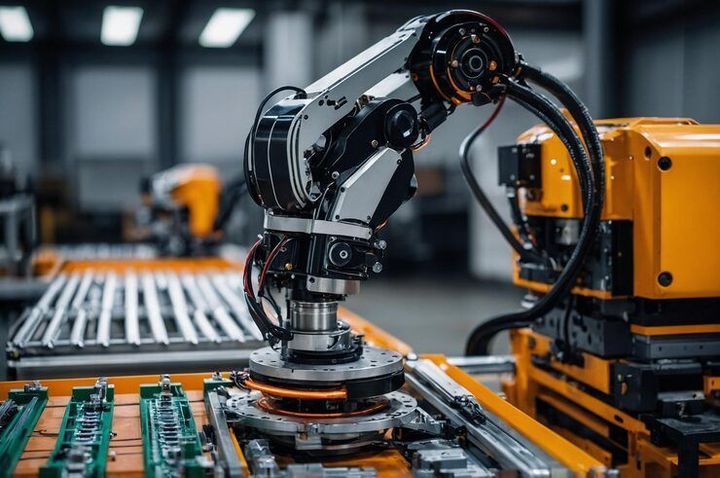
Industrial robotics and CNC machinery are important technologies in modern manufacturing. Industrial robots perform repetitive or programmed movements to handle materials, assemble components, weld metal parts, and package finished products.
CNC, or Computer Numerical Control, machinery uses computer instructions to control machine tools that cut, drill, mill, turn, or shape materials with defined dimensions.
These technologies developed from efforts to improve manufacturing consistency, reduce repetitive manual work, and control complex production processes. CNC systems evolved from numerical control methods, while industrial robotics developed through advances in mechanical engineering, electronics, sensors, and computer programming.
Today, industrial robotics and CNC machinery are used across automotive manufacturing, aerospace, electronics, metalworking, medical equipment production, and general industrial fabrication. Their capabilities differ, but they can work together within a coordinated production environment.
How Industrial Robots and CNC Machines Work
Industrial robots typically use articulated arms, linear motion systems, controllers, sensors, and end-effectors. An end-effector is the component attached to a robot that performs a task, such as gripping an object, welding a joint, or moving a part between stations.
CNC machinery follows programmed instructions that define tool movements, cutting speeds, coordinates, and other operating parameters. Depending on the equipment, these instructions may be created using computer-aided manufacturing software and converted into machine-readable code.
A manufacturing facility may use a CNC milling machine to shape a metal component and a robot to load the raw material, transfer the finished part, or position it for inspection. This arrangement can reduce manual handling between production stages, provided that the machines, tooling, and control systems are properly integrated.
Common Types of Industrial Equipment
Several equipment categories serve different production needs:
Industrial robotic arms: Perform welding, assembly, material handling, painting, and other programmed operations.
CNC milling machines: Remove material using rotating cutting tools to create surfaces, slots, pockets, and complex shapes.
CNC turning machines: Rotate a workpiece against a cutting tool to produce cylindrical components.
CNC routers: Process materials such as wood, plastics, composites, and certain metals, depending on machine specifications.
Collaborative robots: Designed for particular applications where people and robots may share a workspace under defined safety conditions.
Automated inspection systems: Use sensors, cameras, or measurement equipment to check dimensions and detect manufacturing defects.
The appropriate equipment depends on material type, production volume, part geometry, required accuracy, and workplace conditions.
Importance
Improving Manufacturing Consistency
Manufacturers often need to produce large quantities of components with similar dimensions and quality requirements. Industrial robotics and CNC machinery can execute repeatable instructions, helping reduce variation caused by inconsistent manual movements.
However, automation does not eliminate every production error. Incorrect programming, worn cutting tools, unsuitable materials, poor calibration, or faulty sensors can affect results. Routine inspection and process monitoring remain necessary.
Addressing Production Challenges
Manufacturing operations face challenges involving repetitive tasks, complex component geometry, production scheduling, material handling, and workplace safety. Automation can help address some of these challenges by assigning predictable operations to machines while employees focus on programming, supervision, maintenance, quality control, and process improvement.
Industrial robotics and CNC machinery are particularly relevant when tasks require repeated movements or controlled machining paths. Their suitability still depends on the scale and complexity of the operation.
Supporting Different Industries
The technologies serve a broad range of manufacturing activities.
Industry | Typical application | Equipment example |
|---|---|---|
Automotive | Welding and component machining | Robotic arms and CNC mills |
Aerospace | Precision component production | CNC milling and turning machines |
Electronics | Assembly and component handling | Compact industrial robots |
Metal fabrication | Cutting, drilling, and welding | CNC machines and welding robots |
Medical equipment | Machining small components | Precision CNC systems |
Packaging | Sorting and palletizing | Robotic handling systems |
These applications illustrate common uses rather than requirements for every business in each industry.
Workforce Skills and Operational Planning
Automation changes the skills needed in manufacturing environments. Operators may need to understand machine controls, technical drawings, basic programming, tool selection, measurement procedures, and safety systems.
Maintenance teams also need knowledge of mechanical components, electrical systems, sensors, and troubleshooting. Training helps employees recognize abnormal machine behavior and respond appropriately to equipment faults.
Recent Updates
Artificial Intelligence and Adaptive Automation
Developments during 2024–2026 have continued to increase interest in combining industrial robotics with artificial intelligence, machine vision, and data analysis. These technologies can help systems identify objects, inspect components, monitor operating conditions, and adjust selected processes within defined limits.
Machine vision is especially useful when parts vary in position or appearance. A camera-based system can identify a component's location and help a robot position its gripper accordingly, although performance depends on lighting, camera calibration, software, and the range of objects being handled.
AI-based tools can also support predictive maintenance by analyzing vibration, temperature, operating hours, or other machine data. Such systems provide indications of potential problems rather than certainty that a component will fail.
Connected Manufacturing Systems
Industrial equipment is increasingly connected to production monitoring systems, manufacturing execution systems, and enterprise planning platforms. These connections can provide information about machine status, production quantities, downtime, and quality results.
Connected systems also create cybersecurity considerations. Manufacturers need appropriate access controls, network segmentation, software updates, and procedures for responding to security incidents.
Flexible and Collaborative Production
Manufacturers are exploring automation cells that can be adapted for different products or production tasks. Collaborative robots and modular equipment may support certain applications where frequent changes are necessary.
The term collaborative does not mean that a robot is automatically safe to operate beside people. Risk assessments, appropriate tools, speed limits, safeguarding, and application-specific validation remain essential.
Laws or Policies
Machinery Safety and Workplace Requirements
Industrial robotics and CNC machinery must be operated according to applicable workplace safety requirements, equipment instructions, and relevant technical standards. In India, the Occupational Safety, Health and Working Conditions Code, 2020, forms part of the national framework for workplace safety, subject to applicable commencement provisions and rules.
Manufacturers and facility operators should verify the requirements that apply to their establishment, equipment, workforce, and location. Depending on the installation, relevant considerations may include machine guarding, electrical safety, emergency stops, operator training, and maintenance procedures.
Technical Standards and Risk Assessment
International standards such as ISO 10218 address safety requirements for industrial robots and robotic applications. ISO/TS 15066 provides additional guidance for collaborative robot applications.
Standards may be adopted or referenced through national regulations, contractual requirements, or industry practices. Their applicability depends on the equipment and installation, so organizations should verify the relevant editions and local requirements.
Risk assessment commonly considers:
Unexpected machine movement.
Pinch points and crushing hazards.
Flying chips, sharp tools, and hot surfaces.
Electrical and pneumatic hazards.
Tool breakage and workpiece ejection.
Human access during setup and maintenance.
Environmental and Energy Considerations
Manufacturing facilities may also need to comply with applicable electrical, environmental, waste-management, and energy requirements. CNC machining can produce metal chips, cutting fluids, noise, and other waste streams that require suitable handling.
Energy consumption varies according to machine size, duty cycle, operating speed, auxiliary equipment, and production requirements. Monitoring actual usage can help facilities understand energy demand and identify operational inefficiencies.
Tools and Resources
CAD and CAM Software
Computer-aided design (CAD) software helps engineers create digital models and technical drawings. Computer-aided manufacturing (CAM) software can use those models to generate toolpaths and machine instructions for supported CNC equipment.
Examples include Autodesk Fusion, Mastercam, and Siemens NX. Software capabilities differ by product, machine type, licensing arrangement, and configuration.
Robot Simulation and CNC Programming
Simulation tools allow engineers to test selected machine movements, robot paths, and production sequences in a virtual environment. They can help identify collisions, unreachable positions, and inefficient movements before equipment is operated physically.
Useful resource categories include:
CNC programming and code simulators.
Robotic work-cell simulation software.
Digital maintenance logs.
Machine inspection checklists.
Tool-life tracking spreadsheets.
Production monitoring dashboards.
Equipment manuals and operator training materials.
Simulation results should be validated against the real equipment because actual machine behavior may differ from the model.
Evaluating Equipment Requirements
Before selecting industrial robotics or CNC machinery, manufacturers can document their production requirements in a structured comparison.
Evaluation factor | Questions to consider |
|---|---|
Workpiece material | Can the machine process the required material? |
Precision | What dimensional tolerances are necessary? |
Production volume | How many parts must be completed per shift? |
Working area | Is there enough space for the machine and safeguards? |
Integration | Can the equipment communicate with existing systems? |
Maintenance | Are spare parts, technical documentation, and trained personnel available? |
Safety | What guarding and risk controls are required? |
Operating expenses | What are the expected energy, tooling, maintenance, and training requirements? |
This assessment helps align equipment capabilities with actual production needs instead of relying only on machine specifications.
FAQs
What is the difference between industrial robotics and CNC machinery?
Industrial robots perform programmed movements for tasks such as handling, welding, and assembly. CNC machinery controls cutting and shaping operations using computer instructions. Both technologies can operate together in an automated production cell.
How are industrial robotics and CNC machinery used in manufacturing?
They are used for machining components, welding assemblies, moving materials, loading machines, inspecting products, and handling finished parts. The exact application depends on production requirements and equipment capabilities.
What skills are needed to operate CNC machines and industrial robots?
Relevant skills include reading technical drawings, understanding machine controls, basic programming, measuring components, troubleshooting, and following safety procedures. More advanced roles may require knowledge of robotics, automation software, and industrial networks.
How does AI support industrial automation?
AI can assist with visual inspection, object recognition, machine-data analysis, and selected adaptive operations. Its effectiveness depends on data quality, system configuration, validation, and the production environment.
What safety measures are important for industrial robotics and CNC machinery?
Important measures include suitable machine guards, emergency-stop systems, risk assessments, operator training, safe maintenance procedures, and appropriate control of access to hazardous areas. Requirements vary according to the equipment and its application.
Conclusion
Industrial robotics and CNC machinery support modern manufacturing through programmed movement, controlled machining, and repeatable production processes. Advances in AI, machine vision, simulation, and connected systems are expanding their potential applications while introducing additional integration and cybersecurity considerations. Effective implementation depends on equipment suitability, workforce training, maintenance planning, and compliance with applicable safety requirements. Understanding these factors provides a foundation for evaluating automation within different manufacturing environments.