Industrial Coating Machines Guide With Automated Finishing Systems and Industrial Engineering Solutions
Industrial coating machines are equipment systems designed to apply protective, functional, or decorative layers to materials and manufactured components. They are used across metalworking, automotive production, appliances, electronics, construction materials, packaging, and other industrial fields.
Modern systems can include spray coating machines, powder coating equipment, electrostatic application units, curing ovens, conveyor systems, drying chambers, and automated finishing systems. Together, these technologies help manufacturers create controlled coating processes while supporting consistent surface preparation, material application, drying, curing, inspection, and handling.
Context
What Are Industrial Coating Machines?
Industrial coating machines are mechanical and automated systems that place a controlled layer of coating material onto a surface. Depending on the application, the coating may provide corrosion resistance, chemical protection, improved durability, electrical insulation, friction control, or a particular surface appearance.
Traditional coating processes often depended heavily on manual spraying, dipping, brushing, or roller application. As production requirements became more complex, industrial engineering solutions developed around automated material handling, controlled spray patterns, temperature management, ventilation, and process monitoring.
A modern coating line can combine several stages. A typical sequence may include cleaning, surface preparation, coating application, flash-off or drying, curing, cooling, inspection, and final handling. Each stage can influence the condition and performance of the finished surface.
Major Types of Coating Equipment
Industrial coating equipment varies according to the material, coating formulation, component shape, production volume, and required surface characteristics.
Common equipment categories include:
- Spray coating machines for liquid coating applications
- Powder coating machines for electrically charged powder application
- Electrostatic coating systems for controlled material transfer
- Dip coating equipment for components that can be immersed
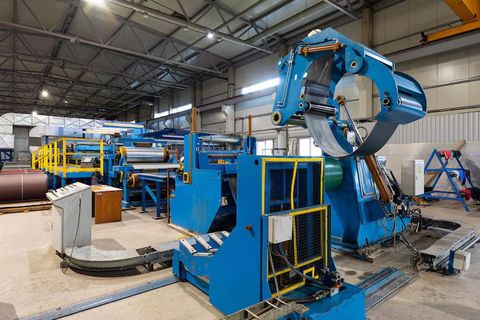
- Roll coating machines for continuous flat materials
- Curtain coating equipment for selected continuous surfaces
- Curing ovens for heat-based coating processes
- UV curing systems for coatings designed for ultraviolet exposure
- Conveyor systems for controlled movement between production stages
- Automated inspection equipment for detecting surface irregularities
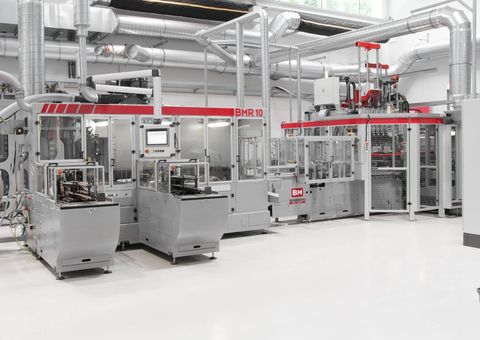
Industrial coating machines may operate as individual units or as connected production lines. Automated finishing systems can coordinate several machines through sensors, programmable controls, robotic equipment, and production software.
How the Coating Process Works
The process normally begins with surface preparation. Dirt, grease, oxidation, dust, or other contaminants can interfere with adhesion, so cleaning and preparation are important parts of the overall operation.
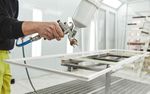
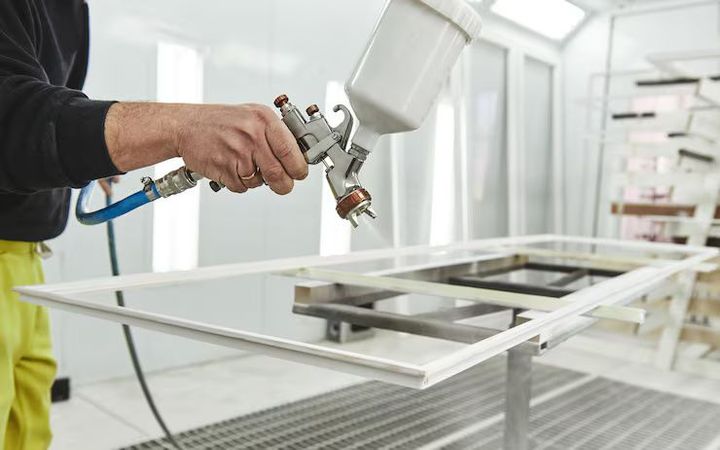
The coating is then applied using a selected method. Spray systems atomize liquid material into controlled droplets, while powder coating equipment applies dry powder that can subsequently be cured. Electrostatic systems use electrical charges to influence how coating particles move toward the target surface.
After application, the coating may require drying or curing. Curing ovens use controlled heat, while some specialized coatings use ultraviolet radiation or other methods. Temperature, airflow, exposure time, and material characteristics all influence the final result.
Importance
Why Industrial Coating Matters
Industrial coatings can help protect manufactured components from environmental exposure, corrosion, abrasion, chemicals, moisture, and repeated handling. In many production environments, surface treatment is an important part of maintaining the functional characteristics of a component.
The process also affects manufacturing consistency. Variations in coating thickness, spray distance, material flow, curing temperature, or surface preparation can create differences between components.
Automated finishing systems address some of these process variations by using programmed movements, sensors, controlled application parameters, and automated material handling.
Industries Using Coating Machines
Industrial coating machines are used across a wide range of manufacturing activities.
Important application areas include:
- Automotive components and vehicle parts
- Metal furniture and fabricated structures
- Electrical and electronic enclosures
- Construction materials
- Agricultural and industrial equipment
- Appliances and household equipment
- Packaging components
- Metal coils and continuous sheet materials
- Aerospace-related components
- Machinery housings and fabricated assemblies
The equipment configuration changes according to the dimensions, material, geometry, and coating requirements of the product.
Automation and Production Control
Automation is increasingly connected with industrial engineering solutions because coating involves multiple variables that can be monitored electronically. Sensors can track temperature, pressure, flow, humidity, conveyor movement, and other process conditions.
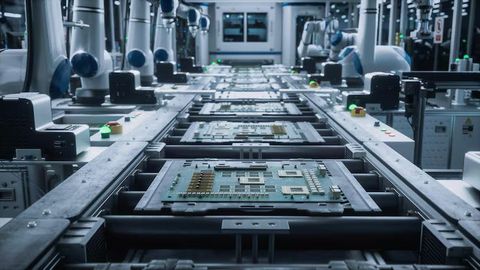
Robotic arms can also be integrated with spray coating machines. A robot can follow programmed paths around complex components while maintaining controlled movement patterns. This approach can reduce variation caused by differences in manual movement.
Data collection is another important development. Modern controllers can record operating conditions and provide information that helps production teams identify process changes or equipment abnormalities.
Basic Comparison of Coating Technologies
| Coating Technology | Typical Material | Main Process Feature | Common Application |
|---|---|---|---|
| Liquid Spray Coating | Liquid coating | Atomized application | Machinery and metal parts |
| Powder Coating | Dry powder | Electrostatic or conventional application | Metal components |
| Dip Coating | Liquid coating | Component immersion | Small or suitable shaped parts |
| Roll Coating | Liquid coating | Controlled roller transfer | Flat or continuous materials |
| UV Curing | UV-reactive coating | Ultraviolet exposure | Selected industrial components |
| Thermal Curing | Heat-reactive coating | Controlled oven heating | Metal and fabricated products |
Recent Updates
Growth of Automated Finishing Systems
Recent developments from 2024 through 2026 have continued to emphasize automation, process monitoring, energy management, and integration between coating equipment and factory control systems.
Industrial coating machines are increasingly designed to communicate with programmable logic controllers, sensors, robotic systems, and production monitoring platforms. This creates a more connected production environment in which application parameters can be monitored during operation.
Robotics in Coating Applications
Robotic coating systems are being used for components with complex geometries or repetitive application requirements. Robot programming can control movement speed, spray distance, angle, and application paths.
Machine vision can also be integrated into certain production lines. Cameras and inspection software can identify visible surface differences, helping operators locate areas that require additional examination.
Powder Coating Development
Powder coating continues to receive attention because it uses a dry coating material and can be integrated with recovery systems. Automated powder coating machines can control application parameters and reclaim certain unused powder depending on the system configuration.
Developments in coating formulations are also associated with lower-temperature curing requirements and expanded material compatibility. The actual performance depends on the coating formulation, substrate, equipment settings, and curing conditions.
Digital Monitoring and Process Data
Industrial engineering solutions increasingly include digital monitoring. Temperature sensors, pressure sensors, flow meters, coating thickness instruments, and equipment diagnostics can generate process information.
This information can support production documentation and help identify changes in operating conditions. Data systems can also connect coating equipment with broader manufacturing execution and factory automation platforms.
Laws or Policies
Workplace Safety Requirements
Coating operations can involve flammable liquids, combustible powders, vapors, heat, compressed air, electrical equipment, and chemical exposure. Consequently, workplace safety rules commonly address ventilation, ignition sources, protective equipment, storage, equipment grounding, and emergency controls.
For example, occupational safety rules in the United States address spray finishing involving flammable and combustible materials. Requirements include appropriate ventilation, controls for ignition sources, grounding of relevant metal components, and specific provisions for powder coating equipment.
Other jurisdictions use their own occupational safety frameworks, so the exact requirements depend on the location and type of operation.
Air Emissions and VOC Controls
Some coating materials contain volatile organic compounds, commonly known as VOCs. Regulatory programs in several jurisdictions establish requirements for controlling air emissions from industrial surface coating operations.
In the United States, environmental rules cover multiple surface coating categories and include requirements related to VOC and hazardous air pollutant emissions. The specific requirements depend on the industry, facility, coating process, and regulatory classification.
Ventilation and Powder Handling
Ventilation is particularly important in spray and powder coating operations. Occupational safety requirements can address the removal of vapors, mists, and suspended powders and the prevention of hazardous concentrations.
Powder coating installations may also require appropriate collection and recovery arrangements. Regulations can specify how powder, exhaust air, electrical equipment, and ignition sources are managed.
Manufacturers and facility operators generally need to review the rules applicable to their specific location, materials, equipment, and production process.
Tools and Resources
Equipment Selection Tools
Equipment selection commonly involves reviewing several technical factors rather than considering a single machine specification. Useful information includes:
- Substrate material and dimensions
- Coating formulation
- Required coating thickness
- Production throughput
- Application method
- Curing temperature and duration
- Conveyor speed
- Booth dimensions
- Ventilation requirements
- Powder or liquid recovery requirements
- Inspection method
Technical datasheets can help users understand equipment capacity, operating ranges, electrical requirements, airflow specifications, and compatible materials.
Measurement and Inspection Instruments
Coating thickness gauges can measure the thickness of applied layers on suitable substrates. Gloss meters can assess surface reflectivity, while adhesion testers can evaluate how strongly a coating remains attached to a surface.
Other instruments may measure temperature, humidity, airflow, pressure, viscosity, or surface roughness. The appropriate instrument depends on the coating technology and quality-control requirements.
Digital Engineering Resources
Computer-aided design software can help engineers plan equipment layouts and material flow. Programmable logic controller software is commonly used for automation control, while industrial monitoring platforms can display production data.
Process documentation can also include equipment manuals, coating technical datasheets, maintenance schedules, safety documentation, calibration records, and inspection procedures.
FAQs
What are industrial coating machines used for?
Industrial coating machines apply controlled layers of liquid, powder, or specialized coating materials to manufactured surfaces. They are used for protection, durability, appearance, insulation, and other functional purposes.
How do automated finishing systems work?
Automated finishing systems coordinate equipment such as conveyors, spray units, robots, sensors, curing ovens, and controllers. Programmable settings can regulate movement, application parameters, temperature, and other process conditions.
What is a powder coating machine?
A powder coating machine applies dry coating powder to a prepared surface. In many systems, electrostatic charging helps the powder adhere to the component before the coating is cured in a controlled heating process.
Why is ventilation important for coating equipment?
Ventilation helps control airborne vapors, mists, and suspended particles generated during certain coating processes. Proper ventilation can also form part of workplace fire and exposure controls, depending on the materials and equipment involved.
What industrial engineering solutions are used with coating lines?
Industrial engineering solutions can include robotic application systems, conveyors, programmable controllers, sensors, curing equipment, inspection instruments, ventilation systems, and production data platforms. The combination depends on the coating process and manufacturing environment.
Conclusion
Industrial coating machines combine material application, surface preparation, drying, curing, handling, and inspection technologies within modern manufacturing processes. Automated finishing systems can connect these stages through robotics, sensors, conveyors, and programmable controls. Recent developments have placed greater attention on process monitoring, automation, powder coating, energy management, and emissions control. Safety, environmental requirements, equipment specifications, and coating characteristics remain important factors in designing and operating industrial coating processes.