Industrial Cleaning Chemicals Information With Cleaning Processes and Industrial Applications
Industrial cleaning chemicals are specialized substances used to remove oil, grease, dust, mineral deposits, residues, and other contaminants from equipment, machinery, floors, production lines, and industrial components.
They support cleaning processes across manufacturing, food processing, automotive production, metalworking, electronics assembly, and other industrial environments. Their formulations vary according to the type of contamination, the material being cleaned, and the operating conditions.
Industrial cleaning chemicals include detergents, degreasers, alkaline cleaners, acidic cleaners, solvents, and disinfectants. Each category performs a different function. For example, alkaline cleaners can help remove oily residues, while acidic formulations can dissolve certain mineral deposits and surface scale. Solvent-based products may be used for specific contaminants that do not respond effectively to water-based cleaning.
Industrial cleaning has developed alongside manufacturing technology. As production equipment became more complex, manufacturers needed methods to maintain clean surfaces, prevent residue accumulation, and prepare components for additional processing. Modern cleaning systems combine chemical formulations with mechanical action, controlled temperatures, water, and suitable application methods.
Common Types of Industrial Cleaning Chemicals
The selection of industrial cleaning chemicals depends on the contaminant and the surface material.
Alkaline cleaners: Used for removing grease, oils, and many organic residues from suitable surfaces.
Acidic cleaners: Designed to remove certain mineral deposits, rust, and scale when compatible with the material.
Industrial degreasers: Formulated to loosen or dissolve lubricants, machining oils, and heavy grease.
Neutral detergents: Used for routine cleaning where a milder chemical formulation is appropriate.
Solvent-based cleaners: Applied to specific oil-based or adhesive residues, subject to material compatibility and exposure controls.
Industrial disinfectants: Used to reduce specified microorganisms on suitable surfaces when the formulation and application are appropriate.
These categories are not interchangeable. A chemical that removes mineral scale may damage certain metals, while an unsuitable solvent can affect plastics, rubber, coatings, or electrical insulation.
How Industrial Cleaning Processes Work
Industrial cleaning generally involves identifying the contaminant, selecting a compatible chemical, applying it under controlled conditions, and removing loosened residues. The process may include rinsing, drying, inspection, and waste collection.
Common application methods include manual wiping, spray cleaning, immersion tanks, circulation cleaning, pressure-assisted washing, and automated cleaning systems. The method depends on equipment design, production requirements, contamination levels, and workplace safety controls.
Importance
Industrial cleaning chemicals play an important role in maintaining production equipment, supporting product quality, and controlling contamination. Deposits on machinery can interfere with moving parts, reduce heat transfer, obstruct fluid passages, and affect the accuracy of manufacturing processes. Appropriate cleaning helps address these operational challenges.
Clean surfaces are also important when components move between production stages. Metal parts may require cleaning before coating, welding, painting, or bonding. Residual oil or dust can interfere with surface preparation and affect the consistency of the finished component.
Industrial Applications Across Different Sectors
Industrial cleaning chemicals are used in many settings, with each sector requiring different cleaning procedures.
Manufacturing: Removes machining oils, dust, metalworking fluids, and production residues from machinery and components.
Food processing: Supports cleaning of suitable food-contact and non-food-contact surfaces according to applicable hygiene requirements.
Automotive production: Helps remove grease, polishing compounds, and contaminants from metal components and manufacturing equipment.
Pharmaceutical manufacturing: Supports controlled cleaning procedures intended to prevent unwanted material from remaining on equipment and surfaces.
Electronics production: Uses compatible cleaning formulations to remove selected residues without damaging sensitive components.
Power generation: Helps maintain suitable surfaces on equipment affected by lubricants, deposits, and operational contamination.
Warehousing and logistics: Supports the removal of dirt, oil marks, and other residues from compatible floors and handling equipment.
Operational Challenges Addressed by Industrial Cleaning
Contamination can create difficulties beyond the visible appearance of machinery. Deposits may interfere with inspection, contribute to equipment wear, or affect the consistency of a production process. Cleaning procedures help control these conditions when properly designed and maintained.
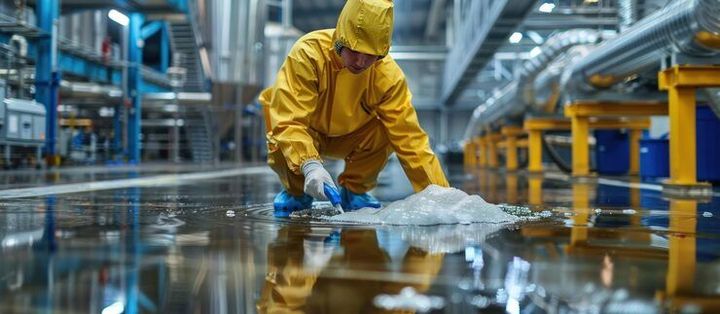
Chemical handling also creates challenges. Workers may encounter irritating vapours, corrosive liquids, splashes, or incompatible substances. Appropriate ventilation, personal protective equipment, chemical storage, and training are therefore important parts of industrial cleaning operations.
Factors Affecting Cleaning Performance
Several variables determine how well an industrial cleaning chemical performs:
Chemical formulation: Determines which contaminants the product can loosen, dissolve, or suspend.
Temperature: Can improve cleaning in some applications but may increase evaporation, exposure, or material damage in others.
Contact time: Allows the chemical to act on the contaminant within the manufacturer's specified limits.
Mechanical action: Spraying, brushing, agitation, or circulation can help remove loosened material.
Material compatibility: Helps prevent corrosion, swelling, discoloration, and surface deterioration.
Rinsing and drying: Remove residual chemicals and moisture where required by the process.
Recent Updates
Industrial cleaning chemicals are increasingly influenced by environmental considerations, workplace safety, automation, and the need for consistent production quality. Manufacturers and industrial operators are evaluating formulations and processes that reduce unnecessary chemical use while maintaining suitable cleaning performance.
Changes in Industrial Cleaning Technology
One important development is the wider use of aqueous cleaning systems. These systems use water-based formulations with suitable detergents, builders, or other cleaning ingredients. They can replace certain solvent-based processes, although suitability depends on the contaminant, equipment, drying requirements, and wastewater treatment arrangements.
Another trend is the use of automated cleaning equipment. Programmable spray systems, controlled immersion tanks, and circulation-based cleaning can provide more consistent operating conditions than procedures relying entirely on manual application. Sensors and process monitoring can help operators track temperature, concentration, pressure, and other relevant variables.
Environmental considerations are also influencing formulation choices. Some facilities assess biodegradability, chemical persistence, packaging, wastewater characteristics, and worker exposure when evaluating cleaning products. Environmental performance must be assessed using relevant product data rather than assumptions based solely on terms such as green or eco-friendly.
Comparison of Industrial Cleaning Approaches
Cleaning approach | Typical application | Main consideration |
|---|---|---|
Aqueous cleaning | General industrial parts and machinery | Requires suitable rinsing and drying |
Alkaline cleaning | Oils, grease, and organic residues | Compatibility with metals and coatings |
Acidic cleaning | Selected mineral deposits and scale | Corrosion control and material suitability |
Solvent cleaning | Specific oil-based contaminants | Vapour exposure, flammability, and residue |
Ultrasonic cleaning | Small or complex components | Suitable chemistry and equipment compatibility |
Automated spray cleaning | Repetitive production cleaning | Process control and maintenance |
These methods serve different purposes. A facility may combine more than one approach when components contain several types of contamination.
Developments in Chemical Management
Current industrial practices increasingly emphasize chemical inventory tracking, controlled dispensing, documented cleaning procedures, and employee training. Concentration monitoring and automated dosing can help reduce inconsistent chemical application.
Digital maintenance records can also document cleaning cycles, inspection results, chemical usage, and equipment conditions. These records help facilities review process consistency and identify recurring contamination problems.
Laws or Policies
Industrial cleaning chemicals are subject to chemical safety, worker protection, environmental management, and industry-specific requirements. The applicable rules depend on the country, the chemical formulation, the workplace, and the intended use.
Chemical Labelling and Workplace Safety
Chemical containers generally require appropriate identification and hazard information under applicable regulations. Safety Data Sheets provide information about chemical hazards, handling precautions, storage, exposure controls, first aid, and emergency procedures.
The Globally Harmonized System of Classification and Labelling of Chemicals, commonly known as GHS, provides an international framework for communicating chemical hazards. Its implementation and legal requirements vary between jurisdictions.
Industrial facilities should ensure that workers understand chemical labels, relevant protective equipment, spill procedures, and the risks associated with mixing products. Cleaning chemicals should not be combined unless the manufacturer's instructions explicitly establish that the combination is appropriate.
Environmental and Industry-Specific Requirements
Chemical disposal and wastewater management may be governed by environmental regulations. Facilities may need suitable arrangements for collecting contaminated rinse water, managing chemical waste, and preventing uncontrolled discharge into drainage systems.
Food processing, healthcare-related manufacturing, and pharmaceutical production can have additional hygiene or contamination-control requirements. Cleaning procedures in these environments may need documented verification and records demonstrating that established requirements are followed.
In India, industrial facilities may need to consider applicable requirements under chemical safety, occupational safety, hazardous waste, and water pollution control frameworks. Specific obligations depend on the substances involved and the facility's activities. Qualified environmental or safety personnel can interpret the requirements relevant to a particular operation.
Tools and Resources
Industrial cleaning operations rely on practical tools and technical documentation to select suitable chemicals, manage application conditions, and verify cleaning results.
Equipment Used in Industrial Cleaning
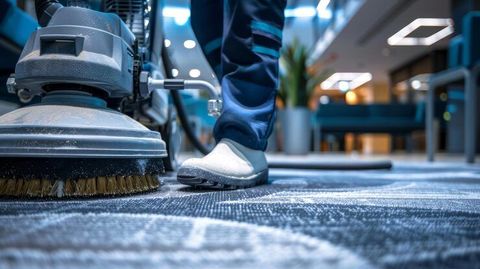
Common equipment includes spray washers, immersion tanks, ultrasonic cleaning units, circulation systems, dosing pumps, pressure washers, and industrial floor-cleaning machines. Equipment selection depends on component dimensions, contamination type, throughput, and the required level of cleanliness.
Protective equipment may include chemical-resistant gloves, goggles, face shields, protective clothing, and respiratory protection when the hazard assessment requires it. Ventilation and emergency washing facilities may also be necessary.
Resources for Chemical Selection
Useful resources include:
Safety Data Sheets: Explain hazards, handling requirements, storage conditions, and emergency measures.
Technical Data Sheets: Describe intended applications, dilution instructions, operating conditions, and material compatibility.
Chemical compatibility charts: Help identify potential interactions between cleaning formulations and metals, plastics, elastomers, and coatings.
Concentration measurement tools: Help verify chemical strength in processes where concentration affects performance.
Inspection checklists: Record visible cleanliness, residue removal, drying conditions, and equipment status.
Wastewater assessment tools: Support the evaluation of rinse water and chemical waste before appropriate treatment or disposal.
Cleaning results should be assessed using methods suitable for the application. Visual inspection may be adequate for some routine tasks, while other processes require residue testing, surface analysis, or documented validation.
FAQs
What are industrial cleaning chemicals used for?
Industrial cleaning chemicals remove grease, oil, dust, mineral deposits, and other contaminants from machinery, production equipment, industrial floors, and manufactured components. The formulation depends on the contaminant and the material being cleaned.
How do industrial degreasers differ from regular detergents?
Industrial degreasers are formulated to address oil, grease, and related residues, while general detergents often target a wider range of everyday dirt and particles. Their suitability depends on formulation strength, surface compatibility, and operating conditions.
Which industrial cleaning chemicals are suitable for metal surfaces?
The appropriate formulation depends on the metal, its coating, and the contaminant. Certain alkaline cleaners work on compatible metal surfaces, while acidic formulations may be used for selected deposits. Product instructions and compatibility information should be checked before application.
What safety precautions apply to industrial cleaning chemicals?
Workers should follow the product's Safety Data Sheet, use the specified protective equipment, maintain suitable ventilation, and observe storage and handling instructions. Incompatible chemicals should not be mixed, and spills should be managed using established workplace procedures.
How are industrial cleaning chemicals selected for manufacturing applications?
Selection depends on contamination type, surface material, cleaning method, temperature, contact time, rinsing requirements, worker exposure, and waste management. Testing under controlled conditions can help establish whether a formulation is suitable for a particular production process.
Conclusion
Industrial cleaning chemicals support manufacturing, equipment maintenance, surface preparation, and contamination control across many industrial sectors. Their effectiveness depends on suitable formulation selection, compatible materials, controlled application, and appropriate rinsing or drying procedures. Chemical safety, environmental management, and applicable industry requirements are essential considerations throughout the cleaning process. Advances in automation, aqueous cleaning, and chemical monitoring continue to influence how industrial facilities manage cleaning operations.