Explore Car Phone Mount Installation With Dashboard, Windshield, and Air Vent Options
Car phone mount installation involves attaching a smartphone holder to a suitable position inside a vehicle. A car phone mount keeps a phone accessible for navigation, hands-free communication, and other permitted functions while the driver remains focused on the road.
Common mounting options include dashboard mounts, windshield mounts, and air vent mounts, each designed for different vehicle interiors and driver preferences.
The development of smartphone navigation has increased the need for practical ways to position phones inside cars. Drivers frequently use digital maps to identify routes, check traffic conditions, and locate destinations. A properly installed mount can help keep the device stable and visible without requiring the driver to hold it.
Car phone mounts are available in several designs, including adhesive mounts, suction cup mounts, magnetic holders, and adjustable vent clips. Some models use a mechanical clamp to secure the phone, while others rely on magnets or a compatible magnetic phone case. The appropriate design depends on the vehicle's dashboard material, vent structure, phone dimensions, and mounting requirements.
Main Types of Car Phone Mounts
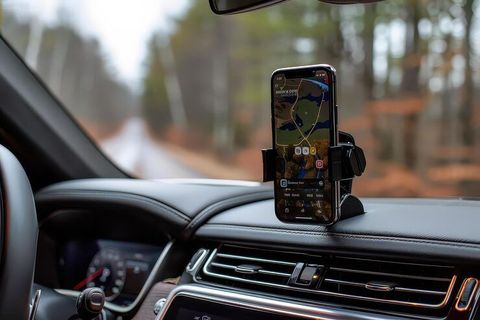
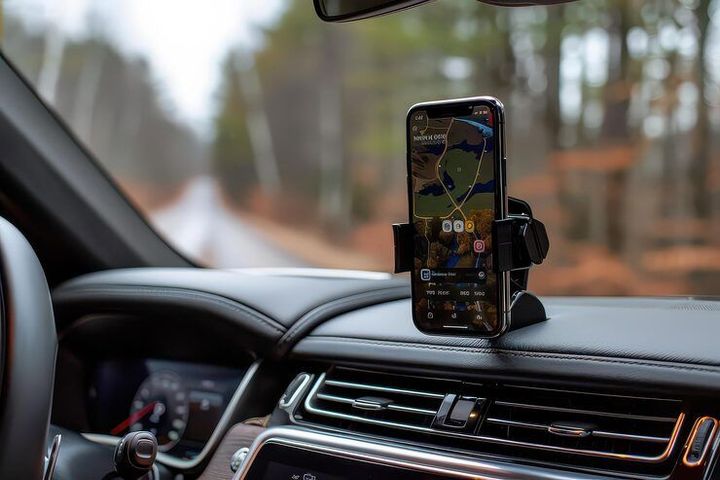
A dashboard phone mount attaches to a suitable dashboard surface, often through an adhesive base or suction mechanism. It can provide convenient viewing when positioned within the driver's normal line of sight, although curved, textured, or heat-sensitive surfaces may affect attachment.
A windshield phone mount generally uses a suction cup to attach to the glass. Its position can be adjusted in many designs, but it must not obstruct the driver's view or interfere with vehicle equipment.
An air vent phone mount uses a clip that attaches to a compatible ventilation grille. It generally requires less dashboard space, although its stability depends on the vent's shape, strength, and orientation.
Importance
Why Proper Installation Matters
Car phone mount installation affects visibility, stability, and driving comfort. A poorly positioned phone can block part of the road view, interfere with controls, or fall during sudden braking. Incorrect attachment may also damage dashboard finishes, loosen vent components, or leave residue on glass and interior surfaces.
Drivers should position the phone so that essential road information remains visible without requiring substantial head movement. Even with a mount, looking at a screen for extended periods can distract the driver, so route information should be checked before driving whenever possible.
Choosing a Mount for Different Vehicles
Vehicle interiors differ considerably. A mount suitable for a flat dashboard may not attach securely to a curved surface, while a vent clip designed for horizontal grilles may not fit vertical or unusually shaped vents.
The following comparison summarizes common considerations.
Mount type | Main advantage | Potential limitation | Installation surface |
|---|---|---|---|
Dashboard mount | Flexible viewing position | Adhesion may vary by surface | Dashboard |
Windshield mount | Adjustable placement | May obstruct visibility | Windshield glass |
Air vent mount | Uses limited dashboard space | May block airflow | Vent grille |
Cup holder mount | Avoids dashboard adhesives | Can occupy a cup holder | Cup holder socket |
CD slot mount | Uses an existing dashboard opening | Not suitable for every vehicle | Compatible CD slot |
Everyday Driving Needs
Different drivers have different mounting requirements. People who frequently follow navigation may prefer a position that makes route guidance easy to glance at, while drivers who use their phone occasionally may prioritize a compact design that can be removed when not needed.
Other considerations include phone weight, case thickness, charging requirements, road conditions, and the driver's seating position. A mount should remain stable during normal driving without requiring the driver to adjust it repeatedly.
Recent Updates
Changes in Mount Design During 2024–2026
Car phone mount designs continue to evolve alongside smartphone shapes, charging technologies, and vehicle interior layouts. Recent product trends include adjustable magnetic mounts, stronger mechanical grips, compact folding arms, and integrated wireless charging.
Magnetic mounting systems can make attaching and removing a compatible phone convenient. However, magnetic alignment, phone case compatibility, and the manufacturer's weight limits should be checked before use. Some phones or cases require a compatible accessory for reliable magnetic attachment.
Wireless charging mounts combine phone support and charging in one unit. Depending on the model, they may require a suitable power connection and compatibility with the phone's charging standard. Charging performance can also be affected by temperature, alignment, and phone case thickness.
Adapting to Modern Vehicle Interiors
Modern vehicles increasingly feature large central displays, touchscreen controls, integrated navigation, and driver-assistance equipment. These features make mount placement more important because additional devices can create visual clutter or block essential information.
A mount should not cover dashboard displays, instrument panels, airbag deployment zones, or camera and sensor areas. Vehicle manuals can help identify restricted mounting positions, especially around the dashboard and windshield.
Improved Flexibility and Adjustment
Many newer mount designs include rotating joints, telescopic arms, adjustable clamps, or quick-release mechanisms. These features allow drivers to change the viewing angle and accommodate different phone sizes.
However, extra adjustment points can also introduce movement if the joints are not secured correctly. The phone should remain stable after installation, and any loose components should be tightened according to the manufacturer's instructions.
Laws or Policies
Road Safety and Phone Placement
Rules governing mobile phone use while driving vary by country and jurisdiction. In many places, handheld phone use is restricted, and drivers are expected to maintain proper control of their vehicles. A phone mount does not automatically make every form of phone interaction lawful or safe.
Drivers should check the rules applicable to their location before using a phone for navigation or communication. Voice guidance and hands-free functions can reduce the need to handle a device, but they do not eliminate the possibility of distraction.
Visibility and Vehicle Equipment
Mount placement should preserve an adequate view of the road, mirrors, traffic signals, and pedestrians. A phone positioned in the driver's direct line of sight can create a dangerous obstruction, particularly when turning, changing lanes, or approaching intersections.
The mount must also remain clear of airbags and other safety equipment. Dashboard and windshield airbags can deploy with considerable force, so placing a rigid mount or phone in a deployment zone may create additional hazards.
Installation and Vehicle Protection
Before attaching a mount, the driver should inspect the vehicle's manual and the mount's installation instructions. Some dashboard finishes require special adhesive pads, while certain plastics may react poorly to strong adhesives or cleaning chemicals.
For windshield installation, the glass should be clean and dry, and the suction cup should be attached only to an appropriate area. Air vent clips should fit securely without bending or damaging the grille.
Tools and Resources
Tools for Car Phone Mount Installation
Most standard mounts require only a few basic items, although the exact requirements depend on the design. Common preparation tools include a clean microfiber cloth, an appropriate surface cleaner, the manufacturer's installation guide, and any supplied adhesive pad or mounting accessory.
A screwdriver or other tool should be used only when specifically required by the instructions. Unnecessary disassembly of dashboard panels or ventilation components can damage vehicle parts.
Step-by-Step Installation Process
A practical installation process can be divided into several stages.
Select the location: Choose a position that allows easy viewing without blocking the road, controls, airbags, or displays.
Prepare the surface: Remove dust and residue using a cleaning method suitable for the material.
Attach the base: Follow the manufacturer's instructions for the adhesive, suction cup, or vent clip.
Secure the phone: Check that the clamp or magnetic connection supports the device properly.
Adjust the angle: Position the screen for a quick glance while keeping attention on driving.
Check stability: Before moving the vehicle, confirm that the mount does not shift under gentle handling.
Adhesive mounts may need a specified curing period before carrying the phone. Suction cup mounts may require periodic inspection, especially after exposure to heat.
Maintenance and Compatibility Checks
Mounts should be inspected periodically for loose joints, worn clips, weakened adhesive, or damaged suction cups. Cleaning dust from contact surfaces and avoiding excessive force can help preserve the attachment.
Before selecting a mount, check the following compatibility factors:
Factor | What to check |
|---|---|
Phone dimensions | Width, height, thickness, and weight |
Case compatibility | Clamp clearance or magnetic attachment |
Dashboard material | Texture, curvature, and heat tolerance |
Vent design | Grille shape, spacing, and strength |
Charging needs | Cable access or wireless charging compatibility |
Viewing position | Road visibility and access to controls |
These checks help identify potential installation problems before the mount is used during travel.
FAQs
How do you install a car phone mount on a dashboard?
Clean and dry a suitable dashboard surface, attach the mount according to its instructions, and allow adhesive to set if required. Secure the phone and confirm that the position does not obstruct visibility or vehicle controls.
Is a windshield phone mount better than an air vent mount?
The two options have different advantages. A windshield mount can provide flexible positioning but may obstruct the driver's view, while an air vent mount preserves dashboard space but may interfere with airflow or place pressure on the grille.
Can a car phone mount damage the dashboard?
Damage is possible if an adhesive is incompatible with the surface, a mount is removed incorrectly, or excessive force is applied. Checking the vehicle manual and following the manufacturer's removal instructions can reduce this risk.
Are magnetic car phone mounts compatible with every phone?
No. Compatibility depends on the mount's magnetic design, phone model, case, and any required accessory. The manufacturer's specifications should be checked to confirm that the phone can be held securely.
Where should a car phone mount be positioned?
The mount should be placed where the phone is easy to glance at without blocking the road, mirrors, instrument panel, or essential controls. It must also remain clear of airbag deployment zones and other safety equipment.
Conclusion
Car phone mount installation involves choosing a suitable mounting type, preparing the attachment surface, and positioning the phone without obstructing visibility or safety equipment. Dashboard, windshield, and air vent mounts each have different compatibility requirements and practical limitations. Regular inspection can help identify loose attachments, worn components, and other installation problems. Safe use also depends on following applicable traffic rules and minimizing interaction with the phone while driving.