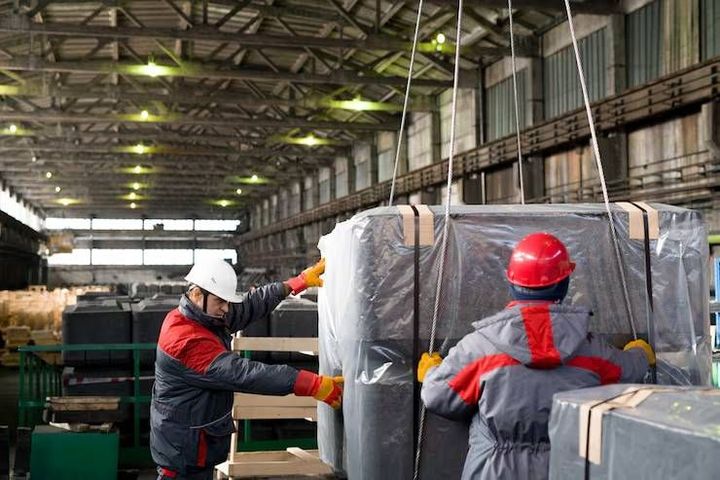
Industrial Bulk Material Handling Chutes Information With Engineering and Handling Technology
Industrial bulk material handling chutes are engineered structures used to guide, transfer, redirect, or discharge bulk materials between different stages of a handling system. They are commonly found in mining, quarrying, cement production, power generation, recycling, ports, agriculture, food processing, and manufacturing facilities.
A chute usually works through gravity, controlled material flow, or a combination of gravity and mechanical movement. Its shape, angle, lining, opening size, and construction material depend on the characteristics of the material being transported and the surrounding equipment.
Bulk material handling chutes exist because uncontrolled material movement can create blockages, excessive dust, impact damage, spillage, and uneven loading. Proper chute engineering helps direct material from one conveyor, hopper, feeder, crusher, screen, or storage point to another in a controlled manner.
Basic Chute Components
An industrial chute can contain several important elements:
- Inlet section: Receives material from upstream equipment.
- Transfer zone: Controls the direction and speed of material movement.
- Wear lining: Protects the chute structure from abrasion or impact.
- Outlet section: Directs material toward the next handling stage.
- Inspection access: Allows operators and maintenance personnel to examine internal areas.
- Dust-control features: Help contain airborne particles where dry material creates dust.
The design is influenced by particle size, moisture, density, temperature, flow rate, abrasiveness, and the tendency of the material to stick together.
How Bulk Material Flow Is Controlled
Material behavior changes as it moves through a chute. Large particles can create significant impact forces, while fine powders may become airborne. Moist or sticky materials can accumulate on internal surfaces and restrict the passage.
Engineering teams therefore consider the trajectory of the material rather than treating the chute as a simple metal passage. The objective is to create a controlled material path that reduces unnecessary impact, turbulence, blockage, and wear.
Importance
Industrial bulk material handling chutes are important because transfer points can become major sources of operational problems when material movement is poorly controlled. A chute that does not match the surrounding equipment can create uneven conveyor loading, excessive abrasion, dust generation, material buildup, or repeated blockages.
These issues affect many industries that move large quantities of bulk material. Mining operations may transfer crushed rock or ore, while cement plants handle clinker and powdered materials. Agricultural facilities may move grain, and recycling plants may transport mixed materials with different particle sizes and shapes.
Problems Addressed by Chute Engineering
Proper chute engineering addresses several common handling challenges:
- Impact forces when material falls from one elevation to another.
- Abrasion caused by hard or sharp particles.
- Material buildup caused by moisture or cohesive particles.
- Dust generation at transfer points.
- Uneven distribution across conveyor belts.
- Blockages caused by unsuitable chute geometry.
- Excessive noise and vibration from uncontrolled impacts.
- Spillage around conveyor transfer areas.
A well-designed material transfer system considers these factors together rather than focusing only on the chute itself.
Engineering Factors
Several technical variables influence industrial chute design.
| Design factor | Why it matters | Typical engineering consideration |
|---|---|---|
| Material density | Affects impact and structural loading | Chute strength and support |
| Particle size | Changes flow behavior | Opening and geometry |
| Moisture content | Can increase sticking | Surface selection and angle |
| Abrasiveness | Influences wear | Wear-resistant lining |
| Material flow rate | Determines capacity requirements | Chute dimensions |
| Drop height | Influences impact energy | Impact management |
| Temperature | Can affect materials and components | Suitable construction materials |
| Dust generation | Influences workplace conditions | Containment and extraction |
Effects on Material Handling Technology
Chutes are closely connected with conveyors, crushers, screens, feeders, hoppers, storage systems, and automated material handling equipment. Changes in one part of the system can affect the behavior of the entire transfer process.
For example, increasing conveyor throughput without reviewing the downstream chute can create higher material velocity and greater impact at the receiving point. This is why chute capacity and geometry are generally considered as part of the complete material handling system.
Recent Updates
Recent developments in industrial bulk material handling have focused on improved engineering analysis, wear management, dust containment, monitoring, and digital design. Modern facilities increasingly use computer-based modelling to examine how bulk solids move through transfer equipment before physical construction.
Digital Chute Design
Discrete Element Method modelling, commonly called DEM, is increasingly used to simulate individual particles and their interactions. Engineers can use these simulations to examine material trajectories, impact zones, buildup areas, and flow distribution.
Digital modelling can be particularly useful when handling materials with complex characteristics. It allows different geometries and operating conditions to be examined during the design stage.
Wear and Material Selection
Wear-resistant materials continue to play an important role in chute construction. Depending on the application, engineers may consider abrasion-resistant steel, ceramic components, rubber-based liners, polymer materials, or composite lining systems.
The selection depends on the material being handled, impact conditions, operating temperature, maintenance requirements, and expected wear pattern.
Monitoring and Automation
Industrial automation is also becoming more closely connected with bulk material handling systems. Sensors can monitor conditions such as vibration, material flow, blockage indicators, temperature, or equipment performance.
Data from these systems can support condition-based maintenance by identifying changes that may require inspection. Automated monitoring is particularly relevant in facilities where transfer points operate continuously or under high material loads.
Dust and Environmental Control
Modern material handling designs increasingly incorporate dust containment and extraction considerations. Enclosed transfer points, improved sealing, controlled material trajectories, and suitable ventilation systems can reduce the movement of airborne particles.
Environmental considerations can also influence the selection of chute geometry and surrounding equipment, particularly in facilities handling fine or dusty materials.
Laws or Policies
Industrial bulk material handling chutes are influenced by workplace safety, environmental protection, machinery safety, structural requirements, fire protection, and material-handling regulations. The exact rules vary according to the country, industry, facility type, and materials being processed.
Workplace Safety Requirements
Facilities generally need to control hazards associated with moving machinery, falling materials, dust, noise, access points, and maintenance activities. Chutes may therefore require suitable guarding, inspection access, safe working clearances, and procedures for isolation before maintenance.
Where combustible dust is present, additional requirements may apply because accumulated or airborne dust can create fire or explosion hazards.
Environmental Requirements
Dust emissions from bulk material transfer can be subject to environmental controls. Facilities may need systems for dust containment, extraction, filtration, or emission management depending on local requirements.
Noise, material spillage, waste handling, and discharge conditions can also fall under environmental or facility-specific rules.
Engineering Standards
Engineers may use recognized industrial standards and design practices covering structural integrity, conveyor systems, guarding, material handling, welding, and equipment safety. The applicable requirements depend on the jurisdiction and the specific application.
Because regulations differ between locations, chute design documentation normally needs to be reviewed against the rules applicable to the particular facility.
Tools and Resources
Several tools help engineers, operators, and students understand or evaluate industrial bulk material handling chutes.
Engineering Calculation Tools
Spreadsheet-based calculators can be used for preliminary calculations involving material flow rate, chute dimensions, conveyor capacity, velocity, loading, and basic structural considerations. More detailed applications may require specialist engineering software.
DEM Simulation Software
DEM platforms can model particle movement through transfer chutes. These tools are useful for examining flow patterns, impact locations, segregation, buildup, and potential blockages.
CAD Platforms
Computer-aided design software is commonly used to create chute geometry, fabrication drawings, connection details, inspection openings, and installation layouts.
Maintenance Resources
Inspection checklists and maintenance templates can help record:
- Wear lining condition
- Material buildup
- Cracks or deformation
- Blockage frequency
- Dust leakage
- Fastener condition
- Conveyor loading behavior
- Structural support condition
These records can help facilities identify recurring problems and compare actual operating conditions with the original engineering assumptions.
FAQs
What are industrial bulk material handling chutes?
Industrial bulk material handling chutes are structures designed to guide bulk solids between different pieces of equipment or processing stages. They control the direction and movement of materials such as ore, stone, coal, grain, powders, and pellets.
How does chute engineering affect material handling?
Chute engineering affects material trajectory, impact, flow distribution, wear, dust generation, and blockage risk. Geometry, inclination, lining, material properties, and flow rate all influence performance.
What materials are used for bulk material handling chutes?
Chutes may use structural steel, stainless steel, abrasion-resistant steel, rubber-based liners, ceramics, polymers, or composite materials. Selection depends on abrasion, impact, temperature, moisture, and material characteristics.
Why is DEM used in industrial chute design?
DEM simulation helps engineers study particle movement and interaction inside a chute. It can provide information about flow patterns, impact areas, material buildup, and potential transfer problems.
What safety issues are associated with material handling chutes?
Common hazards include falling material, moving equipment, unexpected blockages, dust exposure, hot materials, noise, and restricted access areas. Appropriate guarding, isolation procedures, inspection practices, and facility-specific safety controls are important.
Conclusion
Industrial bulk material handling chutes provide controlled pathways for moving bulk solids between different stages of an industrial process. Their design involves material characteristics, flow behavior, impact forces, wear, dust control, structural requirements, and connections with surrounding equipment. Recent engineering practices increasingly use digital modelling, improved lining materials, sensors, and automation to understand and monitor material transfer. Applicable safety and environmental requirements vary by facility and jurisdiction, making regulatory considerations an important part of chute engineering.