Industrial Automation Controllers Guide With Smart Manufacturing Insights
Industrial automation controllers are central components in modern manufacturing systems, helping machines, sensors, motors, and production equipment operate according to programmed instructions.
An industrial automation controller can receive information from connected devices, process that information, and send commands to equipment. As factories adopt smart manufacturing practices, controllers are increasingly connected with monitoring platforms, industrial networks, data systems, and intelligent production technologies.
Context
What Are Industrial Automation Controllers
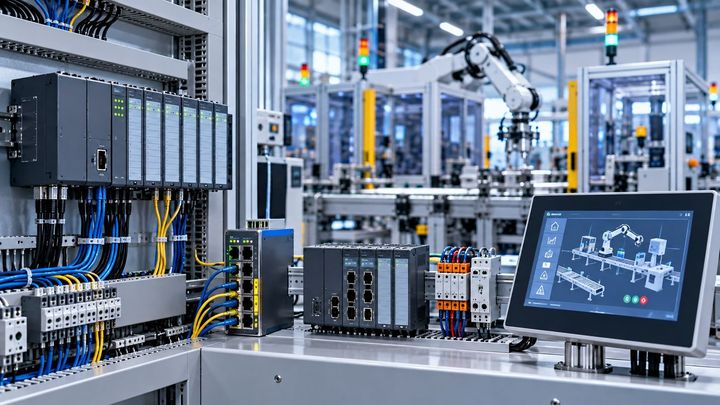
An industrial automation controller is an electronic control device designed to manage industrial processes. It receives signals from sensors and other equipment, processes programmed instructions, and controls connected machinery.
Programmable logic controllers, distributed control systems, programmable automation controllers, and industrial computers are common controller categories. Each type is designed for different levels of process complexity, response requirements, communication needs, and operating environments.
How Controllers Developed
Early industrial automation depended heavily on mechanical controls, electrical relays, switches, and manually operated equipment. These approaches could perform basic sequences but became difficult to modify as production systems became more complex.
Programmable controllers introduced a more flexible approach. Instead of changing large groups of physical wiring, operators and engineers could modify control logic through software. This development helped factories automate repetitive sequences while improving consistency and process monitoring.
Modern industrial automation controllers extend these capabilities through communication networks, remote monitoring, data collection, edge computing, and integration with manufacturing software.
Main Controller Types
Different industrial environments require different control architectures. Common categories include:
- Programmable Logic Controllers, commonly called PLCs, for machine sequencing and process control.
- Programmable Automation Controllers, or PACs, for applications requiring broader control and communication capabilities.
- Distributed Control Systems, or DCS, for large continuous processes involving many interconnected control points.
- Industrial PCs for applications involving advanced computing, visualization, data processing, and software integration.
- Remote terminal units for monitoring and controlling equipment across geographically distributed installations.
The appropriate architecture depends on factors such as machine complexity, response requirements, communication protocols, environmental conditions, and system expansion needs.
Importance
Why Industrial Automation Controllers Matter
Industrial automation controllers coordinate many activities that would otherwise require continuous manual intervention. They can manage machine sequences, monitor operating conditions, detect abnormal signals, and coordinate multiple pieces of equipment.
For everyday users, the impact can appear indirectly through manufacturing consistency, production reliability, product availability, and improved monitoring of industrial processes.
Controllers also help organizations collect operational information. Data from sensors can be analyzed to identify unusual conditions, production interruptions, energy usage patterns, and equipment behavior.
Who Uses Industrial Controllers
Industrial automation controllers are used across many sectors, including:
- Automotive manufacturing
- Food and beverage processing
- Packaging
- Chemical processing
- Pharmaceutical manufacturing
- Energy production
- Water and wastewater treatment
- Electronics manufacturing
- Material handling
- Building automation
- Logistics and warehousing
Their role differs according to the production environment. A packaging machine may use a controller to coordinate conveyors and actuators, while a large processing facility may use distributed control across numerous operating areas.
Common Problems Controllers Address
Automation controllers can address several operational challenges through programmed control and monitoring. These include inconsistent machine sequences, slow response to process changes, limited equipment visibility, and difficulty coordinating multiple devices.
A controller can also use sensor information to trigger programmed responses. For example, if a sensor detects that a material has reached a specified position, the control system can instruct another machine component to begin the next stage.
Controller Functions at a Glance
| Function | Typical Purpose | Example |
|---|---|---|
| Input processing | Receives device signals | Temperature sensor |
| Logic control | Processes programmed instructions | Machine sequence |
| Output control | Sends commands to equipment | Motor activation |
| Communication | Exchanges information | Industrial network |
| Monitoring | Tracks operating conditions | Production status |
| Data handling | Records operational information | Equipment trends |
| Safety integration | Coordinates defined safety functions | Emergency shutdown logic |
Recent Updates
Greater Industrial Connectivity
Recent developments from 2024 through 2026 have continued the movement toward connected industrial automation. Controllers are increasingly designed to communicate with sensors, human-machine interfaces, industrial networks, edge devices, and higher-level manufacturing systems.
Ethernet-based industrial communication has become increasingly important because it can connect control equipment with broader plant networks. Depending on the application, systems may use protocols such as EtherNet/IP, PROFINET, Modbus TCP, OPC UA, or other industrial communication technologies.
Edge Computing and Data Processing
Another important development is the movement of selected data-processing functions closer to machines. Edge computing allows industrial systems to process certain information near the equipment instead of depending entirely on centralized systems.
This approach can support faster analysis and reduce unnecessary data transmission. It is particularly relevant where large numbers of sensors continuously generate operational information.
Integration With Smart Manufacturing
Smart manufacturing connects physical production equipment with software, data systems, and analytical technologies. Industrial automation controllers can act as an important connection point between machines and these broader systems.
Modern architectures may combine PLCs or PACs with industrial PCs, edge computing, cloud platforms, manufacturing execution systems, and data analytics. The exact configuration depends on the production environment and information requirements.
Cybersecurity Considerations
As industrial controllers become more connected, cybersecurity has received greater attention. Controllers and associated networks can become part of a larger operational technology environment, creating additional considerations for access management, network segmentation, software updates, backups, and system monitoring.
Industrial organizations increasingly treat cybersecurity as part of automation system planning rather than as a separate information technology concern.
Laws or Policies
Industrial Safety Requirements
Industrial automation controllers operate within a wider framework of workplace safety, electrical safety, machinery protection, and environmental requirements. Specific rules vary by country, industry, equipment type, and application.
Safety-related control functions may involve emergency stopping, protective interlocks, monitoring devices, and controlled machine states. These functions should be designed and validated according to applicable safety requirements.
Electrical and Machinery Standards
Industrial control equipment may need to comply with applicable electrical, electromagnetic compatibility, machinery, and control-system standards. Internationally recognized standards can provide technical frameworks for equipment design, functional safety, and industrial control systems.
The exact requirements depend on where equipment is installed and how it is used. Organizations should consult applicable authorities, standards bodies, and qualified professionals when determining compliance requirements.
Cybersecurity Policies
Industrial cybersecurity policies increasingly address connected control systems. Common policy areas include user access, authentication, network separation, software maintenance, backup procedures, incident response, and asset inventories.
Government cybersecurity programs and industry frameworks may provide additional guidance for organizations operating critical or connected infrastructure.
Tools and Resources
Programming and Configuration Software
Controller manufacturers generally provide dedicated engineering environments for programming, configuration, diagnostics, and system management. These environments may support graphical programming methods, structured programming, device configuration, and network setup.
Common programming approaches include ladder logic, function block diagrams, structured text, and sequential function charts. The available options depend on the controller family and software platform.
Human-Machine Interfaces
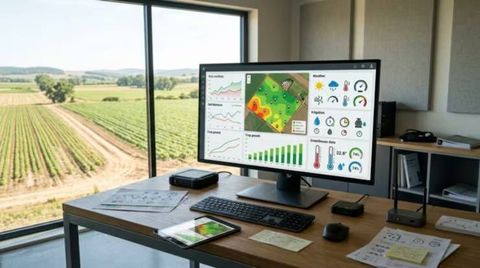
Human-machine interfaces, or HMIs, allow operators to view machine conditions and interact with control systems. An HMI may display temperatures, operating states, alarms, production counts, and equipment conditions.
These interfaces can make complex industrial processes easier to understand without requiring operators to work directly with controller programming.
Industrial Communication Tools
Network diagnostic tools can help identify communication problems between controllers, sensors, drives, HMIs, and other equipment. Protocol analyzers, network monitoring software, and controller diagnostic functions are commonly used for troubleshooting.
Documentation and Templates
Useful resources for automation planning include:
- Control-system architecture diagrams
- Input and output lists
- Electrical schematics
- Controller programming documentation
- Network configuration records
- Equipment manuals
- Maintenance records
- Risk assessment templates
- Cybersecurity checklists
Good documentation helps teams understand how industrial automation controllers interact with other parts of a production system.
FAQs
What is an industrial automation controller?
An industrial automation controller is a programmable electronic system that monitors inputs and controls equipment according to programmed instructions. PLCs, PACs, DCS platforms, and industrial PCs are common examples.
How do industrial automation controllers work?
Industrial automation controllers receive signals from sensors and connected devices. They process those signals according to programmed logic and then send commands to equipment such as motors, valves, actuators, conveyors, and other machinery.
What is the difference between a PLC and a PAC?
A PLC is commonly used for reliable machine and process control, particularly for discrete sequences. A PAC generally provides broader processing, communication, data-handling, and system-integration capabilities, although the distinction varies between manufacturers.
How are industrial automation controllers used in smart manufacturing?
In smart manufacturing environments, controllers can connect machines and sensors with HMIs, edge systems, manufacturing software, and industrial networks. This allows operational information to move between physical equipment and digital systems.
Why is cybersecurity important for industrial automation controllers?
Connected controllers can become part of larger operational technology networks. Security practices such as controlled access, network segmentation, software maintenance, backups, and monitoring can help reduce risks associated with unauthorized access or system disruption.
Conclusion
Industrial automation controllers provide the control foundation for many modern manufacturing and processing systems. They connect sensors, machines, software, and industrial networks while executing programmed control functions. From PLCs and PACs to distributed systems and industrial PCs, controller technologies continue to develop alongside smart manufacturing and connected production. Greater connectivity also makes safety, cybersecurity, documentation, and compliance important considerations in modern industrial automation.