Gemstone Jewelry Types Guide With Color, Cuts, Settings and Selection Insights
Gemstone jewelry includes rings, earrings, necklaces, bracelets, pendants, brooches, and other decorative pieces that incorporate colored or transparent gemstones. These pieces combine natural minerals, laboratory-created materials, precious metals, craftsmanship, and design principles.
Gemstone jewelry types can differ significantly according to the stone used, its color, cut, setting, size, and intended style.
Gemstones have been used for personal adornment for thousands of years. Ancient cultures valued stones for their colors, rarity, durability, and distinctive natural patterns. Over time, cutting techniques and metalworking methods developed, allowing gemstones to be shaped more precisely and incorporated into increasingly varied jewelry designs.
Modern gemstone jewelry includes both traditional and contemporary forms. A ring may feature one prominent gemstone, while a bracelet can contain many smaller stones arranged in a repeated pattern. Earrings may use matching pairs, and necklaces can combine gemstones with chains, beads, metalwork, or decorative settings.
Understanding gemstone jewelry types requires looking at several connected characteristics. Color determines much of the visual identity, while the cut influences shape and interaction with light. The setting holds the stone in place, and the metal provides the structural foundation for the finished piece.
Common Gemstone Jewelry Types
Several categories are commonly found in jewelry design:
Gemstone rings with one or multiple stones
Gemstone earrings using matching or contrasting stones
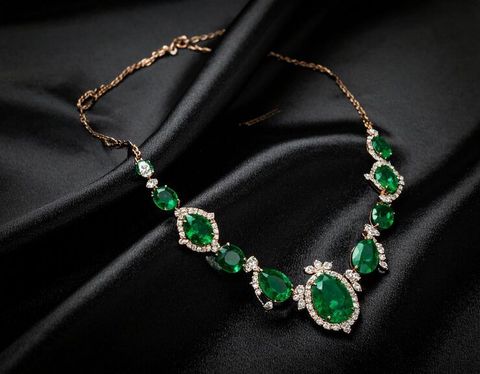
Gemstone necklaces with pendants or repeated stones
Gemstone bracelets with individual stones or continuous arrangements
Gemstone brooches incorporating decorative settings
Gemstone pendants featuring a central stone
Gemstone sets combining coordinated pieces
The same gemstone can appear very different depending on the jewelry format. A large oval sapphire in a pendant creates a different visual effect from small round sapphires arranged across a bracelet.
Natural and Laboratory-Created Materials
Gemstones can be natural, laboratory-created, synthetic, treated, or imitation materials, depending on their composition and production history. These categories should not be treated as interchangeable.
Natural gemstones form through geological processes or, in the case of certain organic gem materials, biological processes. Laboratory-created materials are produced under controlled conditions and can have properties related to their naturally occurring counterparts. Synthetic materials can have the same essential chemical and physical characteristics as a natural gemstone while being manufactured rather than naturally formed.
Accurate identification and disclosure are therefore important when describing gemstone jewelry.
Importance
Gemstone jewelry matters because gemstones have different physical and visual characteristics that affect how they are cut, mounted, worn, and maintained. Understanding these differences helps readers interpret jewelry descriptions and recognize why two pieces containing similar-looking stones can have different designs.
The subject is also relevant to jewelry designers, manufacturers, collectors, retailers, gemologists, and general consumers. Knowledge of gemstone properties can provide useful context when comparing colors, cuts, settings, metals, and overall construction.
Understanding Gemstone Color
Color is one of the most noticeable characteristics of a gemstone. It is commonly considered through three elements: hue, tone, and saturation.
Hue refers to the basic color family, such as blue, green, red, yellow, or purple. Tone describes whether a color appears relatively light or dark, while saturation describes the intensity of the color.
Some gemstones are valued for a narrow range of recognizable colors, while others naturally occur in many color variations. Lighting can also influence how a gemstone appears, making direct observation under different lighting conditions useful when examining color.
Gemstone Cuts and Shapes
Cut refers to the way a gemstone has been shaped and polished. It can influence how light interacts with the stone and how its color and transparency are perceived.
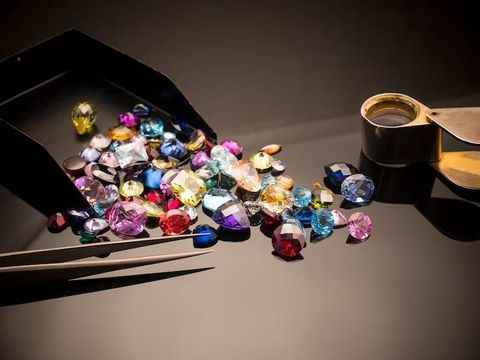
Common gemstone shapes include:
Round
Oval
Cushion
Emerald
Pear
Marquise
Princess
Heart
Cabochon
Faceted gemstones contain multiple polished surfaces designed to interact with light. Cabochon gemstones have smooth, curved surfaces and are often used when the material has distinctive color patterns, optical effects, or characteristics that do not require conventional faceting.
Cut and shape are related but are not identical concepts. Shape describes the outline, while cut also involves the arrangement and proportions of surfaces.
Gemstone Settings
The setting is the part of the jewelry that holds the gemstone. Different settings create different visual effects and levels of exposure around the stone.
Prong settings use small metal supports around the gemstone. Bezel settings surround part or all of the stone with metal. Channel settings place multiple stones within a metal channel, while pavé settings position numerous small gemstones closely together.
Other arrangements include halo settings, cluster settings, flush settings, and tension-style structures. The appropriate setting depends on gemstone dimensions, durability, shape, intended use, and overall design.
Gemstone and Metal Combinations
Gemstones are commonly paired with gold, silver, platinum, and other jewelry metals. Metal color can influence how the gemstone is perceived.
White-colored metals can create a neutral background for many gemstones, while yellow or rose-colored metals introduce additional warmth. The final appearance depends on both the gemstone and the metal's color, surface finish, and design.
Recent Updates
From 2024 through 2026, gemstone jewelry design has continued to combine traditional craftsmanship with digital modeling, personalized designs, varied gemstone shapes, laboratory-created materials, and greater attention to gemstone identification.
Digital Jewelry Design
Computer-aided design has become an important part of contemporary jewelry development. Digital modeling allows designers to create three-dimensional representations of rings, bracelets, pendants, earrings, and other pieces before physical production.
Designers can examine gemstone placement, setting dimensions, metal thickness, proportions, and overall appearance within a digital environment. This can also support customized dimensions and more complex gemstone arrangements.
Alternative Gemstone Shapes
Contemporary jewelry continues to include a broad range of cuts and shapes. Elongated stones, mixed shapes, asymmetric arrangements, and combinations of different gemstone sizes can create visual variety.
Instead of using identical stones throughout a piece, some designs combine contrasting shapes or colors. This approach can be applied to earrings, bracelets, necklaces, and multi-stone rings.
Laboratory-Created Gemstones
Laboratory-created gemstones continue to appear in jewelry design. They can provide alternatives to naturally formed materials, although their characteristics and terminology depend on the specific gemstone.
Clear descriptions remain important because natural gemstones, laboratory-created materials, synthetic stones, and imitations represent different categories. Documentation can provide additional information when material identity needs to be established.
Personalized Jewelry Design
Digital manufacturing and computer-controlled production have expanded possibilities for customized jewelry structures. Designers can adjust dimensions, gemstone arrangements, engraving areas, and metal forms within defined manufacturing parameters.
Personalization can also involve birthstone combinations, color themes, mixed gemstone patterns, or variations in setting styles.
Laws or Policies
Gemstone jewelry is affected by rules concerning gemstone disclosure, jewelry descriptions, precious-metal identification, consumer protection, and international trade. The specific requirements vary according to the jurisdiction and the materials involved.
Gemstone Disclosure
Jewelry descriptions should accurately identify whether a gemstone is natural, laboratory-created, synthetic, imitation, or treated where such information is relevant under applicable rules.
Treatments can include heating, filling, irradiation, dyeing, coating, or other processes depending on the gemstone. Treatment can influence appearance, durability, care requirements, or documentation.
Precious-Metal Identification
Gold, silver, and platinum jewelry can be subject to fineness, hallmarking, or metal-identification requirements. A fineness mark may indicate the proportion of a particular precious metal within an alloy.
The precise marking system varies between jurisdictions. Jewelry manufacturers and distributors need to follow the applicable requirements for the markets in which their products are produced or distributed.
Trade and Documentation
International movement of gemstones and jewelry can involve customs documentation, import requirements, export controls, origin information, and material-specific rules.
Certain minerals, gemstones, and precious materials may have additional documentation requirements. The applicable rules depend on the material, country of origin, destination, and type of transaction.
Tools and Resources
Several tools can help readers understand gemstone jewelry types and compare their characteristics. Gemstone identification references can explain mineral properties, common colors, hardness, transparency, treatments, and optical effects.
Jewelry sizing guides can help explain bracelet, necklace, and ring measurements. Gemstone measurement charts can also provide information about dimensions and proportions.
Useful resources include:
Gemstone identification guides
Gemstone hardness charts
Gemstone shape references
Jewelry sizing templates
Metal purity charts
Gemstone grading reports
Treatment identification references
Jewelry design software
Digital gemstone visualization tools
Jewelry care guides
Measurement conversion calculators
Inventory documentation systems
A simplified comparison of common gemstone jewelry categories is shown below:
| Jewelry Type | Common Gemstone Arrangement | Main Design Consideration |
|---|---|---|
| Ring | Single or multiple stones | Setting and finger proportions |
| Earrings | Matching pairs or individual stones | Symmetry and weight |
| Necklace | Pendant or repeated stones | Length and gemstone placement |
| Bracelet | Individual or continuous stones | Flexibility and wrist fit |
| Pendant | Central gemstone | Stone shape and suspension |
| Brooch | Decorative stone arrangement | Metal structure and balance |
Comparing Gemstone Cuts
The cut should be considered alongside the gemstone's natural properties. Some materials respond well to faceting, while others are frequently shaped as cabochons because of their color, pattern, or optical effects.
A round cut can create a balanced appearance, while an oval or marquise shape can produce an elongated visual effect. Emerald and cushion shapes create different proportions, even when the gemstones have similar weights.
The physical dimensions of a gemstone also matter. Two stones with the same weight can have different length, width, and depth measurements because gemstone density and cutting proportions vary.
Considering Settings
Setting selection involves more than appearance. The structure must correspond to the gemstone's dimensions and physical characteristics.
A bezel can provide substantial protection around the edges, while prongs expose more of the stone. Channel and pavé arrangements are generally associated with multiple smaller gemstones and require precise spacing and metalwork.
FAQs
What are the main types of gemstone jewelry?
Common types include gemstone rings, earrings, necklaces, bracelets, pendants, brooches, and coordinated jewelry sets. Each category can use different gemstone shapes, settings, metals, and arrangements.
How does gemstone color affect jewelry design?
Gemstone color influences the visual character of a jewelry piece. Hue, tone, and saturation can affect how a gemstone interacts with the selected metal, surrounding stones, lighting, and overall design.
What gemstone cuts are commonly used in jewelry?
Common gemstone cuts and shapes include round, oval, cushion, emerald, pear, marquise, princess, heart, and cabochon forms. The appropriate form depends on the gemstone's properties and intended design.
Which gemstone settings are commonly used?
Prong, bezel, channel, pavé, halo, cluster, and flush settings are common approaches. The selection depends on the gemstone's shape, dimensions, durability, design requirements, and intended use.
What should be considered when selecting gemstone jewelry?
Important considerations include gemstone identity, color, cut, clarity, durability, treatment, setting construction, metal type, dimensions, and documentation. These factors help explain the physical and visual characteristics of the finished piece.
Conclusion
Gemstone jewelry includes many forms, from rings and earrings to bracelets, necklaces, and pendants. Color, cut, setting, gemstone characteristics, and metal selection all contribute to the appearance and construction of a piece. Recent developments include digital design, personalized structures, varied gemstone shapes, and continued use of laboratory-created materials. Accurate gemstone disclosure, metal identification, documentation, and applicable trade requirements are important parts of the modern jewelry industry.