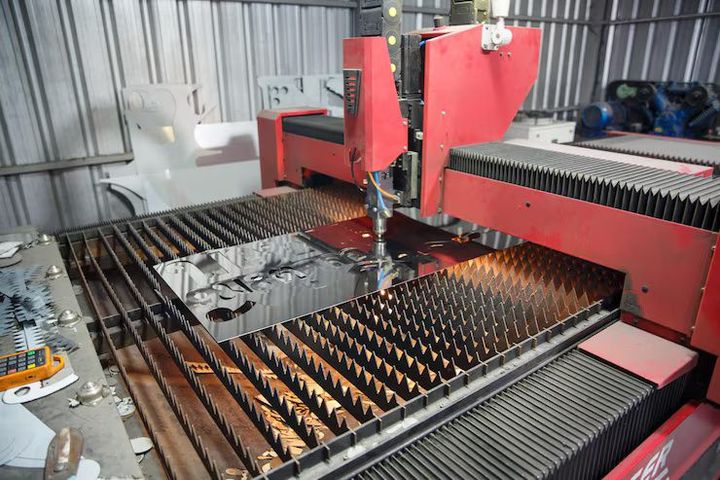
Explore Metal Shearing Machines With Precision Metalworking and Manufacturing Details
Metal shearing machines are industrial systems designed to cut sheet metal, plates, strips, and other flat metal materials into specified sizes and shapes. These machines are used across manufacturing, construction, automotive production, appliance manufacturing, fabrication, and many other industries where accurate metal cutting is required.
Modern metal shearing machines combine mechanical, hydraulic, electrical, and computer-controlled technologies to improve cutting consistency and production efficiency. Understanding how metal shearing machines work provides useful insight into modern metalworking and the manufacturing processes behind many everyday metal products.
Context
What Are Metal Shearing Machines
Metal shearing machines use a cutting action to separate metal without producing the same type of chips associated with drilling or conventional machining. Depending on the machine design, one blade moves against another blade or a fixed cutting edge, creating enough force to separate the material.
The machines can process different thicknesses and material types. Common materials include carbon steel, stainless steel, aluminum, galvanized sheet, and various industrial alloys. The appropriate machine depends on material thickness, width, hardness, required accuracy, and production volume.
How Metal Shearing Developed
Early metal cutting equipment relied heavily on manual force and relatively simple mechanical mechanisms. As manufacturing expanded, powered systems were developed to handle thicker materials and larger production requirements.
Mechanical shears became widely used for repetitive sheet cutting, while hydraulic technology later provided greater control over cutting force. Computerized controls have further changed the field by allowing operators to configure cutting parameters and repeat production settings with greater consistency.
Main Types of Metal Shearing Machines
Several machine configurations are used in modern metalworking environments. Each design has characteristics suited to particular material dimensions and production requirements.
- Hydraulic shearing machines use hydraulic pressure to generate blade movement and are commonly associated with heavier metal processing.
- Mechanical shearing machines use mechanical drive systems to move the cutting mechanism through a controlled cycle.
- Guillotine shears use a straight blade movement to cut sheet and plate materials.
- Swing beam shears use a pivoting blade movement that follows an arc during cutting.
- Pneumatic shearing machines use compressed air for specific light-duty cutting applications.
- CNC shearing machines incorporate computerized controls for repeatable cutting sequences and dimensional settings.
Importance
Why Precision Metal Cutting Matters
Accurate metal cutting is an important stage in many manufacturing processes. Incorrect dimensions can create difficulties during bending, welding, assembly, or forming. Consistent shearing helps downstream processes begin with material that has predictable dimensions.
Metal shearing machines can also reduce unnecessary material handling because a controlled cutting cycle can process multiple pieces according to predefined settings. This is particularly useful when manufacturers need repeated dimensions across batches of sheet metal.
Industries That Use Shearing Equipment
Metal shearing equipment appears in many sectors because flat metal is used in a wide range of products and structures. Typical applications include:
- Automotive components and body panels
- Electrical cabinets and enclosures
- Construction panels and structural components
- Heating, ventilation, and air-conditioning equipment
- Industrial machinery frames
- Household appliances
- Metal furniture
- General fabrication
- Agricultural equipment
- Shipbuilding and transportation equipment
Factors Affecting Cutting Accuracy
Cutting accuracy depends on more than the machine itself. Material characteristics, blade condition, machine alignment, setup parameters, and operator procedures can all influence the finished edge.
Important considerations include blade clearance, cutting angle, material thickness, material hardness, back gauge positioning, and machine rigidity. Excessive clearance can affect edge quality, while inappropriate settings can increase deformation around the cut.
Common Machine Specifications
When comparing metal shearing machines, readers may encounter specifications describing maximum cutting thickness, cutting length, blade stroke, back gauge range, motor capacity, and control configuration.
The following table provides a simplified overview of commonly discussed specifications.
| Specification | What It Describes | Why It Matters |
|---|---|---|
| Maximum thickness | Thickest material the machine is designed to process | Determines suitable applications |
| Cutting length | Maximum width processed in one cutting cycle | Helps determine sheet size compatibility |
| Blade clearance | Space between cutting edges | Influences edge quality |
| Back gauge | Positioning mechanism behind the material | Supports dimensional consistency |
| Stroke rate | Number of cutting movements within a given period | Relates to production speed |
| Control system | Manual, digital, or computerized operation | Determines setting and repeatability features |
| Blade material | Composition and hardness of cutting blades | Affects blade durability and application range |
Recent Updates
Growth of CNC Controls
A major trend in metal shearing machines from 2024 through 2026 has been greater integration of digital controls. CNC systems can allow operators to enter dimensions, configure cutting sequences, and repeat established settings with reduced manual adjustment.
Touchscreen interfaces and digital positioning systems are also becoming more common. These features can make machine setup easier to understand while providing operators with information about selected parameters.
Automation and Production Monitoring
Modern manufacturing environments increasingly connect metal shearing machines with broader production systems. Automated material positioning, programmable back gauges, sensors, and production monitoring can reduce repetitive manual adjustments.
Integration with manufacturing software can also support production records and process monitoring. The level of automation varies considerably between machine models and manufacturing environments.
Energy and Maintenance Considerations
Manufacturers are also paying greater attention to energy consumption and equipment maintenance. Hydraulic systems, electric drives, control components, and standby functions are being evaluated as part of broader manufacturing efficiency programs.
Preventive maintenance remains important regardless of the control system. Blade inspection, alignment checks, hydraulic system monitoring where applicable, lubrication, and electrical inspections can help maintain predictable machine operation.
Improved Operator Interfaces
Another current trend is the development of simpler operator interfaces. Clear displays, programmable settings, fault notifications, and digital positioning information can reduce the complexity associated with machine configuration.
These developments are particularly relevant where operators need to switch between different material sizes or cutting programs during a production shift.
Laws or Policies
Workplace Machinery Requirements
Metal shearing machines are subject to workplace safety requirements in many jurisdictions. Regulations generally focus on preventing access to hazardous moving components, controlling unexpected machine movement, and reducing risks associated with material handling.
Requirements vary by country and industrial setting. Businesses using shearing equipment generally need to identify applicable machinery safety, electrical safety, workplace protection, and occupational risk requirements in their jurisdiction.
Machine Guarding and Operator Protection
Blade areas present significant mechanical hazards. Safety measures can include physical guards, barriers, two-hand controls, emergency stopping systems, protective devices, warning systems, and controlled access.
The exact requirements depend on the machine design and local regulations. Operators should follow the equipment manufacturer's documented operating procedures and workplace safety rules.
Training and Risk Assessment
Organizations using industrial cutting equipment commonly conduct risk assessments before placing machinery into production. These assessments consider blade movement, pinch points, material handling, noise, electrical hazards, and other workplace conditions.
Training requirements also vary according to local rules and the machine's complexity. General knowledge about metal shearing machines does not replace formal workplace training or applicable regulatory requirements.
Tools and Resources
Machine Selection Calculators
Engineering calculators can help users estimate relationships between material thickness, cutting force, blade geometry, and machine capacity. Such calculators are useful for understanding technical requirements, although actual machine selection involves additional variables.
Digital Measurement Tools
Digital calipers, micrometers, steel rulers, laser measurement systems, and other dimensional tools are commonly used to verify metal dimensions. Measurement equipment should be selected according to the required tolerance and material characteristics.
CAD and Manufacturing Software
Computer-aided design software can help prepare drawings and dimensions before sheet metal processing begins. Manufacturing software may then translate design information into production instructions or machine programs, depending on the equipment configuration.
Technical Manuals and Templates
Machine manuals, inspection checklists, maintenance schedules, cutting parameter tables, and production templates can help organize routine machine operation. These resources should correspond to the specific equipment and material being processed.
Industry Training Resources
Educational materials from machinery manufacturers, technical institutions, engineering organizations, and workplace safety authorities can provide additional information about metalworking principles, machine operation, risk assessment, and maintenance procedures.
FAQs
What are metal shearing machines used for?
Metal shearing machines are used to cut sheet metal, strips, and plates into specified dimensions. They are widely used in fabrication, construction, automotive production, appliance manufacturing, and industrial equipment manufacturing.
How do metal shearing machines cut metal?
Metal shearing machines separate material by applying controlled force between cutting edges. The interaction between the moving and fixed blades creates a shearing action that separates the metal.
What is a CNC metal shearing machine?
A CNC metal shearing machine uses computerized controls to configure cutting dimensions and machine movements. CNC controls can support repeatable settings and consistent positioning during production.
What factors should be considered when using metal shearing machines?
Important factors include material type, thickness, sheet width, blade clearance, cutting length, back gauge positioning, machine capacity, edge requirements, and applicable workplace safety procedures.
What is the difference between hydraulic and mechanical shearing machines?
Hydraulic shearing machines use hydraulic pressure to produce blade movement, while mechanical shearing machines use a mechanical drive mechanism. The appropriate configuration depends on material requirements, machine design, production conditions, and operational preferences.
Conclusion
Metal shearing machines are an important part of modern metalworking because they provide controlled methods for separating sheet and plate materials. Hydraulic, mechanical, guillotine, swing beam, and CNC configurations address different manufacturing requirements. Recent developments emphasize digital controls, automation, monitoring, operator interfaces, and equipment efficiency. Safe operation also depends on appropriate machine guarding, training, maintenance, risk assessment, and compliance with applicable workplace requirements.