Complete Guide to RO Water Plants With Purification Processes and Equipment Details
RO water plants are water treatment systems designed to reduce dissolved salts, minerals, suspended particles, microorganisms, and other unwanted substances from water. The central technology is reverse osmosis, commonly called RO, which uses pressure to move water through a semipermeable membrane while retaining many dissolved contaminants.
The development of RO water treatment came from the need to produce cleaner water from sources that could contain high levels of dissolved solids. Today, RO water plants are used in residential, commercial, institutional, and industrial environments, with the system size and equipment configuration depending on the quality and quantity of incoming water.
A typical RO water plant does not rely on the RO membrane alone. Water generally passes through several preparation and treatment stages before reaching the membrane. These stages can include sediment filtration, activated carbon treatment, water softening, micron filtration, pressure boosting, membrane separation, and post-treatment.
How Reverse Osmosis Works
Reverse osmosis reverses the natural process known as osmosis. In natural osmosis, water moves through a semipermeable membrane toward a solution with a higher concentration of dissolved substances.
In an RO system, external pressure is applied to the feed water. This pressure pushes water through the membrane while many dissolved salts and other substances remain in a concentrated stream.
The process normally produces two water streams:
- Permeate: Water that passes through the RO membrane.
- Concentrate: Water containing a higher proportion of retained dissolved substances.
- Feed water: The untreated water entering the treatment system.
The actual removal performance depends on membrane type, water chemistry, pressure, temperature, pretreatment, and operating conditions.
Importance
RO water plants are important because water quality can vary significantly between sources. Groundwater, surface water, municipal supplies, and process water may contain different levels of minerals, salts, suspended particles, organic matter, and other substances.
For everyday users, water treatment can be relevant when dissolved solids or other water-quality characteristics make untreated water unsuitable for a particular application. In industrial environments, treated water may also be required for processes where mineral deposits or impurities could interfere with equipment operation.
Problems Addressed by RO Water Treatment
RO water purification can address several water-quality challenges, particularly those involving dissolved substances. However, RO is not a universal treatment method, and the incoming water should be evaluated before selecting equipment.
Common considerations include:
- High total dissolved solids
- Excess mineral content
- Unwanted salts
- Certain dissolved metals
- Suspended particles
- Organic contaminants that require additional treatment
- Microbiological concerns requiring appropriate disinfection
RO water plants also require appropriate pretreatment because suspended particles, hardness, chlorine, and other characteristics can affect membrane performance.
Typical RO Water Plant Process
A complete RO water purification system may follow a sequence similar to this:
- Raw water storage
- Feed-water pumping
- Sediment filtration
- Activated carbon filtration
- Water softening or antiscalant treatment where appropriate
- Cartridge or micron filtration
- High-pressure pumping
- RO membrane separation
- Permeate storage
- Post-treatment or disinfection when required
The exact sequence varies according to the source-water analysis and the intended use of the treated water.
Common RO Plant Equipment
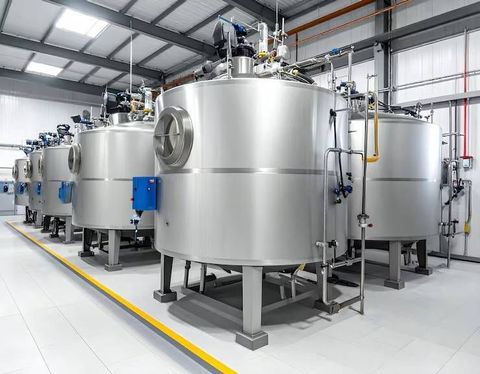
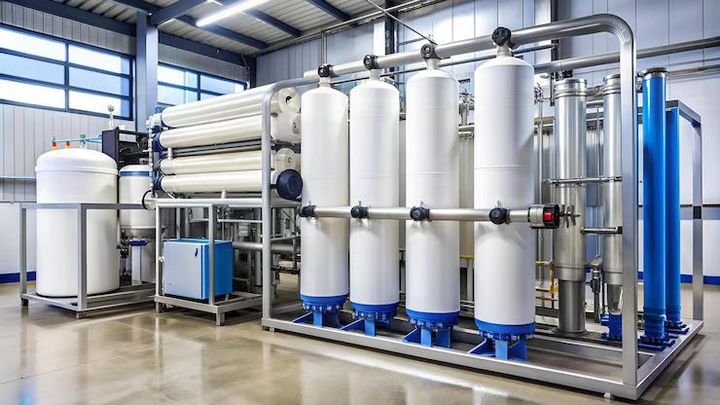
RO plant equipment consists of several components working together. A basic system may include:
| Equipment | Main Function | Typical Role |
|---|---|---|
| Raw Water Tank | Stores incoming water | Feed storage |
| Feed Pump | Moves water through pretreatment | Water circulation |
| Sand or Media Filter | Reduces suspended particles | Pretreatment |
| Activated Carbon Filter | Reduces chlorine and some organic substances | Pretreatment |
| Softener | Reduces hardness | Scale control |
| Micron Filter | Captures smaller particles | Membrane protection |
| High-Pressure Pump | Creates pressure for RO separation | RO operation |
| RO Membrane | Separates water from many dissolved substances | Main purification |
| Flow Meters | Monitor water movement | Process monitoring |
| Pressure Gauges | Monitor system pressure | Operational control |
| Storage Tank | Holds treated water | Water storage |
| Control Panel | Manages pumps and system functions | System control |
The equipment arrangement should be selected according to feed-water conditions, required production capacity, membrane characteristics, and the intended application.
Recent Updates
From 2024 through 2026, the general direction of RO water treatment has continued toward greater process monitoring, automation, energy awareness, and more detailed water-quality measurement. Modern systems increasingly combine conventional RO equipment with sensors and digital controls.
Smarter Monitoring
Sensors can monitor parameters such as pressure, flow, conductivity, temperature, and sometimes additional water-quality indicators. Digital displays can make it easier for operators to identify changes in system performance.
Conductivity and total dissolved solids measurements are particularly useful for observing changes in permeate quality. They should be interpreted alongside other operating information rather than treated as a complete assessment of water safety.
Improved Membrane Management
Membrane technology continues to develop around improved separation performance, durability, fouling resistance, and operating efficiency. Membrane selection remains dependent on feed-water chemistry and treatment objectives.
Energy use is another continuing consideration, especially for larger RO water plants. Efficient pumps, appropriate operating pressures, system recovery management, and effective pretreatment can influence overall energy requirements.
Automation and Data Recording
Automated control systems are becoming more common in larger installations. Depending on the system, automation may regulate pump operation, monitor pressure conditions, control flushing cycles, and record operating parameters.
Remote monitoring can also allow system information to be viewed through connected control platforms. These technologies can help identify changes earlier, although physical inspection and appropriate water testing remain important.
Laws or Policies
Rules governing RO water plants vary according to the country, water source, treatment purpose, discharge requirements, and whether the treated water is intended for drinking, industrial processing, or another application.
For drinking-water applications, systems may need to comply with applicable drinking-water quality requirements. These rules can address microbiological quality, chemical substances, treatment processes, monitoring, and testing.
Regulatory Considerations
Before operating an RO water purification system, relevant requirements may include:
- Source-water testing
- Drinking-water quality requirements
- Equipment installation requirements
- Wastewater or concentrate disposal rules
- Environmental requirements
- Workplace safety provisions
- Water testing and recordkeeping
- Requirements for commercial or institutional water systems
There is no single regulatory framework that applies to every RO water plant worldwide. Requirements can also differ between municipal, private, industrial, and packaged treatment systems.
RO concentrate should also be considered because the treatment process creates a stream containing concentrated dissolved substances. Its handling and disposal may be subject to local environmental requirements.
Tools and Resources
Several tools can help readers understand, design, monitor, or evaluate RO water treatment systems. Water-quality testing instruments are particularly useful because system selection should begin with an understanding of the incoming water.
Water Quality Calculators
Online calculators can help estimate parameters such as total dissolved solids, recovery, permeate production, and concentration factors. These calculations provide useful planning information but do not replace detailed water analysis.
RO System Design Tools
Engineering software and membrane projection tools can estimate expected permeate flow, salt rejection, pressure requirements, and recovery under specified operating conditions. Results depend heavily on accurate feed-water information.
Monitoring Instruments
Common monitoring tools include:
- TDS meters
- Conductivity meters
- pH meters
- Pressure gauges
- Flow meters
- Temperature sensors
- Water-quality test kits
Maintenance Records
A simple maintenance template can record membrane replacement, filter changes, pressure readings, conductivity measurements, cleaning activities, and operating observations. Keeping consistent records makes it easier to identify gradual changes in performance.
FAQs
What is an RO water plant?
An RO water plant is a water treatment system that uses reverse osmosis membranes to reduce many dissolved substances from water. It normally includes pretreatment, pumps, membranes, monitoring equipment, and treated-water storage.
How does an RO water purification system work?
An RO water purification system applies pressure to feed water and directs it through a semipermeable membrane. Water passes through the membrane while many dissolved substances are retained in the concentrate stream.
What equipment is used in an RO water plant?
Common RO plant equipment includes raw-water tanks, feed pumps, media filters, activated carbon filters, softeners or antiscalant systems, micron filters, high-pressure pumps, RO membranes, flow meters, pressure gauges, control panels, and treated-water tanks.
Does an RO water plant remove every contaminant?
No. RO membranes can reduce many dissolved substances, but performance varies by contaminant and operating conditions. Some water-quality concerns may require pretreatment, post-treatment, or additional disinfection.
How often do RO membranes need replacement?
There is no universal replacement interval. Membrane life depends on feed-water quality, pretreatment, operating conditions, cleaning practices, and membrane design. Changes in flow, pressure, or permeate quality can indicate that evaluation is needed.
Conclusion
RO water plants combine pretreatment, pressure-driven membrane separation, monitoring, and water storage to reduce many unwanted substances from water. The effectiveness of an RO water purification system depends on feed-water characteristics, equipment configuration, membrane selection, and operating conditions. Recent developments increasingly emphasize automation, digital monitoring, membrane efficiency, and responsible concentrate management. Applicable water-quality, environmental, and operational requirements should always be considered for the specific application.