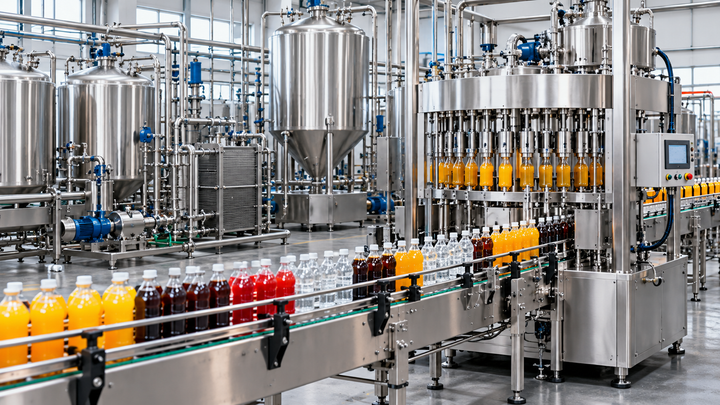
Beverage Processing Equipment Guide With Advanced Manufacturing Systems and Production Resources
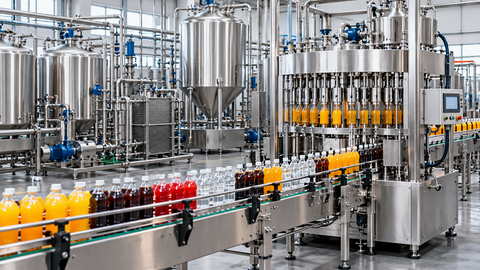
Beverage processing equipment includes the machines, tanks, controls, piping systems, filling units, packaging equipment, and inspection technologies used to turn beverage ingredients into finished packaged products.
The basic idea comes from the need to process liquids in a controlled and repeatable way. Earlier beverage production depended heavily on manual handling, simple vessels, and separate machines for individual stages. Modern facilities connect several stages into coordinated production lines that can measure ingredients, control temperature, mix liquids, filter or clarify products, fill containers, and monitor packaging conditions.
Main Stages of Beverage Production
A typical beverage line may begin with water treatment or ingredient preparation. Depending on the product, the liquid can then move through blending, mixing, filtration, homogenization, carbonation, pasteurization, or another heat-treatment stage.
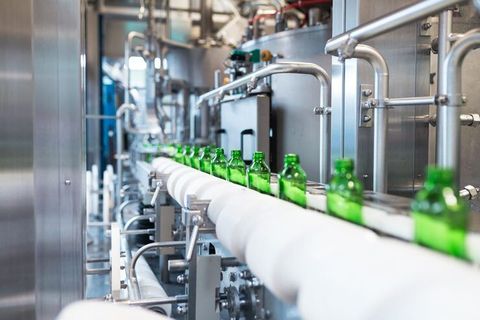
After processing, the beverage moves toward filling and packaging. Common equipment includes bottle fillers, can fillers, capping machines, labeling systems, conveyors, case packing equipment, and inspection units. Advanced manufacturing systems connect these machines through programmable controls and sensors so that production conditions can be monitored throughout the line.
| Processing stage | Common equipment | Main purpose |
|---|---|---|
| Water and ingredient preparation | Water treatment units, dosing systems | Prepare inputs |
| Mixing | Blending tanks, agitators | Combine ingredients |
| Filtration | Filters, clarification units | Control particles and clarity |
| Heat processing | Pasteurizers, heat exchangers | Apply controlled thermal treatment |
| Carbonation | Carbonation systems | Add dissolved carbon dioxide |
| Filling | Bottle or can fillers | Transfer beverage into containers |
| Packaging | Cappers, labelers, packers | Prepare packaged units |
| Inspection | Vision systems, checkweighers | Check packaging and process conditions |
Importance
Why Beverage Processing Systems Matter
Beverage processing equipment affects food safety, consistency, resource use, and production planning. A beverage line must maintain controlled conditions because liquids can be sensitive to temperature, contamination, oxygen exposure, pressure, and changes in ingredient concentration.
For consumers, the visible result is a packaged beverage, but several controlled stages occur before the container reaches a distribution channel. For producers, equipment selection influences how ingredients are handled, how easily a line can be cleaned, how accurately filling can be controlled, and how production data can be recorded.
Who Uses These Systems
Beverage processing systems are used by many types of food and beverage facilities. Their scale can range from compact processing rooms to highly automated plants with integrated filling and packaging lines.
Relevant users include:
- Beverage manufacturers
- Dairy and liquid-food processors
- Bottled-water facilities
- Juice and fruit beverage processors
- Carbonated beverage plants
- Ingredient and flavor preparation facilities
- Packaging and quality-control teams
- Engineering and plant-design groups
Production Challenges Addressed
Beverage manufacturing can involve several practical challenges. Ingredients may have different viscosities, temperatures, particle levels, or mixing requirements. Packaging formats can also vary, requiring changes in filling heads, container handling, labeling, and inspection settings.
Advanced manufacturing systems help coordinate these variables. Sensors can monitor pressure, flow, temperature, level, and other process conditions. Programmable logic controllers can use these signals to control equipment according to defined operating parameters.
Recent Updates
Automation and Digital Monitoring
From 2024 through 2026, beverage production has continued moving toward automation, connected equipment, digital monitoring, and more integrated processing lines. Sector information from India's Ministry of Food Processing Industries describes automation, smart manufacturing, and newer machinery as important developments in food processing equipment.
Modern systems increasingly combine programmable controls with human-machine interfaces and industrial sensors. This allows operators to view process conditions, identify deviations, record production information, and adjust approved operating parameters without relying entirely on manual observation.
Energy and Resource Management
Another current trend is greater attention to energy, water, cleaning chemicals, and material efficiency. Heat exchangers can transfer thermal energy between process streams, while automated cleaning systems can control cleaning cycles according to defined procedures.
Manufacturers are also examining equipment layouts that reduce unnecessary product movement and make sanitation easier. These developments are relevant because beverage plants often use substantial quantities of water for processing, cleaning, and utility operations.
Flexible Production Lines
Beverage facilities increasingly need equipment that can handle different container sizes, formulations, and production schedules. Modular equipment, automated changeover functions, adjustable conveyors, and recipe-based controls can make line configuration more adaptable.
Food Testing and Quality Infrastructure
India's Ministry of Food Processing Industries issued new 2025 scheme guidelines concerning food testing laboratories with NABL accreditation under the Food Safety and Quality Assurance Infrastructure component of PMKSY. This reflects continued development of testing infrastructure around food processing and quality management.
Laws or Policies
Food Safety Requirements in India
In India, beverage production is shaped by the Food Safety and Standards Act and regulations administered by the Food Safety and Standards Authority of India. The regulatory framework includes rules covering licensing and registration of food businesses, food product standards and additives, packaging, and labeling and display.
These rules matter to beverage processing equipment because the design and operation of processing lines must support hygienic handling, controlled processing, suitable food-contact materials, and accurate product information.
Packaging and Labeling
The Food Safety and Standards Labelling and Display Regulations have been amended over time, including amendments recorded in 2025 and 2026. Beverage packaging therefore needs to be considered alongside current labeling requirements rather than treated as a separate packaging-only activity.
Packaged beverages can also fall within Legal Metrology requirements for packaged commodities. The Department of Consumer Affairs maintains the Legal Metrology framework and related packaged-commodity rules and amendments.
Food Processing Programs
Government food-processing programs can also influence infrastructure development. The Ministry of Food Processing Industries continued the Pradhan Mantri Kisan Sampada Yojana through the 2025–26 period, with components covering food processing and preservation capacity, cold-chain infrastructure, food safety and quality assurance, and related areas.
Regulatory requirements and government programs can change, so manufacturers and facility operators need to use the current applicable rules for their product category and operating location.
Tools and Resources
Equipment Selection Resources
Useful planning resources include equipment specification sheets, process-flow diagrams, production-capacity calculators, utility requirement tables, sanitation procedures, and preventive-maintenance schedules.
A process-flow diagram can show how ingredients move from preparation through processing and packaging. Equipment specification sheets can document flow ranges, temperature limits, electrical requirements, connection sizes, materials, and control interfaces.
Digital Production Tools
Modern beverage facilities may use several digital tools:
- Manufacturing execution systems for production records and workflow visibility
- Supervisory control and data acquisition systems for process monitoring
- Programmable logic controllers for automated machine control
- Human-machine interfaces for operator interaction
- Sensor dashboards for temperature, pressure, flow, and level information
- Quality-management software for inspections and records
- Maintenance-management platforms for planned equipment checks
Planning a Beverage Processing Line
When studying a beverage processing line, several technical factors should be considered together:
- Product characteristics and formulation
- Required processing steps
- Target production capacity
- Container type and size
- Cleaning and sanitation requirements
- Food-contact materials
- Utility requirements
- Automation level
- Quality-control points
- Packaging and inspection needs
A complete production resource plan should connect these factors rather than evaluating each machine in isolation.
FAQs
What is beverage processing equipment?
Beverage processing equipment is a group of machines used to prepare, process, fill, package, and inspect liquid food and drink products. The exact equipment depends on the beverage formulation and packaging format.
What machines are used in a beverage processing line?
A beverage processing line can include water treatment units, ingredient dosing systems, mixing tanks, filtration equipment, heat exchangers, pasteurizers, carbonation systems, filling machines, capping units, conveyors, labeling equipment, and inspection systems.
How do advanced manufacturing systems improve beverage production?
Advanced manufacturing systems connect machines, sensors, controls, and software so process conditions can be monitored and controlled more consistently. They can also create production records and help identify process deviations.
What regulations affect beverage processing equipment in India?
Food businesses are subject to the Food Safety and Standards framework, including rules covering licensing, food standards, packaging, and labeling. Packaged beverages can also be affected by Legal Metrology requirements.
What resources help with beverage processing equipment planning?
Process-flow diagrams, equipment specification sheets, capacity calculations, utility tables, sanitation procedures, quality records, and maintenance schedules are useful resources for planning and operating beverage processing systems.
Conclusion
Beverage processing equipment combines liquid preparation, controlled processing, filling, packaging, and inspection into an organized production system. Advanced manufacturing systems increasingly connect these stages through automation, sensors, digital controls, and production data. In India, food safety, packaging, labeling, and packaged-commodity requirements shape how beverage facilities are designed and operated. Understanding the equipment, processing stages, digital tools, and regulatory framework provides a clearer view of modern beverage production.