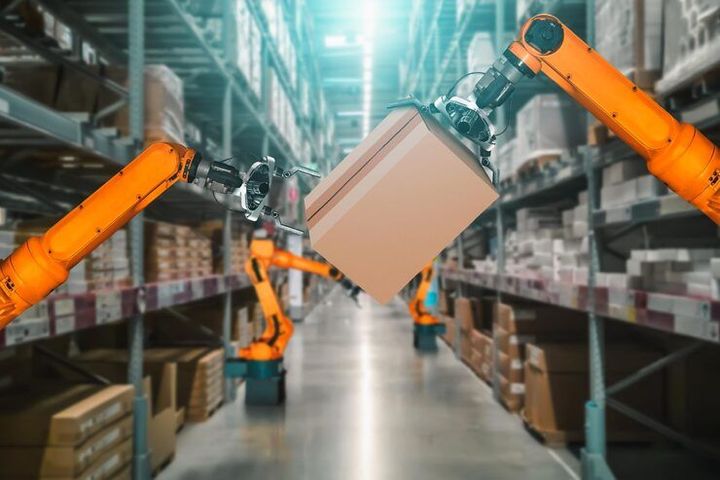
Warehouse Automation Technology Explanation of Robotics Sensors Conveyors and Smart Systems
Warehouse automation technology combines robotics, sensors, conveyors, software, storage equipment, and smart control systems to manage the movement, storage, identification, and retrieval of goods within warehouses and distribution facilities.
Instead of relying entirely on manual movement, automated systems can coordinate selected warehouse activities through programmed equipment and digital information.
Warehouse automation developed from basic mechanical handling equipment such as lifts, conveyors, and powered storage systems. As computing, robotics, sensing, and industrial communication technologies developed, warehouses began incorporating more connected equipment. Modern facilities can combine automated storage and retrieval systems, autonomous mobile robots, robotic arms, bar code readers, cameras, conveyors, and warehouse management software.
The purpose of automation is not limited to moving products faster. It can also organize information about inventory locations, coordinate equipment movement, reduce repetitive handling, improve traceability, and support more structured warehouse workflows.
A modern warehouse automation system normally contains several layers. Physical equipment performs movement, sensors collect information, controllers coordinate machinery, and software determines or communicates what should happen next. These layers work together through industrial networks and digital platforms.
Main Components of Warehouse Automation
Warehouse automation can include several different technologies:
Conveyor systems for transporting products between areas
Industrial robots for repetitive handling activities
Autonomous mobile robots for moving materials
Automated storage and retrieval systems for organized storage
Sensors for detecting position, movement, weight, and environmental conditions
Barcode and identification systems for tracking goods
Machine-vision systems for recognizing objects and locations
Warehouse management software for inventory and workflow information
Warehouse control systems for coordinating automated equipment
Human-machine interfaces for monitoring equipment
Not every warehouse requires all these technologies. The appropriate arrangement depends on building size, product characteristics, storage methods, order patterns, workforce structure, and required level of automation.
How Automated Warehouses Work
A warehouse automation process often begins when goods arrive at a receiving area. Identification equipment can record product information, while sensors and software help determine where items should be placed.
Conveyors, mobile robots, or other handling equipment can then move goods toward storage locations. Automated storage systems may use cranes, shuttles, lifts, or robotic mechanisms to position inventory within designated locations.
When goods are required for an order, software communicates the relevant information to the appropriate equipment. Items can be retrieved and moved toward picking, packing, staging, or dispatch areas.
Importance
Warehouse automation technology matters because warehouses handle large numbers of products that must be located, moved, counted, stored, and retrieved accurately. Manual processes can involve repeated walking, lifting, scanning, sorting, and transportation between different warehouse zones.
Automation can assign repetitive movement activities to conveyors, robots, automated storage equipment, or mobile systems. This can change how workers interact with warehouse operations by shifting some activities toward equipment monitoring, exception handling, inventory control, maintenance coordination, and system management.
Robotics in Warehouses
Robotics is one of the most visible parts of warehouse automation. Robotic arms can perform activities such as picking, placing, sorting, palletizing, depalletizing, and packaging-related handling.
Autonomous mobile robots can transport shelves, bins, totes, pallets, or other materials between defined locations. Their movement can be coordinated using maps, sensors, cameras, markers, or other navigation technologies.
Robots can vary considerably in complexity. A fixed robotic arm performs a defined range of movements, while a mobile robot may navigate through changing warehouse routes. Both require appropriate software, sensing, safety controls, and physical operating areas.
Sensors and Identification
Sensors provide information that automated equipment uses to understand its surroundings and operating conditions. Different sensors are suited to different tasks.
Common examples include:
Photoelectric sensors for detecting objects
Proximity sensors for identifying nearby materials
Weight sensors for measuring loads
Position sensors for tracking equipment movement
Temperature sensors for environmental monitoring
Cameras for visual identification
Barcode readers for product identification
Radio-frequency identification systems for selected tracking applications
Sensors can work together to create a more complete picture of warehouse activity. If a conveyor detects an object at a particular location, the control system can use that information to determine when another machine should operate.
Conveyor Systems
Conveyors are a fundamental part of many automated warehouses. They can transport cartons, totes, trays, pallets, and other loads between receiving, storage, picking, packing, and dispatch areas.
Different conveyor types are designed for different applications. Roller conveyors can handle many rigid packages, belt conveyors can transport various product shapes, and specialized conveyor arrangements can manage changes in direction or elevation.
Automated conveyor networks can include sensors and controllers that regulate movement. Divert mechanisms can route products toward different destinations according to information from the warehouse control system.
Recent Updates
From 2024 through 2026, warehouse automation has continued to develop around robotics, artificial intelligence, machine vision, autonomous navigation, digital twins, connected sensors, and software integration. The broader trend is toward warehouses where physical equipment and digital systems exchange information continuously.
Artificial Intelligence and Machine Vision
Artificial intelligence is increasingly being explored for warehouse activities involving image recognition, object identification, route planning, demand analysis, and operational decision support.
Machine vision can help robotic systems identify package shapes, locations, labels, or orientations. This can be particularly useful when products do not always arrive in identical positions.
AI-based systems still depend on suitable data, reliable sensors, appropriate system configuration, and human oversight. Their performance can vary according to product types, lighting, warehouse conditions, and the quality of available information.
Autonomous Mobile Robots
Autonomous mobile robots are increasingly used for material movement within warehouses. These robots can navigate designated areas and transport goods between workstations or storage locations.
Navigation may use cameras, laser-based sensing, mapping technologies, markers, or combinations of different systems. Modern systems can dynamically adjust routes when obstacles or changes in warehouse conditions are detected.
Smart Warehouse Platforms
Warehouse management systems are increasingly connected with warehouse control systems and automation equipment. This allows inventory information and physical equipment activity to interact within a broader digital environment.
Smart warehouse platforms can provide information about inventory locations, order status, equipment conditions, and material movement. Dashboards can present selected information to warehouse personnel for monitoring and analysis.
Digital Twins and Simulation
Digital twin technology can create a digital representation of warehouse equipment, layouts, workflows, or operating conditions. Simulation tools can be used to examine potential equipment arrangements and material flows before physical changes are made.
These technologies can help planners visualize conveyor routes, robot movement, storage locations, travel distances, and potential bottlenecks. Actual results depend on the accuracy of the digital model and the information used to create it.
Energy and Resource Monitoring
Energy monitoring is also becoming part of smart warehouse management. Automated storage equipment, conveyors, robots, lighting, climate-control systems, and charging infrastructure can contribute to overall facility energy use.
Connected monitoring platforms can record equipment activity and energy information. This allows warehouse operators to examine patterns across different areas of a facility.
Laws or Policies
Warehouse automation is shaped by machinery safety requirements, workplace protection rules, electrical standards, building requirements, data practices, and transportation regulations. The exact rules depend on the country, facility type, equipment configuration, and materials handled.
Machinery and Robot Safety
Automated warehouses contain moving robots, conveyors, lifts, storage machinery, and other mechanical systems. Safety measures may include guards, emergency stops, safety scanners, interlocked gates, warning systems, and restricted access zones.
Risk assessment is important when automated equipment is introduced. Designers and operators need to consider robot movement, conveyor hazards, falling materials, unexpected starts, vehicle traffic, maintenance access, and interactions between people and machines.
Workplace Protection
Workers may operate near automated equipment even when direct material handling has been reduced. Training and operating procedures can address equipment access, emergency response, manual intervention, inspection, and maintenance.
Energy isolation procedures may also be necessary when equipment requires maintenance. Electrical, mechanical, hydraulic, pneumatic, and stored energy sources can present different hazards.
Data and Digital Systems
Smart warehouses generate information about inventory, equipment activity, orders, and system performance. Facilities may therefore need to consider data protection, cybersecurity, access control, and network security.
The specific requirements depend on the jurisdiction and the type of information handled. Automated equipment connected to wider business networks should be managed with appropriate technical and organizational controls.
Tools and Resources
Warehouse automation planning uses a combination of physical measurements, software tools, equipment specifications, and operational data. Facility-layout software can help visualize storage locations, conveyor routes, robot operating zones, workstations, and pedestrian pathways.
Warehouse simulation software can model material movement and equipment interactions. Robot simulation platforms can analyze robotic reach, movement patterns, and cycle sequences before physical installation.
Useful resources include:
Warehouse layout software
Inventory management platforms
Warehouse management systems
Warehouse control systems
Robot simulation software
Conveyor capacity calculators
Storage-density calculators
Barcode management tools
RFID planning tools
Digital twin platforms
Maintenance management systems
Safety assessment templates
A simplified comparison of common automation technologies is shown below:
| Technology | Main Function | Typical Information Used |
|---|---|---|
| Conveyor | Product transportation | Location and routing data |
| Robotic Arm | Picking or handling | Product position and dimensions |
| Mobile Robot | Material transportation | Map and destination data |
| AS/RS | Automated storage and retrieval | Inventory location |
| Machine Vision | Object recognition | Images and visual features |
| Barcode System | Product identification | Product codes |
| RFID | Wireless identification | Tag information |
| Warehouse Management System | Inventory and workflow control | Orders and inventory records |
Planning Warehouse Automation
A warehouse automation project generally begins with an understanding of the existing material flow. Planners examine receiving, storage, picking, packing, staging, and dispatch activities before determining where automation can fit.
Important planning factors include:
Product dimensions and weight
Storage density
Order patterns
Required movement routes
Building height and floor area
Conveyor requirements
Robot operating zones
Charging areas for mobile equipment
Maintenance access
Worker pathways
Emergency access
Network connectivity
Integration is another important consideration. Automated equipment needs to exchange information correctly with inventory databases, warehouse management platforms, control systems, and other operational technologies.
FAQs
What is warehouse automation technology?
Warehouse automation technology uses equipment and software to automate selected activities such as storage, retrieval, transportation, sorting, picking, identification, and inventory tracking. It can include robotics, conveyors, sensors, automated storage systems, and warehouse software.
How are robotics used in warehouse automation?
Robots can pick and place products, move materials, palletize goods, sort packages, and transport inventory. Robotic systems can be fixed in one location or mobile, depending on the application.
What role do sensors play in smart warehouse systems?
Sensors provide information about object position, movement, weight, temperature, equipment status, and other conditions. Control systems use this information to coordinate automated equipment.
How do conveyor systems support automated warehouses?
Conveyors move products between different warehouse areas and can be integrated with sensors, scanners, and routing controls. They can connect receiving, storage, picking, packing, and dispatch processes.
What factors affect warehouse automation planning?
Important factors include inventory characteristics, warehouse layout, product flow, storage requirements, equipment compatibility, safety systems, software integration, maintenance access, network infrastructure, and workforce interaction.
Conclusion
Warehouse automation technology combines robotics, sensors, conveyors, automated storage equipment, identification systems, and smart software to coordinate material movement and inventory processes. Recent developments include autonomous mobile robots, machine vision, artificial intelligence, digital twins, connected monitoring, and integrated warehouse platforms. Safe implementation requires appropriate machine protection, worker procedures, facility planning, and consideration of applicable regulations. The overall system depends on warehouse layout, product characteristics, operational requirements, and the level of automation involved.