Tunnel Lining Machines Guide With Tunnel Construction and Engineering Insights
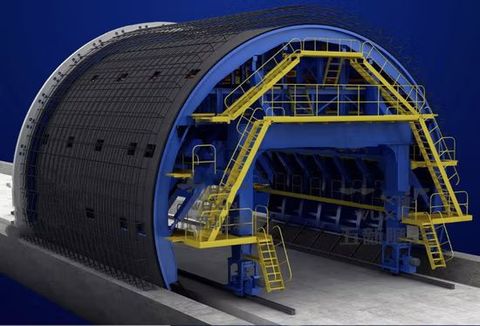
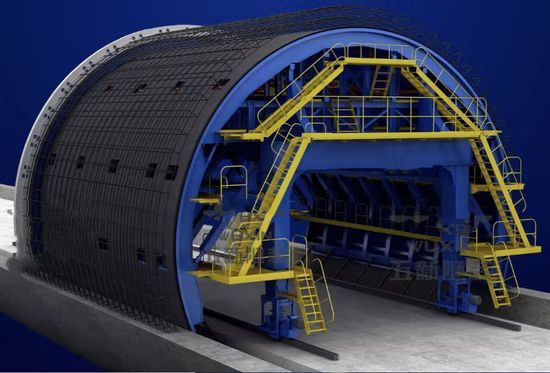
Tunnel lining machines are specialized systems used during underground construction to place, position, and secure structural lining components inside newly excavated tunnels. They are commonly associated with tunnel boring machines, shield machines, and other mechanized excavation systems.
Modern tunnel construction often uses precast concrete segments that are assembled into circular rings behind the excavation face. A tunnel lining machine, often integrated with a segment erector, moves individual segments into their planned positions. Hydraulic controls, positioning systems, grippers, sensors, and alignment mechanisms work together to form each ring accurately.
The concept developed alongside mechanized tunneling. As underground projects became longer, deeper, and more complex, construction methods needed equipment capable of supporting excavation while also creating a durable structural enclosure. Tunnel lining machines became an important part of this process because lining installation must keep pace with excavation.
A typical mechanized tunneling sequence includes several connected stages:
- Ground excavation at the tunnel face
- Removal or transport of excavated material
- Forward movement of the shield or tunneling machine
- Positioning of precast lining segments
- Assembly of a complete lining ring
- Injection of material into the space around the finished ring
- Repetition of the cycle as the tunnel advances
This coordinated process allows excavation and structural lining to progress as connected activities rather than as completely separate construction stages.
Importance
Tunnel lining machines matter because underground structures must remain stable during construction and throughout their intended operating period. A tunnel without an appropriate lining system can be exposed to ground movement, water pressure, deformation, cracking, and other structural challenges.
The lining also creates the internal boundary of many tunnels. Depending on the project, the finished structure may accommodate rail systems, roadways, pedestrian paths, pipelines, water infrastructure, drainage systems, or utility networks.
Who Uses Tunnel Lining Technology
Tunnel construction involves several groups with different responsibilities. Civil engineers assess structural requirements and geological conditions, while mechanical engineers focus on machine operation and equipment integration. Surveying teams monitor alignment, and construction personnel manage segment handling and installation.
Other participants may include:
- Geotechnical specialists
- Structural designers
- Machine operators
- Safety professionals
- Concrete and materials specialists
- Surveying teams
- Project planners
- Environmental specialists
- Inspection personnel
For the public, the importance of tunnel lining technology is often connected to infrastructure reliability. Underground transport and utility projects can reduce the need for surface corridors and can provide routes through areas where conventional surface construction is difficult.
Main Engineering Challenges
Tunnel lining machines must operate within restricted underground environments. The equipment needs to work accurately despite vibration, dust, moisture, changing ground conditions, limited space, and continuous excavation activity.
Ground conditions are particularly important. Soft soil may require controlled face pressure, while hard rock can create different demands on excavation and structural support. Mixed ground can be even more complicated because the machine may encounter different materials within a relatively short distance.
Water is another major consideration. Groundwater pressure can affect excavation stability, segment joints, seals, and the space surrounding the finished lining. Engineers therefore consider drainage, waterproofing, gasket systems, grout placement, and structural loading during tunnel design.
Recent Updates
Recent developments in tunnel lining machines have increasingly focused on automation, digital monitoring, construction efficiency, material development, and improved quality control.
Automation and Digital Monitoring
Modern equipment can incorporate sensors that monitor hydraulic pressure, machine position, segment handling, alignment, and other operating conditions. Digital data can help engineering teams understand how the machine and lining system behave during construction.
Building Information Modeling, commonly known as BIM, is also becoming more relevant to mechanized tunneling. BIM-based workflows can connect design information with construction planning, machine data, segment information, and project documentation. Industry guidance published in recent years has specifically addressed BIM implementation for mechanized and conventional tunnel projects.
Advanced Segment Materials
Precast concrete remains widely used for tunnel linings, but material development continues. Fibre-reinforced concrete is receiving attention because fibres can contribute to crack control and reinforcement strategies in appropriate designs.
Low-carbon concrete formulations are also being investigated for tunnel segments. These approaches can involve changes to cementitious materials and mix designs while maintaining required structural characteristics.
Larger and More Complex Machines
Large-diameter tunnel boring machines are being developed for major transportation and underground infrastructure projects. Larger machines require carefully coordinated segment handling systems because individual lining components can become substantial structural elements.
Recent tunnel projects have also demonstrated the use of digital sensing, automated equipment, specialized segment designs, and advanced navigation systems for complex underground conditions.
Tunnel Lining Machine Data Table
| Component | Main Function | Typical Engineering Concern |
|---|---|---|
| Segment erector | Positions lining segments | Alignment and placement accuracy |
| Hydraulic system | Provides controlled movement | Pressure and reliability |
| Sensors | Collect operating information | Data accuracy |
| Grippers or supports | Hold segments during assembly | Stability during installation |
| Navigation system | Maintains tunnel alignment | Positioning precision |
| Gasket system | Helps control water entry | Joint sealing |
| Grouting system | Fills surrounding voids | Ground support and settlement control |
| Control system | Coordinates machine functions | Safe and consistent operation |
These developments show that tunnel lining equipment is moving beyond purely mechanical operation. Modern systems increasingly combine mechanical equipment with sensors, digital controls, automated positioning, and data-based monitoring.
Laws or Policies
Tunnel construction is shaped by multiple layers of rules because underground projects involve structural safety, worker protection, environmental conditions, transportation requirements, and emergency planning.
The exact requirements vary between jurisdictions. Projects normally need to follow applicable construction regulations, occupational safety rules, environmental requirements, structural design standards, electrical provisions, fire protection rules, and transportation or infrastructure specifications where applicable.
Construction Safety Requirements
Safety rules can address excavation hazards, confined underground environments, machinery operation, ventilation, emergency access, communication systems, hazardous atmospheres, and pressure-related work.
Projects involving pressurized environments may have additional requirements. Specialized chambers and decompression procedures can require engineering controls and documented operating procedures.
Structural and Material Requirements
Tunnel lining design normally considers geological loads, groundwater pressure, structural forces, segment connections, reinforcement, durability, fire exposure, and long-term deformation.
Technical standards can also define requirements for concrete properties, reinforcement, segment manufacturing, dimensional tolerances, inspection, testing, and installation procedures.
Environmental Requirements
Tunnel construction may involve groundwater management, excavated material handling, vibration, noise, dust, energy consumption, and construction emissions. Environmental approvals and monitoring requirements therefore vary according to project location and tunnel purpose.
Because regulations differ internationally, engineers normally apply the standards and legal requirements that govern the specific project rather than relying on a single worldwide rule.
Tools and Resources
Several tools help professionals understand, plan, monitor, and document tunnel lining operations.
Design and Engineering Software
Structural analysis software can be used to examine tunnel segments, joints, reinforcement, and loading conditions. Geological modeling platforms can help represent ground conditions and support excavation planning.
BIM Platforms
BIM platforms allow tunnel geometry, segment information, construction sequencing, and project documentation to be organized within a coordinated digital environment.
Surveying and Navigation Equipment
Total stations, laser-based measurement equipment, inertial navigation systems, and machine-mounted sensors can support tunnel alignment and positioning.
Segment Inspection Tools
Inspection equipment can examine concrete segments for dimensional accuracy, surface defects, cracking, joint conditions, and other characteristics. Digital inspection records can help organize quality information across large numbers of tunnel segments.
Reference Resources
Useful professional resources include engineering standards, tunneling association publications, construction specifications, manufacturer technical manuals, academic papers, BIM guidance documents, and safety regulations. These resources help readers understand how tunnel lining systems are designed and operated without relying on a single equipment type.
FAQs
What is a tunnel lining machine?
A tunnel lining machine is equipment used to position and install structural lining components inside an excavated tunnel. It is commonly integrated with mechanized tunneling equipment and may use hydraulic, mechanical, and automated positioning systems.
How does a tunnel lining machine work?
The machine positions individual lining segments after excavation. Segments are moved into the required location, aligned with previously installed pieces, and connected to form a complete ring. The cycle is then repeated as excavation continues.
What materials are used for tunnel lining?
Precast concrete is widely used for segmental tunnel linings. Depending on engineering requirements, designs may incorporate conventional reinforcement, fibre reinforcement, specialized concrete mixes, gaskets, protective layers, and other structural or waterproofing components.
Why are tunnel boring machines used with lining systems?
Tunnel boring machines can excavate and support the tunnel face while creating space for lining installation behind the excavation area. Integrating excavation and lining activities helps coordinate the construction sequence in mechanized tunnel projects.
What factors affect tunnel lining design?
Important factors include tunnel diameter, geological conditions, groundwater pressure, excavation method, structural loading, segment geometry, joint design, reinforcement, durability requirements, construction sequence, and expected operating conditions.
Conclusion
Tunnel lining machines form an important part of modern mechanized tunnel construction by supporting accurate placement of structural lining segments behind the excavation face. Their operation combines mechanical equipment, hydraulic controls, positioning systems, sensors, and construction planning. Recent developments increasingly involve automation, digital monitoring, BIM workflows, advanced concrete formulations, and improved inspection methods. Tunnel lining design and construction must also account for geological conditions, structural requirements, safety rules, environmental considerations, and jurisdiction-specific standards.