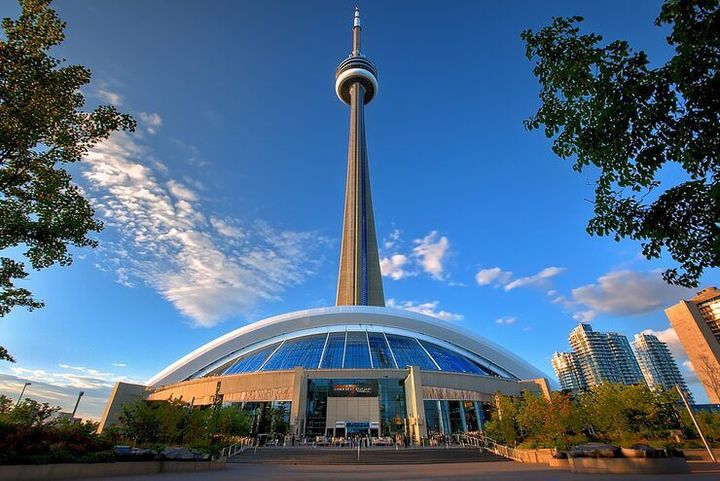
Toronto CN Tower Explained With Observation Decks, Experiences, and Highlights
The Toronto CN Tower is one of Canada's most recognisable landmarks and an important part of Toronto's skyline. Located in downtown Toronto, Ontario, the tower is a communications and observation structure that attracts visitors interested in architecture, city views, engineering, and tourism.
Standing approximately 553 metres tall, it provides several observation experiences, including indoor viewing areas, a glass floor, an outdoor terrace, and the famous EdgeWalk attraction.
The tower was originally developed to address communication challenges created by Toronto's growing number of tall buildings. These buildings were interfering with television and radio transmission signals, creating a need for a taller broadcasting structure. Construction began in 1973, and the CN Tower opened to the public in June 1976.
Today, the structure serves as a telecommunications facility and a major visitor attraction. Its observation decks provide views of Toronto, Lake Ontario, surrounding communities, and the wider landscape on clear days.
What Is the CN Tower?
The CN Tower is a concrete communications and observation tower with a steel antenna at its uppermost point. Its total height is approximately 553.33 metres, including the antenna. The structure was originally developed by Canadian National Railway, which explains the initials CN in its name.
The tower contains several levels designed for different activities. Visitors can explore observation areas, experience interactive attractions, enjoy dining facilities, and learn about the structure's engineering.
Its major features include:
Main Observation Level: An indoor viewing area located approximately 346 metres above ground.
Lower Observation Level: Contains the Glass Floor, Outdoor Terrace, and other interactive experiences.
The Top: An additional observation platform approximately 447 metres above ground.
EdgeWalk: An outdoor experience that allows participants to walk along a circular ledge while attached to an overhead safety system.
360 Restaurant: A revolving dining venue that provides panoramic views of Toronto.
History and Engineering Behind the CN Tower
The CN Tower was constructed using reinforced concrete and specialised building techniques. One important method used during construction was slipforming, in which concrete is continuously poured into a moving form that gradually rises as the structure develops.
The tower's design includes a central shaft, supporting structural elements, an observation pod, and a tall antenna. Engineers designed these components to withstand wind pressure, temperature variations, and other environmental conditions.
When it opened in 1976, the CN Tower became an important engineering landmark. It remained the world's tallest freestanding structure until the development of taller structures elsewhere.
Importance of the Toronto CN Tower
The CN Tower has considerable importance for Toronto's tourism, communications infrastructure, architecture, and cultural identity. It is a recognisable feature of the city's skyline and provides visitors with a way to understand the city's geography from an elevated viewpoint.
The tower also demonstrates how large engineering structures can serve several purposes within an urban environment. Its telecommunications functions support broadcasting infrastructure, while its public attractions contribute to the city's visitor economy.
Tourism and Cultural Importance
The CN Tower attracts international tourists, Canadian residents, families, photographers, and architecture enthusiasts. Its observation decks provide an overview of Toronto's urban development, waterfront, parks, and surrounding neighbourhoods.
The tower is also connected to major events and celebrations. Its exterior lighting changes for selected occasions, public celebrations, and national commemorations, making it a visible part of Toronto's cultural activities.
Educational and Engineering Importance
The structure provides an opportunity to understand several engineering principles, including:
Structural stability: How a tall concrete structure supports its own weight and external forces.
Wind resistance: How the design manages movement and pressure caused by changing weather conditions.
Communication technology: How elevated antennas support broadcasting and telecommunications.
Elevator engineering: How high-speed elevators transport visitors between different observation levels.
Construction techniques: How reinforced concrete and slipform construction are used in large structures.
These features make the CN Tower relevant to students, engineering enthusiasts, and people interested in modern architecture.
Observation Decks and Visitor Experiences
The observation levels are the main attraction for many visitors. Each level provides a different perspective of Toronto and includes specific features.
| Attraction | Approximate Height | Main Highlight |
|---|---|---|
| Main Observation Level | 346 metres | Panoramic indoor views |
| Lower Observation Level | 342 metres | Glass Floor and Outdoor Terrace |
| 360 Restaurant | 351 metres | Revolving dining experience |
| EdgeWalk | 356 metres | Outdoor circular walk |
| The Top | 447 metres | Elevated observation platform |
The heights are approximate and refer to the relevant attraction levels.
Recent Updates and Developments at the CN Tower
The CN Tower continues to develop its visitor experiences through interactive attractions, accessibility improvements, digital technology, and special events. Recent developments reflect an interest in making the tower relevant to different age groups and visitor interests.
Artmosphere and Interactive Experiences
One notable addition to the visitor experience is Artmosphere, an immersive and interactive art showcase located on the Lower Observation Level. It combines visual displays and interactive elements to provide another activity alongside the traditional viewing experience.
This development reflects a broader trend in tourism attractions, where digital creativity and interactive environments complement architectural and sightseeing experiences.
The CN Tower's 50th Anniversary
The tower reached its 50th anniversary in 2026, marking five decades since it first opened to the public. The anniversary has brought renewed attention to its engineering history, cultural importance, and role in Toronto's development.
Commemorative activities and public recognition highlight the tower's history as a telecommunications structure that gradually became an internationally recognised visitor attraction.
Accessibility Improvements
Accessibility remains an important part of the CN Tower's visitor planning. The facility has introduced features such as accessible elevators, wheelchair-accessible observation areas, adapted facilities, and improved visitor information.
Its accessibility initiatives also include sensory-conscious visits on scheduled Low Sensory Mornings. These sessions involve adjustments to lighting, sound, and visitor capacity to accommodate people with sensory sensitivities.
Digital Visitor Information
Digital platforms are increasingly used to provide information about admission, opening hours, visitor experiences, and accessibility arrangements. Timed admission and online planning tools help visitors organise their visits and understand which attractions are included in different admission categories.
Operating hours and attraction availability can change because of maintenance, weather conditions, or scheduled closures.
Laws and Policies Affecting the CN Tower in Canada
The CN Tower operates within Canada's building safety, accessibility, workplace protection, and public facility regulations. These requirements help establish standards for maintaining a large public structure and managing visitor activities.
Accessibility for Ontarians with Disabilities Act
The Accessibility for Ontarians with Disabilities Act (AODA) establishes accessibility requirements for organisations operating in Ontario. Its purpose is to reduce barriers for people with disabilities in areas such as public information, transportation, employment, and customer-facing environments.
The CN Tower provides several accessibility features, including:
Accessible elevators connecting public observation levels.
Wheelchair-accessible routes and designated entrances.
Accessible washrooms and selected dining facilities.
Information for visitors with visual and hearing accessibility needs.
Adapted arrangements for certain EdgeWalk participants.
The Ontario Building Code also establishes accessibility requirements for applicable new construction and extensive renovations.
Building and Fire Safety Regulations
Large public structures must comply with applicable building and fire safety requirements. These frameworks address structural stability, emergency exits, fire protection systems, evacuation arrangements, and building maintenance.
The CN Tower's height and public use make appropriate safety planning particularly important. Elevator operations, emergency procedures, and visitor movement must be managed according to relevant regulatory and operational requirements.
Visitor Safety Policies
Individual attractions have additional participation conditions. For example, EdgeWalk requires participants to meet specified age, weight, and physical eligibility criteria.
Participants receive safety instructions and wear specialised harness equipment connected to an overhead safety system. Outdoor activities may be suspended during electrical storms, strong winds, or other unsuitable weather conditions.
Tools and Resources for Planning a CN Tower Visit
Several digital and practical resources help visitors understand the tower, organise their visit, and explore its attractions.
Official CN Tower Website
The official CN Tower website provides information about observation decks, admission categories, current operating hours, dining, accessibility, and special experiences. Visitors can also check attraction availability and planned closures before travelling.
Maps and Navigation Applications
Digital mapping platforms help visitors locate the tower, identify nearby attractions, and understand transportation options.
The CN Tower is located near several major Toronto destinations, including Rogers Centre, Ripley's Aquarium of Canada, and the Toronto waterfront.
Weather and Visibility Forecasts
Weather applications help visitors understand cloud cover, rain, wind, and visibility conditions. These details can influence the viewing experience, particularly when the main purpose of visiting is to observe the city from the upper levels.
Accessibility Information
The tower's accessibility guide provides details about wheelchair access, elevators, washrooms, entrances, and selected visitor arrangements. This information can help individuals and families understand the available facilities before arriving.
Frequently Asked Questions About the Toronto CN Tower
How Tall Is the Toronto CN Tower?
The Toronto CN Tower stands approximately 553.33 metres tall, including its antenna. It was completed in 1975 and opened to the public in 1976.
What Are the Main CN Tower Observation Decks?
The main observation areas include the Main Observation Level at approximately 346 metres, the Lower Observation Level at 342 metres, and The Top at approximately 447 metres. Each provides a different viewing experience.
What Is the Glass Floor Experience at the CN Tower?
The Glass Floor is located on the Lower Observation Level, approximately 342 metres above ground. It consists of specially engineered transparent panels that allow visitors to look directly down towards the ground below.
What Is EdgeWalk at the Toronto CN Tower?
EdgeWalk is an outdoor attraction that allows eligible participants to walk along a circular ledge around the tower's exterior. Participants wear a full-body harness connected to an overhead safety system and are accompanied by trained guides.
What Can Visitors See From the CN Tower?
Visitors can see Toronto's downtown skyline, Lake Ontario, nearby islands, waterfront areas, and surrounding communities. Visibility varies depending on weather and atmospheric conditions.
Conclusion
The Toronto CN Tower is an important Canadian landmark combining telecommunications infrastructure, engineering, tourism, and observation experiences. Its main attractions include multiple observation levels, the Glass Floor, EdgeWalk, and the revolving 360 Restaurant. Accessibility improvements and interactive experiences continue to shape its visitor environment. Its history and engineering design also make it a significant part of Toronto's architectural and cultural identity.