AI-Driven Manufacturing Explained With Technologies, Benefits, and Industrial Applications
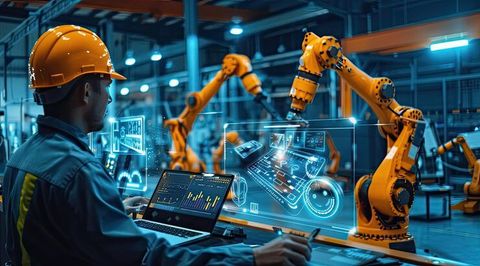
AI-driven manufacturing refers to the use of artificial intelligence technologies to improve industrial production, equipment monitoring, quality inspection, and manufacturing operations. It combines machine learning, robotics, computer vision, data analytics, and connected industrial systems to help factories make decisions based on production data.
AI-driven manufacturing is becoming increasingly relevant in automotive, electronics, pharmaceutical, food processing, aerospace, and heavy engineering industries.
Traditional manufacturing systems depend heavily on fixed machine settings, manual inspections, and operator experience. Although these methods remain important, modern factories generate large amounts of information through sensors, production equipment, and digital monitoring systems. Artificial intelligence helps analyse this information to identify patterns, detect unusual conditions, and support production planning.
The concept is closely connected to Industry 4.0, which focuses on connecting industrial machinery, digital technologies, and data systems. By integrating AI into manufacturing environments, companies can improve visibility across production processes and respond more effectively to changing operating conditions.
What Is AI-Driven Manufacturing?
AI-driven manufacturing is an industrial approach in which artificial intelligence supports different stages of production. AI systems process information collected from machines, sensors, cameras, and enterprise software to identify patterns and generate useful insights.
For example, an AI-based inspection system can examine product images to identify surface defects. Similarly, machine learning software can analyse equipment data to detect unusual vibration or temperature changes that may indicate developing mechanical problems.
Common technologies include:
Machine learning: Analyses historical and real-time data to identify patterns and support predictions.
Computer vision: Uses cameras and image-processing systems to inspect products and detect visible defects.
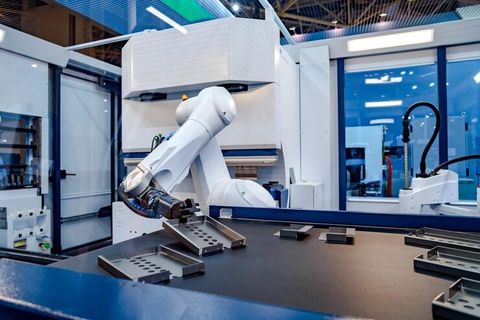
Industrial robotics: Performs repetitive manufacturing tasks with programmed movements and sensor-based controls.
Natural language processing: Helps users interact with manufacturing information through conversational systems and text analysis.
Predictive analytics: Uses operational data to estimate possible equipment failures and production variations.
Industrial Internet of Things (IIoT): Connects machines, sensors, and monitoring platforms to collect and exchange production information.
These technologies can operate independently or together, depending on the manufacturing environment.
How Artificial Intelligence Works in Manufacturing
AI-driven manufacturing generally begins with data collection. Sensors installed on production equipment record information such as temperature, pressure, vibration, speed, and operating time.
This information is processed through software that identifies patterns and compares current conditions with historical data. The resulting insights can help operators adjust machine settings, investigate unusual activity, or schedule equipment inspections.
A typical AI-supported manufacturing process involves four stages:
Data collection: Sensors, cameras, and industrial systems gather production information.
Data processing: Software organises and prepares information for analysis.
AI analysis: Machine learning models identify patterns, irregularities, or possible future conditions.
Operational response: Operators or authorised automated systems use the results to support manufacturing decisions.
Human supervision remains important, particularly in processes involving worker safety, product quality, and critical equipment.
Importance of AI-Driven Manufacturing in Modern Industries
AI-driven manufacturing matters because industrial operations must manage complex production requirements, equipment reliability, material usage, and quality expectations. Manufacturers also face challenges related to changing demand, supply chain interruptions, production delays, and skilled workforce availability.
Artificial intelligence can help address these challenges by improving access to production information and supporting faster analysis. It also allows manufacturing teams to identify operational patterns that may be difficult to recognise through manual observation alone.
Key Benefits of AI in Manufacturing
AI technologies support several areas of industrial operations.
Predictive maintenance: Analyses machine conditions to identify possible equipment problems before a breakdown occurs.
Quality control: Uses computer vision and data analysis to detect defects and irregularities during production.
Production optimisation: Examines machine performance and production data to identify process variations.
Inventory management: Helps estimate material requirements using production schedules and demand information.
Energy management: Analyses energy consumption patterns and identifies areas where energy use may be improved.
Workplace safety: Supports hazard detection through cameras, sensors, and equipment monitoring systems.
These benefits depend on data quality, system integration, employee training, and appropriate human oversight. AI systems may also produce incorrect results, so their outputs require suitable validation.
Industrial Applications of AI-Driven Manufacturing
Artificial intelligence is used in different industrial sectors according to their production requirements.
Automotive manufacturing: AI supports robotic assembly, visual inspection, production scheduling, and monitoring of manufacturing equipment. It can also help identify inconsistencies in vehicle components.
Electronics manufacturing: Computer vision systems inspect circuit boards, electronic connections, and small components for visible defects. Data analytics can also help monitor precision assembly operations.
Pharmaceutical manufacturing: AI can support production monitoring, process analysis, documentation review, and equipment condition monitoring. Applications must operate within relevant quality and regulatory requirements.
Food processing: AI-based inspection systems can examine product appearance, packaging conditions, and production patterns. Predictive monitoring can also support equipment maintenance.
Aerospace manufacturing: AI assists with production data analysis, component inspection, process monitoring, and selected robotic operations. Accuracy and traceability are particularly important in this sector.
Heavy engineering: Industrial AI helps monitor large machines, analyse equipment conditions, and support production planning in facilities working with metal, machinery, and industrial components.
Traditional Manufacturing Compared With AI-Driven Manufacturing
| Manufacturing Area | Traditional Approach | AI-Driven Approach |
|---|---|---|
| Equipment maintenance | Scheduled inspections | Data-based condition monitoring |
| Quality inspection | Manual checks | AI-assisted visual inspection |
| Production planning | Fixed schedules | Data-supported planning |
| Defect detection | Operator observation | Image and pattern analysis |
| Energy monitoring | Periodic measurement | Continuous data analysis |
| Inventory planning | Historical estimates | Predictive demand analysis |
AI-driven systems generally support existing manufacturing methods rather than replacing every traditional process.
Recent Developments in AI-Driven Manufacturing
Developments across the 2024–2026 period show increasing interest in generative AI, industrial robotics, digital twins, and connected production systems. Manufacturers are exploring ways to integrate artificial intelligence into existing machinery while maintaining operational reliability and data security.
Generative AI in Industrial Operations
Generative AI is being explored for technical documentation, production knowledge management, maintenance assistance, and engineering support. It can help workers search technical information, summarise machine records, and understand equipment instructions.
However, generated information must be checked against approved engineering documents and operating procedures. AI-generated responses should not independently control safety-critical manufacturing activities without appropriate validation.
Digital Twins and Predictive Analysis
A digital twin is a virtual representation of a physical machine, production line, or industrial process. It uses information from the real manufacturing environment to represent operating conditions digitally.
When combined with AI, digital twins can help examine different production scenarios, identify performance variations, and support maintenance planning. Their accuracy depends on the quality and frequency of the data used.
Collaborative Robots and Intelligent Automation
Collaborative robots, commonly called cobots, are designed to work near people in appropriately configured industrial environments. AI and sensor technologies can support object recognition, movement planning, and task adaptation.
Applications include material handling, component positioning, packaging, and selected assembly activities. Risk assessments and suitable protective measures remain necessary when robots operate near workers.
Edge AI and Connected Factories
Edge AI processes selected information close to the machine or sensor rather than sending all data to a remote platform. This can reduce communication delays and support quicker responses in certain manufacturing applications.
Connected factory systems also combine IIoT devices, industrial networks, cloud platforms, and analytics software. Manufacturers are increasingly considering cybersecurity and data governance as part of these digital systems.
Laws and Policies Affecting AI-Driven Manufacturing in India
AI-driven manufacturing in India is influenced by industrial safety regulations, data protection requirements, environmental laws, and government initiatives supporting digital manufacturing. The applicable rules depend on the industry, type of equipment, information collected, and manufacturing activities.
Government Initiatives and Digital Manufacturing
The Indian government has introduced programmes to support manufacturing development, industrial technology adoption, and digital transformation.
Important initiatives include:
Make in India: Encourages manufacturing development across various industrial sectors.
Digital India: Supports digital infrastructure, technology adoption, and digital capabilities.
IndiaAI Mission: Supports the development of AI infrastructure, innovation, and wider AI adoption.
SAMARTH Udyog Bharat 4.0: Focuses on awareness and adoption of Industry 4.0 technologies in manufacturing.
These initiatives provide a broader policy environment for industrial technology development. Participation conditions and specific support mechanisms depend on the relevant programme.
Data Protection and Cybersecurity
AI-driven factories collect operational information and may also process employee, supplier, or customer data. Organisations must consider applicable privacy and cybersecurity requirements when collecting, storing, and processing such information.
India's Digital Personal Data Protection Act, 2023, establishes a framework for processing digital personal data. Its applicable provisions and rules depend on implementation requirements and the nature of the data involved.
Manufacturers should also consider industrial network security, access controls, software updates, and protection against unauthorised access to connected machinery.
Industrial Safety and Environmental Requirements
AI systems used in factories must operate alongside applicable workplace safety and environmental regulations. Machine guarding, emergency controls, electrical safety, and employee training remain important even when automated monitoring is introduced.
Environmental requirements may also apply to energy consumption, industrial emissions, wastewater, and waste management. AI-based monitoring can support operational analysis, but it does not replace statutory compliance responsibilities.
Tools and Resources for AI-Driven Manufacturing
Different software platforms and engineering tools help manufacturers implement and manage artificial intelligence in industrial environments.
Industrial AI and Machine Learning Platforms
Machine learning platforms help engineers develop models using equipment data, production records, and inspection images. These tools can support predictive maintenance, defect classification, and process analysis.
Common capabilities include data preparation, model training, performance evaluation, and deployment monitoring.
Computer Vision and Inspection Software
Computer vision platforms analyse images captured by industrial cameras. They can identify surface defects, missing components, incorrect positioning, and packaging irregularities.
The system must be trained and tested using images that represent actual production conditions.
Digital Twin and Simulation Software
Digital twin platforms help create virtual models of machines and production lines. Engineers can use simulation tools to examine production layouts, equipment behaviour, and possible process changes.
These systems are particularly useful when physical testing is difficult or disruptive.
Manufacturing Data and Monitoring Systems
Manufacturing Execution Systems (MES) and Supervisory Control and Data Acquisition (SCADA) platforms help monitor production activities and industrial equipment.
They can collect information about machine status, production quantities, process conditions, alarms, and equipment performance. Integration with AI software allows manufacturers to analyse this information in greater detail.
Frequently Asked Questions About AI-Driven Manufacturing
What Is AI-Driven Manufacturing?
AI-driven manufacturing uses artificial intelligence, machine learning, robotics, and data analytics to support industrial production. It helps manufacturers monitor equipment, inspect products, analyse production information, and improve operational planning.
What Technologies Are Used in AI-Driven Manufacturing?
Common technologies include machine learning, computer vision, industrial robotics, predictive analytics, digital twins, and the Industrial Internet of Things. These technologies collect and analyse information from manufacturing environments.
What Are the Main Benefits of AI in Manufacturing?
AI can support predictive maintenance, automated quality inspection, production planning, inventory analysis, and energy monitoring. Its effectiveness depends on data quality, system configuration, and human supervision.
How Is AI Used in Industrial Manufacturing Applications?
AI is used for inspecting automotive components, monitoring electronic assembly, analysing pharmaceutical production data, examining food packaging, and monitoring heavy industrial equipment.
Is AI Replacing Human Workers in Manufacturing?
AI is generally used to support or automate selected manufacturing tasks rather than replace every human role. Workers remain important for supervision, engineering decisions, equipment maintenance, problem-solving, and safety management.
Conclusion
AI-driven manufacturing combines artificial intelligence, automation, connected equipment, and industrial data analysis to support modern production operations. Its applications include predictive maintenance, quality inspection, production planning, robotics, and energy monitoring across multiple industries. Recent developments in generative AI, digital twins, and edge computing are expanding the ways manufacturers use intelligent technologies. Successful implementation depends on reliable data, appropriate infrastructure, cybersecurity, regulatory compliance, and human oversight.