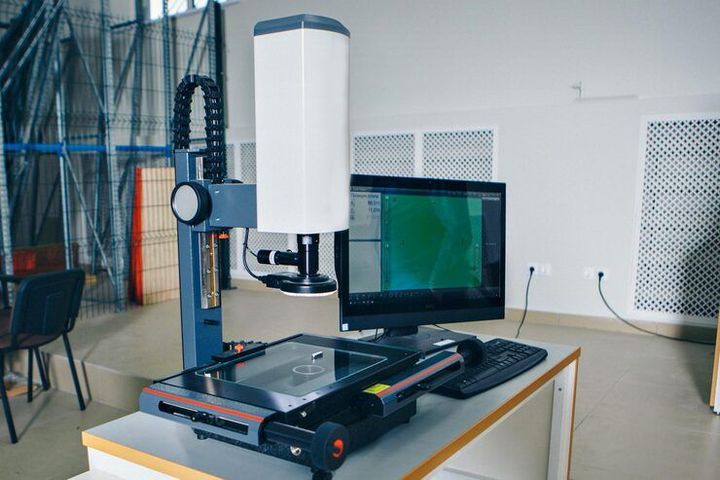
Tensile Testing Machines Guide With Material Testing and Engineering Insights
Tensile testing machines are laboratory instruments used to understand how materials behave when they are pulled apart under controlled conditions. They are widely used in material testing because engineers need measurable information about strength, deformation, flexibility, and failure before materials are used in products, structures, components, or manufacturing processes.
The basic concept comes from the study of mechanical properties. A test specimen is placed between two grips, and the machine applies a steadily increasing pulling force. Sensors record the applied force and the amount the specimen stretches. The resulting measurements help describe how a material responds to tension.
Modern tensile testing machines can evaluate metals, plastics, rubber, composites, textiles, films, wires, paper, and other materials. Their design varies according to the specimen type, expected force range, testing speed, temperature conditions, and level of measurement accuracy required.
How tensile testing works
A typical tensile test follows several basic stages:
- A specimen is prepared according to a defined shape and size.
- The specimen is positioned between machine grips.
- A controlled pulling force is applied.
- Load and extension measurements are recorded.
- Software converts the measurements into useful engineering data.
- The test continues until a specified condition, such as a defined extension or specimen break, is reached.
One important result is tensile strength, which describes the maximum stress a specimen experiences during the test. Other measurements can include yield strength, elongation, elastic behavior, and the point at which the specimen fractures.
Main components of tensile testing machines
A tensile testing system generally contains a rigid frame, drive mechanism, load cell, grips, measurement system, controller, and testing software. Each component contributes to the accuracy and repeatability of the test.
The load cell measures force, while an extensometer or another displacement measurement system records changes in specimen length. Grips hold the specimen securely, and the control system determines how the test progresses.
Different grip designs are used for different materials. Flat specimens, round specimens, thin films, wires, textiles, and soft materials may require different arrangements to prevent slipping or unwanted damage.
Importance
Tensile testing matters because materials that look similar can behave very differently when subjected to force. Two metal grades, plastic formulations, or composite structures may have different strength and deformation characteristics even when their appearance is almost identical.
Material testing provides measurable information that can support engineering calculations, quality control, research, manufacturing evaluation, and product development. It can also help identify changes in material behavior caused by processing conditions, environmental exposure, or variations between production batches.
Who uses tensile testing
Tensile testing machines are used across many technical fields, including:
- Metal and alloy manufacturing
- Plastics and polymer production
- Automotive component development
- Aerospace engineering
- Construction materials research
- Textile manufacturing
- Packaging development
- Cable and wire production
- Composite material research
- Academic and industrial laboratories
For engineers, tensile data can form part of a broader understanding of how a material performs under different loading conditions. Tensile behavior alone does not describe every possible application, because real components can also experience compression, bending, fatigue, impact, temperature changes, and repeated loading.
Why test conditions matter
Accurate material testing depends on controlled test conditions. Specimen dimensions, alignment, pulling speed, temperature, humidity, grip selection, calibration, and measurement resolution can influence the results.
For example, a thin polymer specimen may behave differently when tested at different speeds or temperatures. A poorly aligned specimen can also introduce bending forces that affect the measured result.
This is why engineering laboratories normally document specimen preparation and test conditions along with the numerical results. A measurement without its testing context can be difficult to interpret correctly.
Common measurements
| Measurement | What it describes | Typical relevance |
|---|---|---|
| Tensile strength | Maximum tensile stress reached | Material strength |
| Yield strength | Stress associated with permanent deformation | Metals and engineering materials |
| Elongation | Increase in specimen length | Ductility and flexibility |
| Elastic modulus | Relationship between stress and elastic strain | Material stiffness |
| Breaking force | Force recorded at fracture | Specimen failure analysis |
| Extension | Change in specimen length | Deformation measurement |
The precise definitions and calculation methods depend on the applicable testing standard and material category.
Recent Updates
Recent developments in tensile testing have focused on automation, digital measurement, software integration, data management, and more flexible testing configurations. Modern systems increasingly combine electronic controls with computer-based analysis, allowing test parameters and results to be recorded in structured formats.
Digital measurement and automation
Digital load cells and displacement sensors can provide detailed measurements during a test. Software can display force-extension or stress-strain curves and calculate selected mechanical properties based on configured test procedures.
Automated specimen identification is also becoming more common in laboratory workflows. Barcode or database integration can associate test results with specimen information, material batches, production records, or research projects.
Wider range of testing applications
Another trend is the development of adaptable systems that can accommodate different fixtures and test accessories. A single testing frame may be configured for several material categories by changing grips, fixtures, or measurement equipment.
Environmental testing is another area of development. Specialized chambers can allow specimens to be tested under controlled temperature or humidity conditions, helping researchers examine how environmental factors influence mechanical behavior.
Data and laboratory integration
Testing software is increasingly designed to support data export, electronic reporting, and laboratory information systems. This can reduce manual transcription and make it easier to compare results from multiple test sessions.
Artificial intelligence and advanced data analysis are also being explored in laboratory environments. These technologies can assist with pattern recognition and large datasets, although engineering interpretation still depends on appropriate test methods and validated measurement practices.
Laws or Policies
Tensile testing is influenced primarily by technical standards, laboratory procedures, product requirements, and regulatory frameworks rather than by one universal rule. The exact requirements depend on the material, application, industry, and jurisdiction.
International and national standards organizations publish procedures describing specimen dimensions, testing speeds, equipment requirements, calculations, and reporting methods. Commonly referenced standards include ASTM and ISO methods, although the applicable standard depends on the material and intended testing purpose.
Standardization and laboratory practices
A laboratory performing regulated or contract testing may need documented procedures covering equipment calibration, specimen identification, environmental conditions, operator practices, and result recording.
Calibration is particularly important because load and displacement measurements form the foundation of a tensile test. Laboratories may maintain calibration records and perform verification procedures according to the applicable quality system.
Organizations working under formal laboratory accreditation frameworks may also have requirements concerning equipment, personnel competence, measurement traceability, documentation, and quality assurance.
Because requirements vary across industries and jurisdictions, the applicable standard should be identified before testing begins. General information cannot replace the specific requirements associated with a particular material or regulated application.
Tools and Resources
Several tools can help readers understand tensile testing machines and interpret material testing information.
Testing software
Manufacturer-independent or machine-specific testing software can control test parameters, collect measurements, generate stress-strain curves, and calculate selected properties. The available functions depend on the equipment and testing method.
Engineering calculators
Stress and strain calculators can help explain the mathematical principles behind tensile testing. Basic tensile stress can be represented as applied force divided by the original cross-sectional area, while engineering strain is commonly expressed as the change in length divided by the original length.
Standards and technical documents
Standards databases and technical libraries provide detailed procedures for different material categories. Engineering textbooks, laboratory manuals, university resources, and technical publications can also explain concepts such as elastic modulus, yield behavior, ductility, and fracture.
Data analysis tools
Spreadsheet applications and scientific data-analysis platforms can be used to organize test measurements, plot curves, calculate averages, and compare multiple specimens. For larger laboratories, specialized laboratory information management systems can connect test data with sample records and quality documentation.
FAQs
What are tensile testing machines used for?
Tensile testing machines measure how a material responds when it is pulled under controlled conditions. They can provide information about tensile strength, elongation, stiffness, yield behavior, and fracture characteristics.
How does material testing measure tensile strength?
The machine applies a controlled pulling force to a prepared specimen while measuring force and deformation. Tensile strength is calculated from the maximum recorded force and the relevant specimen cross-sectional area according to the applicable testing method.
What materials can tensile testing machines test?
Tensile testing machines can be configured for metals, plastics, rubber, composites, textiles, films, paper, wires, and various other materials. Grips and fixtures are selected according to the specimen design and material properties.
What is the difference between tensile strength and elongation?
Tensile strength describes the maximum tensile stress reached during a test, while elongation describes how much the specimen extends relative to its original length. They provide different information about material behavior.
Why are standards important in material testing?
Standards establish consistent procedures for specimen preparation, equipment setup, test conditions, calculations, and reporting. Following an appropriate standard makes results easier to interpret and compare between laboratories.
Conclusion
Tensile testing machines provide controlled methods for studying how materials respond to pulling forces. Material testing can reveal properties such as tensile strength, elongation, stiffness, yield behavior, and fracture characteristics. Recent developments have increased the use of digital measurement, automated workflows, environmental control, and integrated data management. Appropriate standards, calibration procedures, and documented test conditions remain important for producing meaningful engineering data.