Solar Panel Manufacturing Machines Guide With Solar Module Assembly and Quality Control Information
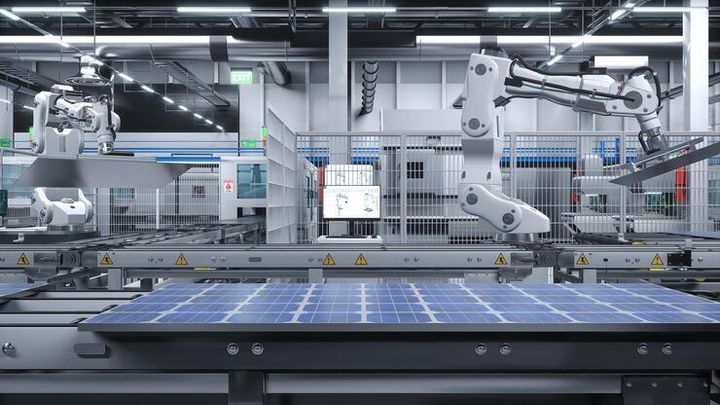
Solar panel manufacturing machines are industrial systems used to transform photovoltaic materials and components into finished solar modules. A modern production line can include equipment for cell handling, tabbing and stringing, layup, lamination, framing, junction box installation, testing, inspection, and packaging.
Solar module production has developed from relatively manual assembly into increasingly automated manufacturing. Automation helps coordinate delicate solar cells, maintain repeatable alignment, control process temperatures, and collect production data. The exact equipment configuration depends on the module design, cell technology, production volume, and required testing procedures.
A typical solar panel manufacturing process begins with photovoltaic cells. Cells are electrically connected into strings before being positioned between protective layers. These layers commonly include glass, encapsulant materials, the interconnected cells, another encapsulant layer, and a rear protective layer or glass.
The assembled stack then passes through a laminator. Controlled heat, pressure, and vacuum conditions help bond the layers into a durable module structure. After lamination, additional equipment may be used for trimming, framing, junction box attachment, electrical testing, visual inspection, and final identification.
Main Equipment Used in Solar Module Production
Solar panel manufacturing machines can be divided into several groups based on their position in the production process.
- Cell sorting equipment checks and organizes photovoltaic cells according to measured electrical characteristics.
- Solar cell tabbing and stringing machines connect cells electrically using conductive ribbons.
- Layup equipment positions cell strings and module materials in the correct arrangement.
- Electroluminescence inspection equipment identifies hidden cracks and other cell defects.
- Solar module laminators bond the module layers under controlled process conditions.
- Trimming and framing equipment prepares module edges and attaches structural frames where applicable.
- Junction box equipment supports electrical connection and enclosure installation.
- Flash testing equipment measures electrical output under controlled light conditions.
- Insulation and high-voltage testing equipment checks electrical safety characteristics.
Solar Module Assembly Process
Solar module assembly requires accurate positioning because small alignment errors can affect appearance, electrical connections, and long-term reliability.
A simplified production sequence is:
- Cell inspection and sorting
- Cell tabbing and stringing
- Glass and encapsulant preparation
- Cell string layup
- Busbar or interconnection arrangement
- Electroluminescence inspection
- Lamination
- Edge trimming
- Framing or structural finishing
- Junction box installation
- Electrical performance testing
- Final visual and dimensional inspection
Different module technologies can require different production equipment. For example, glass-glass modules may use a different material configuration from glass-backsheet modules, while newer cell formats can require equipment designed around larger cell dimensions.
Importance
Solar module manufacturing matters because photovoltaic systems are increasingly used for electricity generation across residential, commercial, industrial, and utility-scale applications. Manufacturing quality influences how consistently modules perform after installation and how well they withstand environmental conditions.
For manufacturers, the production process involves several technical challenges. Solar cells are relatively thin and can be damaged by excessive mechanical pressure, incorrect handling, or poor alignment. Manufacturing machines therefore need to combine controlled movement with precise positioning.
Quality control is another important consideration. A module may appear normal during a visual inspection while containing an internal cell crack, poor electrical connection, delamination risk, or other hidden defect. This is why modern production lines commonly combine visual inspection with electrical and imaging-based testing.
Problems Addressed by Automated Equipment
Automation can address several recurring production challenges:
- Inconsistent cell positioning
- Uneven soldering or interconnection
- Excessive handling of fragile cells
- Variations in lamination conditions
- Difficulties identifying internal defects
- Manual recording errors
- Inconsistent electrical testing
- Production traceability challenges
Automation does not eliminate the need for human oversight. Operators, engineers, and quality personnel still need to establish process parameters, review inspection results, maintain equipment, and investigate abnormal production data.
Solar Panel Manufacturing Machines and Production Scale
Equipment requirements differ according to manufacturing scale and module design. A smaller facility may use a combination of semi-automatic and automatic machines, while a high-throughput plant may integrate multiple automated stages into a connected production line.
| Production Stage | Common Equipment | Main Purpose |
|---|---|---|
| Cell preparation | Cell sorter | Classify cells by electrical characteristics |
| Interconnection | Tabbing and stringing machine | Connect photovoltaic cells |
| Layup | Automatic layup system | Position strings and module layers |
| Inspection | EL tester | Detect hidden cell defects |
| Lamination | Vacuum laminator | Bond module layers |
| Finishing | Trimming equipment | Remove excess material |
| Structural assembly | Framing equipment | Attach module frame where applicable |
| Electrical connection | Junction box equipment | Install connection components |
| Performance testing | Flash tester | Measure module electrical output |
| Final inspection | Visual and dimensional systems | Check finished module condition |
Recent Updates
Recent developments in solar manufacturing have focused on higher automation, improved inspection, larger cell formats, advanced module designs, and stronger production traceability.
One important trend is the development of equipment for newer photovoltaic cell architectures. Production lines increasingly need flexibility because cell dimensions, interconnection methods, and module layouts can change as photovoltaic technology develops.
Automation and Digital Monitoring
Modern solar panel manufacturing machines increasingly incorporate sensors, programmable controls, machine vision, and production-data systems. These technologies can monitor process conditions and help identify variations before they become widespread production problems.
Machine vision is also becoming more useful for checking alignment, surface conditions, component placement, and other visible characteristics. Automated electroluminescence systems can inspect modules for internal defects that may not be visible under normal lighting.
Larger Modules and New Cell Designs
Manufacturing equipment is adapting to larger photovoltaic cells and module formats. Larger components can improve module power density, but they also create handling and alignment requirements for production machinery.
New interconnection approaches are also influencing solar module assembly. Equipment manufacturers therefore need to account for different cell structures, connection methods, encapsulation arrangements, and glass configurations.
Quality Control Developments
Quality control is increasingly integrated into production rather than being performed only at the final stage. In-line inspection allows manufacturers to examine components at multiple points throughout the process.
Digital traceability is another developing area. Production systems can associate inspection results with batches, equipment settings, and manufacturing stages, helping quality teams investigate recurring process variations.
Laws or Policies
Solar panel manufacturing is affected by several categories of rules, although exact requirements vary by country and manufacturing location. These rules commonly address electrical safety, worker protection, environmental management, product quality, waste handling, and industrial operations.
Manufacturers may need to comply with applicable product standards covering electrical characteristics, mechanical durability, environmental exposure, and module safety. International technical standards can also be used as a framework for testing and certification, although the legal status of a particular standard depends on the jurisdiction.
Environmental Requirements
Manufacturing facilities may be subject to environmental requirements involving:
- Industrial emissions
- Wastewater management
- Chemical handling
- Material storage
- Waste classification
- Recycling and disposal
- Packaging materials
- Hazardous material management
Photovoltaic manufacturing can involve glass, polymers, metals, electronic components, and process chemicals. Appropriate handling procedures depend on the materials used and the regulations governing the facility.
Electrical and Workplace Requirements
Electrical testing equipment must be operated according to applicable safety procedures. Production facilities also need controls for machinery hazards, electrical exposure, heat, moving components, and material handling.
Government renewable-energy programs can also influence photovoltaic manufacturing through procurement rules, domestic production incentives, energy policies, or environmental targets. Because these policies vary significantly, manufacturers must review the requirements applicable to their specific location and product category.
Tools and Resources
Several tools can help readers understand solar panel manufacturing machines and solar module assembly without requiring an engineering background.
Solar Production Calculators
Production calculators can estimate theoretical line capacity based on machine cycle time, operating hours, module dimensions, and planned production efficiency. These calculations are useful for understanding how different production stages interact.
Electrical Testing Tools
Solar module testing commonly involves equipment such as:
- IV curve testers
- Flash testers
- Insulation resistance testers
- High-voltage testers
- Ground continuity testers
- Electroluminescence systems
- Thermal imaging equipment
These tools provide different types of information. Electrical testers examine module performance, while imaging technologies can reveal physical or electrical abnormalities that may not be visible externally.
Manufacturing Documentation
Production teams commonly use process specifications, inspection checklists, equipment manuals, calibration records, maintenance schedules, and quality-control templates. These documents help establish repeatable procedures and provide records for process review.
Industry databases, technical standards organizations, equipment documentation platforms, and photovoltaic research resources can also help readers understand changes in module technology and manufacturing methods.
FAQs
What are solar panel manufacturing machines?
Solar panel manufacturing machines are production systems used for processes such as solar cell stringing, module layup, lamination, framing, junction box installation, inspection, and electrical testing.
How does solar module assembly work?
Solar module assembly generally involves connecting photovoltaic cells into strings, arranging the strings between protective materials, inspecting the assembly, laminating the layers, completing structural and electrical components, and testing the finished module.
What quality control equipment is used in solar panel manufacturing?
Common equipment includes electroluminescence testers, flash testers, insulation testers, high-voltage testing systems, machine-vision equipment, and dimensional inspection tools.
Why is a solar module laminator important?
A solar module laminator bonds the module layers under controlled heat, vacuum, and pressure conditions. Proper lamination helps create the finished module structure and reduces the risk of problems associated with incomplete bonding.
Are solar panel manufacturing machines fully automated?
Not always. Production lines can range from manually assisted systems to highly automated facilities. The level of automation depends on production requirements, module design, equipment configuration, and quality-control objectives.
Conclusion
Solar panel manufacturing machines support the major stages involved in converting photovoltaic cells and module materials into finished solar panels. Solar module assembly combines precise cell interconnection, material positioning, lamination, structural finishing, and electrical testing. Quality control uses visual inspection, electroluminescence, electrical measurements, and other testing methods to identify manufacturing variations. As photovoltaic technology evolves, production equipment is also adapting to new cell formats, automation requirements, digital monitoring, and changing module designs.