Smart Farming Tips for Using Sensors, Data Analytics, Automation, and Precision Tools
Smart farming uses digital technology, sensors, automation, data analytics, connected equipment, and precision tools to support agricultural decision-making. Instead of treating an entire field as one uniform area, smart farming can collect information about soil, crops, weather, machinery, and water conditions at different locations and times.
The idea developed from precision agriculture, which began using tools such as satellite positioning, field mapping, yield monitoring, and variable-rate equipment to understand differences within agricultural land. Modern smart farming expands this approach by connecting more data sources and using software to organize and interpret information.
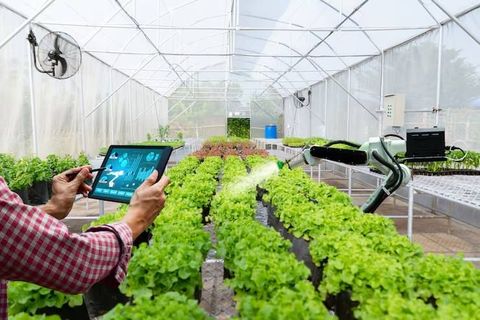
Farm sensors can measure conditions such as soil moisture, temperature, humidity, electrical conductivity, light levels, and other environmental variables. Weather stations can provide local information about rainfall, wind, temperature, and atmospheric conditions. Cameras and drones can also capture images that help identify differences in crop growth.
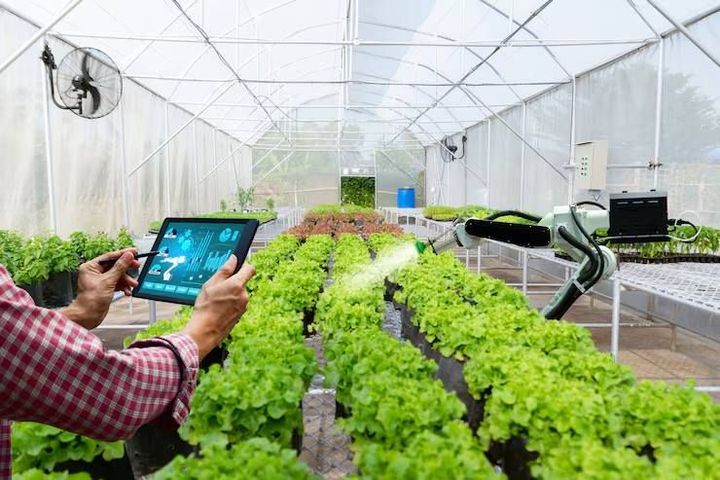
Automation connects information with physical equipment. Irrigation controllers, greenhouse systems, agricultural machinery, pumps, ventilation equipment, and other devices can respond to programmed conditions. Data analytics can then help farmers examine historical and current information rather than relying only on visual observations.
Main Elements of Smart Farming
A smart farming system can contain several interconnected technologies:
Soil sensors for measuring selected soil conditions
Weather stations for local environmental measurements
GPS and satellite positioning for field mapping
Drones and cameras for crop observation
Farm management software for organizing information
Data analytics tools for identifying patterns
Automated irrigation controllers
Variable-rate application equipment
Machine guidance systems
Connected agricultural machinery
Remote monitoring platforms
Not every farm needs every technology. The appropriate combination depends on crop type, field size, climate, irrigation arrangements, machinery, connectivity, and the decisions that need better information.
Importance
Smart farming matters because agriculture involves changing conditions. Soil moisture can vary across a field, weather can change quickly, and crops can develop differently depending on soil characteristics, water availability, pests, planting density, and other factors.
Technology can help organize these observations into usable information. Instead of collecting measurements separately and keeping them in disconnected records, connected systems can combine data into maps, dashboards, alerts, and historical records.
Using Sensors Effectively
Sensors are useful when their measurements relate to an actual farming decision. For example, soil-moisture information can help monitor changes in water availability, while weather measurements can provide local information for irrigation planning and field operations.
Sensor placement is important because one sensor does not necessarily represent an entire field. Soil texture, elevation, crop variety, drainage, and irrigation patterns can create different conditions across the same agricultural area.
Regular calibration and inspection also matter. Dirt, physical damage, poor installation, battery problems, communication interruptions, or sensor drift can affect readings.
Data Analytics in Agriculture
Data analytics involves collecting, organizing, comparing, and interpreting agricultural information. A farm database might contain planting records, soil measurements, weather observations, irrigation activity, machinery information, crop imagery, and harvest results.
Analytics can help identify patterns such as areas that repeatedly show lower moisture levels or sections of a field with different crop development. Maps can make these variations easier to understand than tables containing large numbers of individual measurements.
Farmers should also distinguish between correlation and causation. A relationship between two measurements does not automatically establish that one factor caused the other. Field observations and agricultural knowledge remain important when interpreting digital information.
Automation and Precision Tools
Automation can reduce the need for repeated manual adjustments in certain agricultural operations. Automated irrigation controllers can operate pumps or valves according to programmed conditions, while greenhouse systems can adjust ventilation or environmental controls based on sensor readings.
Precision tools can also vary the application of water, seed, fertilizer, or other agricultural inputs according to field maps or sensor information. The objective is to account for spatial differences rather than applying identical settings everywhere.
Recent Updates
From 2024 through 2026, smart farming has continued moving toward connected sensors, artificial intelligence, machine vision, autonomous equipment, cloud-based farm platforms, and improved interoperability between agricultural technologies.
Artificial Intelligence and Data Analysis
Artificial intelligence is increasingly being explored for agricultural image analysis, crop monitoring, weather interpretation, anomaly detection, and decision-support applications. Machine-learning models can examine large datasets and identify patterns that may be difficult to detect manually.
The usefulness of an AI system depends on the quality, location, and relevance of the data used to train or operate it. Models can also produce incorrect interpretations, so agricultural decisions should not rely solely on automated outputs.
Connected Farm Equipment
Agricultural equipment increasingly includes onboard computers, positioning systems, sensors, and wireless communication capabilities. These systems can record machine activity and exchange information with farm management platforms.
Interoperability remains important because farms may use equipment and software from different manufacturers. Data formats, communication protocols, application interfaces, and access permissions can influence whether different systems work together effectively.
Autonomous and Automated Machinery
Automation is expanding beyond individual sensors and controllers. Autonomous or semi-autonomous agricultural machines can use positioning systems, cameras, radar, or other sensors to navigate defined areas and perform selected field activities.
These systems still require appropriate supervision, maintenance, operating boundaries, and safety procedures. Their practical use depends on terrain, crop conditions, connectivity, machine capabilities, and local requirements.
Remote Monitoring
Remote monitoring allows agricultural operators to view selected field or equipment information through computers and mobile devices. Alerts can identify conditions such as low soil moisture, equipment interruptions, unusual temperature readings, or communication failures.
Remote access can be particularly useful for farms with distributed fields, greenhouses, irrigation infrastructure, or equipment located away from a central operating area.
Laws or Policies
Smart farming is influenced by agricultural, environmental, machinery, telecommunications, data protection, drone, chemical-use, and workplace rules. Specific requirements vary by country and by the technology being used.
Agricultural and Environmental Rules
Precision agriculture does not remove the need to follow rules concerning water use, fertilizer application, pesticides, soil protection, waste management, and environmental protection.
Automated application equipment may make it easier to control application patterns, but the underlying legal requirements still apply. Digital records can also become relevant where agricultural activities require documentation.
Drone and Imaging Rules
Farm drones can be used for crop observation, mapping, surveying, and other agricultural activities. However, drone operation can be subject to aviation rules concerning registration, operating areas, altitude, pilot requirements, aircraft identification, and restricted locations.
Privacy and land-access considerations can also arise when cameras capture areas beyond the intended agricultural property.
Data Protection and Digital Records
Farm management systems can contain information about land, production, machinery, suppliers, workers, and business operations. Where personal information is collected, applicable data protection requirements may govern how information is stored, accessed, shared, and retained.
Connected agricultural equipment can also create cybersecurity considerations. Password controls, software updates, access permissions, network segmentation, and backup procedures can help protect connected systems.
Tools and Resources
Smart farming requires a combination of physical equipment and digital resources. Soil sensors and weather stations provide measurements, while positioning systems and field-mapping platforms organize information geographically.
Farm management platforms can combine planting records, field boundaries, machinery data, crop observations, and harvest information. Spreadsheet software can also be useful for smaller datasets when information does not require a specialized platform.
Useful tools and resources include:
Soil-moisture sensors
Weather stations
GPS field mapping tools
Satellite imagery platforms
Agricultural drone systems
Crop-monitoring cameras
Irrigation controllers
Farm management software
Data dashboards
Yield-monitoring equipment
Variable-rate application systems
Equipment maintenance records
A simplified comparison of common smart farming technologies is shown below:
| Technology | Main Information or Function | Typical Agricultural Use |
|---|---|---|
| Soil Sensor | Soil moisture and other measurements | Irrigation monitoring |
| Weather Station | Local weather conditions | Field planning |
| GPS Mapping | Location and field boundaries | Precision operations |
| Drone Imaging | Aerial crop observations | Crop monitoring |
| Satellite Imagery | Large-area field information | Crop assessment |
| Data Analytics | Pattern identification | Decision support |
| Automated Irrigation | Controlled water application | Irrigation management |
| Variable-Rate Equipment | Adjusted application rates | Precision input management |
| Machine Guidance | Accurate equipment positioning | Field operations |
Planning a Smart Farming System
A practical system generally begins with a specific information requirement. A farm may first need better irrigation monitoring, more accurate field mapping, improved machinery records, or better crop observation.
The next step is identifying what data can address that requirement. Sensors, satellite imagery, machinery records, weather information, or manual observations may provide relevant inputs.
Connectivity should also be considered. Remote fields may have limited cellular coverage or internet access, which can affect how frequently sensors transmit information. Systems may therefore require local data storage, alternative communication methods, or periodic data transfer.
Data quality is another important consideration. Measurements should be checked for missing values, unusual readings, incorrect timestamps, and sensor faults before being used for analysis.
FAQs
What is smart farming?
Smart farming is an agricultural approach that uses sensors, data analytics, automation, positioning technology, connected machinery, and precision tools to collect information and support farm management decisions.
How are sensors used in smart farming?
Farm sensors can monitor soil moisture, temperature, humidity, weather conditions, and other variables. The information can be displayed through dashboards or combined with other data for irrigation, crop monitoring, and field planning.
How does data analytics help precision farming?
Data analytics organizes information from sensors, machinery, maps, imagery, weather records, and production records. It can identify patterns and differences across fields that may help operators understand changing agricultural conditions.
What automation tools are used in smart farming?
Automation can include irrigation controllers, greenhouse controls, variable-rate equipment, machine guidance, automated machinery, and remote monitoring systems. The level of automation depends on the farm and its operating requirements.
What should farmers consider when using precision tools?
Important considerations include the purpose of the technology, sensor placement, data accuracy, connectivity, equipment compatibility, maintenance, cybersecurity, operating conditions, regulatory requirements, and the ability to interpret the collected information.
Conclusion
Smart farming combines sensors, data analytics, automation, connected equipment, and precision tools to provide more detailed information about agricultural conditions. Soil measurements, weather data, field mapping, imagery, and machinery records can be combined to support monitoring and planning. Recent developments include artificial intelligence, remote monitoring, connected equipment, machine vision, and autonomous technologies. Effective use depends on reliable data, appropriate system design, human oversight, equipment maintenance, and compliance with applicable agricultural and technology requirements.