Precision Grinding Machines Basics With Grinding Methods, Features, and Applications
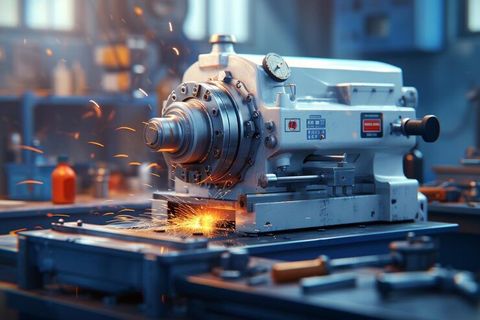
Precision grinding machines are industrial machines designed to remove small amounts of material from a workpiece to achieve accurate dimensions, smooth surfaces, and specific shapes.
These machines use rotating abrasive wheels or other grinding tools to process materials such as steel, stainless steel, aluminium, ceramics, and hardened alloys. Precision grinding is widely used in manufacturing industries where dimensional accuracy and surface quality are important.
The development of precision grinding technology is closely connected to the growth of mechanical engineering and industrial manufacturing. As machinery became more advanced, manufacturers needed methods to produce components with tighter dimensional tolerances and smoother finishes. Traditional cutting operations were not always suitable for processing hardened materials or achieving extremely fine surface finishes.
Precision grinding machines address these requirements through controlled material removal. They are commonly used after turning, milling, heat treatment, or other machining processes. By combining abrasive technology, accurate machine movements, and measurement systems, grinding equipment helps produce components that meet specific engineering requirements.
How Precision Grinding Machines Work
A precision grinding machine uses an abrasive grinding wheel or tool that rotates at a controlled speed. The workpiece is positioned against the grinding surface, and small amounts of material are removed through repeated contact between the abrasive particles and the material.
The process generally involves:
Workpiece positioning: The component is secured using a chuck, fixture, or other holding arrangement.
Grinding wheel rotation: An abrasive wheel rotates at a selected speed.
Material removal: The abrasive particles remove small quantities of material from the workpiece.
Controlled movement: Machine axes guide the grinding tool or component along the required path.
Measurement: Instruments check dimensions and surface characteristics during or after processing.
The final result depends on factors such as wheel selection, grinding speed, feed rate, material hardness, and machine condition.
Importance
Precision grinding machines play an important role in modern manufacturing because many industrial components require accurate dimensions and consistent surface finishes. Even small dimensional variations can affect how mechanical parts fit together, move, or transfer loads. Grinding helps address these challenges by providing controlled finishing operations.
These machines are particularly relevant to industries that manufacture components requiring close dimensional tolerances. Automotive manufacturers use grinding for shafts, gears, bearings, and engine components. Aerospace production involves precision grinding of selected turbine and structural components, while medical equipment manufacturing uses specialised grinding processes for certain metal and ceramic parts.
Industries That Use Precision Grinding Equipment
Different manufacturing sectors depend on precision grinding for specific production requirements.
Automotive manufacturing: Grinding is used for crankshafts, camshafts, transmission components, and bearing surfaces.
Aerospace engineering: Specialised grinding processes help manufacture selected turbine parts and precision components.
Tool and die manufacturing: Grinding produces accurate cutting tools, moulds, dies, and hardened metal surfaces.
Medical equipment manufacturing: Grinding supports the production of certain surgical instruments and precision components.
Electronics manufacturing: Fine grinding is used for semiconductor materials, ceramic substrates, and specialised components.
Heavy machinery production: Industrial shafts, rollers, gears, and other mechanical parts may require grinding operations.
Problems Addressed by Precision Grinding
Manufacturing processes can leave unwanted surface irregularities, dimensional variations, or machining marks. Precision grinding helps reduce these problems through controlled abrasive removal.
Its main advantages include:
Improved dimensional accuracy: Helps components meet specified measurements.
Better surface finish: Reduces roughness and unwanted machining marks.
Hardened material processing: Handles materials that are difficult to machine using conventional cutting tools.
Consistent component production: Supports repeatable manufacturing when machine settings and processes are properly controlled.
Improved component fitting: Helps produce mating surfaces with suitable dimensions and geometry.
However, grinding performance depends on machine accuracy, operator knowledge, workpiece material, and process conditions.
Recent Updates
Precision grinding technology continues to develop alongside automation, digital manufacturing, and advanced material processing. Current industry trends focus on improving process monitoring, reducing unnecessary material removal, and maintaining consistent production quality.
CNC Precision Grinding Machines
Computer Numerical Control (CNC) technology has changed how precision grinding operations are managed. CNC grinding machines use programmed instructions to control machine movements, grinding positions, feed rates, and other operating parameters.
These systems are particularly useful for producing complex geometries and repeating the same grinding operation across multiple components. They also reduce the need for manual adjustments during certain production stages.
Automation and Robotic Integration
Manufacturing facilities increasingly integrate robotic systems with CNC grinding equipment. Robots can load and unload workpieces, transfer components between production stages, and support automated inspection arrangements.
Automation can reduce manual handling and improve workflow consistency. However, suitable machine programming, safety arrangements, and maintenance remain important.
Advanced Grinding Wheel Technology
Grinding wheel manufacturers continue developing abrasive materials and bonding methods for different industrial applications.
Common developments include:
Cubic boron nitride (CBN) abrasive wheels for hardened steels.
Diamond grinding wheels for ceramics and other hard materials.
Improved vitrified bonds for controlled grinding performance.
Specialised abrasive structures for heat-sensitive materials.
These technologies allow manufacturers to select grinding wheels according to material properties and production requirements.
Digital Monitoring and Smart Manufacturing
Modern precision grinding systems may incorporate sensors that monitor vibration, temperature, spindle conditions, and machine performance. Digital monitoring helps identify unusual operating conditions and supports maintenance planning.
Some advanced machines also integrate measurement systems that check workpiece dimensions during processing. This can reduce repeated manual inspections and improve control over manufacturing operations.
Laws or Policies
Precision grinding machines are influenced by workplace safety requirements, industrial machinery standards, environmental rules, and electrical safety regulations. These requirements vary according to the country, manufacturing sector, and machine installation.
In India, industrial facilities must consider applicable occupational safety requirements, factory regulations, and machinery-related standards. The Occupational Safety, Health and Working Conditions Code provides a broader framework for workplace health and safety, alongside applicable rules and implementation requirements.
Workplace Safety Requirements
Grinding operations involve rotating wheels, flying particles, noise, vibration, and potential exposure to dust. Industrial facilities need appropriate safeguards to reduce workplace risks.
Important safety considerations include:
Machine guards: Protect operators from accidental contact with rotating components and grinding wheels.
Personal protective equipment: Safety glasses, face shields, hearing protection, and suitable work clothing may be necessary.
Wheel inspection: Grinding wheels should be checked for damage before installation and use.
Dust management: Suitable extraction and ventilation systems help control airborne particles.
Emergency controls: Accessible emergency stopping arrangements help manage unexpected situations.
Machinery Standards and Environmental Considerations
Industrial grinding equipment may need to comply with relevant machinery safety and technical standards, depending on its design and intended application.
International standards developed by organisations such as ISO address machine safety, measurement methods, and manufacturing quality. Environmental requirements may also cover industrial noise, energy consumption, and the management of grinding waste.
Manufacturing facilities should identify the applicable requirements for their equipment, location, and operating activities.
Tools and Resources
Several technical tools and resources help manufacturers understand, operate, and evaluate precision grinding machines. These resources support machine selection, process planning, measurement, and quality control.
Grinding Process Calculation Tools
Grinding calculations help determine suitable operating parameters for different materials and applications.
Common calculations include:
Grinding wheel speed: Determines the rotational surface speed of the wheel.
Material removal rate: Estimates the volume of material removed during grinding.
Feed rate: Defines the movement of the grinding wheel or workpiece.
Grinding depth: Determines the amount of material removed in each pass.
Wheel diameter calculations: Help evaluate wheel dimensions and operating conditions.
The correct values depend on machine specifications, abrasive type, workpiece material, and manufacturer instructions.
Measurement and Inspection Instruments
Accurate measurement is important for checking finished components and maintaining manufacturing quality.
Instrument | Primary Application |
|---|---|
Digital micrometer | Measuring external dimensions |
Vernier caliper | Checking component dimensions |
Dial indicator | Measuring alignment and runout |
Surface roughness tester | Evaluating surface texture |
Coordinate measuring machine (CMM) | Checking complex component geometry |
Optical measuring system | Inspecting detailed profiles |
CAD and CAM Software
Computer-Aided Design (CAD) and Computer-Aided Manufacturing (CAM) software support the planning and programming of precision grinding operations.
CAD systems help engineers create component designs and define dimensional requirements. CAM platforms translate suitable manufacturing information into machine instructions for compatible CNC equipment.
These tools are particularly useful when manufacturing components with complex profiles or repeated production requirements.
Machine Maintenance Resources
Regular maintenance supports machine accuracy and operating reliability. Maintenance records, inspection checklists, lubrication schedules, and grinding wheel condition logs help manufacturing teams monitor equipment.
Common maintenance activities include checking spindle alignment, inspecting machine guides, monitoring coolant systems, and evaluating vibration levels.
FAQs
What Are Precision Grinding Machines Used For?
Precision grinding machines are used to achieve accurate dimensions, smooth surface finishes, and specific component geometries. They are commonly used in automotive, aerospace, tool manufacturing, electronics, and heavy machinery production.
What Are the Main Types of Precision Grinding Machines?
The main types include surface grinding machines, cylindrical grinding machines, centerless grinding machines, internal grinding machines, and CNC grinding machines. Each type is designed for different workpiece shapes and manufacturing requirements.
What Is the Difference Between CNC Grinding and Conventional Grinding?
CNC grinding uses computer-controlled movements and programmed instructions to manage grinding operations. Conventional grinding generally involves more manual control and operator adjustments. Both methods are used for different manufacturing applications.
Which Grinding Wheel Is Used for Hardened Steel?
Aluminium oxide and cubic boron nitride (CBN) grinding wheels are commonly used for hardened steel, depending on the material properties and grinding conditions. Wheel selection also depends on the required surface finish and machine specifications.
How Is Surface Quality Measured After Precision Grinding?
Surface quality is commonly evaluated using a surface roughness tester. Measurements such as Ra (arithmetical mean roughness) help describe surface texture, while dimensional inspection instruments verify the component's measurements.
Conclusion
Precision grinding machines are important manufacturing systems used to achieve accurate dimensions, controlled geometries, and smooth surface finishes. Different grinding methods, including surface, cylindrical, internal, and centerless grinding, address specific industrial requirements. CNC technology, automation, advanced abrasives, and digital monitoring continue to influence modern grinding operations. Machine safety, suitable equipment selection, and regular maintenance remain essential considerations for consistent manufacturing quality.