Metal Forming Machinery Overview With Advanced Forming Technology and Production Information
Metal forming machinery plays an important role in modern manufacturing by shaping metal materials into specific sizes, designs, and structures. These machines use mechanical force, pressure, heat, or a combination of different techniques to transform metal sheets, bars, tubes, and solid components into useful industrial products.
Metal forming machinery is commonly used in automotive manufacturing, construction, aerospace, electronics, agricultural equipment, and heavy engineering.
The development of metal forming technology began with basic manual tools, mechanical presses, and traditional forging techniques. As industrial production expanded, manufacturers introduced hydraulic systems, mechanical power presses, rolling equipment, and automated forming machines to improve production consistency and handle larger manufacturing requirements.
Today, advanced metal forming machinery combines computer-controlled operations, precision tooling, hydraulic pressure systems, and automated material handling. These technologies help manufacturers produce components with consistent dimensions while reducing unnecessary material waste and manual handling.
What Is Metal Forming Machinery?
Metal forming machinery refers to industrial equipment designed to change the shape of metal without primarily removing material. Instead of cutting away unwanted sections, these machines apply controlled forces that cause metal to bend, compress, stretch, roll, or take the shape of a particular tool.
The forming process depends on the material, component design, production quantity, and required dimensional accuracy. Some operations take place at room temperature, while others require heating to make the metal easier to shape.
Main Types of Metal Forming Machines
Different machines perform different forming operations according to manufacturing requirements.
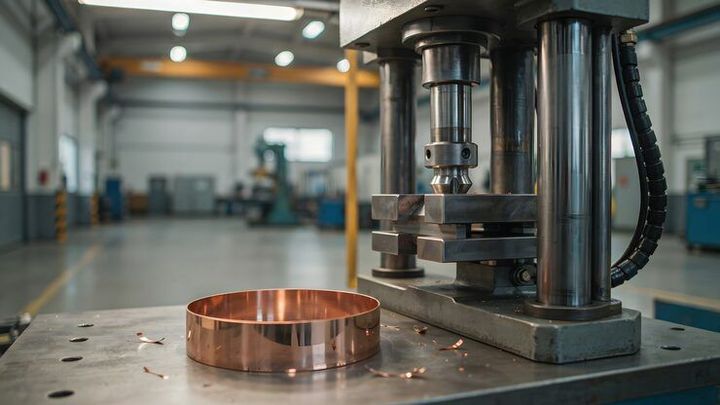
Hydraulic Press Machines: Use pressurized fluid to generate force for pressing, deep drawing, compression, and shaping operations.
Mechanical Power Presses: Use mechanical mechanisms to apply force during stamping, punching, and sheet metal forming.
Metal Rolling Machines: Pass metal between rotating rollers to reduce thickness or create specific profiles.
CNC Bending Machines: Use computer-controlled positioning and bending operations to shape metal sheets and profiles.
Forging Machines: Apply compressive forces to shape heated or cold metal into components with particular structures.
Tube and Pipe Forming Machines: Shape metal strips or tubes into cylindrical, curved, and other required profiles.
Each machine has different operating capabilities, tooling requirements, and production limitations.
How Does the Metal Forming Process Work?
The metal forming process generally begins with material preparation. Manufacturers select a suitable metal according to its strength, thickness, flexibility, and intended application.
The material is then positioned inside the machine, where dies, rollers, punches, or other forming tools apply controlled pressure. Once the material reaches the required shape, the formed component is removed and inspected for dimensional accuracy, surface condition, and possible defects.
Common forming operations include:
Bending: Changing the angle or direction of a metal component.
Stamping: Producing shapes through pressing operations using specialized dies.
Deep drawing: Transforming flat metal sheets into hollow components.
Rolling: Reducing thickness or creating uniform metal profiles.
Forging: Reshaping metal through compressive force.
Extrusion: Forcing metal through a shaped opening to create a continuous profile.
Importance
Metal forming machinery is important because many everyday products depend on accurately shaped metal components. Vehicles, household appliances, electrical enclosures, building structures, industrial equipment, and agricultural machinery all contain parts manufactured through different metal forming processes.
Without controlled forming operations, manufacturers may experience inconsistent dimensions, material deformation, production delays, and component quality problems. Modern forming equipment helps address these challenges through repeatable machine movements, controlled pressure, accurate positioning, and automated production sequences.
Industries That Use Metal Forming Technology
Several industries depend on metal forming equipment for regular manufacturing activities.
Automotive industry: Produces vehicle body panels, chassis components, brackets, doors, and structural parts.
Construction industry: Manufactures metal roofing sheets, structural profiles, frames, support components, and steel sections.
Aerospace industry: Forms specialized metal structures, lightweight panels, and precision components.
Electronics industry: Produces metal housings, electrical cabinets, connectors, and protective enclosures.
Agriculture industry: Manufactures equipment frames, machine housings, metal attachments, and structural components.
Household appliance industry: Uses sheet metal forming for refrigerators, washing machines, ovens, and other equipment.
Production Problems Addressed by Advanced Forming Equipment
Traditional metal forming operations may require considerable manual adjustment and repeated material handling. These activities can create variations in finished components, particularly when production involves complex shapes or large quantities.
Advanced metal forming machinery addresses several common production challenges:
Dimensional variation: CNC controls and accurate tooling help maintain consistent component measurements.
Material waste: Proper process planning and forming simulations help identify potential material losses.
Production interruptions: Monitoring systems can identify abnormal operating conditions.
Manual handling: Robotic systems and automated feeding equipment reduce repeated operator involvement.
Surface defects: Appropriate pressure, tooling, lubrication, and material selection help control surface damage.
Metal Forming Processes and Their Applications
The following table explains common forming processes and their industrial applications.
Forming process | Main operation | Typical applications |
|---|---|---|
Bending | Changes metal angles | Frames and panels |
Stamping | Shapes sheet metal using dies | Vehicle body parts |
Rolling | Reduces thickness or forms profiles | Steel sheets and sections |
Forging | Shapes metal through compression | Mechanical components |
Deep drawing | Creates hollow shapes | Containers and enclosures |
Extrusion | Produces continuous profiles | Metal channels and tubes |
The selection of a process depends on metal properties, product geometry, thickness, required strength, and production volume. A process suitable for thin aluminum sheets may not be appropriate for thick steel components.
Recent Updates
Metal forming technology is gradually moving toward connected manufacturing systems, automation, energy management, and data-based production monitoring. Developments during 2024–2026 reflect the wider adoption of digital manufacturing practices and more flexible production equipment.
CNC Automation and Smart Manufacturing
Computer numerical control technology has become an important part of modern metal forming machinery. CNC systems control machine movements, pressure settings, bending angles, and production sequences through programmed instructions.
Newer production arrangements increasingly connect forming machines with factory monitoring systems. This allows production teams to review operating conditions, identify equipment interruptions, and monitor manufacturing performance.
Artificial Intelligence and Predictive Maintenance
Artificial intelligence is increasingly being explored for manufacturing applications, including quality inspection, process monitoring, and equipment maintenance planning.
Predictive maintenance systems use information from sensors to identify unusual vibration, temperature changes, pressure variations, or other operating patterns. These signals can help maintenance teams investigate potential equipment problems before they interrupt production.
Robotic Material Handling
Industrial robots and collaborative robots are becoming more common in metal fabrication environments. They can support repetitive activities such as loading sheets, transferring formed components, positioning materials, and handling finished parts.
Automation is also expanding in press brake operations, where robotic systems can assist with repeated bending tasks. The degree of automation depends on component design, machine compatibility, and production requirements.
Energy-Efficient Hydraulic and Electric Systems
Manufacturers are paying greater attention to energy consumption during forming operations. Servo-electric presses and variable-speed hydraulic systems can adjust power usage according to machine requirements.
These technologies are particularly relevant where machines operate frequently or perform different forming sequences throughout a production cycle. Their actual energy performance depends on machine configuration, material properties, operating speed, and maintenance conditions.
Comparison of Traditional and Advanced Metal Forming Machinery
Feature | Traditional machinery | Advanced machinery |
|---|---|---|
Operation | Manual or basic mechanical control | CNC and programmable control |
Material handling | Greater manual involvement | Robotic or automated handling |
Monitoring | Periodic inspection | Sensor-based monitoring |
Production adjustment | Manual settings | Digital parameter adjustment |
Quality inspection | Manual measurement | Digital inspection and measurement |
Maintenance | Scheduled or reactive | Scheduled and predictive methods |
These differences are general rather than universal. Traditional equipment can remain suitable for straightforward operations, while advanced systems are useful for complex production requirements.
Laws or Policies
Metal forming machinery is influenced by industrial safety regulations, machinery design requirements, workplace protection rules, and product conformity standards. These requirements are intended to reduce operational hazards and establish consistent safety practices across manufacturing environments.
Because regulations differ between countries, manufacturers and industrial operators must follow the legal requirements applicable to their operating location and the markets where machinery is placed.
Industrial Machinery Safety Requirements
Metal forming equipment contains moving components, high-pressure systems, electrical controls, and powerful mechanical mechanisms. These features create potential hazards such as crushing, cutting, unexpected machine movement, and material ejection.
Common safety requirements include:
Emergency stop controls that allow operators to stop hazardous machine movements.
Physical guards around dangerous moving components.
Safety interlocks that prevent operation under unsafe conditions.
Appropriate electrical protection and machine isolation arrangements.
Clear operating instructions and maintenance procedures.
Operator training and workplace risk assessments.
International Standards for Metal Forming Machinery
International standards provide technical guidance for machinery design, risk reduction, and safe operation.
One relevant standard is ISO 16092, which addresses safety requirements for industrial presses. Its different parts cover general requirements and specific press technologies. ISO 12100 also provides a framework for machinery risk assessment and risk reduction.
These standards support machinery manufacturers, equipment integrators, and industrial operators in identifying hazards and implementing suitable protective measures. Their applicability depends on the machinery type and relevant national regulations.
Machinery Regulations and Compliance
Different markets establish their own machinery conformity requirements. For example, the European Union's Machinery Regulation (EU) 2023/1230 is scheduled to apply fully from January 2027, replacing the existing Machinery Directive.
The regulation addresses machinery safety, conformity assessment, digital documentation, and certain cybersecurity considerations for safety-related systems. Manufacturers and other economic operators involved in placing machinery on the EU market need to understand the applicable requirements.
Compliance considerations generally include:
Machinery risk assessment and technical documentation.
Electrical and mechanical safety provisions.
Appropriate conformity assessment procedures.
Safety instructions and operator documentation.
Inspection and maintenance arrangements.
Regulatory requirements should be checked against the latest official national legislation before machinery is manufactured, modified, imported, or installed.
Tools and Resources
Metal forming machinery relies on different technical tools and digital resources for machine selection, production planning, process simulation, and quality inspection. These resources help engineers and production teams understand manufacturing requirements before beginning large-scale operations.
CAD and CAM Software
Computer-aided design (CAD) software is used to develop component drawings, dimensions, and three-dimensional product models. Computer-aided manufacturing (CAM) software helps translate approved designs into manufacturing instructions.
These systems are particularly useful for CNC bending, sheet metal stamping, and complex component development.
Metal Forming Simulation Software
Forming simulation tools help manufacturers study how metal behaves under pressure and deformation. Engineers can examine material stretching, thinning, wrinkling, springback, and possible cracking during the forming process.
Simulation is useful for evaluating die designs and identifying potential manufacturing problems before physical production begins.
Production Monitoring Systems
Manufacturing execution systems and industrial monitoring platforms collect information from connected machines. They can help production teams examine machine availability, operating conditions, output quantities, and production interruptions.
Common monitoring features include:
Machine operating time.
Production quantity tracking.
Equipment condition monitoring.
Maintenance records.
Production quality information.
Measurement and Inspection Equipment
Accurate inspection is important for maintaining component dimensions and identifying manufacturing defects.
Common measurement tools include:
Digital calipers for measuring external and internal dimensions.
Micrometers for checking material thickness and diameter.
Coordinate measuring machines for inspecting complex component geometry.
Surface measurement instruments for examining finish quality.
Laser measurement systems for non-contact dimensional inspection.
Technical Information Resources
Manufacturers and engineering teams can consult recognized technical organizations and software documentation for additional information.
Useful resources include:
ISO standards for machinery safety and technical requirements.
CAD and CAM software documentation.
Industrial equipment manuals and maintenance guides.
Metal forming process handbooks.
Material property databases and engineering reference tables.
Manufacturing production planning templates.
The selection of tools depends on the forming process, component complexity, material type, and required inspection accuracy.
FAQs
What Is Metal Forming Machinery Used For?
Metal forming machinery is used to shape metal sheets, bars, tubes, and solid materials through bending, pressing, rolling, forging, stamping, and extrusion. It supports manufacturing across automotive, construction, aerospace, electronics, and other industrial sectors.
What Are the Main Types of Metal Forming Machines?
The main types include hydraulic presses, mechanical power presses, CNC bending machines, rolling machines, forging equipment, stamping presses, and tube forming machines. Each machine performs different operations according to material and production requirements.
How Does CNC Metal Forming Machinery Work?
CNC metal forming machinery operates through programmed instructions that control machine movements, positioning, pressure, and forming sequences. These controls help maintain repeatable production operations and reduce variations caused by manual adjustments.
What Is the Difference Between Hydraulic and Mechanical Press Machines?
Hydraulic press machines generate force through pressurized fluid, while mechanical presses use mechanisms such as flywheels, gears, and crank systems to produce movement. Hydraulic presses provide flexible force control, whereas mechanical presses are commonly used for repeated high-speed operations.
What Safety Standards Apply to Metal Forming Machinery?
Applicable requirements depend on machine design and operating location. International references include ISO 16092 for industrial press safety and ISO 12100 for machinery risk assessment and risk reduction. National regulations may introduce additional requirements.
Conclusion
Metal forming machinery is an important part of modern manufacturing, supporting the production of components used in numerous industrial and everyday applications. Hydraulic presses, CNC bending systems, rolling machines, stamping equipment, and forging technologies perform different shaping operations according to material and production requirements. Automation, artificial intelligence, digital monitoring, and energy-efficient machine systems are influencing the development of advanced forming technology. Machinery safety, quality inspection, and regulatory compliance remain important considerations throughout the manufacturing process.