Learn How Laser Cleaning Machines Remove Rust, Paint, and Surface Contaminants
Laser cleaning machines use focused light energy to remove rust, paint, oil, oxidation, dust, and other unwanted layers from surfaces. Unlike many conventional cleaning methods, laser cleaning machines can remove selected contaminants without relying on abrasive media or large quantities of chemical agents.
The technology is increasingly discussed in manufacturing, restoration, automotive production, metal preparation, maintenance, and industrial surface treatment. Understanding how laser cleaning works helps general readers recognize why this technology is being used for different materials and applications.
Context
What Laser Cleaning Machines Are
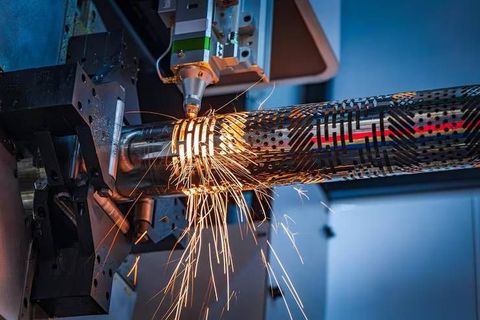
A laser cleaning machine is an equipment system that directs a controlled laser beam toward a surface. The beam transfers energy to the unwanted layer, causing the contaminant to heat, break apart, evaporate, or detach from the underlying material.
The process is often called laser ablation when the laser energy removes a thin surface layer. Depending on the laser type, power level, scanning speed, and material, the process can be adjusted to target contaminants while limiting effects on the underlying surface.
How Laser Cleaning Works
The basic process involves several stages. A laser source generates concentrated light, an optical system directs the beam, and a scanning mechanism moves the beam across the selected area.
When the laser reaches rust, paint, grease, or another contaminant, the material absorbs part of the laser energy. The resulting heat can weaken the connection between the contaminant and the surface.
Some contaminants are converted into very small particles or vapor, while others are loosened and removed from the surface. The exact mechanism depends on the material, wavelength, pulse duration, and operating settings.
Common Contaminants Removed
Laser cleaning machines can be configured for different surface-cleaning requirements. Common targets include:
- Rust and oxidation
- Paint and coatings
- Oil and grease
- Carbon deposits
- Dirt and dust
- Welding residue
- Oxide layers
- Certain adhesive residues
- Surface contamination from manufacturing processes
The suitability of laser cleaning depends on the material and contaminant combination. A setting that works for steel may not produce the same result on aluminum, stone, plastics, or delicate components.
Importance
Why Laser Cleaning Matters
Surface contamination can interfere with manufacturing, welding, coating, inspection, restoration, and equipment maintenance. Rust can alter the appearance and condition of metal, while paint and oxide layers can interfere with later processing.
Traditional cleaning approaches may involve abrasive blasting, mechanical tools, solvents, or other chemical processes. These methods remain useful for many applications, but they can create secondary waste, affect the underlying surface, or require additional handling.
Laser cleaning provides another approach by concentrating energy directly on the unwanted layer. Because the process can be precisely controlled, it can be useful when selective removal is important.
Applications Across Different Industries
Laser cleaning technology is used in several industrial and technical environments.
In metal fabrication, it can remove oxidation and residue before welding or coating. In automotive production, laser systems can prepare selected metal areas and remove coatings or contaminants from components.
In restoration, controlled laser cleaning can be used for certain historical or decorative surfaces when appropriate testing confirms that the substrate can tolerate the process.
Other applications include machinery maintenance, mold cleaning, aerospace component preparation, electronics manufacturing, and surface preparation before joining or coating.
Advantages and Limitations
Laser cleaning has several characteristics that distinguish it from conventional methods. It can provide accurate treatment of localized areas and reduce dependence on abrasive materials.
However, it is not automatically appropriate for every surface. Operators need to consider reflectivity, thermal sensitivity, coating thickness, contamination type, surface geometry, laser wavelength, and required cleaning depth.
A poorly selected setting can discolor, roughen, heat, or otherwise affect the underlying material. Proper equipment configuration and controlled testing are therefore important parts of the process.
Laser Cleaning Compared With Conventional Methods
| Cleaning Method | Main Mechanism | Typical Residue | Surface Control | Common Consideration |
|---|---|---|---|---|
| Laser cleaning | Focused light energy | Particles or vapor | High | Requires controlled settings |
| Abrasive blasting | Impact from abrasive media | Abrasive waste and removed material | Moderate | Can affect surface texture |
| Mechanical cleaning | Physical contact | Removed material | Moderate | May require substantial manual effort |
| Chemical cleaning | Chemical reaction | Chemical and contaminant residue | Variable | Requires chemical handling |
| Dry ice cleaning | Sublimation and impact | Removed contamination | Moderate | Equipment and material compatibility matter |
Recent Updates
Development of More Flexible Systems
Recent developments from 2024 through 2026 have continued to focus on making laser cleaning machines more adaptable to different surfaces and production environments. Manufacturers have increasingly emphasized adjustable laser parameters, automated scanning, improved beam control, and easier operator interfaces.
Portable systems have also become an important category. Compact equipment can be moved between work areas, while larger integrated systems can be incorporated into automated production lines.
Automation and Robotic Integration
Automation is another significant trend. Laser cleaning systems can be integrated with robotic arms, programmable motion platforms, cameras, and production-control systems.
This allows cleaning paths to be repeated with greater consistency when components have similar dimensions. Automated systems can also help maintain controlled movement and laser exposure during repetitive processing.
Improved Process Monitoring
Modern systems increasingly incorporate sensors and software intended to monitor operating conditions. Process monitoring can help identify changes in surface response and maintain more consistent treatment.
Computer-controlled scanning patterns can also allow operators to define specific areas instead of exposing an entire component uniformly.
Growing Interest in Reduced Secondary Waste
Another trend is interest in cleaning processes that generate less secondary material. Laser cleaning does not require abrasive media during operation, although the removed contamination still needs appropriate collection and disposal.
This distinction is important because laser cleaning does not eliminate all waste. Rust particles, paint residues, coatings, and other removed materials may require controlled collection depending on their composition.
Laws or Policies
Workplace Laser Safety
Laser cleaning machines are subject to safety requirements because high-powered lasers can create hazards for eyes and skin. Workplace rules in many jurisdictions require appropriate protective measures, controlled access, warning systems, and documented operating procedures.
The exact requirements depend on the laser classification, equipment configuration, workplace environment, and local regulations.
Ventilation and Contaminant Control
Removing paint, coatings, oil, or other materials can produce airborne particles, fumes, or vapors. Appropriate ventilation and extraction may therefore be necessary.
The composition of the original coating matters. Older coatings may contain substances requiring additional precautions, so identifying the material before processing can be important.
Electrical and Equipment Safety
Laser cleaning equipment also involves electrical, optical, and mechanical components. Installation and operation should follow the manufacturer's technical instructions together with applicable workplace safety requirements.
Because regulations vary between jurisdictions, organizations using industrial laser systems generally need to review the rules that apply to their particular facility and application.
Tools and Resources
Laser Parameter Guides
Laser parameter charts can help users understand how factors such as power, pulse duration, frequency, scanning speed, and beam size influence surface treatment. These guides are normally specific to a particular machine and material.
Material Testing
A small test area is commonly useful before processing a larger component. Testing can reveal whether the selected settings remove the contaminant while maintaining the desired surface condition.
Surface Inspection Tools
Inspection equipment can help evaluate the result after cleaning. Depending on the application, useful tools may include:
- Digital microscopes
- Surface roughness testers
- Thickness measurement instruments
- Cameras and machine-vision systems
- Lighting and visual inspection equipment
- Particle collection equipment
Safety Documentation
Laser safety manuals, equipment documentation, workplace procedures, and applicable regulatory guidance provide important information for responsible operation. Training materials can also explain beam hazards, protective equipment, controlled areas, and emergency procedures.
FAQs
How do laser cleaning machines remove rust?
Laser cleaning machines direct concentrated light energy onto rust. The rust absorbs energy and is heated or disrupted, allowing the oxidized layer to separate from the underlying material when appropriate settings are used.
Can laser cleaning machines remove paint?
Yes, laser cleaning machines can remove certain paint and coating layers. The effectiveness depends on coating composition, thickness, substrate material, laser wavelength, and operating parameters.
Are laser cleaning machines suitable for every material?
No. Different materials respond differently to laser energy. Reflective metals, heat-sensitive materials, plastics, stone, composites, and coated surfaces may require different equipment and settings.
Does laser cleaning create waste?
Laser cleaning does not use abrasive media during the cleaning process, but it can produce particles, fumes, vapor, or fragments from the removed material. These materials may require collection and appropriate handling.
Is laser cleaning safe for operators?
Laser cleaning requires specific safety controls because high-powered laser beams can cause serious eye and skin hazards. Controlled work areas, appropriate protective equipment, ventilation, training, and equipment-specific safety procedures are important.
Conclusion
Laser cleaning machines use controlled laser energy to remove rust, paint, oxidation, grease, and other surface contaminants. Their ability to target selected layers makes them useful across manufacturing, restoration, maintenance, and surface preparation applications. Recent developments have emphasized automation, portable equipment, process monitoring, and more precise control. Safe operation still depends on appropriate equipment settings, material testing, contaminant control, and compliance with applicable laser and workplace safety requirements.