Learn How Industrial Robots & Automation Support Precision Manufacturing
Industrial robots are reshaping modern production environments. These machines perform repetitive tasks, handle materials, and support manufacturing operations with programmed movements.
Industrial robots and automation technologies are increasingly important in factories, warehouses, automotive facilities, and electronics manufacturing. Understanding their types, applications, technical requirements, and purchasing considerations helps businesses evaluate suitable automation systems.
Understanding Industrial Robots and Automation
Industrial robots are programmable machines designed to perform specific manufacturing and material-handling activities. They can operate independently or work alongside other equipment within an automated production line.
Automation combines robotics, sensors, software, controllers, and mechanical systems to coordinate industrial processes. Industrial automation systems can reduce repetitive manual activities and improve consistency across different production stages.
How Industrial Robots Work
Most industrial robots operate through a combination of mechanical components and electronic controls. Their movements are managed by controllers that follow programmed instructions.
Important components include:
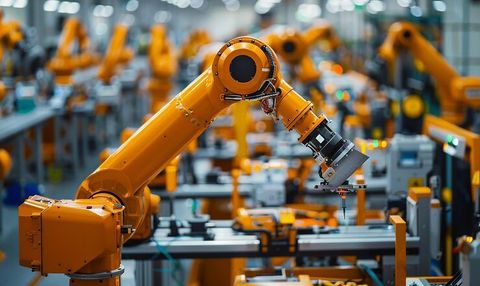
Robotic arms: Move materials, tools, and components between designated positions.
Controllers: Process instructions and coordinate robot movements.
Sensors: Detect objects, positions, and environmental conditions.
End effectors: Perform specific activities such as gripping, welding, or cutting.
Software: Supports programming, monitoring, and operational adjustments.
Importance of Industrial Automation in Manufacturing
Industrial automation supports production processes that require repeatable movements, controlled operations, and consistent output. It is particularly useful in environments where production activities involve heavy materials, repetitive handling, or precise positioning.
Manufacturers evaluate robotic automation equipment for several operational reasons.
Production consistency: Programmed movements help maintain repeatable operating procedures.
Operational efficiency: Automated equipment can perform repetitive activities with reduced manual intervention.
Workplace safety: Robots can handle certain hazardous or physically demanding tasks.
Production flexibility: Reprogrammable systems can accommodate changes in manufacturing requirements.
Process monitoring: Integrated sensors provide information about equipment performance and operating conditions.
However, automation requires appropriate planning, technical knowledge, and regular maintenance.
Types of Industrial Robots
Different robotic designs support different production requirements. Their movement capabilities, working ranges, payload capacities, and installation requirements vary.
Common Industrial Robot Categories
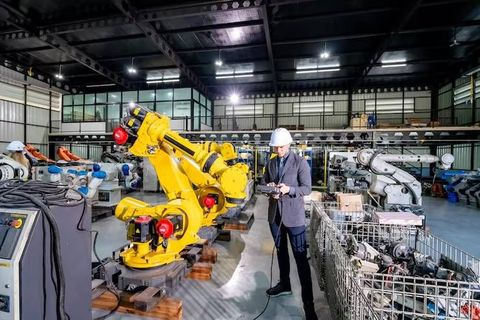
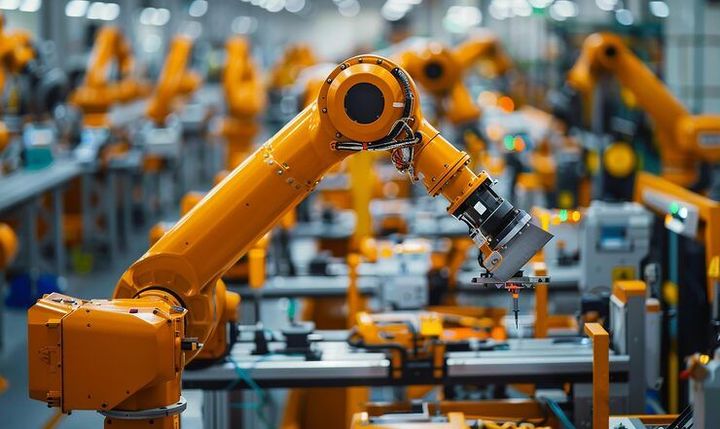
Articulated robots: Feature multiple rotating joints and are frequently used for welding, assembly, and material handling.
Cartesian robots: Move along linear axes and support precise positioning operations.
SCARA robots: Perform horizontal assembly and pick-and-place activities.
Delta robots: Use parallel-arm structures for lightweight, high-speed handling applications.
Collaborative robots: Designed to work near people under specified safety conditions.
Industrial robotic arms are available in different configurations depending on the required payload, reach, accuracy, and operating environment.
Industrial Robot Applications Across Industries
Industrial robots are used in several manufacturing and processing sectors. Their applications depend on production volume, material characteristics, equipment specifications, and operational requirements.
Major Industrial Applications
Automotive manufacturing: Robotic systems perform welding, painting, assembly, and component handling.
Electronics production: Robots support circuit board handling, component placement, and product inspection.
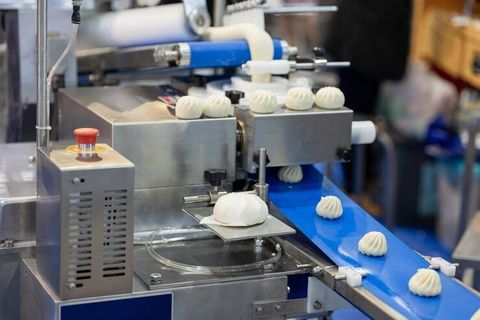
Food processing: Automated equipment assists with packaging, sorting, and material movement.
Metal fabrication: Robot welding systems support repetitive welding operations and controlled positioning.
Warehousing: Robotic equipment moves products, organizes materials, and supports automated storage operations.
These applications demonstrate how automation can support different industrial workflows.
Industrial Robot Manufacturers and Equipment Selection
Industrial robot manufacturers develop equipment for different manufacturing requirements. Comparing manufacturers involves examining technical specifications, compatibility, operating conditions, and available documentation.
Industrial robot suppliers may provide different robot configurations, controllers, software packages, and integration arrangements.
Before evaluating industrial equipment, consider these factors:
Payload capacity: Determine the maximum weight the robot must handle.
Working range: Check whether its movement range matches the production layout.
Accuracy: Evaluate positioning and repeatability requirements.
Compatibility: Examine connections with existing machinery and control systems.
Maintenance: Understand inspection schedules, replacement components, and technical support arrangements.
Industrial Robot Price and Cost Considerations
Industrial robot price depends on several technical and operational factors. A single price cannot represent every robotic configuration because equipment specifications and installation requirements differ.
Pricing Factor | What It Includes |
|---|---|
Robot configuration | Arm design, movement axes, and payload |
Controller | Processing hardware and control software |
End effector | Grippers, welding tools, and attachments |
Installation | Mechanical setup and electrical connections |
Integration | Communication with existing production equipment |
Maintenance | Inspection and replacement components |
Businesses comparing automation equipment should evaluate the complete system requirements rather than considering the robot unit alone.
Recent Developments in Industrial Automation
Industrial automation continues to incorporate artificial intelligence, machine vision, connected sensors, and data analysis technologies.
Machine vision helps robots identify objects and inspect products. Artificial intelligence can support pattern recognition and process adjustments in certain applications.
Collaborative robot systems are also receiving attention because their designs support specific tasks near human workers. However, appropriate risk assessments, protective measures, and safety configurations remain essential.
Frequently Asked Questions
What are industrial robots used for?
Industrial robots perform welding, assembly, packaging, inspection, material handling, painting, and other repetitive manufacturing activities.
How do businesses choose industrial robot manufacturers?
They compare technical specifications, product compatibility, documentation, maintenance requirements, operating capabilities, and integration arrangements.
What affects industrial robot price?
Payload capacity, robot configuration, controllers, software, installation, end effectors, and integration requirements influence pricing.
What is the difference between industrial robots and collaborative robots?
Traditional industrial robots often operate within designated safeguarded areas, while collaborative robots are designed for specific applications involving closer human interaction under appropriate safety conditions.
What is industrial robot integration?
Industrial robot integration involves connecting robotic equipment with controllers, sensors, software, machinery, and existing manufacturing processes.
Conclusion
Industrial robots and automation systems play an important role in modern manufacturing. Different robot configurations support activities ranging from welding and assembly to packaging and material handling.
Understanding equipment specifications, industrial robot manufacturers, pricing factors, and integration requirements helps businesses assess automation technologies. Careful planning and appropriate safety procedures are essential for implementing reliable industrial operations.